How to jump start a car with a jump box
A dead battery never happens at a good time. Whether it's a frosty Monday morning or a parking lot after a long day, learning how to jump start a car with a jump box turns a stressful moment into a five-minute fix you handle yourself. No second car, no awkward flagging down a stranger, no waiting on a tow truck.
A modern portable jump starter is a compact lithium power pack that delivers a short, high-amperage burst straight to your 12V battery, bypassing the need for a donor vehicle. Most consumer units advertise 1,000 to 3,000 peak amps, weigh under five pounds, and as of 2026 ship with smart clamps that protect against reverse polarity and sparks. That last point matters, because it changes the whole workflow from the old jumper-cable ritual.
Here's what you need to know before you crack open the box.
Quick Answer
Turn off the jump box and your car. Connect the red clamp to the dead battery's positive (+) terminal. Connect the black clamp to an unpainted metal ground point on the engine block.
Power on the jump box, wait 30 to 60 seconds, then crank the engine for up to 5 seconds. Disconnect in reverse order once the engine runs.
What You Need Before You Start (Quick Prep)
Before you pop the hood, take ten seconds to gather your gear and check a few things. Rushing this part is where most beginners get into trouble, so slow down here and you'll save time later.
Here's your pre-jump checklist:
- A fully charged jump box (check the indicator lights, not just the sticker)
- The jump box's smart clamps (inspect for cracked insulation or bent jaws)
- Safety glasses and gloves if you have them
- Your vehicle's owner's manual (some cars hide the battery or specify a remote jump post)
- A clean rag for wiping corrosion off the terminals
If the battery case looks swollen, cracked, or wet with acid, stop here. Do not attempt to jump a damaged battery. The risk of hydrogen gas ignition or acid splash outweighs any convenience.
Call a tow service instead.
Manufacturer specifications indicate most lithium jump boxes hold a usable charge for six to twelve months on the shelf, but cold temperatures drain them faster. If yours has been sitting in a freezing trunk all winter, plug it in for an hour before you trust it in an emergency.
How a Jump Box Actually Works
A jump box is basically a high-discharge battery in a rugged plastic shell with two heavy-duty clamps. Inside, lithium-ion or LiFePO4 cells store energy at 12V to 16V, then dump it through the clamps in a controlled burst when you hit the ignition.
The key spec to understand is the difference between peak amps and cranking amps:
| Spec | What It Means | Why It Matters |
|---|---|---|
| Peak amps | Maximum instant current the box can deliver for a fraction of a second | Marketing number, often inflated |
| Cranking amps (CA) | Sustained current at 32°F | Closer to real-world starting power |
| Cold cranking amps (CCA) | Sustained current at 0°F | The standard for battery ratings |
For a typical 4-cylinder or V6 gas engine, 1,000 peak amps is usually plenty. Big V8s and diesel engines want closer to 2,000 peak amps or higher. Per SAE International's J537 standard, cranking amps are measured at 32°F with the voltage held above 7.2V, which is roughly the threshold your starter motor needs to spin the engine.
The smart clamp module built into most modern units does three jobs at once: it blocks current flow until you make a proper connection, detects reversed polarity and beeps at you, and prevents sparks near the battery. That last feature is the safety upgrade over old-school jumper cables, where a wrong move could ignite hydrogen gas venting from the battery.
Know Your Jump Box: Lithium vs. Lead-Acid and Why It Matters
Not all jump boxes are built the same. The two common chemistries behave differently in cold weather, and that affects whether your jump box actually fires when you need it.
Lithium-Ion (LiFePO4)
- Lightweight, typically 1 to 3 pounds
- Holds charge for 6 to 12 months
- Loses 20 to 40% capacity below freezing
- 500 to 1,000 charge cycles before noticeable degradation
- Costs more upfront, lasts longer per charge
Sealed Lead-Acid
- Heavy, often 10 to 20 pounds
- Loses charge in 3 to 6 months if not topped up
- More cold-tolerant than lithium at first power-up
- 200 to 300 cycles typical lifespan
- Cheaper, bulkier, older technology
For most drivers, lithium wins on every practical front except extreme cold. A lithium pack stored in an unheated garage overnight at -10°F will deliver noticeably less cranking power until it warms up. If you live somewhere with brutal winters, keep the unit indoors until you need it.
Check the Battery First — Is It Even Safe to Jump?
Not every dead battery should be jumped. A quick five-second inspection protects you from acid burns, explosions, and fried electronics.
Walk around the battery and look for these red flags:
- Cracked or bulging case (the battery has frozen or been overcharged)
- Green or white crusty corrosion on the terminals (normal, but wipe it off)
- Sulfur or rotten egg smell (hydrogen gas leak, ventilate and proceed carefully)
- Wet liquid pooling around the base (acid leak, do not jump)
- Battery older than 5 years (likely the real culprit, jump it now but plan a replacement)
If the case is swollen or cracked, the battery is frozen, or there's visible acid leakage, do not connect clamps. Per OSHA guidance on battery handling, a frozen battery can explode when current is applied because the ice inside creates gas pressure. Thaw it first, or replace it.
A mildly corroded terminal is fine to jump after a quick scrub with a wire brush or rag. Heavy corrosion just means you'll get a weaker connection, so clean it off before clamping.
The Right Way to Jump Start a Car With a Jump Box (Step-by-Step)
Once you've confirmed the battery is safe to jump, the actual hookup takes about two minutes. Follow this order every single time. Reversing the sequence is one of the most common ways people fry their alternator or blow a fuse.
Step 1: Position the Jump Box and Prep the Clamps
Park in neutral or park, turn off the ignition, and pop the hood. Set the jump box on a stable, dry surface near the battery. Do not let it dangle from the cables or rest on a moving belt.
If the unit has a master power switch, leave it off for now.
Step 2: Connect the Red (Positive) Clamp First
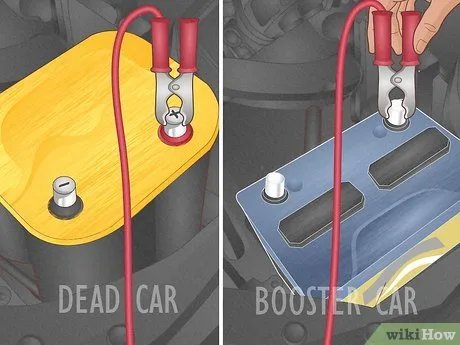
Attach the red clamp to the positive (+) terminal on the dead battery. The terminal is usually marked with a plus sign, often covered by a red plastic cap. Push the clamp on firmly so the teeth bite through any light corrosion.
Step 3: Connect the Black (Negative) Clamp to Ground
This is the step most beginners get wrong. Do not connect the black clamp to the dead battery's negative terminal. Instead, clip it to a clean, unpainted metal surface on the engine block, a chassis bolt, or the alternator bracket.
This grounds the circuit away from the battery, which reduces sparking near hydrogen gas.
If your vehicle has a designated remote ground post (some BMWs, Mercedes, and hybrids do), use that. The owner's manual will show you where.
Step 4: Power On the Jump Box
Flip the master switch or press the boost button. Most units will chirp or light up to confirm a solid connection. If you hear a rapid beeping or see a red reverse-polarity light, stop.
The clamps are crossed. Disconnect both, swap them, and start over.
Step 5: Wait 30 to 60 Seconds
Let the jump box push a small charge into the dead battery before you crank. Thirty seconds is usually enough. If the battery is deeply discharged (below 10V), give it a full minute.
The smart clamps will handle the current flow automatically.
Step 6: Crank the Engine
Turn the key or press the start button and hold it for up to 5 seconds. If the engine doesn't fire, release, wait 30 seconds, and try again. Aggregate user reviews report that most cars start within the first two attempts.
If you've cranked three times with no fire, something else is wrong.
Step 7: Disconnect in Reverse Order
Once the engine is running, leave it idling. Disconnect the black clamp first, then the red clamp. Do not turn off the jump box before disconnecting, or you'll get a small spark at the terminal.
Set the clamps somewhere they can't touch each other or any metal surface.
Step 8: Let the Engine Idle or Drive
The alternator needs 15 to 30 minutes of running time to meaningfully recharge a dead battery. If you're parked safely, let it idle. If you're on the road, drive gently and avoid short trips for the next day or two.

Where to Connect the Black (Negative) Clamp: Ground Point vs. Battery Terminal
This is the single most common question new jump box users ask. The answer matters more than most people realize.
Connecting the negative clamp to the dead battery's negative terminal works, but it's riskier. The dead battery is venting trace hydrogen gas. If the clamp sparks while making contact, that gas can ignite.
Most experienced mechanics avoid it for that reason.
Connecting to a remote ground point is safer and just as effective. A clean, unpainted metal bolt on the engine block, the alternator bracket, or a chassis ground strap gives the current a solid return path. Sparks happen at the ground clamp, far from any gas.
Quick rule: if you can see the battery and it's not swollen or wet, the negative terminal is acceptable. If the battery is tucked away, hard to reach, or you're not sure where it is, use any shiny bare-metal bolt on the engine. The alternator mounting bracket is a popular favorite among tow truck drivers for a reason.
What to Do If the Engine Won't Crank on the First Try
Three failed cranks in a row means something beyond a dead battery is wrong. Don't keep cranking. You'll just overheat the starter motor and drain the jump box.
Run through this quick decision tree:
- No sound at all when you turn the key? Check the clamp connections. Wiggle them and make sure they're biting metal, not just corrosion.
- Rapid clicking but no crank? The battery is too dead for the jump box to register. Wait a full two minutes before cranking again.
- Single click, then nothing? Likely a bad starter solenoid or a dead cell in the battery. Jump box can't fix this.
- Engine cranks slowly but won't fire? Could be fuel delivery (empty tank, bad fuel pump) or a fouled spark plug. Jump box isn't the problem.
- Engine fires and dies immediately? The battery is severely discharged. Let it idle for 5 minutes before driving.
If three attempts produce nothing, stop and diagnose. Repeated cranking with no start wastes the jump box and risks damaging the starter windings.
Cold Weather Jump Starting: What Changes Below Freezing
Cold is the jump box's worst enemy. Lithium batteries lose noticeable capacity below 32°F, and a jump box stored in an unheated car overnight at 0°F may deliver only 60 to 70% of its rated cranking amps.

Three adjustments make winter jumps more reliable:
- Keep the jump box indoors until you need it. A glove box in Minnesota is a bad storage spot from November through March.
- Warm the pack briefly before use. Holding it near a heater vent for 5 to 10 minutes restores a chunk of lost capacity.
- Extend the pre-crank wait to 90 seconds. Cold batteries accept a charge slowly, so give the jump box time to push current in.
If the engine doesn't fire after three attempts in deep cold, suspect a frozen battery before suspecting the jump box. A frozen 12V battery will read voltage but won't accept a charge, and forcing current through it can crack the case.
Jump Starting a Diesel Truck or Large Engine
Diesel engines need more cranking power than gas engines, often twice as much for the same displacement. A standard 1,000-amp consumer jump box may not budge a 6.7L Powerstroke or a 6.6L Duramax in cold weather.
For reliable diesel starting, look for a jump box rated at 2,000 peak amps or higher. Heavy-duty commercial units from brands like Clore Automotive, NOCO Boost Pro, and Antigravity deliver 3,000 to 4,000 peak amps and use thicker 4-awg cables to handle the load.
Diesel trucks also often have two batteries wired in parallel. The jump box should connect to the battery closest to the starter, not the farther one. Most diesel owner's manuals identify the primary battery.
If the truck has a remote jump post under the hood (common on Ford and Ram diesels), use that.
One more consideration: many diesels use glow plugs to preheat the cylinders before cranking. If the glow plug relay clicks but the engine doesn't fire, the batteries are fine. The issue is the glow plug system, not the jump box.
Jump Starting a Motorcycle, Lawn Mower, or Small Vehicle
Small engines need much less cranking power, but they also have smaller, more sensitive electronics. A 2,000-amp jump box on a motorcycle is overkill and can fry the regulator-rectifier if you're not careful.
For motorcycles, ATVs, and lawn tractors, look for a jump box with a "low output" or "motorcycle mode" setting. Some premium units detect the smaller battery and throttle down automatically. Others have a manual override switch.
Key differences when jumping small vehicles:
- Battery terminals are smaller and closer together. Use smaller clamp jaws or adapter cables.
- Many bikes have a remote positive terminal under a side cover. Check before clamping directly.
- Lawn tractors and mowers usually have accessible batteries but minimal ventilation. Crank in short bursts.
- ATVs and side-by-sides often share a battery with accessories (winches, light bars). Disconnect accessories before jumping.
If the small engine still won't fire after a jump, the issue is almost never the battery. Check the spark plug, fuel, and safety kill switches before assuming a deeper electrical fault.
Common Mistakes That Can Fry Your Electronics or Blow Up the Battery
Most jump box mishaps come from rushing, skipping the visual check, or treating the clamps like jumper cables. A few habits prevent the costly ones.
- Connecting black to negative instead of ground. Works, but sparks near hydrogen gas. Use a remote ground.
- Letting the clamps touch each other while powered on. Creates a dead short and can weld the jaws together.
- Cranking for more than 5 seconds at a time. Overheats the starter and drains the jump box fast.
- Skipping the 30 to 60 second wait before cranking. The dead battery needs a moment to accept surface charge.
- Reversing polarity. Red on negative, black on positive. The smart clamps will scream at you. Listen.
- Jumping a frozen or visibly damaged battery. Internal ice or a cracked case can turn a jump into an explosion.
If you ever smell sweet chemicals, hear a popping sound, or see the jump box swell, disconnect both clamps immediately and move away. A swollen lithium pack can vent and ignite within minutes.
How Long to Drive After a Jump to Actually Recharge the Battery
The alternator does the heavy lifting once the engine fires, but it doesn't fully refill a deeply discharged battery in a short drive. Plan for at least 30 minutes of continuous running to put a meaningful charge back in.
Highway driving charges faster than idling because the alternator spins faster at RPM. A 30-minute highway drive at 60 mph typically restores 60 to 80% of a dead battery's charge. A 30-minute idle at a parking lot might restore 30 to 40%.
If the car sits again for a few days and won't start, the battery is dead, not just discharged. A healthy 12V battery holds enough charge to start a car after sitting for two weeks in moderate weather. If it dies overnight, the battery is at end of life and needs replacement.
How to Recharge and Store Your Jump Box So It's Ready Next Time
A jump box that sits at 0% when you need it is worse than no jump box at all. Manufacturer specs confirm that lithium jump boxes lose 1 to 3% charge per month, so a quarterly top-up keeps the unit ready.
Storage best practices:
- Charge to 50 to 80% before long-term storage. Full charge stresses lithium cells. Empty storage kills them.
- Recharge every 3 months if unused. A 15-minute wall plug restores most of the capacity.
- Store in a dry, room-temperature location. Avoid trunks in summer heat or unheated garages in winter.
- Recharge fully after every jump use. Topping up immediately extends cell life.
- Use the manufacturer's USB-C or wall adapter. Off-brand chargers can skip the BMS handshake and damage cells.
A unit that won't hold a charge for more than a week has bad cells and should be replaced. Don't trust it in an emergency.
Safety Warnings You Shouldn't Ignore (Hydrogen Gas, Frozen Batteries, Lithium Fires)
Three risks deserve real attention because they escalate fast. Each one is preventable with a five-second check.
Hydrogen gas. Lead-acid batteries vent hydrogen during charging and discharging. A spark near the vent cap can ignite it.
Connect the negative clamp at a remote ground point, away from the battery, and you'll never see a flame.
Frozen battery. Water inside a discharged battery freezes around 20°F. Charging a frozen battery can crack the case or explode it.
If the case looks swollen in winter, bring the battery inside to thaw before attempting anything.
Lithium jump box fires. Damaged or deeply discharged lithium cells can enter thermal runaway. Signs include swelling, hissing, strong chemical smell, or heat.
Move the unit to a non-flammable surface outdoors and call local fire services if it ignites. Per FAA guidance, lithium jump boxes under 100Wh fly in carry-on luggage only, with airline approval needed between 100Wh and 160Wh.
When a Jump Box Won't Fix the Problem (Bad Alternator, Bad Battery, Parasitic Drain)
A jump box is a starting aid, not a battery replacement. If the car dies again within a day or two, something deeper is wrong.
- Battery won't hold charge: jump it, drive 30 minutes, park overnight. If it's dead again in the morning, the battery has a dead cell and needs replacement.
- Alternator not charging: engine runs but warning light stays on, electronics flicker, battery dies while driving. Jump box can't help here. A voltmeter test at the battery with the engine running should show 13.8 to 14.4V. Anything below 13V means the alternator is failing.
- Parasitic drain: battery dies overnight with no lights or accessories left on. A multimeter in series with the negative terminal should read under 50 milliamps when the car is off. Higher draw means a stuck relay, aftermarket accessory, or trunk light staying on.
If any of these match your symptoms, replace the battery, repair the alternator, or chase the parasitic drain before trusting the jump box again.
Jump Box vs. Jumper Cables vs. Roadside Assistance: Which One Wins?
Each option has a place. The right choice depends on whether you have access to a second vehicle, how far you are from help, and how often your battery dies.
Jump box wins when you're alone, parked away from traffic, or in a remote area. It also wins during cold mornings when strangers don't want to leave their warm cars. Cost runs $50 to $250 upfront, with no per-use fees.
Jumper cables win when a helper is already offering. Free, fast, and reliable if both drivers know the proper sequence. Downside: you need a second running vehicle and willing participant.
Roadside assistance wins when the battery won't hold a charge, the jump box fails, or you suspect a deeper electrical fault. AAA and most insurance add-ons cover jumps, but average wait times run 30 to 60 minutes. Cost is included in your membership or billed per incident.
A practical setup for most drivers: keep a jump box in the car for solo situations and keep roadside assistance as backup for everything else. The two complement each other more than they compete.
How Many Amps You Actually Need for Your Engine Size
Marketing claims exaggerate peak amp numbers across the industry. Real-world cranking amps matter more than the headline figure, but matching peak amps to engine size is still a useful starting point.
- 4-cylinder gas (2.0L to 2.5L): 800 to 1,000 peak amps is plenty.
- V6 gas (3.0L to 4.0L): 1,200 to 1,500 peak amps works reliably.
- V8 gas (4.5L to 6.2L): 1,800 to 2,500 peak amps handles most conditions.
- Small diesel (3.0L to 4.5L): 2,000 to 2,500 peak amps minimum.
- Large diesel (5.0L to 6.7L): 2,500 to 4,000 peak amps from a commercial unit.
Cold weather adds 30 to 50% to the requirement. A V8 that starts fine at 1,800 amps in July may need 2,500 amps in January. When in doubt, oversize by one tier.
A jump box with extra capacity still weighs the same and lasts longer per charge.
Frequently Asked Questions
Can a jump box start a completely dead battery?
Yes, if the smart clamps recognize the battery voltage. Below 3V, most clamps lock out as a safety. Look for a "force mode" or "0V override" on premium units.
How long should I let the jump box run before cranking?
Thirty to 60 seconds is the sweet spot. Deeply discharged batteries may need 90 seconds to accept surface charge.
Can I leave my jump box plugged in overnight?
No. Unplug once full. Continuous charging degrades lithium cells and can trigger the BMS to cut output.
Do jump boxes work on trucks with dual batteries?
Yes. Connect to the battery closest to the starter, not the secondary one. Most trucks label the primary bank.
Will a jump box damage my car's computer?
No, when used correctly. Smart clamps prevent voltage spikes that fry ECUs. Avoid cheap, unregulated units without surge protection.
The Decision Guide: Picking the Right Jump Box for Your Situation
Not every driver needs the same jump box. Match the unit to your engine size, climate, and storage situation, and you'll never get stranded.
| Situation | Recommended Peak Amps | Best Chemistry | Storage Tip |
|---|---|---|---|
| Compact car, 4-cylinder, mild climate | 1,000 amps | Lithium-ion | Trunk is fine |
| Mid-size sedan, V6, mixed climate | 1,500 amps | Lithium-ion or LiFePO4 | Glove box or cabin |
| Full-size SUV, V8, cold winters | 2,000 amps | LiFePO4 | Indoors during winter |
| Diesel truck, heavy-duty use | 2,500+ amps | Commercial LiFePO4 | Dedicated case indoors |
| Motorcycle / ATV / small engine | 500 to 1,000 amps | Lithium-ion with low mode | Under-seat storage |
Drivers who rarely drive, own multiple vehicles, or live somewhere with brutal winters benefit most from a heavy-duty LiFePO4 unit stored indoors. Daily commuters in mild climates can get by with a budget lithium pack tossed in the trunk. The jump box only fails when it's under-spec'd for the engine, under-charged when needed, or stored in extreme heat or cold.
Avoid those three mistakes and it'll save your morning for years.