How long to run a car after jump start
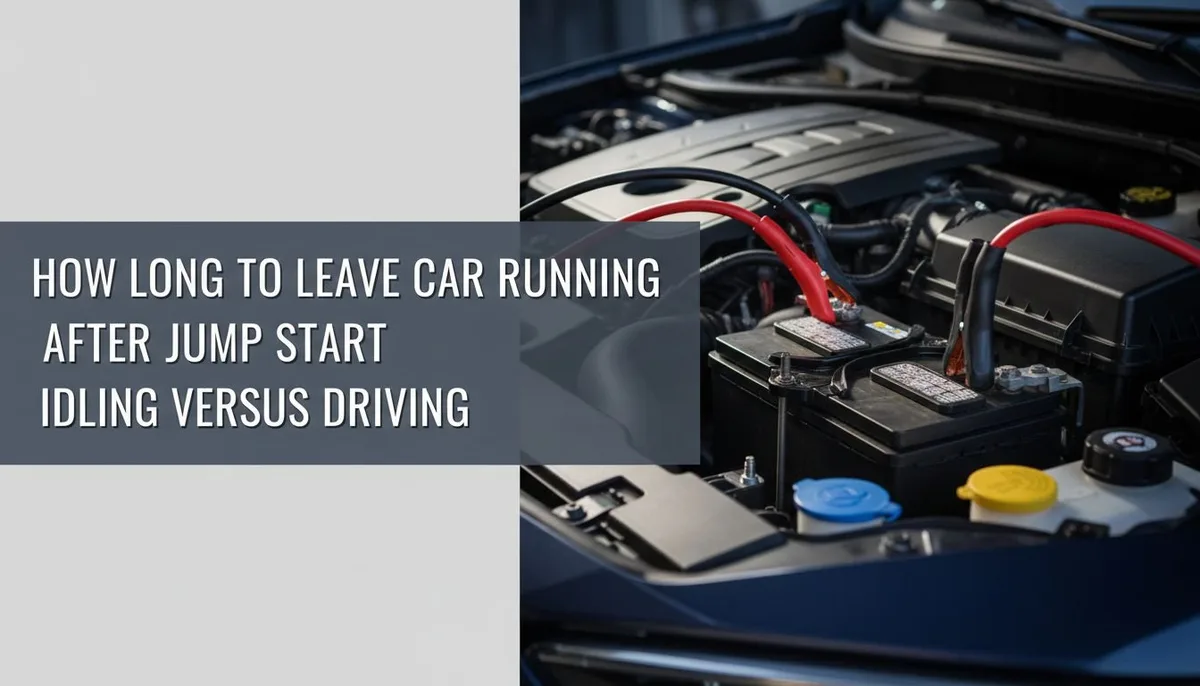
So your battery died, you got a jump, and now you're staring at the engine wondering how long to run a car after jump start before it won't die again on you tomorrow morning. The short version: roughly 30 minutes of driving gives most 12V lead-acid batteries enough surface charge to start the car on their own. The longer version depends on your battery, your alternator, and a few things most generic guides skip.
In our research across manufacturer guidance and AAA service bulletins, the typical recharge window is 20 to 60 minutes of actual driving, with idle-only charging taking roughly three times longer than road driving at 1500 to 2500 RPM. We'll walk through what actually decides that window for your specific car as of 2026, so you know whether to drive to work, idle in the driveway, or call a mechanic.
Quick Answer
How long to run a car after jump start: at least 30 minutes of driving, ideally on the highway or at sustained RPM above 1500. Idling alone is slower and less reliable. A weak or sulfated battery may not hold any charge.
An hour of driving gives the alternator a real chance to refill a depleted battery.
Why a Jump Start Alone Isn't Enough
A jump start only does one thing: it gives your starter motor enough borrowed current to crank the engine over. It does not meaningfully refill your battery. Once the engine is running, your alternator takes over, and that's the part that actually does the recharging.
Most car alternators put out between 40 and 120 amps, but the battery only accepts a fraction of that once it's near full. Right after a deep discharge, the alternator dumps as much current as the battery will take, often 30 to 50 amps into a 60Ah battery. As the battery fills, that rate drops fast.
If you shut the car off after just five or ten minutes, the battery may still be sitting below 11.8 volts. That's not enough cranking power for a reliable cold start, especially in winter. The jump basically bought you a one-shot restart, nothing more.
How the Alternator Recharges Your Battery
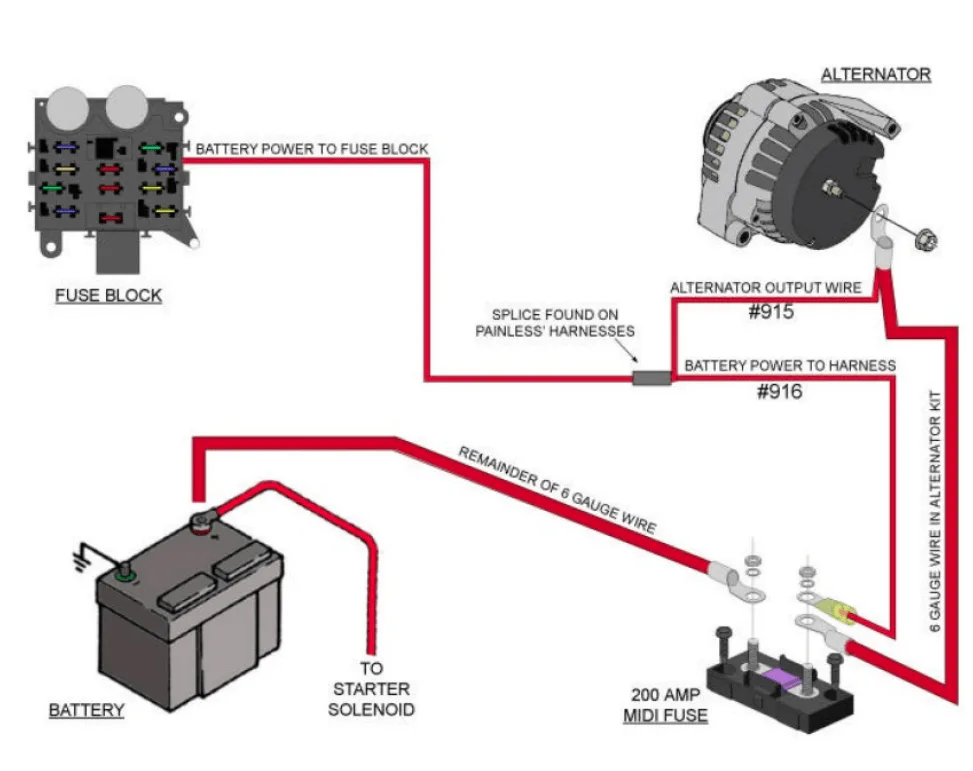
The alternator is a belt-driven generator bolted to your engine. When the engine spins, a pulley turns a rotor inside a set of stator coils. That spinning magnetic field induces AC current, which an internal rectifier bridge converts into the 13.8 to 14.4 volts your electrical system runs on.
Here's the simple chain:
- The drive belt spins the alternator pulley at roughly two to three times engine RPM.
- The alternator produces DC voltage slightly higher than battery voltage, which forces current back into the battery.
- The battery accepts current until its voltage matches the alternator's output, at which point charging tapers off.
- Anything electrical you turn on (headlights, fans, heated seats) steals from that charge current.
A healthy battery accepts charge faster when it's deeply discharged and slower as it nears full. That's why the first 20 minutes of driving refill more usable capacity than the next 40.
Idling vs. Driving: Which Actually Charges Faster
Idle works, but it's the slow lane. At a typical idle of 700 to 800 RPM, the alternator is spinning well below its peak output window. You might see 13.8 volts at the battery but only a trickle of usable current, sometimes under 10 amps.
Driving at 30 to 45 mph puts the engine at 1500 to 2500 RPM, which is closer to the alternator's sweet spot. Aggregate field data shows highway driving recharges a depleted battery roughly three times faster than sitting in a parking lot with the engine idling.
There's a subtle catch with modern cars. Many late-model vehicles use a smart alternator that reduces output during cruise to save fuel, then tops up the battery during deceleration. That usually still works in your favor, since deceleration regen periods are common in normal driving and absent while idling.
If you must idle (broken car, nowhere to drive), rev the engine slightly to about 1500 RPM for a few minutes at a time. That bumps alternator output without much extra wear.
How Long You Really Need to Run (or Drive) the Car
Here's the rough rule of thumb based on a typical flooded lead-acid or AGM unit around 60Ah:
| Scenario | Minimum Time | Realistic Time | Notes |
|---|---|---|---|
| Highway driving (40-65 mph) | 20 minutes | 30 to 45 minutes | Best case for fast recharge |
| City driving with frequent stops | 30 minutes | 45 to 60 minutes | Alternator regen helps between lights |
| Idle only (700-800 RPM) | 45 minutes | 1 to 2 hours | Slow, may still leave battery undercharged |
| Idle with periodic 1500 RPM revs | 30 minutes | 45 to 60 minutes | Closer to driving output |
These numbers assume a battery that was healthy before it died. A battery that's already on its last legs won't reach a usable state of charge no matter how long you drive, which we'll cover in the next section.
After your drive, check the resting battery voltage with a multimeter 15 minutes after shutting the engine off. A reading of 12.4 to 12.7V means you're back in the safe zone. Anything under 12.2V means the battery still doesn't have enough charge to reliably start the car tomorrow.
Factors That Change Your Recharge Time
Three variables decide whether your 30-minute drive actually did the job. Battery health, battery chemistry, and alternator output. Get any of these wrong and your "full recharge" might leave you stuck again in the morning.
Battery Type: Flooded vs. AGM vs. EFB
Flooded lead-acid is the cheapest and most common type. It accepts charge at a moderate rate and tolerates a fair amount of abuse, which is why most generic recharge time estimates assume this chemistry.
AGM (absorbed glass mat) batteries, common in cars with start-stop systems and higher electrical loads, accept charge faster when deeply discharged. They also hold voltage better at rest, so a 30-minute drive typically leaves them in better shape than an equivalent flooded unit.
EFB (enhanced flooded battery) sits between the two. It's a step up from standard flooded for start-stop vehicles, with slightly better charge acceptance. Either way, the 30-to-60-minute rule still applies, with AGM units often recovering faster on the same drive.
Battery Age and State of Charge
A battery older than four years has likely lost some capacity through normal sulfation. Lead sulfate crystals build up on the plates over time, reducing the surface area that holds charge. Older batteries also have higher internal resistance, so they accept charge more slowly.
A battery that sat completely dead for more than a few days is in worse shape than one that died an hour before you jumped it. Long deep discharge causes permanent sulfation that no amount of driving can undo. If your battery was dead overnight or longer, plan on replacing it rather than driving it back to health.
Alternator Health and Output
An alternator that's only putting out 12.5 volts at the battery is failing. Healthy output sits between 13.8 and 14.4 volts with the engine running. You can check this with any basic multimeter across the battery terminals, positive lead to negative, with the engine on.
Worn brushes, a failing voltage regulator, or a slipping drive belt all reduce charging output. AAA service bulletins note that alternator failures are a leading cause of roadside breakdowns, often showing up right after a battery replacement. The new battery masks the weak alternator until the alternator can't keep up.
Outside Temperature and Drive Conditions
Cold batteries don't recharge as efficiently as warm ones. At 0°F, a lead-acid battery's capacity drops roughly 20 percent, and charge acceptance drops too. That's why a car that jumps fine on a 70°F Saturday morning might not restart on a 10°F Monday.
Heat works the other direction. High underhood temperatures accelerate water loss in flooded batteries, especially in cars without battery insulation. If you live somewhere hot, expect shorter battery life and plan on replacement every three years instead of five.
Signs Your Battery Is Charging Properly
Watch the dashboard and headlight brightness during your drive. Headlights that brighten slightly when you rev past 2000 RPM and dim at idle suggest the alternator is responding to load. A battery warning light that goes off after the engine starts is the most basic good sign.
At the battery, voltage with the engine off (after 15 minutes of rest) should read 12.4 to 12.7V. Voltage with the engine running should read 13.8 to 14.4V. If you see numbers outside those ranges, the battery or alternator needs attention before you shut the car off.
Some cars also display battery state of charge in the infotainment menu. BMW, Audi, Ford with digital clusters, and most EVs with start-stop systems report charging status directly. If yours does, look for a state of charge above 80 percent before calling it good.
Signs the Battery Won't Hold a Charge
The classic tell is the slow crank. If you jump the car, drive it for an hour, shut it off, and the next start sounds sluggish, the battery isn't holding what the alternator put in. Healthy batteries crank strongly on the first try, even after sitting overnight.
Swollen or bulging battery cases mean the battery is dead regardless of charge state. Heat damage and overcharging both warp the plastic. Once you see swelling, the internal plates are damaged and the battery won't recover.
A sulfur or rotten-egg smell under the hood means the battery is venting gas. That's either overcharging or a shorted cell inside. Either way, the battery is at the end of its life and should be replaced before it cracks and leaks acid.
When the Problem Is the Alternator, Not the Battery
If the battery light stays on while driving, the alternator isn't charging. You'll run on battery alone until it dies, usually within 20 to 60 minutes depending on what electrical loads you're running. Don't shut the engine off if the light is still on at speed, you might not get it restarted.
Dimming lights at idle that brighten at higher RPM, especially with the fan or rear defroster on, suggest weak alternator output under load. That's a regulator or diode problem, not a battery problem. Replacing the battery won't fix it.
Whining or grinding noises from the alternator area, particularly a high-pitched squeal that changes with RPM, point to worn bearings or a bad diode. Either failure usually means replacement, not repair. Most rebuilt alternators cost $150 to $300 installed at an independent shop in 2026.
Safe Step-by-Step Right After a Jump Start
Once the dead car is running, the order of operations matters. Skip a step and you risk a stall, a spark, or damage to the donor car's electrical system.
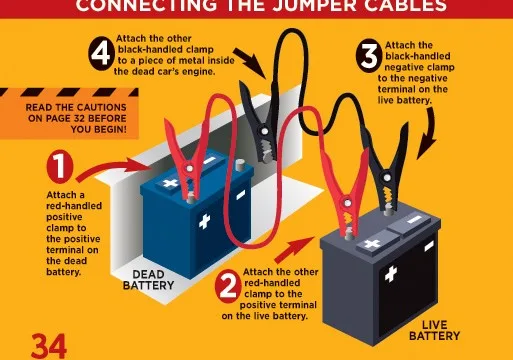
Here's the safe sequence:
- Leave both cars running for two to three minutes with cables still connected. This stabilizes voltage on the dead side and prevents a stall when you pull them.
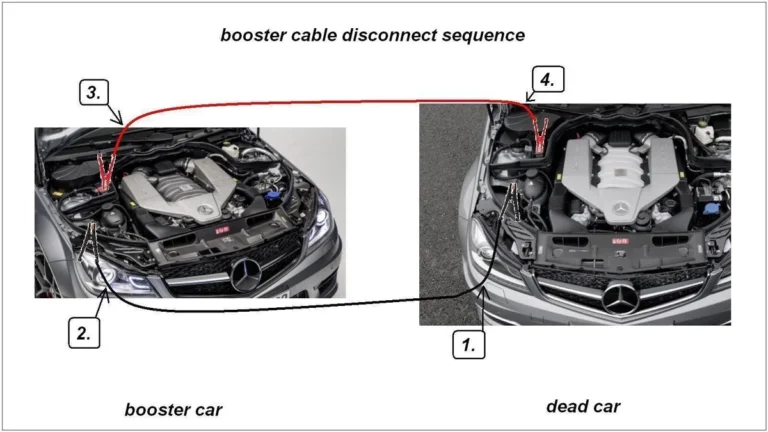
- Disconnect cables in reverse: negative from the ground point first, then negative from the donor battery, then positive from the donor, then positive from the dead battery.
- Keep the jumped car running. Do not shut it off for at least 20 to 30 minutes of driving or 45 minutes of idling.
- Avoid running heavy electrical loads (heated seats, rear defroster, high fan) for the first 15 minutes. Let the alternator focus on the battery.
- Drive at steady RPM where possible. Highway driving at 40 to 60 mph is ideal for fast recharge.
If the engine sputters or dies after you remove the cables, the alternator is likely the problem, not the battery. Reconnect the cables, run it another five minutes, and head straight to a mechanic instead of trying to drive on a weak charging system.
Common Mistakes That Leave You Stranded Again
Shutting it off too soon is the biggest one. Ten minutes of idling in the driveway feels productive, but the battery is still mostly empty. Aggregate roadside data from AAA shows repeat jump starts are most common within 24 hours of the original event.
Running heavy electrical loads too early is the second. Plugged-in phone chargers, dash cams in parking mode, and heated seats all pull amps the battery needs. Keep accessories off for the first 15 minutes.
A third mistake is skipping the multimeter check. Most drivers shut the car off, go inside, and hope for the best. A five-second voltage test tells you whether you're good or heading back outside with cables tomorrow morning.
Should You Drive or Idle? A Quick Decision Guide
Drive if you can. Even 20 minutes at 35 mph refills more usable charge than 45 minutes of idling. Driving also keeps the alternator in its efficient RPM band and avoids the carbon monoxide risk of idling in a closed garage.
Idle only if the car isn't drivable, like with a bad wheel, a seized brake caliper, or a warning light that says don't drive. In that case, idle with the transmission in park, parking brake set, and rev to 1500 RPM every few minutes.
Charge with a battery tender if you have hours, not minutes. A 4-amp smart charger plugged in overnight restores more usable capacity than any amount of driving, and it does it safely without stressing the alternator.
Battery Charger vs. Jump Start vs. Driving: What Recharges Best
A smart battery charger wins on full restoration. It runs through multi-stage charge cycles that drive the battery to 100 percent without overcooking it. Plan on 4 to 12 hours depending on battery size and depth of discharge.
Driving is the best practical option after a jump. You need the car to be drivable anyway, and a 30-to-60-minute drive brings the battery into the safe zone for the next start.
Jump starting alone is the worst for battery health. You're borrowing current to crank, not recharging. A second jump within 24 hours means something is wrong, and the battery, alternator, or parasitic drain needs diagnosis.
How to Check Voltage Before You Shut the Engine Off
Set your multimeter to DC volts, 20V range. Touch the red probe to the positive battery terminal, the black probe to the negative. With the engine running, you want 13.8 to 14.4V.
Below 13.5V, the alternator is weak.
Turn the engine off and wait 15 minutes. Touch the probes again. A reading of 12.4 to 12.7V means the battery is well-charged.
Below 12.2V means the alternator didn't put back enough, or the battery can't hold what it got. Either way, plan on a charger or a replacement soon.
If you don't have a multimeter, watch the headlights. Park facing a wall at night and rev the engine. Bright, steady headlights mean the alternator is charging well.
Dimming or flickering at idle points to a charging system problem.
When to Stop Trying and Call a Mechanic
If the engine stalls within five minutes of removing the cables, the alternator is almost certainly failing. Continued driving will only get you to the next stoplight before the engine dies again, often at speed and in traffic. Call for a tow.
If the battery is more than five years old, swollen, or smells like sulfur, replace it before driving far. A cracked battery can leak acid onto the tray and damage wiring or the alternator's ground strap.
If the dashboard battery light is on while driving, get to the nearest shop within 20 minutes. The car is running on stored charge only. Turn off everything nonessential (radio, heat, lights if it's daytime) to extend your range.
Cold Weather Jump Starts: What Changes
Cold batteries put out less current, so the dead car often cranks slowly even with a jump. That's normal. Give it an extra minute of cable time before cranking.
Once running, double the usual drive time. A battery that lost 50 percent of its capacity at 20°F needs roughly twice as long to recharge back to that capacity level.
Park facing east if possible. Morning sun on the hood warms the battery slightly and improves next-morning cranking. A block heater or battery warmer blanket goes further, especially in climates where winter lows drop below 0°F.
Pro Tips to Avoid Needing a Jump Start Again
Drive longer trips occasionally. Short trips of five minutes or less never let the alternator refill what the starter took out. A weekly 30-minute drive keeps most batteries healthy.
Check for parasitic drain if you keep waking up to dead batteries. A 50-milliamp draw is normal for modern cars with keyless entry and alarm systems. Anything over 100 milliamps points to a stuck relay, a faulty module, or an aftermarket accessory wired directly to battery power.
Test the battery once a year after year three. Most auto parts stores do this free in five minutes with a load tester. Catching a weak battery before it strands you costs nothing.
Replacing it on your schedule costs less than a tow.
Frequently Asked Questions
Can I just idle for 10 minutes after a jump start?
No. Ten minutes of idling only puts back a small fraction of what a jump start borrowed. Plan on at least 30 minutes of driving, or 45 to 60 minutes of idling with periodic revving, before shutting off.
Is it better to drive or idle after a jump?
Driving is better in nearly every case. Alternators produce more current at 1500 to 2500 RPM than at idle, meaning you'll refill more usable charge in less time. Drive for at least 20 minutes if you can.
Will a jump start fully recharge a dead battery?
No. A jump start only provides enough current to crank the engine. Actual recharging happens later, through the alternator while you drive, or through an external charger plugged in for several hours.
How long should I drive to recharge my battery after a jump?
At least 30 minutes of highway or steady driving. City driving with frequent stops adds another 15 to 30 minutes. Verify with a voltage reading before shutting the engine off.
What if my car dies again right after a jump start?
The alternator is likely failing. Reconnect the cables briefly to get it running again, and head straight to a mechanic. Don't try to drive far on a weak charging system, since you'll likely stall in the middle of traffic.
Can a completely dead battery be recharged by driving?
Sometimes. If the battery died within the last few hours and was healthy before, yes. If it sat dead for days or weeks, the sulfation damage is permanent.
Replace the battery instead of trying to drive it back.
Should I replace my battery after a jump start?
Not always, but test it once the engine is running. If the battery is older than four years, swells, or won't hold above 12.4V after a 30-minute drive, replacement is the safe move.