How After Jump Start How Long to Run Car: Best guide
A dead battery never picks a good moment. One minute you're running late, the next you're popping a hood and hoping a stranger has cables. Once the engine finally fires back up, the real question hits you: after jump start how long to run car before you can trust it again?
The honest answer isn't a single number. Most service literature and battery makers like Interstate and Optima point to roughly 15 to 30 minutes of actual driving as the minimum to recover a usable charge, with idling being a slower, less efficient option. The exact timeline depends on how dead the battery was, how old it is, whether the alternator is healthy, and whether you drive or just sit there revving nothing.
We'll walk through all of those branches so you know exactly what to do next, and when the jump wasn't really the fix.

Quick Answer
Plan on driving for at least 15 to 30 minutes after a jump start. Idling the engine works but recharges much more slowly. If your battery is older than three to five years, or the car stalls again later that day, replace the battery or have the alternator tested.
As of 2026, modern charging systems still need real engine load time to push a meaningful charge back into a depleted 12-volt battery.
Why a Jump-Start Doesn't Fully Recharge Your Battery
Here's the part most people miss. A jump-start gets your engine running, but it doesn't fill the battery back up the way a wall charger does. The alternator is doing the work, and it's doing it under the worst possible conditions: the battery is nearly empty, accessories are pulling current, and the engine is barely turning at idle RPM.
A 12-volt flooded lead-acid battery is "full" at roughly 12.6 volts at rest. A "dead" battery sits around 11.9 volts or lower. When the engine is running, the alternator pushes system voltage up to about 13.7 to 14.7 volts, which is what recharges the battery.
But that charging only happens when there's spare current left over after the ignition, fuel pump, ECU, lights, and any plugged-in accessories have taken their share.
The result is a slow, partial top-up. Industry estimates from groups like the Battery Council International put real-world alternator recovery in the 30 to 60 minute range for a deeply discharged battery under typical driving loads. A jump-start just gets you to the start of that climb.
There's also a sneaky trap called surface charge. Right after you remove the jumper cables, a multimeter can show a healthy-looking 12.4 or even 12.6 volts. That's not the battery being restored.
It's a thin layer of voltage sitting on the plates that bleeds off within an hour or two, sometimes faster. If you shut the engine off based on that false reading, the car won't restart.
Bottom line: a jump is a rescue, not a repair.
The Condition Variables That Change Your Timeline
Not every jump-start follows the same script. These are the variables that move your timeline from 15 minutes to "call a tow truck."
Battery age and condition
Average automotive battery life lands somewhere between three and five years, with shorter spans in hot climates and slightly longer in mild ones. A one-year-old battery that got drained by an interior light will usually recover fine. A six-year-old battery that stranded you in a parking lot is at the end of its service life, and no amount of driving will bring it back.
Depth of discharge
A battery that turned the engine over slowly is one thing. A battery that wouldn't even click the starter is something else. The deeper the discharge, the more amphours the alternator has to push back in.
Multiply your recovery time accordingly.
Alternator health
A healthy alternator produces 13.7 to 14.7 volts at the battery posts with the engine running. If it's putting out 13.2 volts because a diode is weak, your recharge window stretches. If it's putting out 12.6 volts, the alternator isn't charging at all, and no amount of driving will save you.
Parasitic draw
Some current always leaks when the car is off: clock memory, alarm system, keyless entry. Normal parasitic draw sits around 20 to 50 milliamps. A stuck relay or a trunk light that won't shut off can pull amps.
If something drained the battery once, it'll drain it again.
Temperature
Cold batteries deliver less cranking power and accept charge more slowly. Hot batteries lose fluid and sulfate faster. The sweet spot for charging is roughly 60 to 80°F.
Outside that band, everything takes longer.
If you don't know the age of your battery or the state of your alternator, the safe play is to assume the worst-case scenario and plan for the longer end of the timeline, plus a trip to a shop.
Battery State of Charge vs. Surface Charge (Why It Matters)
This is the single biggest reason people get stranded twice in one day. They jump the car, the engine runs, voltage looks fine, they park, and the next morning the battery is flat again.
Surface charge is a voltage artifact. During charging, hydrogen ions concentrate near the plate surfaces, creating a temporary voltage bump that disappears within minutes to a couple of hours. A resting voltage reading taken right after a jump is misleading.
Per standard battery testing practice, you wait at least an hour, or you apply a brief 15-amp load, before reading resting voltage.
Here's what a healthy 12-volt battery looks like at rest, no charger attached, surface charge gone:
| Resting Voltage | State of Charge | Practical Meaning |
|---|---|---|
| 12.6 V+ | 100% | Fully charged, ready |
| 12.4 V | ~75% | Good, drive normally |
| 12.2 V | ~50% | Marginal, may struggle to start |
| 12.0 V | ~25% | Likely won't crank reliably |
| 11.8 V or less | Discharged | Won't start, needs charging |
If you can't measure, you can still estimate by behavior. If the engine cranks strong and headlights look bright after 20 minutes of driving, you're in decent shape. If everything still looks dim and lazy, the battery is still mostly empty.
For owners with a multimeter, the Battery Council International provides guidance on resting voltage thresholds and load testing that match what manufacturers print on their spec sheets. It's worth a look before you trust a single reading.
Idle the Engine or Drive It? The Real Difference
Most drivers sit in the driveway with the engine idling for 10 minutes, then shut it off and wonder why the car won't restart the next morning. That habit is the silent killer of post-jump reliability.
The alternator's output scales with engine RPM and load. At idle, it's making the minimum it can to keep the electronics alive and dribble a little charge into the battery. At cruising speed with light accessory load, it's making much more current, which actually pushes amphours back into the battery.
As a rough rule, 30 minutes of highway driving puts roughly the same charge back into a depleted battery as an hour or more of idling. Per manufacturer guidance from brands like Bosch and CTEK, driving cycles above 1,500 to 2,000 RPM with limited accessory use are the most efficient way to recover state of charge without plugging in.
That doesn't mean idling is useless. It's fine for the first five to 10 minutes to let the alternator stabilize and the ECU relearn idle parameters. After that, drive.

A practical post-jump plan:
- Idle for 3 to 5 minutes to confirm stable running.
- Drive for 20 to 30 minutes at road speed, accessories off (no A/C on max, no heated seats, no phone fast-charging).
- Avoid stop-and-go traffic for that window if you can. Steady RPM is your friend.
- Park, wait 30 minutes, then test before shutting off if you want to be sure the next start will work.
If your commute is short, consider looping the highway for an extra 10 minutes instead of pulling into the driveway after five blocks. The difference between a battery that will start tomorrow and one that won't usually lives in that last 10 minutes of driving.
How Long to Drive After a Jump Start to Restart Safely
The minimum threshold is shorter than people expect, but it's not zero. Most vehicles can be safely restarted after about 15 minutes of driving following a jump, assuming the original discharge wasn't catastrophic and the alternator is healthy.
Here's the conditional logic:
- If the battery is less than three years old, the alternator tests fine, and the discharge was caused by a one-time mistake like leaving headlights on, 15 to 20 minutes of steady driving is enough for a reliable restart.
- If the battery is three to five years old or you don't know its age, plan on 30 to 45 minutes of driving. The same goes for cold weather, where battery chemistry slows down.
- If the battery is over five years old, or you had to jump the car for no clear reason, skip the driving math and head straight to a shop. A jump won't fix a battery that can no longer hold a charge, and a weak alternator won't either.
There's also a "next morning test" worth doing. After your drive, let the car sit for 12 hours. Then try to start it cold.
If it cranks strong, the battery held the charge. If it's sluggish, the battery or alternator is failing, and another jump is only buying you time.
For drivers who want a hard number backed by a standard, the Society of Automotive Engineers publishes charging-system performance specs (notably SAE J537 for 12-volt batteries) that line up with what battery makers use in their own technical sheets. It's the closest thing to an industry-wide rule for how charging systems behave.
Step-by-Step: What to Do in the First 30 Minutes After a Jump
The first half hour after a jump decides whether you're driving home or calling for help. Here's the sequence that works.
Confirm the engine is actually running on the alternator
Before you pull the jumper cables, watch the dashboard. If the battery light stays on after the engine starts, the alternator isn't charging and you have a bigger problem. If the light goes out within a few seconds, the alternator is doing its job.
Disconnect cables in the right order
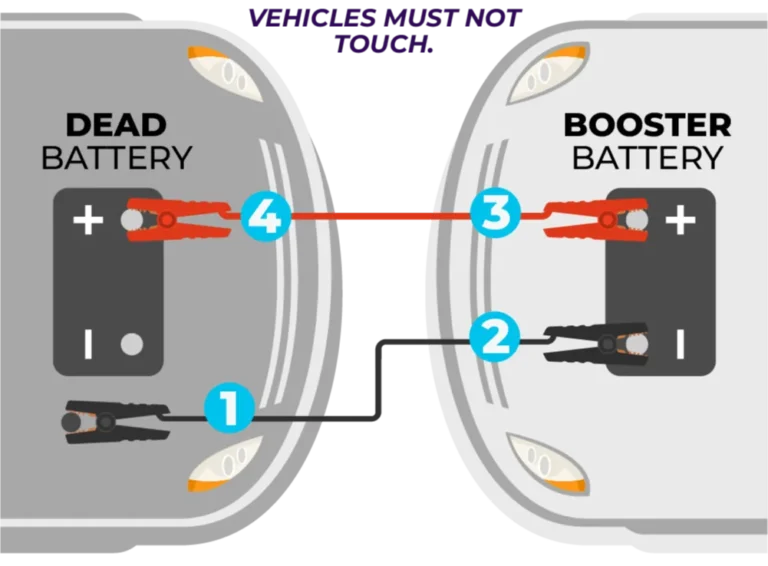
Negative clamp on the donor car first, then negative on your car. Positive on your car, then positive on the donor. Reversed order creates voltage spikes that stress electronics.
Manufacturer guidance from jump-starter makers like NOCO is consistent on this point.
Let it idle for 3 to 5 minutes
This lets the alternator stabilize and the ECU relearn idle trim. Don't rev the engine to "charge faster." Higher RPM at idle doesn't help much and just wastes fuel.
Drive for 20 to 30 minutes
Steady highway speeds beat city stop-and-go. Turn off heated seats, rear defrost, and phone fast-chargers to free up alternator capacity for the battery.
Park and test
Wait at least 30 minutes, ideally overnight, before assuming the next start will work. If you must shut it off, do so in a place where you can call for help if it doesn't restart.
How to Know If Your Alternator Is Actually Charging
Guessing doesn't work here. You want a number. A cheap multimeter tells you everything you need in 60 seconds.
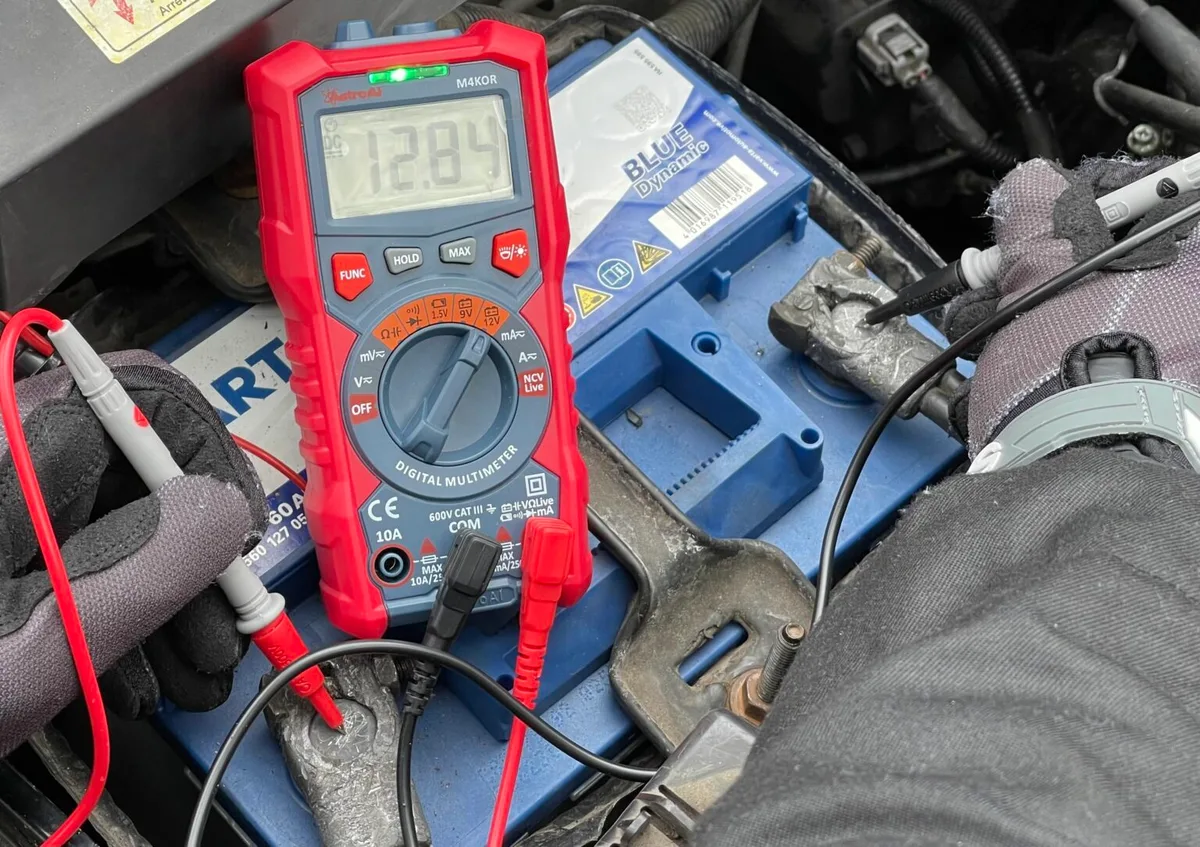
Measure at the battery with the engine running
Touch the red lead to the positive post, black to the negative. A healthy system reads 13.7 to 14.7 volts at idle with accessories off. Anything in that range means the alternator is pushing current into the battery.
Compare with engine off
Shut the engine off, wait 10 minutes for surface charge to settle, and measure again. The difference between running voltage and resting voltage tells you how hard the alternator was working. A small difference (under one volt) means a strong, healthy alternator.
A flat or negative difference means trouble.
Watch for the warning signs
Dimming headlights at idle, a battery light that flickers, or a sulfur smell from the belt area all point to an alternator on its way out. Per aggregate service data, alternators typically last 80,000 to 150,000 miles, but a failed diode or bad voltage regulator can take one out early.
If your reading is under 13.5 volts with the engine running, drive straight to a shop. The battery won't recover, and you'll be stranded again.
Battery vs. Alternator: How to Tell What's Really Wrong
The jump-start is just the symptom. The cause is either a battery that can't hold charge, or an alternator that won't put charge in. The branch matters because the fix is different.
The simple split
A battery problem usually shows up after the car sits. You park, everything is fine, and hours later the engine won't crank. An alternator problem usually shows up while you're driving.
Lights dim, the battery light appears, accessories slow down, and eventually the engine dies.
The headlight test (rough but useful)
With the engine off, headlights look dim. Start the engine and they should brighten noticeably. If they don't, the alternator is weak.
If they brighten but the car dies later, the battery is the suspect.
The age check
Batteries fail more often than alternators in most vehicles. If your battery is over four years old and just stranded you, the battery is the prime suspect. Replace it first.
If the new battery goes flat within a week, then the alternator is the real culprit, often a parasitic draw that's draining things while the car sits.
The parasitic draw test
Pull the negative battery cable, connect a multimeter in series between the cable and the post, and wait 15 minutes for the modules to go to sleep. A reading under 50 milliamps is normal. Anything over 100 milliamps needs investigation, usually a stuck relay, aftermarket accessory, or a light that won't shut off.
Knowing which branch you're on saves you from replacing the wrong part. That distinction is the difference between a $100 battery and a $500 alternator job.
Common Mistakes After a Jump Start (and What They Cost You)
Most post-jump failures aren't about the jump itself. They're about what people do right after.
Shutting off too soon
The car runs, the dash looks normal, you shut it off and run inside. Twenty minutes later it's dead again. Surface charge fooled you, and the battery never got a real charge.
Sitting in the driveway idling for 10 minutes
Idling generates far less charging current than driving. You're burning fuel and not putting meaningful charge back into the battery.
Driving with every accessory on
Heated seats, rear defrost, phone charging, A/C on max. Every one of those is current the alternator isn't sending to the battery. Your "30-minute drive" became a 90-minute drive.
Repeatedly jump-starting the same dead battery
Each jump stresses the battery further. If you've had to jump the car more than twice in a week, the battery is at end of life and the next failure might leave you stranded somewhere worse.
Ignoring the battery light
If the light stays on after a jump, the alternator isn't charging. Driving on a failing alternator is a countdown to a stalled engine on the road. Don't ignore it.
Connecting cables in the wrong order
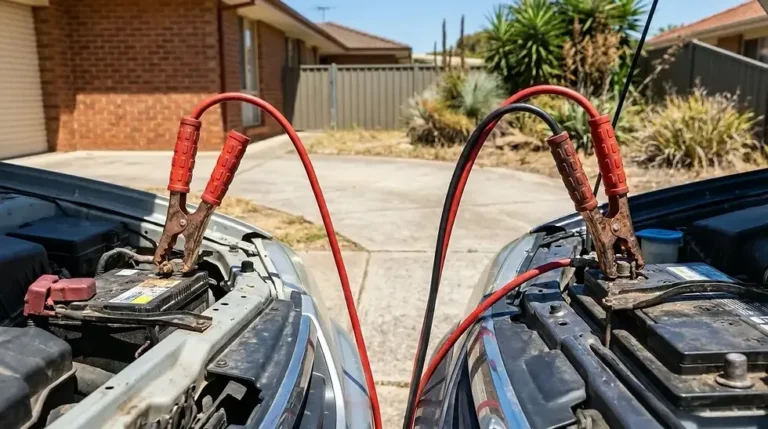
Positive to negative creates a direct short through the cables. You get sparks, possible battery damage, and in rare cases a battery explosion. Always positive to positive, negative to a ground point on the dead car, away from the battery.
Cold Weather, Heat, and Storage: How Climate Changes the Math
Temperature isn't a side note. It's one of the biggest variables in how well a jump-start works.
Cold weather
Engine oil thickens, demanding more cranking amps. Battery chemistry slows, reducing usable capacity. A battery that starts the car fine at 70°F may drop to half its cranking power at 0°F.
This is also when alternators work harder and batteries accept charge more slowly, so the 30-minute recovery window stretches closer to 45 minutes.
Hot weather
Heat accelerates battery fluid loss and plate corrosion. In desert climates, batteries often die at three years instead of five. Heat also increases parasitic draw because owners run fans and accessories longer, and the battery sits in an engine bay that's 180°F after a drive.
Long-term storage
A car parked for two to four weeks will lose charge naturally. Park it for two months and the battery will likely be flat. A stored battery can be saved with a trickle charger (also called a battery tender or maintainer), which delivers a low, steady current over weeks.
That's a different tool than a jump starter, and it's the right one for storage situations.
If you're storing a vehicle, disconnect the negative battery cable or plug in a maintenance charger. Coming back to a dead battery after winter storage is one of the most common jump-start scenarios there is.
When a Jump Start Isn't Enough (Replace It or Recharge It?)
If the car won't hold charge after a proper drive, the battery needs replacement or a dedicated charger. A slow 4-amp charger over 12 to 24 hours restores more capacity than any amount of idling. But if the battery is over four years old, replacement is usually cheaper than another charger session.
Portable Jump Starter, Jumper Cables, or Battery Charger: Which Is Right Now?
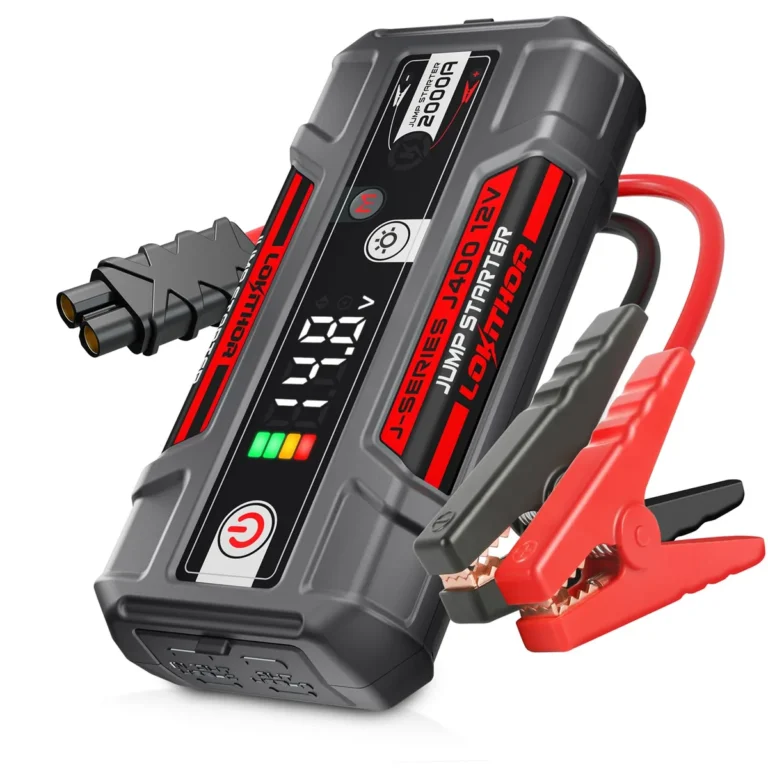
Jumper cables need a second car. Portable lithium jump starters work alone and are the right call for solo drivers. A dedicated battery charger is the right tool at home, not roadside.
Match the tool to the situation: cables or booster for emergencies, charger for storage and recovery.
Idling Laws and Safety Warnings You Shouldn't Ignore
Several cities cap idling at 5 minutes or less. Running the engine in a closed garage risks carbon monoxide poisoning. A frozen or cracked battery can explode when jump-started.
Always crack a window, attach the negative clamp to a ground point away from the battery, and wear gloves and eye protection.
Quick Decision Guide: Drive, Idle, or Call a Mechanic
Drive for 20 to 30 minutes if the battery is under three years old and the jump was a one-time mistake. Idle only for 3 to 5 minutes before driving. Call a mechanic if the battery is older than four years, the jump was unexplained, or the battery light stays on while running.
Frequently Asked Questions
Can a car battery die while idling?
Yes. A weak battery plus high accessory load can outpace the alternator's idle output, leaving you stuck.
How do I know if it's the battery or the alternator?
Battery failure usually shows after sitting. Alternator failure usually shows while driving, with dimming lights or a battery warning.
Is 30 minutes of idling enough to recharge a battery?
Not really. It adds a small amount of charge, but most drivers need 30 to 60 minutes of idling to match what 20 minutes of driving accomplishes.
Will jumping a car damage the alternator?
Done correctly, no. Done wrong (reverse polarity, repeated deep cycling), it can stress voltage regulators and diodes over time.
Should I replace my battery after a jump start?
Not necessarily. If the battery is under three years old and you know why it died (headlights left on), a charge plus a drive is fine. Replace it if it's near end of life or the failure is unexplained.