How long to let car run after jump starting: Best guide
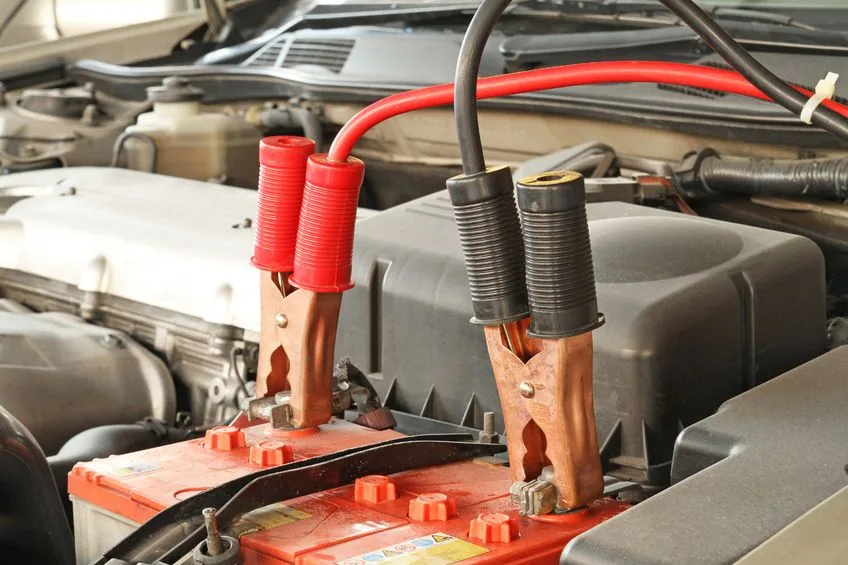
So your battery died, you got a jump, and now you're sitting in a running car wondering what comes next. The honest answer to how long to let car run after jump starting isn't one fixed number. It depends on your battery's age, your alternator's health, and whether you plan to idle in the parking lot or actually drive somewhere.
A surface charge can come back in ten minutes, but a meaningful recharge usually takes 20 to 30 minutes of road-speed driving. Manufacturer specifications indicate most alternators only produce full output above 1,500 to 2,000 RPM, which is why idling alone often falls short. Let's walk through what actually happens under the hood so you can make the right call for your situation.
Quick Answer
You should let the car run, or better, drive it for at least 20 to 30 minutes after a jump start. Idling alone is often less effective than driving at road speed. The goal is a resting voltage of 12.4 volts or higher.
A short idle may get you restarted, but it rarely fully recharges the battery.
Why the Answer Isn't Just One Number
If you've ever gotten three different answers from three different mechanics, you're not imagining things. The "right" runtime after a jump depends on a handful of variables that shift the answer in real ways. A 2-year-old battery in a warm garage behaves nothing like a 6-year-old battery in a Minnesota parking lot in February.
The biggest factors that change the answer:
- Battery age and health. A battery near the end of its life won't hold much charge no matter how long you run the car.
- State of charge before the jump. A battery drained by an interior light recovers faster than one that's been sitting dead for weeks.
- Battery type. Conventional flooded lead-acid, AGM (absorbed glass mat), and EFB (enhanced flooded battery) units all recharge at different rates.
- Alternator condition. A weak alternator can't push full current into the battery, which stretches recovery time.
- Engine RPM. Higher RPM means more alternator output, which is why driving charges faster than idling.
- Ambient temperature. Cold batteries resist charging, and very hot batteries lose capacity to internal corrosion.
- Electrical load. Headlights, the HVAC blower, and heated seats all steal current the battery could be using to recover.
Aggregate reviews from roadside assistance providers like AAA suggest most jump-started vehicles need 20 to 45 minutes of actual driving before the battery is reliably topped up. As of 2026, modern vehicles with start-stop systems and AGM batteries tend to need even longer than older, simpler cars did.
What Actually Happens When You Jump Start a Dead Battery
A jump start doesn't really "charge" your battery in the way most people picture it. What it does is supply enough external current to crank the engine and get the alternator spinning. From that point, your alternator becomes the primary power source for the car's electrical system, and any leftover current trickles back into the battery.
The first few minutes after the jump are mostly about getting the engine running smoothly, not about deep recovery. The battery might have just enough surface charge to start the car once, but if you shut it off right away, you'll often be stuck again within minutes. That's the "jump and die" scenario so many drivers have lived through, and it's almost always caused by cutting the recovery window short.
A few things to know about the recovery process:
- Surface charge is misleading. A battery can read 12.6 volts right after the jump but drop fast once the engine is off. That reading is mostly surface charge sitting on the plates.
- Real recovery takes time. A deeply discharged conventional battery needs 4 to 8 hours on a proper slow charger to hit 100 percent. Your alternator is faster, but it can't fully replace a dedicated charger.
- Heat builds up under heavy charging. A weak or sulfated battery can get warm during a fast recharge. If the case feels hot, stop the engine and have the battery tested.
- Modern cars are pickier. Vehicles with battery management systems may limit charging current to protect the battery, which can stretch recovery time further.
The Idling vs. Driving Question
This is where most advice online gets it wrong. Idling after a jump start works, but it's the slower, less efficient option. Driving at road speed does in 20 minutes what idling barely does in 40.
The reason comes down to alternator output. Most automotive alternators are rated between 80 and 150 amps, but they only hit that number at higher engine speeds. At a 700 RPM idle, the alternator might only put out 40 to 60 amps, and half of that is going straight to running the engine, fuel pump, ignition, and electronics.
What's left over for the battery is a trickle.
| Factor | Idling | Driving (Road Speed) |
|---|---|---|
| Typical engine RPM | 650 to 800 | 1,800 to 2,500 |
| Alternator output available for battery | 10 to 25 amps | 30 to 70 amps |
| Time to meaningful recharge | 45 to 60+ minutes | 20 to 30 minutes |
| Risk of stranding if shut off early | High | Moderate |
| Wear on engine from cold extended idle | Noticeable | Minimal |
If your only option is to idle (say, you're in a parking lot with a dead car and no safe route), then idle. Just plan on at least 30 minutes, and don't trust the battery to restart the car right after. If you can safely drive, that's almost always the better call.
How Your Alternator Really Charges the Battery
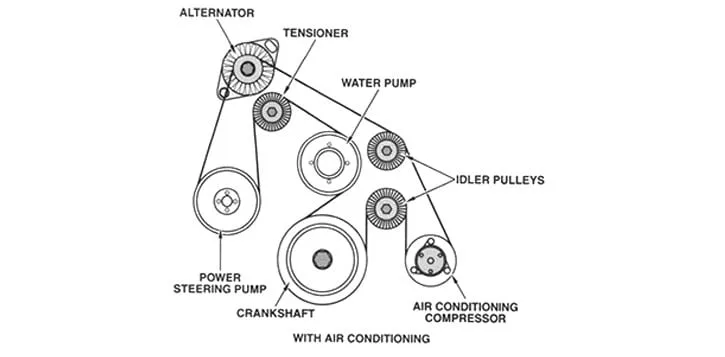
The alternator is a generator driven by the engine's serpentine belt. As the belt spins the alternator's pulley, internal components called the stator and rotor convert mechanical motion into electrical current. That current gets regulated and sent to two places: the battery and the car's electrical system.
Voltage, not amperage, is what your battery uses to "know" it's full. A healthy charging system holds battery voltage between 13.7 and 14.7 volts while the engine runs. If you see voltage below 13.5 volts at the battery with the engine on, the alternator may be undercharging, or the battery may have a parasitic draw eating current before it can recharge.
A few things most drivers don't realize about alternators:
- They're not constant-output devices. Output scales with engine speed. Some newer "smart" alternators deliberately reduce output during cruise to save fuel, then bump it up during deceleration.
- Heat kills them. Alternators live in a brutal thermal environment. By the time one fails, it's often because years of heat and vibration have worn the brushes, bearings, or diodes.
- A bad alternator can pass a basic test. It takes a load test or a voltage-drop test to catch a weak one. The battery light on the dash is a lagging indicator, not a leading one.
- You can drive with a weak alternator for a while, but you're running on borrowed time. The battery will eventually drain to the point where the engine dies, usually at the worst possible moment.
The Society of Automotive Engineers publishes standards like J537 that define how automotive batteries are tested and rated, including charging recovery performance. If you want to know what your specific battery is actually capable of, that's the right place to start.
Battery Type Changes the Recovery Timeline
Not all 12-volt car batteries are the same. The three most common types behave differently during recovery, and using the wrong recovery approach for the battery type can shorten its life.
| Battery Type | Where You'll Find It | Recovery Notes |
|---|---|---|
| Flooded lead-acid (FLA) | Most older and budget vehicles | Tolerant of slow charging, but loses water if overcharged. Standard recovery approach works. |
| Absorbed glass mat (AGM) | Start-stop vehicles, premium cars, many cars built after 2015 | Charges faster, but sensitive to high voltage. Needs a charger or alternator that supports AGM profile. |
| Enhanced flooded battery (EFB) | Entry-level start-stop vehicles | A step up from FLA, recovers well but not as fast as AGM. |
If your vehicle came from the factory with an AGM battery and you replaced it with a cheap flooded battery to save money, your alternator's voltage regulator may be overworking the new battery. That's a fast track to a repeat failure.
For an AGM or EFB battery that was deeply discharged, the Battery Council International recommends a slow, controlled recharge whenever possible. The 30-minute drive after a jump is a band-aid, not a cure.
Step-by-Step: What to Do Right After the Jump
Once the donor car has your engine running, the order of the next few minutes matters more than most people think. A clean sequence protects your car's electronics and gives the battery the best shot at recovering.
- Leave both engines running for 2 to 3 minutes. This stabilizes voltage and lets the donor car support your systems while your alternator spins up.
- Disconnect the cables in reverse order. Remove the ground clamp from your car first, then the positive, then the donor side. This reduces the risk of a voltage spike hitting your ECU.
- Keep your car running. Don't shut it off. Even a quick restart attempt right after a jump is risky if the battery hasn't recovered.
- Turn off unnecessary loads. Kill the headlights, HVAC blower, heated seats, and infotainment screen. Every amp saved is an amp the battery can use.
- Drive for 20 to 30 minutes at road speed. Steady 1,500 to 2,500 RPM is the sweet spot for alternator output.
If the car dies again right after you disconnect the cables, don't keep trying. That points to a bad alternator, a broken battery cable, or a battery so far gone it can't take a charge. Call for a tow instead.
How to Tell If Your Battery Is Actually Taking a Charge
A jump start tells you the battery had enough juice to crank the engine. It doesn't tell you whether the battery is healthy enough to keep running on its own. Within the first 10 minutes after the jump, you can do a few quick checks to see where you stand.
- Watch the dashboard voltage gauge. Most cars display a charging readout. You're looking for 13.7 to 14.7 volts with the engine running.
- Look at the headlights at idle. If they dim heavily when you turn on the blower or rear defroster, the alternator is struggling.
- Smell the battery. A sulfur or rotten-egg smell means the battery is gassing. That can be normal during recovery, but a strong smell means stop the engine.
- Touch the battery case carefully. Warm is okay. Hot is not. Heat means internal resistance is high and the battery is failing.
If the engine runs smoothly, the voltage sits at 14 volts, and the headlights hold steady, your charging system is probably doing its job. The next test is what happens when you turn the key off.
Common Mistakes That Leave You Stranded Again
The single most common mistake is shutting the engine off too soon. The second most common is assuming a successful jump means the battery is fixed. Both of those assumptions come from treating the jump as the fix, when it's really just the start of the fix.
Other mistakes that show up over and over:
- Revving the engine to "charge faster." Pushing the RPM gauge to 3,000 doesn't actually help much past 2,000, and it wastes fuel.
- Using the donor car for too long. If the donor car is running at idle while yours is at idle, both alternators are stressed. Five minutes of donor support is plenty.
- Skipping the drive for a quick errand. If you turn the car off after 10 minutes to grab coffee, you'll likely need another jump when you come back.
- Ignoring corroded terminals. Even a thin layer of corrosion on the battery posts can prevent current from flowing. Clean terminals with a wire brush before the next start attempt.
- Jump-starting a frozen or visibly damaged battery. A cracked case or bulging side means replace, don't jump. A frozen battery can explode when current hits it.
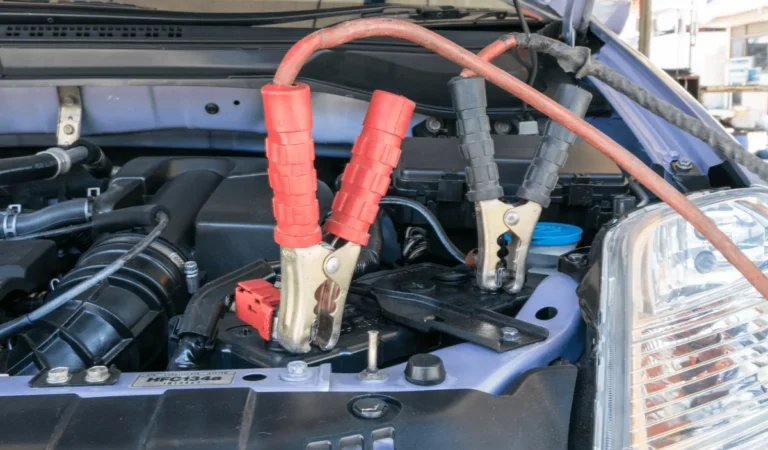
- Hooking up the cables backward. Reverse polarity fries fuses, ECUs, and sometimes the alternator itself. Red to positive, black to ground, every time.
If the car dies again within hours of a successful jump, the most likely culprits in order are: bad battery, bad alternator, or a parasitic draw draining the system while parked.
When Idling Isn't Enough (and Why)
There are real situations where idling is your only option. Maybe the car won't move because of a seized brake caliper, a bad transmission, or a tire you can't safely drive on. In those cases, idling becomes a workaround, not a fix.
The problem is that idling delivers a slow, weak charge. Most alternators only push 10 to 25 amps of net current to the battery at idle. The rest goes to running the engine itself.
A deeply discharged battery can take hours of idling to recover even partially, and most people don't have the patience (or the fuel budget) to wait that long.
If idling is your only choice, here are a few things that help:
- Rev the engine gently to 1,500 RPM every few minutes. This bumps the alternator into a higher output range without overheating anything.
- Turn off every accessory you can live without. Climate control, heated seats, and the stereo are the biggest draws.
- Watch the temperature gauge. Extended idling on a hot day can overheat some engines, especially diesel trucks with DPF regen cycles running.
- Plan on at least 45 to 60 minutes. And be honest with yourself: even then, the battery may not be ready to restart the car.
In our research, idling-based recovery fails more often than driving-based recovery, mostly because drivers cut the runtime short and assume the worst-case scenario.
When Driving Doesn't Fix It Either
Sometimes you do everything right and the car still dies. You drive for 30 minutes, park, try to restart, and get nothing. When that happens, the problem usually isn't how long you ran the car.
It's the battery itself.
A battery can fail to hold a charge for a handful of reasons:
- Sulfation. The lead plates have built up hard sulfate crystals from sitting discharged too long. This is permanent damage in most cases.
- Short cell. One of the six cells inside the battery has shorted, dropping total voltage to around 10 volts even when "fully charged."
- Physical damage. A cracked case or loose internal plate means the battery physically can't hold current.
- Old age. Most car batteries last 3 to 5 years. Past year five, recovery after a deep discharge becomes unreliable.
- Parasitic draw. Something in the car is pulling current when the key is off. A dome light, an aftermarket stereo, or a stuck relay can drain a new battery in days.
If a healthy battery sits at 12.6 volts or higher after a 30-minute drive and a 10-minute rest, it's probably good. If it sits below 12.2 volts, the battery is the problem. A load test at any auto parts store will confirm it in about five minutes, and most will do it free.
How Long to Drive to Meaningfully Recharge
The 20-to-30-minute drive window isn't arbitrary. It's the time it takes most alternators to push enough current into a moderately discharged battery to clear the danger zone for a restart. Below that window, you're gambling.
If your battery was at 50 percent state of charge when the car died, a 30-minute drive at 1,500 RPM or higher will usually bring it back to 75 to 80 percent. That's enough for a reliable restart. To hit 90 percent, you're looking at closer to an hour.
Full recharge from a slow charger is the only path to 100 percent, and the alternator alone won't get you there.
Reading Your Voltage to Know Where You Stand
A cheap multimeter or even a basic OBD-II scanner with a voltage readout will tell you what your battery is doing. The numbers don't lie, and they take the guesswork out of the recovery process.

| Voltage Reading (Engine Off, After 10-Min Rest) | What It Means |
|---|---|
| 12.6 to 12.8 volts | Fully charged. Battery is healthy. |
| 12.4 to 12.6 volts | Around 75 percent. Good enough to drive normally. |
| 12.2 to 12.4 volts | Around 50 percent. Marginal. Charge before shutting off. |
| Below 12.0 volts | Discharged. Battery may be damaged. Test before relying on it. |
| Below 11.8 volts | Severely discharged. Likely won't hold a charge. Replace or professional recharge. |
Check the voltage with the engine off and the car sitting for at least 10 minutes. Any reading taken right after shutdown is still inflated by surface charge. Once you have a true resting number, you'll know whether the jump worked or if you're one stop away from being stranded.
When to Replace the Battery Instead of Waiting It Out
A jump start buys you time, not a new battery. If the battery is more than 4 or 5 years old, has been jump-started more than once recently, or sits below 12.2 volts after a 30-minute drive, replacement is the smart move. Continuing to nurse a dying battery just sets you up for the next failure at the worst possible moment.
Signs the Alternator, Not the Battery, Is the Real Problem
If the battery is new but the car keeps dying, suspect the alternator. Watch for dimming headlights at idle, a battery warning light that stays on, a whining noise from the engine bay, or a sulfur smell paired with a hot battery. Any of these mean a charging system test at a shop, not another jump.
Cold Weather, Hot Weather: How Climate Changes the Timeline
Cold weather cuts battery capacity by 20 to 50 percent and slows the chemical reaction needed to accept a charge. A battery that recovers in 30 minutes in May might need 60 minutes in January. Hot weather has the opposite effect on charging speed, but accelerates internal corrosion, which shortens battery life.
In both cases, plan on more recovery time than the average estimate suggests.
Pro Tips From Mechanics (Not the Internet)
A 1-amp or 2-amp trickle charger overnight is the gold standard for recovery. A 30-minute drive is the band-aid. Keep a battery maintainer on any vehicle that sits more than two weeks.
That's the single biggest thing you can do to prevent the next jump.
Decision Guide: What To Do Based on Your Situation
- Battery is less than 2 years old, car starts fine after a quick idle: Drive 30 minutes, monitor voltage, you're good.
- Battery is more than 4 years old, car dies again after driving: Replace the battery and have the alternator load-tested.
- Car sits in a cold garage for weeks and won't start: Put a maintainer on it. Idling won't solve chronic undercharge.
- Headlights dim and battery smells like sulfur: Stop driving. The alternator is overworking a failing battery. Get a tow.
Frequently Asked Questions
Can I shut off my car 10 minutes after a jump start?
Not safely. Ten minutes of idling usually only adds a surface charge, not enough to restart the car. Plan on at least 20 to 30 minutes of driving, then check the resting voltage before shutting down.
Does revving the engine charge the battery faster?
Mildly. Revving to 1,500 to 2,000 RPM bumps alternator output versus a 700 RPM idle. It won't replace a proper drive cycle, but it helps if you're stuck idling.
Is it bad to idle for a long time after a jump?
Extended idling is harder on the engine and less effective for charging than driving. A 45-minute drive beats a 90-minute idle every time.
How do I know if my alternator is bad after a jump?
Watch for a battery warning light, dimming headlights, or voltage below 13.5 volts at the battery with the engine running. Any of these mean the alternator needs a professional test.
Should I replace my battery after one jump start?
Not necessarily. If the battery is young, the cause was a known drain (left lights on), and it holds 12.4 volts or more after a drive, it's fine. Repeated jump-starts on an older battery usually mean replacement is due.