How to jump start a yaris: Easy guide
You turn the key (or press the button) and nothing happens. Maybe you left a dome light on overnight. Maybe it's 10 degrees outside and your battery finally gave up.
Either way, you need to know how to jump start a Yaris without frying the electronics or getting acid in your eyes. The good news is that a Yaris is one of the easier compact cars to bring back to life. The process takes about 10 minutes once the cables are in your hand.
Most Yaris models use a standard 12V lead-acid or AGM battery in Group 35 or 35AGM size, with roughly 500 cold cranking amps (CCA). The catch is that some newer Yaris variants hide the battery under the rear seat or in the trunk rather than under the hood. Where yours lives changes the workflow, so let's start there.
Quick Answer
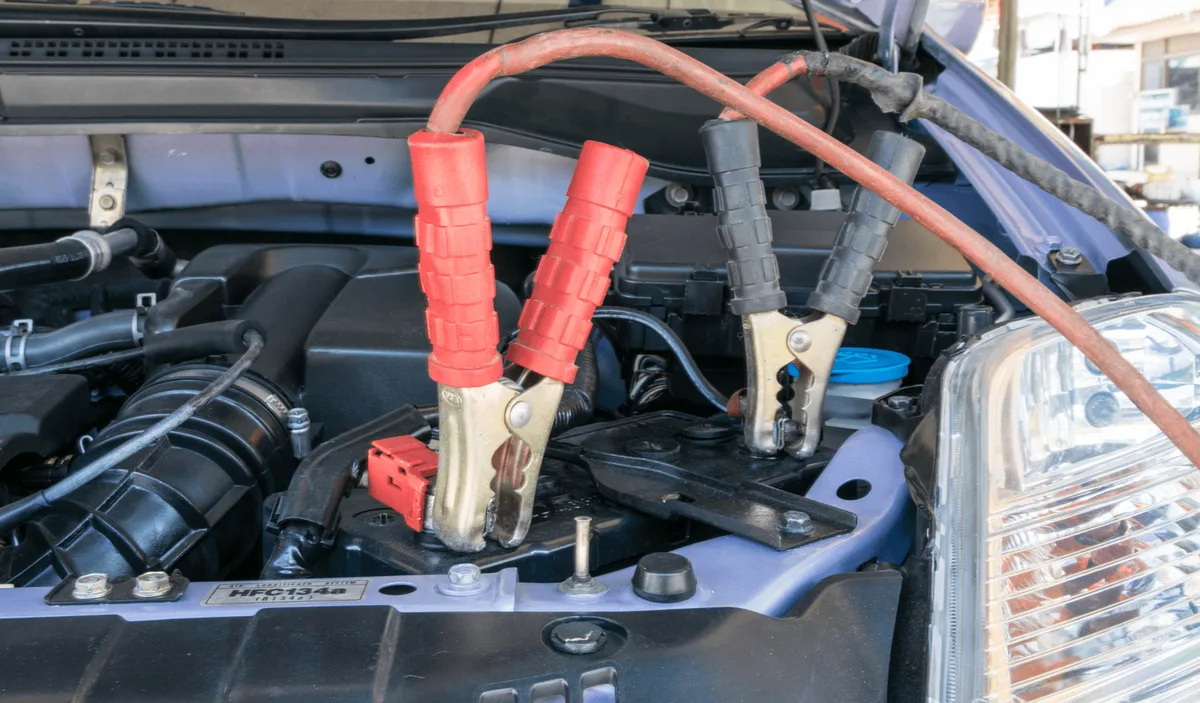
To jump start a Yaris, connect red jumper cable clamps to the positive (+) terminal on both batteries, then connect black clamps to the negative (-) terminal on the donor battery and an unpainted metal ground on the Yaris. Start the donor car, wait 2-3 minutes, then start the Yaris. Disconnect in reverse order and drive 15-30 minutes to recharge.
What a Dead Yaris Battery Looks Like (and Why It Won't Start)
If your Yaris won't crank, the battery is the first suspect. Three symptoms give it away before you even pop the hood.
- Clicking sound, no engine turnover. You hear a rapid clack-clack-clack from the starter. The dash lights stay on, but the engine won't spin. The battery has enough juice for accessories but not enough amps to turn the starter motor.
- Total silence, no lights. Push the button (or turn the key) and absolutely nothing happens. The interior lights are dim or dead. The battery is severely discharged, usually below 11.5V resting voltage.
- Slow, labored cranking. The engine turns over like it's swimming in molasses, then gives up. This often points to a dying battery that won't hold a full charge, especially in cold weather when available cranking amps drop.
In our research, parasitic drain from interior lights, door-ajar switches, and aftermarket electronics (dash cams, phone chargers) accounts for most dead-battery calls on the Yaris. Toyota's own owner's manual guidance, available through the Toyota owner resources portal, recommends running the engine at least 15-30 minutes after a jump to recover a meaningful charge. That detail matters more than most guides admit.
Cold weather is the other big culprit. As of 2026, northern climate drivers still see Yaris battery failures spike from November through March. A fully charged 12V battery loses about 35% of its cranking power at 0°F compared to 80°F.
If your battery is already three years old, the cold finishes it off.
First, Find the Battery in Your Yaris
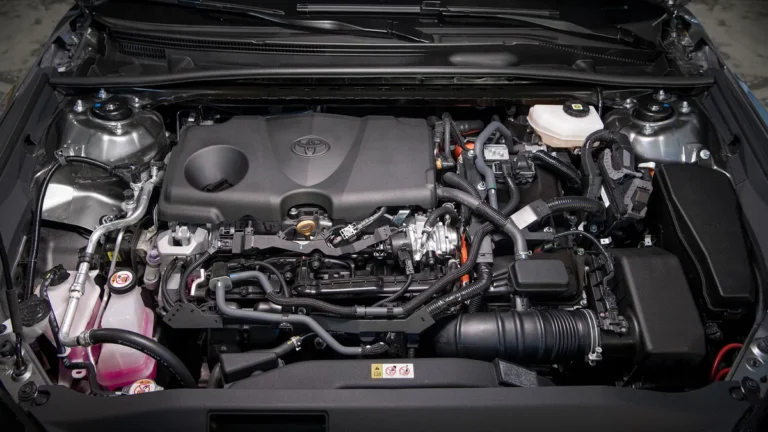
This is the step that trips people up. Most Yaris sedans and hatchbacks built from 2006 to 2020 (USDM) have the battery right up front under the hood, on the driver's side near the firewall. Open the hood, look for a black rectangular box with two cable terminals, and you're done.
But there are exceptions. Some Toyota Yaris variants, particularly certain European and Asian market models, place the battery under the rear seat or behind a panel in the trunk to free up engine bay space. If you pop the release and can't find the battery up front, check these spots in order.
- Under the rear seat. Lift the rear cushion from the front edge and look underneath. You'll see a plastic cover that unsnaps.
- Trunk side panel. Some Yaris models tuck the battery behind a removable carpeted panel on the right side of the trunk.
- Passenger side engine bay. A handful of right-hand-drive export models mount it on the opposite side.
Your owner's manual will tell you in 30 seconds. Battery Council International (BCI) group size standards, which you can read about at batterycouncil.org, confirm that most Yaris models use Group 35 or 35AGM. Knowing this saves you from buying the wrong replacement if the jump doesn't bring the battery back.

Once you find it, do a quick visual check. Look for cracked casing, white or blue-green corrosion around the terminals, or a sulfur (rotten egg) smell. If the battery is cracked or leaking, don't jump it.
Call for a tow and replace the battery. A damaged battery can explode when you try to crank it.
Quick Safety Check Before You Touch Anything
Jump starting a car battery is safe if you respect three real risks: hydrogen gas ignition, acid burns, and electrical shorts. Spend 60 seconds on this checklist before you clamp anything.
| Risk | What happens | How to prevent it |
|---|---|---|
| Hydrogen gas explosion | Battery vents emit flammable gas; a spark ignites it | No smoking, no flames, make the final negative connection to a ground, not the battery |
| Sulfuric acid burns | Cracked or overfilled battery leaks acid on skin or in eyes | Wear safety glasses, avoid touching eyes, rinse with water if exposed |
| Reverse polarity damage | Cables on wrong terminals fry the ECU, alternator, or fuse box | Double-check red to (+), black to (-); reversed cables mean a tow truck |
Now do these things.
- Put on safety glasses. Even a tiny spark near the battery can fling corrosion dust into your eyes. Safety glasses take one second.
- Remove jewelry. A watchband or ring touching both terminals completes a circuit through your body. Take them off.
- Position the cars correctly. Park the donor car so its battery is close enough that the cables reach comfortably. Both cars should be in Park (automatic) or Neutral (manual) with the parking brake set.
- Turn both ignitions off. Keys out, accessories off, headlights off. Radios off. Heated seats off.
Skipping this prep is the single most common cause of damaged Yaris ECUs after a jump. The repair runs $800 to $2,000 for a new ECU plus programming.
What You'll Need: Cables, Donor Car, or Jump Box
You have three real options for jump starting a Yaris. Pick based on what you've got.
| Method | What you need | Best for | Cost |
|---|---|---|---|
| Jumper cables + donor car | 4-gauge or 6-gauge cables, 15-20 ft long | Home driveway, someone nearby to help | $20-$60 for cables |
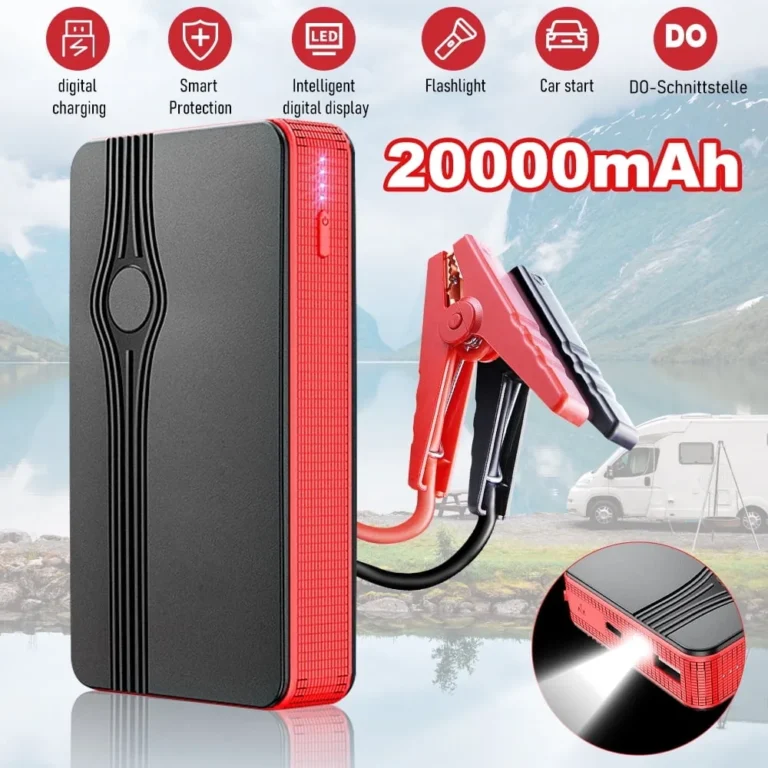
| Portable lithium jump box | A 1000-2000A peak unit (Yaris doesn't need much) | Solo drivers, roadside, no second car available | $60-$120 |
| Calling roadside assistance | Insurance app, AAA, or Toyota Roadside (included on new warranties) | Anyone who doesn't want to touch cables | Often free with coverage |
For a compact car like the Yaris, a portable jump box rated around 1,000 to 1,500 peak amps is plenty. You don't need a truck-sized booster. Compact lithium packs handle a 1.5L or 1.8L four-cylinder Yaris easily.
Anything labeled for engines up to 4 liters will start a Yaris in any weather.
If you're using cables, gauge matters. 4-gauge is best for cold-weather starts. 6-gauge works fine in mild climates. Anything thinner than 8-gauge and you'll lose too much current over the cable length.
For donors, any car with a working 12V battery will do. The donor's battery voltage just needs to be above 12.0V. Check by turning on the donor's headlights.
If they're bright, the donor is good. If they're yellow and weak, find another donor.
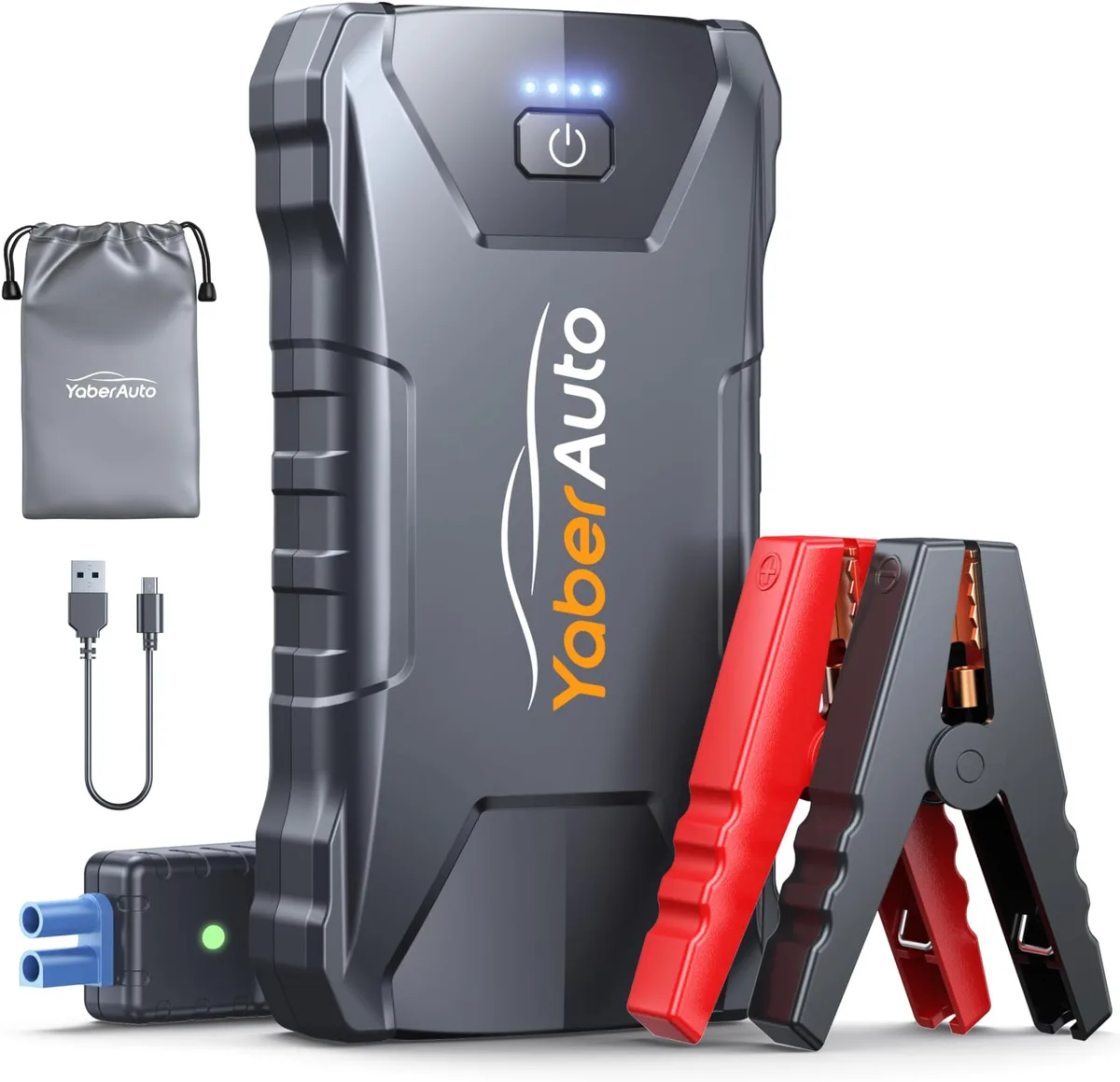
One last thing. Make sure your jumper cables' clamps are color-coded (red for positive, black for negative) and fully insulated except for the metal teeth. Cheap clamps that are hard to grip are a sign of cheap cables.
Spend the extra $15. You'll use them again.
How to Jump Start a Yaris with Jumper Cables
The cables-and-donor-car method is the classic approach, and it works every time when the steps stay in the right order. Here's the full workflow.
Step 1: Position the Cars
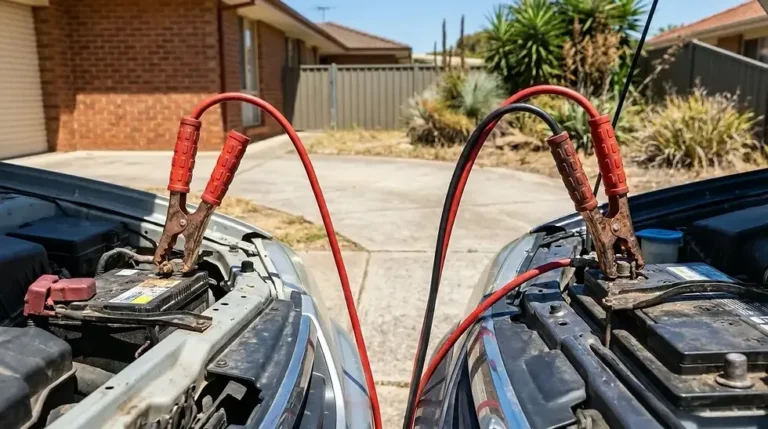
Park the donor vehicle close enough that the cables reach the Yaris battery without stretching. Engine-to-engine or nose-to-nose is fine. Both cars should be off with keys removed and parking brakes set.
Step 2: Identify Terminals on Both Batteries
The positive (+) terminal is larger in diameter and marked with a plus sign or red cover. The negative (-) terminal is smaller and marked with a minus sign or black cover. Verify both before any clamp touches metal.
Step 3: Connect Positive First (Red Clamps)
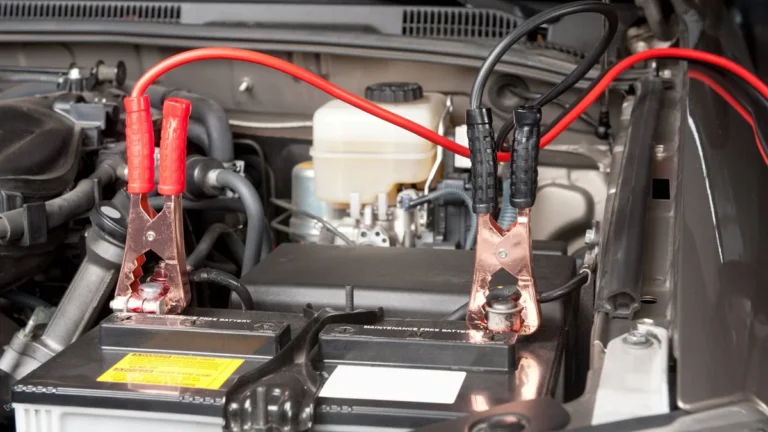
Clamp one end of the red cable to the Yaris positive (+) terminal. Then clamp the other end of the red cable to the donor battery's positive (+) terminal. Positive goes on first to minimize the chance of accidental grounding.
Step 4: Connect Negative Last (Black Clamps)
Clamp one end of the black cable to the donor battery's negative (-) terminal. Clamp the other end to an unpainted metal ground on the Yaris, like the engine block, an alternator bracket, or a designated ground bolt. Never clamp the final black lead directly to the Yaris battery's negative post; that creates a spark right over the battery vents.
Step 5: Start the Donor, Wait, Start the Yaris
Start the donor car and let it idle for 2 to 3 minutes. This sends a charging pulse into the Yaris battery through the cables. Now try starting the Yaris.
If it cranks slowly, wait another minute and try again. Don't crank for more than 10 seconds at a time; you'll overheat the starter.
How to Jump Start a Yaris with a Portable Jump Box
The portable jump box workflow is faster because there's no donor involved. It also works in parking garages where a second car can't pull up.
Step 1: Charge the Jump Box Ahead of Time
A jump box that sits in your trunk for six months uncharged won't help you. Lithium jump packs self-discharge at about 2-3% per month. Top it off every two months, or buy one with a built-in self-test light that tells you the charge level at a glance.
Step 2: Hook Up the Clamps to the Battery
Same red-positive, black-negative sequence as cables. Most jump boxes have short cables with integrated clamps. The cables are short on purpose so you don't lose current over distance.
Step 3: Power On the Jump Box
Turn on the unit. Many modern jump boxes have a "boost" or "override" button for severely discharged batteries below 8V. If your Yaris battery is completely dead (no lights, no clicking), press the boost button before cranking.
Step 4: Start the Yaris
Crank the engine for no more than 5 seconds. If it doesn't start, wait 30 seconds for the box to recover, then try again. Once it starts, leave the box connected with the engine running for about 60 seconds so the alternator takes over cleanly.
Step 5: Disconnect and Pack Up
Turn off the jump box. Remove the black clamp first, then the red. Don't let the clamps touch each other while still hot.
Drive the Yaris immediately to recharge the battery, or you'll be jump starting it again tomorrow.
Push-Button Yaris? Here's the Starting Sequence That's Different
If your Yaris has a smart key system (push-button start), the dead-battery symptoms hit differently. Pressing the button with a dead battery does absolutely nothing. There's no key to turn, no ignition cylinder to engage.
What Happens When the Smart Key Battery Is Dead
If only the key fob battery is dead (but the car's battery is fine), the Yaris still won't recognize the fob. Hold the fob directly against the start button while pressing the brake pedal. Most Yaris models from 2012 onward have an emergency start sensor built into the button that reads the fob through the plastic.
Engine starts normally.
What Happens When the Car Battery Is Dead
If the car's 12V battery is dead, the push-button system won't respond at all. No interior lights, no button light, nothing. Jump the battery using either method above.
Once the Yaris is running, the smart key system reboots automatically and works normally.
One Quirk Worth Knowing
Push-button Yaris models sometimes won't start after a jump if the brake pedal isn't pressed firmly. Confirm the brake is pressed hard, not just tapped. A pressure sensor in the brake pedal switch has to register full input before the start command goes through.
The Right Order: Connecting and Disconnecting Cables
Getting the order wrong won't always destroy something, but it makes sparks more likely. Sparks near a battery can ignite hydrogen gas vented during charging.
Connection Order
- Red clamp to dead battery positive (+)
- Red clamp to donor battery positive (+)
- Black clamp to donor battery negative (-)
- Black clamp to engine ground on the dead car
Why This Order Matters
The fourth connection (black to ground) is where any spark will happen. Putting it on a clean metal bracket away from the battery keeps the spark far from the gas. If you reversed this and connected black to the dead battery's negative post, the spark lands right on the vent cap.
Disconnection Order (Reverse It)
- Black clamp off the engine ground
- Black clamp off the donor battery negative
- Red clamp off the donor battery positive
- Red clamp off the dead battery positive
What If the Order Gets Mixed Up?
If you connect black to negative on the dead battery first, you'll likely get a spark. It usually doesn't damage anything, but it's the cause of most "jump starting nearly blew up" stories. If you hear a loud pop or see battery acid bubbling, stop and disconnect everything.
The battery may have internal damage.
After the Jump: How Long to Drive and How to Recharge
A jump brings the Yaris back to life, but the battery isn't fully charged. The alternator does the rest, and that takes time.
Drive Time to Recharge
The Yaris alternator typically puts out 13.7 to 14.7 volts while the engine runs. At idle, that recharges the battery slowly. At 2,000 RPM and above (highway driving), charging is faster.
Plan for at least 15 to 30 minutes of driving. Sitting in a parking lot idling will recharge at maybe half that speed.
What Counts as Enough Driving
A 20-minute highway commute at 55+ mph is a solid recharge cycle. Stop-and-go city driving at low RPM charges more slowly. Either way, don't shut the engine off within 5 minutes of the jump.
The battery needs that initial burst of alternator output to climb out of the deeply discharged zone.
If the Yaris Won't Start the Next Day
The most common explanation is a battery that won't hold a charge. Load testing at any auto parts store takes 5 minutes and confirms whether the battery is bad. The second possibility is an alternator that's not charging properly.
With the engine running, a healthy alternator pushes 13.7 to 14.7V across the battery terminals. If your multimeter reads under 13.5V, the alternator is failing.
Long-Term Battery Health
Aggregate user reviews indicate that Yaris batteries last 3 to 5 years in moderate climates and 2 to 4 years in extreme heat or cold. A battery that's reached year 4 should be considered a candidate for preventive replacement, especially before winter. The cost is $120 to $200 for a Group 35 AGM battery.
That's cheap insurance against another dead-battery morning.
Jump Starting a Yaris vs. Calling for Roadside Help
Jumping it yourself saves time and a tow fee, but there are moments when calling for help is the smarter move. If the battery is cracked or leaking, jump starting is unsafe. If the Yaris is stuck in a tight parking spot where no donor car can pull close, a portable jump box or a service call is easier than wrestling 20-foot cables.
Roadside help makes sense if you're not sure whether the issue is the battery or the starter. A clicking sound with bright headlights points to the starter, not the battery, and jumping won't fix that. Most insurance plans and Toyota's own roadside program (included for the first few years of ownership) cover dead batteries at no charge.
Common Mistakes That Can Fry Your Yaris Electronics
Reversed polarity is the big one. Red to negative and black to positive sends a voltage spike through the ECU, alternator diodes, and fuse box. Repair costs run $800 to $2,000.
The second-biggest mistake is letting the clamps touch each other while one end is still on a battery. That arc-welds the clamps together and dumps hundreds of amps as heat.
Running the engine with cables still connected and the donor running at high RPM can also push voltage above 15V into the Yaris, which stresses sensitive modules. Don't rev the donor. Idle is enough.
When a Jump Start Won't Work (Alternator or Dead Battery)
If the engine cranks but dies immediately after disconnecting the cables, the alternator isn't charging. Test by measuring battery voltage with the engine running. Anything below 13.5V means the alternator is failing.
If the engine doesn't crank at all and the dash stays dark even with cables connected to a known-good donor, the battery has an open cell and is unrecoverable.
A battery that's more than 4 years old and won't hold a charge after a full hour of driving is done. Replace it. Group 35 AGM batteries for the Yaris run $120 to $200 and last another 3 to 5 years with normal use.
Yaris Battery Specs: CCA, Group Size, and Voltage
Most Yaris models use a Group 35 or 35AGM battery with around 500 CCA and a 12V nominal voltage. Resting voltage on a healthy battery reads 12.4 to 12.7V. Below 12.0V resting means the battery is discharged.
Below 11.5V means deeply discharged, which is where jump starting becomes necessary. Running voltage with the engine on should read 13.7 to 14.7V from the alternator.
Best Portable Jump Starters for a Yaris
For a 1.5L or 1.8L Yaris, a 1,000 to 1,500 peak amp lithium jump box is plenty. Look for units labeled for engines up to 4 liters; they're typically $60 to $120 and small enough to fit in a glove box. Make sure the unit has reverse-polarity protection and a built-in flashlight, both standard on quality packs in 2026.
Key Fob Dead? How to Start Your Yaris With a Dead Smart Key
When the key fob battery dies but the car's battery is fine, hold the fob directly against the start button while pressing the brake. The Yaris has an emergency reader behind the button that picks up the fob signal passively. Engine fires up normally.
If the car's 12V battery is dead instead, the push-button won't respond at all. Jump the battery using cables or a jump box. The smart key system reboots automatically once voltage is restored.
Frequently Asked Questions
Can you jump start a Yaris in the rain?
Yes. The 12V system runs on low voltage and the cables are insulated. Just don't let the clamps sit in a puddle.
A wet battery terminal won't hurt anything, but standing in a puddle while cranking is a bad idea.
How long should a Yaris run after a jump?
Drive it for 15 to 30 minutes, or let it idle for the same span. Toyota's owner materials recommend at least 20 minutes of running to push a meaningful charge back into the battery. Short trips don't cut it.
The alternator needs time to refill what the jump pulled out.
Will jump starting a Yaris damage the computer?
No, if you do it right. The risk is reverse polarity (cables on wrong terminals), which sends a voltage spike through the ECU. Connect red to positive and black to negative on both batteries.
Make that final negative clamp on a ground, not the negative post, and you're safe.
Why does my Yaris battery keep dying?
Three usual suspects. A parasitic drain from an aftermarket accessory (dash cam, stereo, tracker). An alternator that's not charging at 13.7-14.7V when the engine runs.
Or a battery that's just past its lifespan, which for a Yaris is typically 3-5 years. Any auto parts store will test the alternator and battery for free.
Can I jump a Yaris with a Tesla or hybrid?
Yes, but only through the 12V auxiliary battery terminals, not the high-voltage pack. The 12V battery in a Prius, for example, sits in the trunk and uses the same standard clamps. Don't try to use the high-voltage system; the connectors and voltages are completely different.
How do I know if my Yaris needs a new battery instead of a jump?
If the engine starts after the jump but the car won't restart the next morning, the battery won't hold a charge and needs replacement. If it starts fine for days afterward, the battery is healthy and you just had a one-time drain event. Most auto parts stores will load-test your battery for free in under 5 minutes.