How long to leave jumper cables on before starting car
Most guides will tell you to "wait a few minutes" and move on. That's lazy advice. How long to leave jumper cables on before starting car actually depends on how dead the battery is, what the weather's doing, and what kind of cables you're holding.
Get the timing wrong and you either cook the donor's alternator or stand there cranking a battery that never had a chance.
The honest answer comes down to a small set of variables. Per SAE J537 battery testing standards, a healthy 12V lead-acid battery rests at 12.4 to 12.7 volts. Below 11.8V it's considered deeply discharged, and that changes everything.
As of 2026, the standard rule of thumb still works: 30 seconds of donor idle for a mildly drained battery, up to 5 minutes for a battery that's been sitting dead overnight. Let's walk through why.

Quick Answer
Leave jumper cables connected for 30 seconds to 5 minutes before cranking. Mildly discharged batteries need about 30 seconds. Deeply discharged batteries need 3 to 5 minutes of donor idle.
Never crank for more than 10 to 15 seconds per attempt. Wait 1 to 2 minutes between attempts.
The Short Answer (and Why the "Right" Time Actually Depends)
If you want a single number, start at two minutes. That covers most real-world cases without stressing either vehicle.
But "two minutes" only works under specific conditions. A battery that died from a dome light left on overnight has plenty of surface charge left. It'll fire fast.
A battery that's been sitting dead in a Minnesota driveway for two weeks is a different animal. It needs time to absorb a real charge from the donor before the starter motor can do its job.
The four variables that actually matter:
- How dead the battery is (voltage at rest)
- Donor battery size and state of charge
- Cable gauge (thickness)
- Ambient temperature
If any of those tilt toward "worse," add time. If they tilt toward "better," you can cut it close to 30 seconds and still fire the engine.
What Happens Inside a Dead Battery the Moment You Hook Up the Cables
The second you clamp on the cables, the donor battery starts pushing current into the dead one. The dead battery isn't charging fast like a wall charger would. It's more like pouring water into a dry sponge, slow at first, faster as the chemistry wakes up.
Two things are happening in parallel:
- The dead battery is slowly rebuilding a usable voltage (slow, minutes)
- The dead car's electrical system is getting live power directly from the donor (instant)
That second point is what makes the engine crank at all. Even if the dead battery has zero recovery, the donor is feeding the starter directly through the cables. The wait time is mostly about giving the dead battery enough surface charge to support the starter's draw, which on most 12V systems peaks around 150 to 300 amps during cranking.
If the dead battery is warm, recently discharged, and not sulfated, this happens fast. If it's cold, old, or deeply discharged, the donor can only push so much current through those cables before voltage drop becomes the limiting factor.
The Real Factors That Decide How Long to Wait
How Dead Is "Dead", Surface Charge vs. Deep Discharge
Not all "dead" batteries are equal. A quick way to read the situation before you even hook up the cables: turn the key to ON and look at the headlights and dome light.
- Dim or flickering lights = deeply discharged, give it 3 to 5 minutes
- Normal-bright lights but the starter just clicks = battery has surface charge, 30 to 60 seconds is usually enough
- No lights at all = either a fully dead battery or a wiring/connection issue, check the terminals first
Per the Battery Council International (BCI), resting voltage is the cleanest indicator. A battery below 11.8V is considered discharged. Below 10.5V and it's deeply discharged, and the recovery wait time stretches out.
Donor Battery Size vs. Dead Battery Size
A small 4-cylinder donor idling at 700 RPM puts out maybe 40 to 60 amps of alternator output. A big V8 donor might put out 80 to 120 amps. That extra capacity matters when the dead battery is acting like a hole in the road, soaking up everything you can give it.
A good rule: if the donor is bigger or newer than the dead vehicle, you can shorten the wait. If the donor is smaller or also a little tired, lean toward the longer end.
Cable Gauge, Length, and Why They Affect Wait Time
Cable gauge is the biggest hardware factor most people ignore.
| Cable Gauge | Best For | Practical Effect |
|---|---|---|
| 4 AWG | Heavy-duty, trucks, diesel | Lowest voltage drop, fastest transfer |
| 6 AWG | Standard cars, most situations | Good balance of cost and performance |
| 8 AWG | Light use, smaller engines | Noticeable voltage drop, longer wait times |
| 10 AWG | Emergency only | High resistance, slow transfer, may struggle |
Longer cables also mean more resistance. A 25-foot run drops more voltage than a 10-foot run at the same gauge. If you've got heavy 4 AWG jumper cables, 30 seconds is plenty.
If you're working with thin 10 AWG cables from a budget kit, give it the full 5 minutes.
Outside Temperature and Battery Chemistry
Cold kills batteries in two ways. First, chemical reactions slow down, so the dead battery absorbs charge slower. Second, the engine oil is thicker, so the starter draws more current.
Both push the wait time up.
The U.S. Department of Energy notes that battery capacity drops roughly 30 to 40 percent at 0°F compared to 80°F. If you're jump starting in the cold, plan for the longer end of the wait window, and don't be surprised if the first crank doesn't catch.
That's normal.
Hot weather is the opposite problem. The battery will absorb charge fast, but it's also more likely to be permanently damaged if it went dead from heat-related sulfation. In that case, a jump gets you going, but the battery won't hold the charge long after you disconnect.
Step-by-Step: How to Jump Start a Car the Safe Way
This is the part where small mistakes cost real money. Modern cars, especially anything built after 2015, have sensitive ECUs and voltage regulators that don't forgive a reversed cable. Take the extra 30 seconds to do it right.
Step 1, Position Both Cars Correctly
Park the donor car close enough that the cables reach comfortably, but the cars should never touch. Metal-to-metal contact can create a path for current you don't want.
Both cars in Park (or Neutral for manual transmission). Parking brake set. Ignitions OFF on both vehicles.
Pop both hoods.
Step 2, Identify the Terminals and Ground Point
Look for the "+" symbol (red cover or red cable) and the "−" symbol on the dead battery. Clean off any corrosion with a rag or wire brush if you have time. Corroded terminals are the #1 reason a jump "doesn't work" even when everything is connected right.
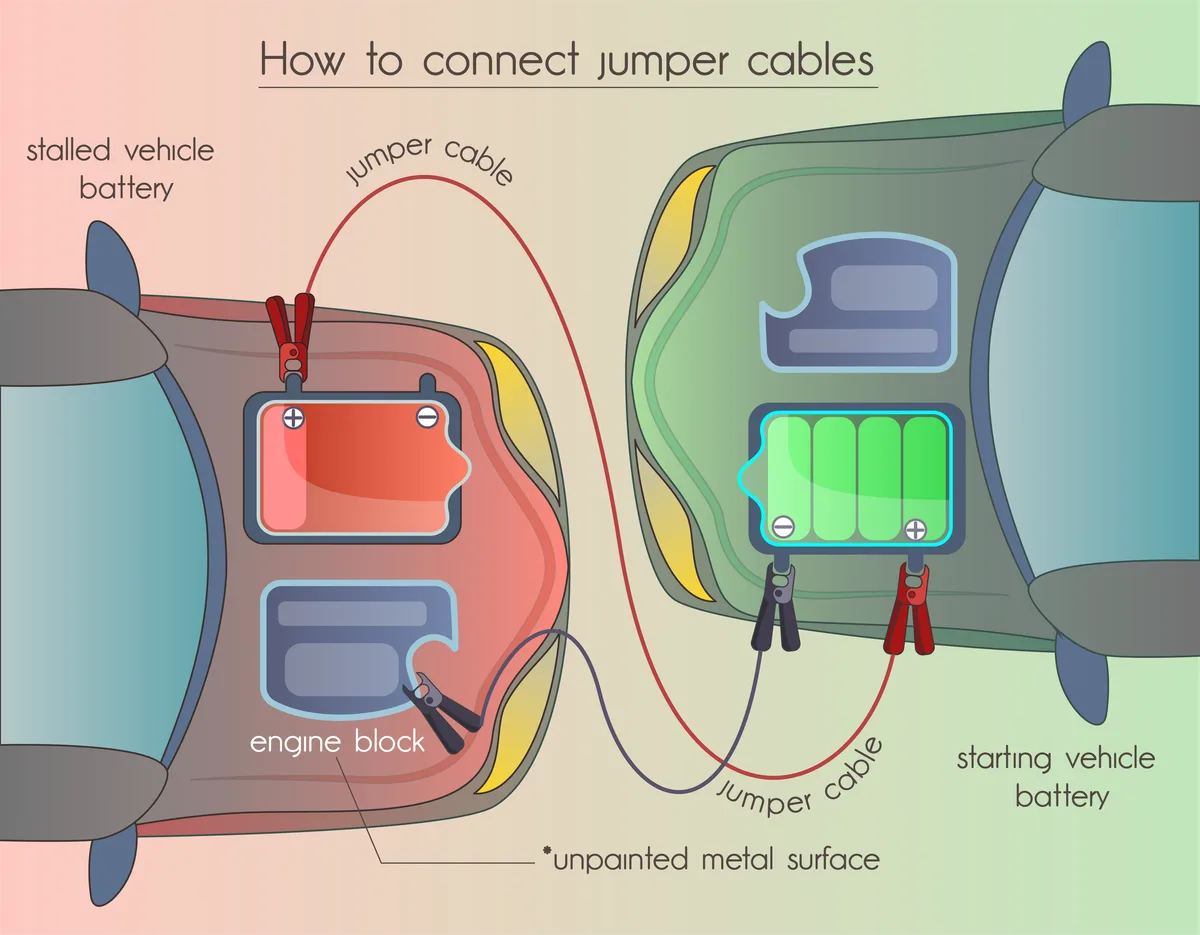
The ground point on the dead vehicle is NOT the negative terminal. Find a clean, unpainted metal surface on the engine block, like a bracket, bolt head, or engine lift point. This is where the final black clamp goes.
Step 3, Connect the Cables in the Right Order
The order matters because of how current flows through the chassis. Get this wrong and you can spark directly across the dead battery, which can ignite hydrogen gas that's built up inside.
- Red clamp to POSITIVE (+) terminal of the DEAD battery
- Red clamp to POSITIVE (+) terminal of the DONOR battery
- Black clamp to NEGATIVE (−) terminal of the DONOR battery
- Black clamp to a GROUND POINT on the dead vehicle (unpainted metal)
Step 4, How Long to Idle the Donor Car Before Cranking
Start the donor car. Let it idle. Don't rev the engine.
The alternator is already producing its full output at idle, and revving just sends voltage spikes through the cables.
| Battery Condition | Donor Idle Time Before First Crank |
|---|---|
| Mild (lights work, slow crank) | 30 to 60 seconds |
| Moderate (dim lights, clicking) | 2 to 3 minutes |
| Deep (no lights, fully dead) | 3 to 5 minutes |
| Cold weather (below 32°F / 0°C) | Add 1 to 2 minutes |
Step 5, Cranking the Dead Car (and When to Stop)
Try to start the dead car. If it fires, leave it running. If it doesn't:
- Crank for no more than 10 to 15 seconds per attempt
- Wait 1 to 2 minutes between attempts
- Try up to 3 times total
If it still won't start after 3 attempts, the problem isn't the wait time. You could be looking at a bad starter, a bad alternator, a broken timing belt, or a battery so far gone it won't take a charge. Stop and diagnose before you cook something.
Step 6, Disconnecting the Cables in Reverse Order
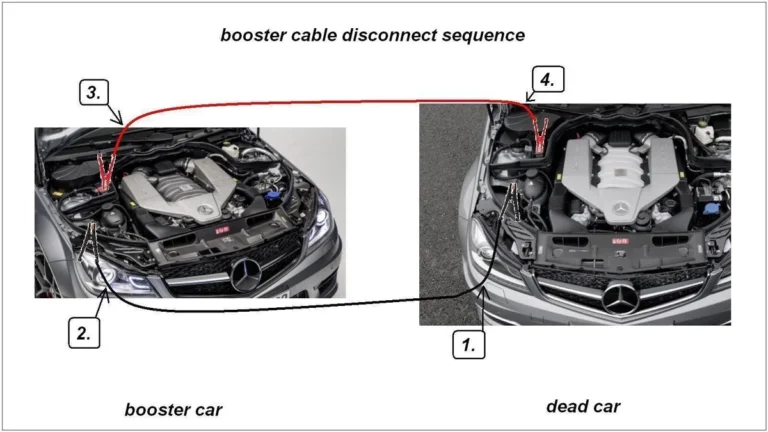
Once the dead car is running, disconnect in reverse:
- Black clamp from the ground point on the (now running) dead vehicle
- Black clamp from the donor battery's negative terminal
- Red clamp from the donor battery's positive terminal
- Red clamp from the dead battery's positive terminal
Don't let the clamps touch each other or any metal surface while any clamp is still connected to a battery. Keep the red and black ends separate at all times.
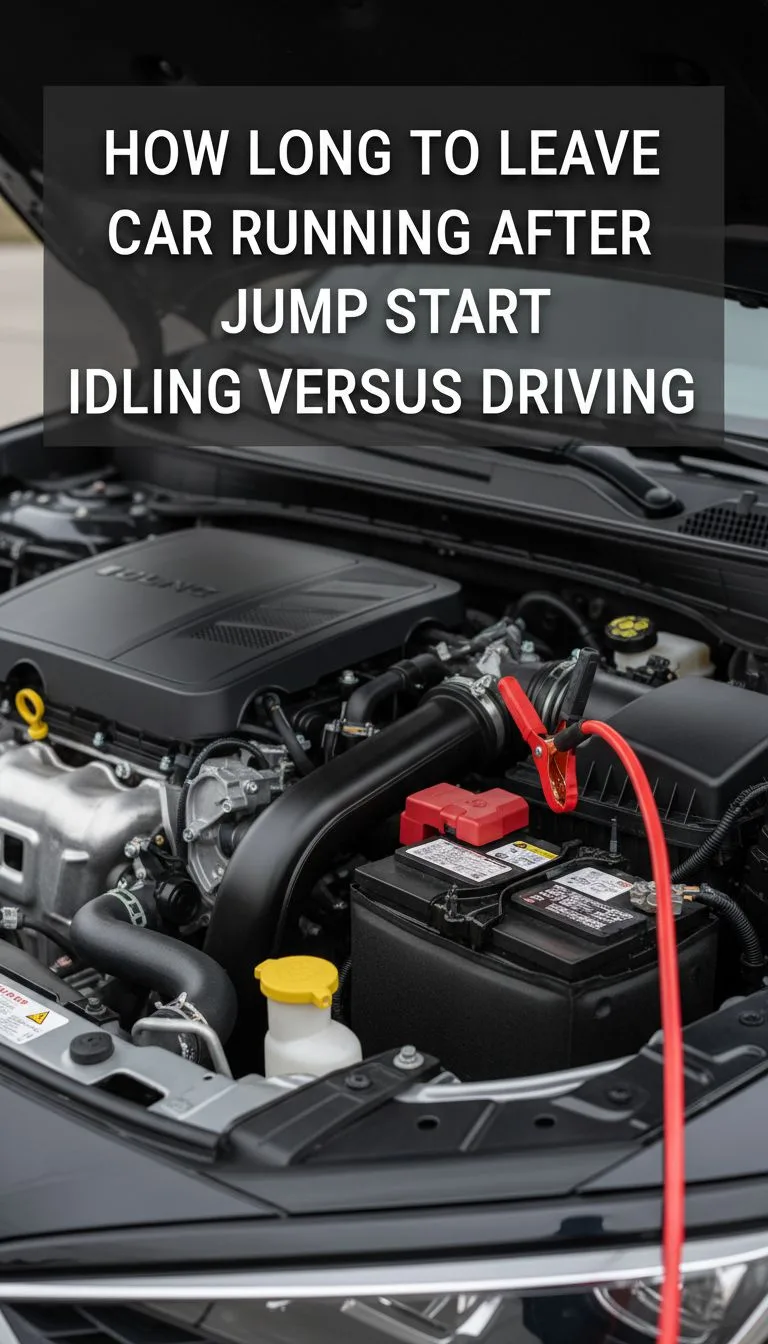
How Long to Let the Jumped Car Run (or Drive) Afterward
Getting the engine fired is only half the job. The alternator now has to put back what the dead battery lost, and that takes real drive time, not idle time.
At idle, the alternator produces enough current to run the car's electronics with very little left over for charging. Driving at road speed (1,500 to 2,000 RPM) spins the alternator faster, producing significantly more current. This is the difference between waiting 30 minutes in a parking lot and driving 15 minutes down the highway.
A practical rule from aggregate mechanic feedback:
- 20 to 30 minutes of steady driving for a mildly discharged battery
- 45 minutes to an hour for a deeply discharged battery
- Don't rely on idling in the driveway. It barely charges at all
If the battery was deeply discharged and the car struggles to restart after that drive, the battery has likely given up. Time for a replacement, not another jump.
Mistakes That Can Fry Your Alternator or ECU
A jump start is simple in concept, but the margin for error on modern cars is razor thin. These are the failures that show up in repair shops every winter.
Reverse Polarity, The One Mistake That Ruins Everything
Red to black, black to red, even for a second. The donor battery pushes current backward through the dead car's electrical system. Fuses blow first, sometimes saving the day.
If the main fuse doesn't catch it, the alternator's diodes fry, and the ECU can take a voltage spike that bricks it.
Symptoms of reverse polarity damage: a burning smell during the connection, blown fuses the moment you turn the key, or a totally dead dashboard afterward. A single repair bill can run $800 to $2,000 depending on the car.
Revving the Donor Engine Too High
Revving the donor's engine above 2,000 RPM during the wait sends voltage spikes through the cables. Old cars shrugged these off. Modern cars with solid-state voltage regulators and ECU sensors don't.
Let the donor idle, no more.
Cranking for More Than 10 to 15 Seconds
Each cranking attempt pulls 150 to 300 amps. Holding the key past 15 seconds overheats the starter motor, drains the donor battery into a state it may not recover from, and pushes huge current spikes back through the cables. Stop, wait, try again.
Skipping the Ground Point on the Dead Vehicle
Putting the final black clamp on the dead battery's negative terminal instead of a ground point sparks directly at the battery. Lead-acid batteries off-gas hydrogen, especially when dead or recently charged. One spark, and the battery can crack or pop.
This is the mistake that ends with someone going to the ER with acid in their eyes.
Jumping a Frozen, Cracked, or Leaking Battery
A frozen battery looks dead but isn't discharged. It's solid. Charging or cranking a frozen battery can crack the case, leak sulfuric acid, or explode.
If you can see bulging, cracks, white crust, or a sulfur smell, do not jump it. Replace it.
When Jumper Cables Won't Work (and What to Try Instead)
Sometimes the cables are connected right, the wait time is right, and the engine still won't fire. That's a signal something else is broken.
Dead Battery vs. Bad Alternator vs. Parasitic Drain
The jump test tells you a lot about which part failed.
| Symptom After Jump | Most Likely Cause |
|---|---|
| Car starts, runs fine, starts again next morning | Battery was just drained, no underlying issue |
| Car starts, dies within a few minutes | Alternator isn't charging the system |
| Car starts, dies when you disconnect the cables | Alternator is dead, battery is the only power source |
| Car won't start next day | Parasitic drain or a battery that won't hold a charge |
A load test at any auto parts store (usually free as of 2026) confirms whether the battery itself is healthy. An alternator output test (should read 13.7 to 14.7V at the battery with the engine running) confirms the charging system.
Portable Jump Starter vs. Donor Vehicle vs. Battery Charger
Each option has a real use case. None of them is "best" for everyone.
| Method | Best For | Wait Time | Trade-Off |
|---|---|---|---|
| Donor car + jumper cables | Home, parking lot, road shoulder | 30 sec to 5 min | Need a second vehicle |
| Portable lithium jump starter | Solo driver, no roadside service | Instant | Battery pack needs to be charged |
| Smart battery charger (trickle) | Overnight recovery at home | 4 to 24 hours | Not useful if you need to drive now |
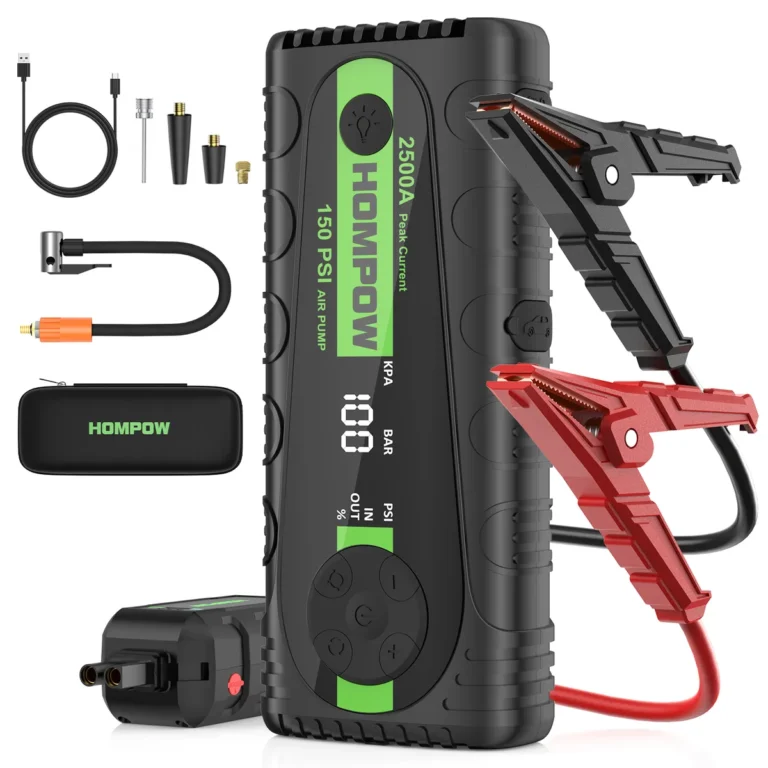
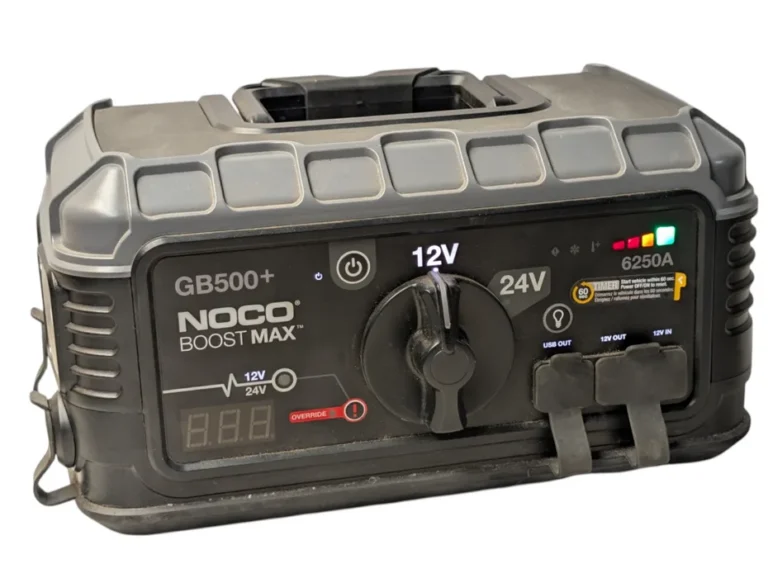
For most people, keeping a compact lithium jump starter in the trunk covers 90% of emergencies. It also eliminates the wait time question entirely, since you're feeding the dead system directly without needing a donor to idle.
How to Tell If Your Battery Needs Replacement After the Jump
A successful jump doesn't mean the battery is healthy. It just means the battery had enough surface charge to crank the engine once. Here's how to read the next 24 hours.
- Battery holds charge overnight and starts normally: battery was just discharged, keep driving
- Battery dies again within a day or two: battery is sulfated or has a dead cell, replace it
- Battery dies while idling but starts after a drive: alternator is weak, not the battery
- Battery needs jumping after every short trip: parasitic drain somewhere, like an interior light, aftermarket stereo, or stuck relay
A battery older than 4 to 5 years that needs a jump is almost always at the end of its life. Lead-acid batteries lose capacity steadily, and a jump just delays the inevitable.
Safety Rules You Should Never Skip
Every reputable source, from AAA to manufacturer service bulletins, agrees on a short list of non-negotiables.
Eye protection matters. ANSI Z87.1 safety glasses are cheap and they protect against the most common jump-start injury (battery acid in the eyes from a cracked case). No smoking, no open flames, no sparks near the battery.
Hydrogen gas is invisible and ignites easily.
Both vehicles in Park or Neutral, parking brake set, ignitions OFF until you're ready to start the donor. Match voltage systems. Never use a 24V truck to jump a 12V car, since the donor's running voltage will cook the recipient's entire electrical system.
For hybrid and EV vehicles, follow the manufacturer's specific 12V jump-start procedure. The high-voltage system is isolated, but the 12V auxiliary battery has unique jump points, often under a fuse box cover rather than directly on the battery itself.
Per the National Highway Traffic Safety Administration, electrical system failures are a leading cause of non-crash roadside breakdowns. Most of them are preventable with basic jump-start discipline.
Real-World Scenarios That Change the Wait Time
Cold Winter Morning, North-Central US
Outside temp: 0°F. Battery: 4 years old, sat through two cold nights. Symptoms: nothing, no lights, no clicks, totally dead.
Wait time: 4 to 5 minutes of donor idle. First crank likely won't catch. Rest 2 minutes, try again.
May take 2 to 3 attempts. Drive at highway speed for 30+ minutes afterward. If it dies at the next stop, replace the battery.
Cold-cranking amps drop 30 to 40 percent at freezing temps, and an old battery barely has margin left.
Garage-Stored Car That Sat for 3 Months
A car parked in a climate-controlled garage with the battery still connected will slowly drain from parasitic draw (clock, alarm system, ECU memory). Voltage typically drops to 10 to 11V over that period.
Wait time: 3 to 5 minutes. The battery isn't damaged, just flat. It'll take a charge, but slowly.
Expect 2 crank attempts. Drive 45 minutes to fully recover. Check resting voltage next morning.
If below 12.4V, the battery is on its way out.
Modern Car with Sensitive Electronics (2015+)
Anything with a complex infotainment system, drive-by-wire throttle, or multiple control modules is more sensitive to voltage spikes. Use a surge-protected jump starter if you have one. Otherwise, donor vehicle with clean, heavy-gauge cables.
Wait time: stick to the standard 2 to 3 minutes. Crank no more than 10 seconds. If the engine fires, let it idle 5 minutes before driving so the alternator voltage stabilizes before electronics do their startup handshake.
Diesel Truck with Dual Batteries
Many diesel trucks run two 12V batteries in parallel. Both need to be at decent voltage for the starter to engage. The wait time doesn't double, but you need both batteries connected to the donor's positive side, often through designated jump posts on the fender well rather than directly on the battery terminals.
Wait time: 5 minutes minimum for the deeper-discharged of the two batteries to come up. Glow plugs on a cold diesel may also need their cycle to complete before cranking, which adds another 10 to 15 seconds.
Quick Reference: Wait Times at a Glance
| Situation | Donor Idle Before Crank | Crank Length | Rest Between Attempts |
|---|---|---|---|
| Mild discharge, warm weather | 30 to 60 seconds | 5 to 10 sec | 30 sec |
| Moderate discharge | 2 to 3 minutes | 10 to 15 sec | 1 to 2 min |
| Deep discharge | 3 to 5 minutes | 10 to 15 sec | 1 to 2 min |
| Cold weather (below freezing) | 4 to 5 minutes | 10 to 15 sec | 2 min |
| Diesel with dual batteries | 5+ minutes | 10 to 15 sec | 2 min |
Frequently Asked Questions
Can you leave jumper cables on too long?
Yes, but only in a technical sense. Leaving cables connected for 10 to 15 minutes won't damage anything if the donor engine is running and the polarity is correct. The risk is overheating undersized cables or boiling electrolyte in a heavily sulfated dead battery.
For a normal jump, disconnect within 5 to 10 minutes of the dead engine starting.
Is it bad for the donor car to jump another vehicle?
Minor, not significant. The donor's alternator works a little harder during the wait, and the donor battery loses some surface charge. A healthy donor system recovers within 20 minutes of driving.
Avoid using a donor with a weak or aging alternator to jump a large diesel, which can push the donor's charging system past its limit.
How long should I drive after a jump start?
For a mildly discharged battery, 20 to 30 minutes of driving is enough. For a deeply discharged battery, plan on 45 minutes to an hour. Idling in a parking lot barely charges anything.
The alternator needs engine RPM above 1,500 to produce enough current to actually put energy back into the battery.
Can you jump start a car in the rain?
Yes, with normal caution. Water on the battery terminals isn't dangerous on its own. The 12V system is too low to pose a shock risk through wet skin.
The real concerns are the same as in dry weather: no sparks near the battery, correct connection order, and making sure the cables aren't sitting in pooled water that could carry current between clamps.
How many times can you jump the same battery before it dies for good?
There's no fixed number, but each deep discharge permanently damages the battery. Lead-acid batteries lose capacity every time they drop below 10.5V. After 3 to 5 deep cycles, a battery that's already 3+ years old usually won't hold a usable charge anymore.
A load test at any auto parts store tells you objectively whether the battery is still viable.