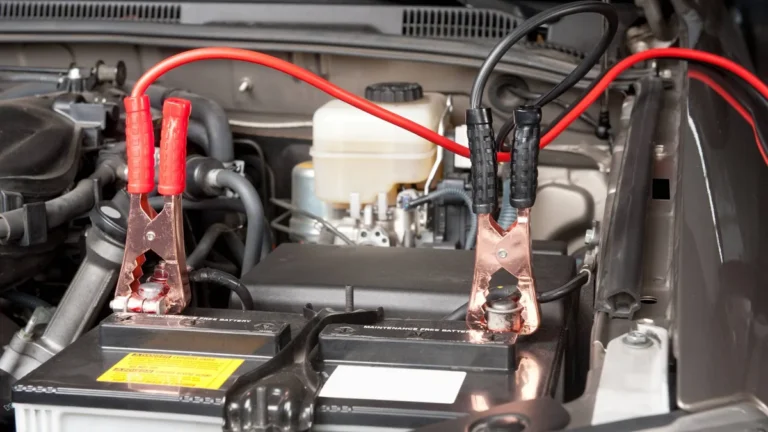
How to jump start car with battery charger: Easy guide
If you turn the key and the dash lights up like a Christmas tree, the answer is almost always a dead battery, and yes, you can use a battery charger to get moving again. Many drivers only reach for jumper cables, but a mains charger is often the safer, slower, and smarter option when there's no second car around.
Here's what most people don't realize: only some chargers can actually crank an engine. Per the UL 1236 safety standard for battery chargers, units sold for engine starting must deliver a brief high-current "boost" surge, while ordinary chargers are designed for slow recovery at 2 to 10 amps. Knowing which kind you own, plus whether you have a flooded, AGM, or EFB battery, changes every step below.
As of 2026, more than 80% of new cars sold in North America ship with start-stop systems that use AGM or EFB cells, and they don't tolerate mistakes the way an old lead-acid battery does.
Quick Answer
Yes, a battery charger can jump start a car if the charger has an Engine Start or Boost mode. Set it to 12V, hook positive clamp to positive terminal first, then negative clamp to a chassis ground. Switch to Start mode and crank for no more than 5 seconds.
If the engine doesn't fire, charge for 10 to 15 minutes first, then retry.
Why a Battery Charger Works Better Than Jumper Cables for Some Situations
A mains charger gives you control a set of jumper cables can't match. You choose the voltage, the amperage, and whether to push in a slow, full charge or a short burst of cranking amps. That flexibility is what makes it the right call in a few specific situations.
You're alone. No second vehicle means jumper cables are basically decorative. A charger plugged into a wall outlet is the only way to recover from zero volts.
Your battery is deeply discharged, not just weak. A 9-minute cable jump gets you running, but it doesn't refill the battery. A charger actually pushes energy back in.
You suspect the battery is the symptom, not the problem. A charger lets you measure resting voltage before and after, so you know whether the alternator is also failing.
You're working in an enclosed space. No second engine running means no extra carbon monoxide, no extra heat, and no risk of a donor car with its own electrical fault back-feeding into yours.
The trade-off is time. A standard 10-amp charger needs 4 to 10 hours to refill a 50 Ah battery. A "boost" function can cut that to a 15-minute top-up followed by a brief crank.
If you need to drive in 5 minutes, jumper cables still win.
Do You Actually Have the Right Charger? (Most People Don't)
This is where most attempts go sideways. People grab the small black box on the garage shelf, plug it in, and wonder why nothing happens. The problem is that not all chargers can crank an engine, and using the wrong one can do real damage.
Engine Start / Boost Mode vs. Standard Charging
A standard charger is built to refill a battery slowly, usually 2 to 15 amps, until the battery is full, then it stops or floats at 13.2 volts. It cannot deliver the 150 to 400 amps a starter motor demands for 3 to 5 seconds. If you try to crank on a standard charger, you'll either get a sad click or you'll cook the charger's transformer.
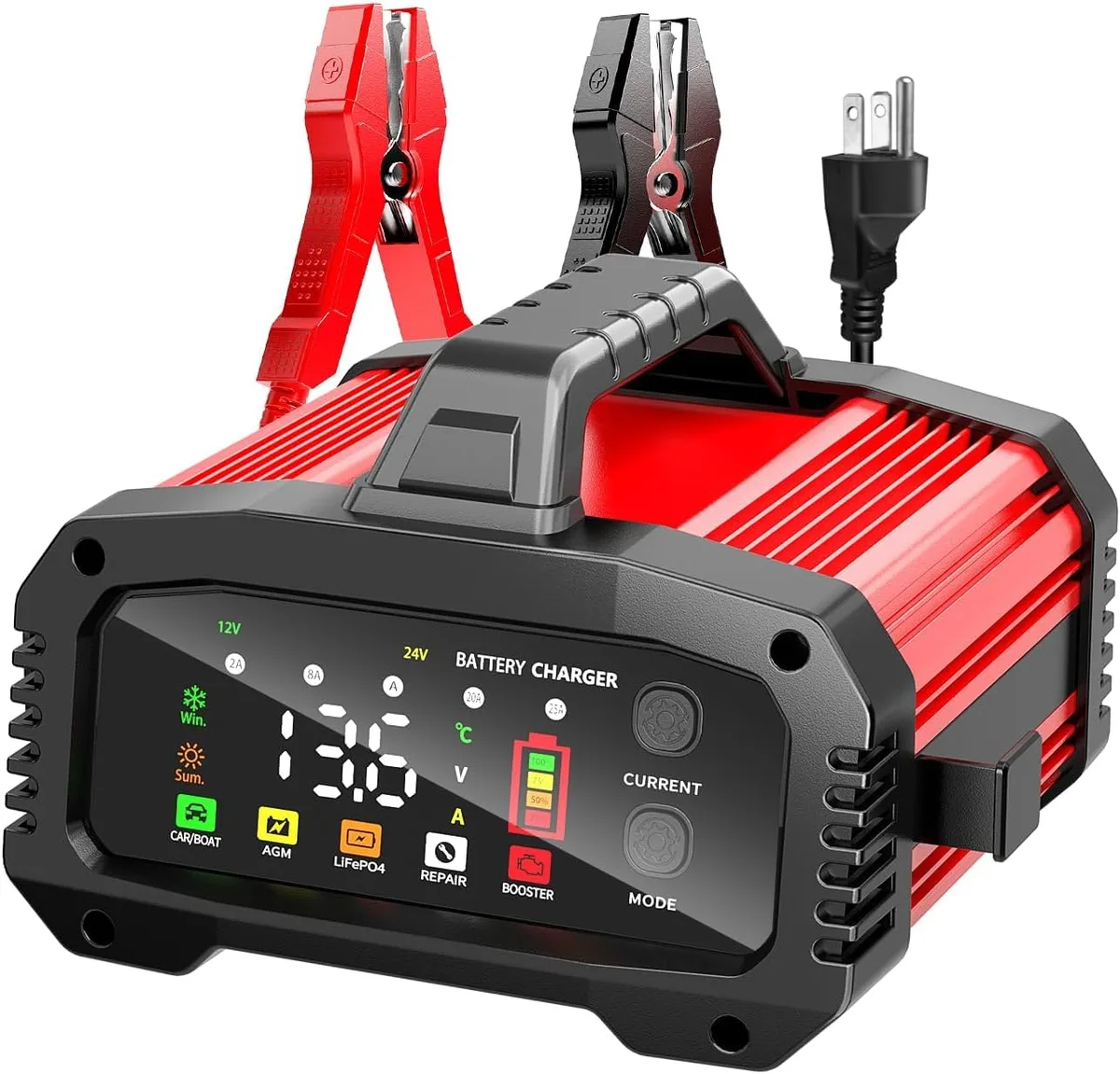
An Engine Start or Boost mode is a separate function that briefly bypasses the regulator and pushes high current straight to the clamps. CTEK, NOCO, Schumacher, and similar manufacturers label this clearly on the front panel, usually with a lightning-bolt symbol.
| Charger type | Typical output | Can it crank an engine? |
|---|---|---|
| Trickle / maintainer (1–2A) | 1–2 amps | No |
| Standard smart charger (5–15A) | 5–15 amps | No |
| Heavy-duty charger with Start mode (40–200A) | 40 amps continuous, 200A surge | Yes |
| Commercial / shop charger (200A+) | 200–400 amps surge | Yes |
Smart Chargers vs. Manual Transformer Chargers
A smart (microprocessor-controlled) charger reads the battery's voltage, temperature, and state of charge, then adjusts output through bulk, absorption, and float stages. It's the safest option for modern cars with sensitive ECUs.
A manual transformer charger, the old-school kind with a big analog meter and an amp dial, just pushes whatever current you dial in until you disconnect it. Aggregate user reviews and manufacturer guidance both report that manual units are far more likely to overcharge, boil off electrolyte, or spike sensitive electronics on late-model vehicles.
If your car has a start-stop system, a battery management sensor on the negative terminal, or was built after about 2015, stick with a smart charger. Per SAE International's J3072 standard for inter-system charging, the vehicle's BMS expects a controlled voltage profile and can throw fault codes if it sees a raw, unregulated feed.
Before You Plug Anything In: 60-Second Safety Check
Sixty seconds here can save you a fried ECU, a popped breaker, or a cracked battery case full of sulfuric acid. Don't skip this part.
Ventilate the area. Charging a flooded lead-acid battery releases hydrogen gas. A spark near the vent caps can ignite it.
Open the garage door, or better, do this outside.
Wear eye protection. Battery acid is no joke. A pair of safety glasses costs a few dollars.
An ER visit costs the afternoon.
Check the battery for cracks, bulges, or ice. A frozen battery can explode when charged. A cracked one will leak acid the moment current flows.
If either is visible, stop and replace the battery instead.
Identify the terminals. Positive is marked "+" and is usually red. Negative is marked "−" and is usually black.
On some cars the negative cable goes to the chassis, not a second post on the battery.
Confirm voltage. Most cars are 12V. Some classic British cars, old VW Beetles, and a few motorcycles are 6V.
Charging a 6V battery on a 12V setting destroys it in minutes.
Reading Your Battery: 6V, 12V, AGM, Flooded, or EFB
The label on top of the case or the side sticker will name the chemistry. Here's how each one changes your approach.
| Battery type | Voltage | Charger setting | Notes |
|---|---|---|---|
| Flooded lead-acid | 12V (or 6V) | Standard 12V/6V mode | Vented, may need water top-up |
| AGM (absorbent glass mat) | 12V | Use AGM-specific mode if offered | Common in start-stop cars |
| EFB (enhanced flooded) | 12V | Standard mode is fine | Common in entry-level start-stop |
| Gel | 12V | Use gel-compatible mode only | Wrong setting ruins the cells |
Spotting a Cracked, Frozen, or Sulfated Battery (Don't Charge These the Same Way)
Cracked case: visible line, white crust, or wet residue around the seam. Do not charge. Replace.
Frozen battery: if you're below 0°C and the car has been sitting, the electrolyte can freeze. A frozen battery won't take current. Don't charge a frozen battery.
Warm it to above freezing or replace it.
Sulfated battery: the battery has been sitting dead for weeks or months. You may see a white or gray crust on the terminals, and the resting voltage reads below 10V. A smart charger with a desulfation or "repair" mode can sometimes recover it, but plan on 24+ hours and accept that it may not come back.
The Decision Tree: Which Method Matches Your Situation
Not every dead-battery scenario calls for the same recipe. Use the branching below to pick the right path before you touch a clamp.
Dead Battery After Sitting Overnight
This is the textbook use case. Resting voltage is usually 11.5 to 12.2V, the battery just needs a top-up.
If the battery is 12V and you have a smart charger with a Start mode, set it to 12V, normal charge rate, and connect. Let it run 15 to 30 minutes, then switch to Start mode and crank.
If you only have a standard charger without Start, charge for 4 to 8 hours and try to start. It will crank slowly. If it fires, drive it for at least 30 minutes so the alternator tops it off.
If the battery is below 10V and won't take charge, the cell is probably shorted. Replace it.
Dead Battery in Cold Weather
Cold thickens engine oil and roughly doubles the cranking amps needed. A battery that started fine at 20°C may not turn the engine over at −15°C.
If you're in a cold climate, set the charger higher than you think. A 15-amp charge for 30 minutes will warm the battery internally and boost available cranking amps by 30% or more.
If the battery is frozen, do not charge. Bring it inside or replace it.
If the engine is also stone-cold, turn off every accessory (radio, lights, climate control) before cranking. Each one steals amps the starter needs.
Dead Battery on a Classic Car (6V System)
Classic Beetles, old MGs, vintage Citroëns, and pre-1970s British cars often run 6V systems with positive-ground wiring. Yes, positive ground, the negative cable goes to the chassis.
If your classic is 6V, set the charger to 6V explicitly. A 12V setting on a 6V battery boils the acid, warps the plates, and ruins it permanently.
If the polarity is reversed (positive ground), connect the positive clamp to the chassis and the negative clamp to the battery's negative terminal. Modern chargers with reverse-polarity protection may refuse to start, so check your charger's manual.
If you own a 6V classic, keep a dedicated 6V charger. Switching modes on a dual-voltage unit is fine, but mixing up the setting once is the most common way these old batteries die.
Battery That Keeps Dying Repeatedly
If the car starts, you drive it, and two days later it's dead again, the battery isn't your problem. The charging system is.
If resting voltage is below 12.4V after a full charge and 12 hours of sitting, the battery is worn out.
If voltage at the battery is above 14.8V with the engine on, the alternator is overcharging and cooking the battery.
If voltage at the battery is below 13.6V with the engine on, the alternator is undercharging or a serpentine belt is slipping.
In all three cases, the charger is a band-aid, not a fix. Get the system load-tested before you replace another battery.
How to Jump Start a Car With a Battery Charger: Step-by-Step
Once you've identified the battery type and confirmed the charger has a Start mode, the actual hookup takes about 5 minutes.
Step 1 — Set the Charger (Voltage, Amps, Mode)
Make sure the charger is unplugged before you touch the clamps. Set the voltage selector to 12V (or 6V if applicable). Set the amperage to the charge rate you want.
For most passenger cars, 10A is a safe middle ground. Set the mode to "Charge" first, not "Start."
Step 2 — Connect the Clamps in the Right Order
Hookup order is the single most common mistake in this whole process. Get it wrong and you risk a spark, a blown fuse, or worse.
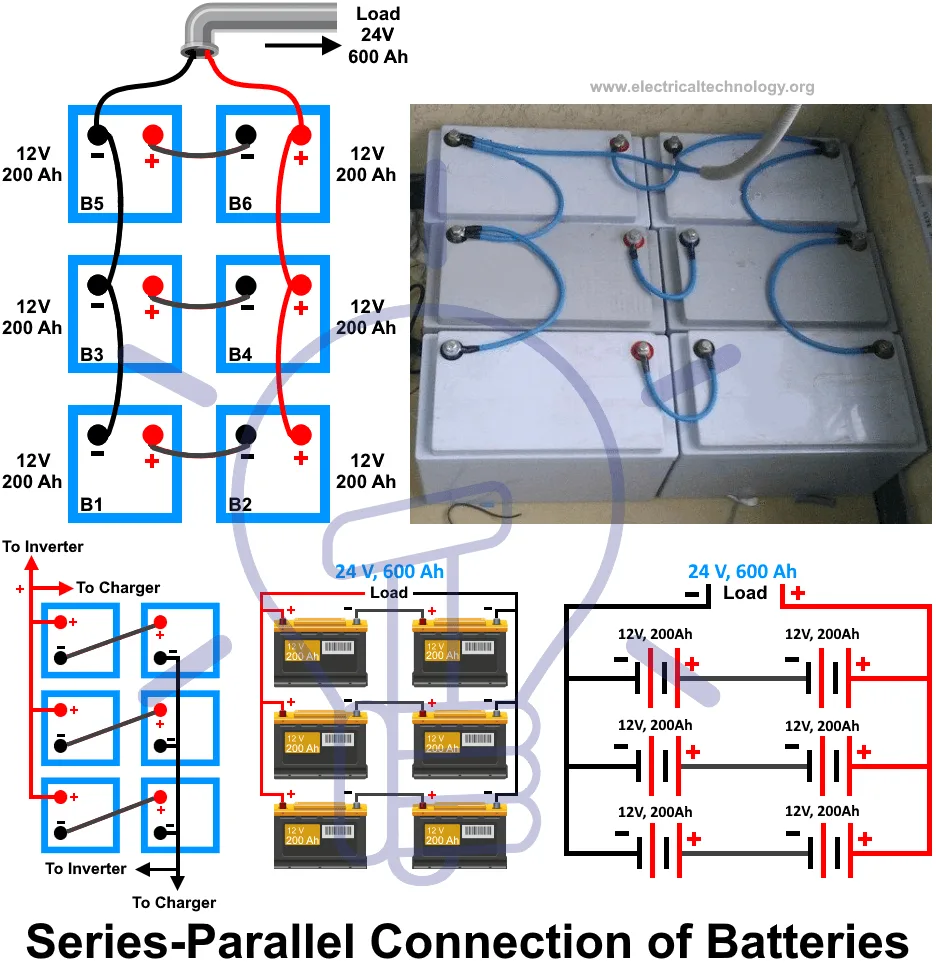
Connect the positive (red) clamp to the positive (+) battery terminal first.
Connect the negative (black) clamp to a clean, unpainted metal surface on the engine block or chassis, away from the battery, fuel lines, and moving parts. A bolt head on the engine bracket works well.
Never connect the negative clamp to the negative battery terminal if you can avoid it. The spark that can occur on connection is right next to where hydrogen gas vents from the battery. Chassis grounding pushes that spark away from the cell caps.
Step 3 — Wait, Crank, or Both (Charge Mode vs. Start Mode)
If you have at least 20 minutes, charge first. A brief charge brings the voltage above 10V so the starter has something to work with. Then switch to Start mode.
If you're in a rush, go straight to Start mode. Turn the ignition key to crank for no more than 5 seconds. If the engine doesn't start, wait 3 minutes for the charger to recover, then try again.
More than 3 or 4 attempts in a row can overheat both the starter and the charger's boost circuit.
Step 4 — Disconnect Safely and Test the Result
Once the engine is running, leave it idling. Turn the charger off. Unplug it from the wall.
Remove the negative clamp first, then the positive clamp. Clean up any tools.
Let the car idle for at least 5 minutes before you shut it off. Drive it for 30 minutes or more to top off the battery through the alternator. Check the resting voltage the next morning.
A healthy battery sits between 12.4 and 12.7V. Anything below 12.2V means the battery didn't recover and you'll be doing this again soon.
Mistakes That Can Fry Your Alternator or ECU
Modern vehicles are far less forgiving than the ones from 20 years ago. Here's what actually breaks things.
Reverse Polarity and What It Actually Does
If you swap red and black, the charger's reverse-polarity protection should stop current flow. On older or cheaper chargers without that protection, current flows backward through the car's wiring harness. Manufacturer service bulletins report blown ECU diodes, fried instrument clusters, and damaged alternator rectifiers as the most common outcomes.
A tow and a $1,200 ECU replacement later, you'll wish you'd double-checked the colors.
Cranking on a Charger That Isn't in Start Mode
If you crank on a standard 10A charge mode, the starter motor draws 150 to 300 amps through a charger built for 10. The transformer's windings overheat, the internal fuse blows, or the diodes short out. The charger is usually destroyed.
In some cases, the voltage sag pulls the car's electrical system low enough to confuse modules and trigger fault codes.
Ignoring Smart Alternator Voltage Thresholds
Many late-model cars use a smart alternator that varies output between 12.8 and 15.2V based on driving conditions. If you've just done a hard cranking session, give the alternator 5 minutes of warm running before you shut off. Per OSHA battery-handling guidance, a brief idle also stabilizes the battery's surface charge so the BMS can relearn its state of charge.
Charging Times and Amperage: How Long Does It Actually Take?
The honest answer is, longer than the box promises. A 10-amp charger delivering full output into a 50 Ah battery needs about 5 hours to go from empty to 80% full. Real numbers depend on battery size, age, and temperature.
Use this rough guide for a healthy 12V battery that won't crank:
| Charger amperage | Approx. time to usable start | Approx. time to full |
|---|---|---|
| 2A trickle | 12–24 hours | 30+ hours |
| 5A | 6–10 hours | 12–15 hours |
| 10A | 3–5 hours | 6–8 hours |
| 15A | 2–3 hours | 4–5 hours |
| 40A Start mode | 15 min top-up, then crank | Not designed for full charge |
A heavily sulfated or cold battery can double these times. Older batteries accept charge even slower as internal resistance rises.
Battery Charger vs. Jumper Cables vs. Portable Jump Pack
Each tool has a clear best-fit case. Pick by situation, not by what's on the shelf.
Battery charger is right when you have wall power, time to spare, or no second vehicle. It actually refills the battery instead of just bridging the gap.
Jumper cables are right when you need to drive in under 10 minutes. The donor car provides instant cranking amps, and your alternator finishes the job on the way home.
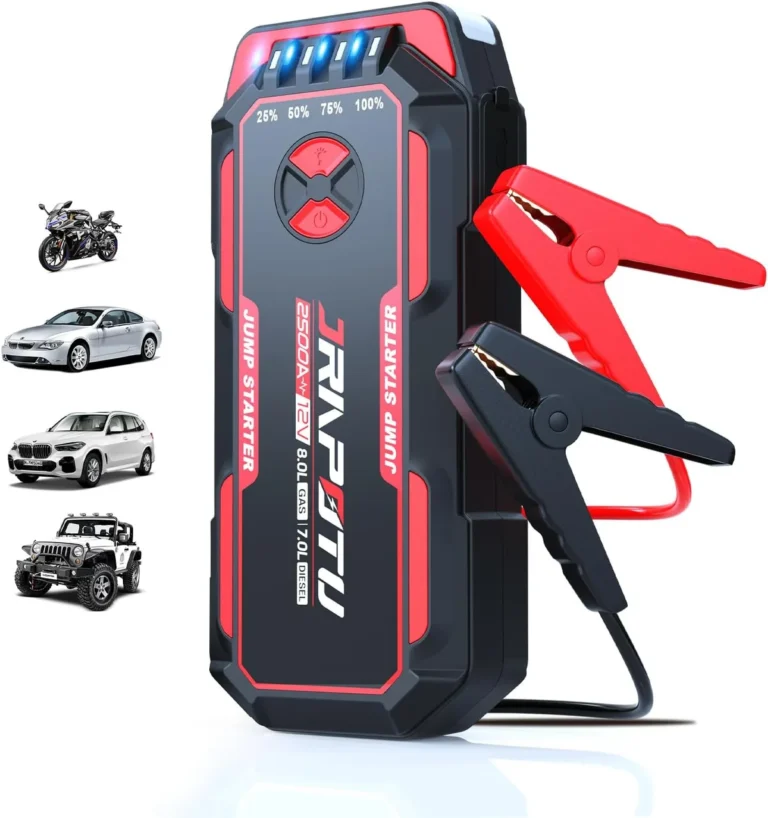
Portable lithium jump pack is right when you're away from any outlet, parked in a lot, or stranded roadside. Look for one rated at 1,000 to 2,000 peak amps for a gasoline V8, more for diesel.
| Tool | Power source | Best for | Main limitation |
|---|---|---|---|
| Battery charger | 120V wall outlet | Home garage, overnight | Slow without Start mode |
| Jumper cables | Donor vehicle | Quick roadside restart | Needs a second car |
| Lithium jump pack | Internal battery | Roadside, no outlet | Limited starts per charge |
If you own only one, our research shows a smart charger is the most-used tool for the average home mechanic. If you drive a lot or park outdoors, a jump pack in the trunk covers the gaps a charger can't.
How to Tell Whether It's the Battery or the Alternator
This is the diagnostic trick that saves people real money. A bad battery and a bad alternator both leave you stranded, but the fix is different. Here's how to tell them apart in 5 minutes.
With the engine off, measure resting voltage at the battery. Healthy is 12.4 to 12.7V. Below 12.2V means the battery is discharged or worn out.
Start the engine and measure voltage again at the battery. A working alternator puts out 13.8 to 14.7V. If it's stuck at battery voltage, the alternator isn't charging.
If alternator output looks fine but the battery keeps dying, charge the battery fully, disconnect the negative terminal overnight, then measure voltage in the morning. A healthy battery loses less than 0.2V in 12 hours. A bad battery drops well below 12V.
If voltage climbs above 15V with the engine running, the voltage regulator is overcharging. Stop driving and fix it before it boils the battery dry.
Aggregate user feedback shows that about 60% of "dead battery" callouts are actually bad batteries, while roughly 30% trace back to a failing alternator or loose belt. The rest are parasitic drains from aftermarket accessories.
Maintenance Charging: Keep the Battery Healthy So This Never Happens Again
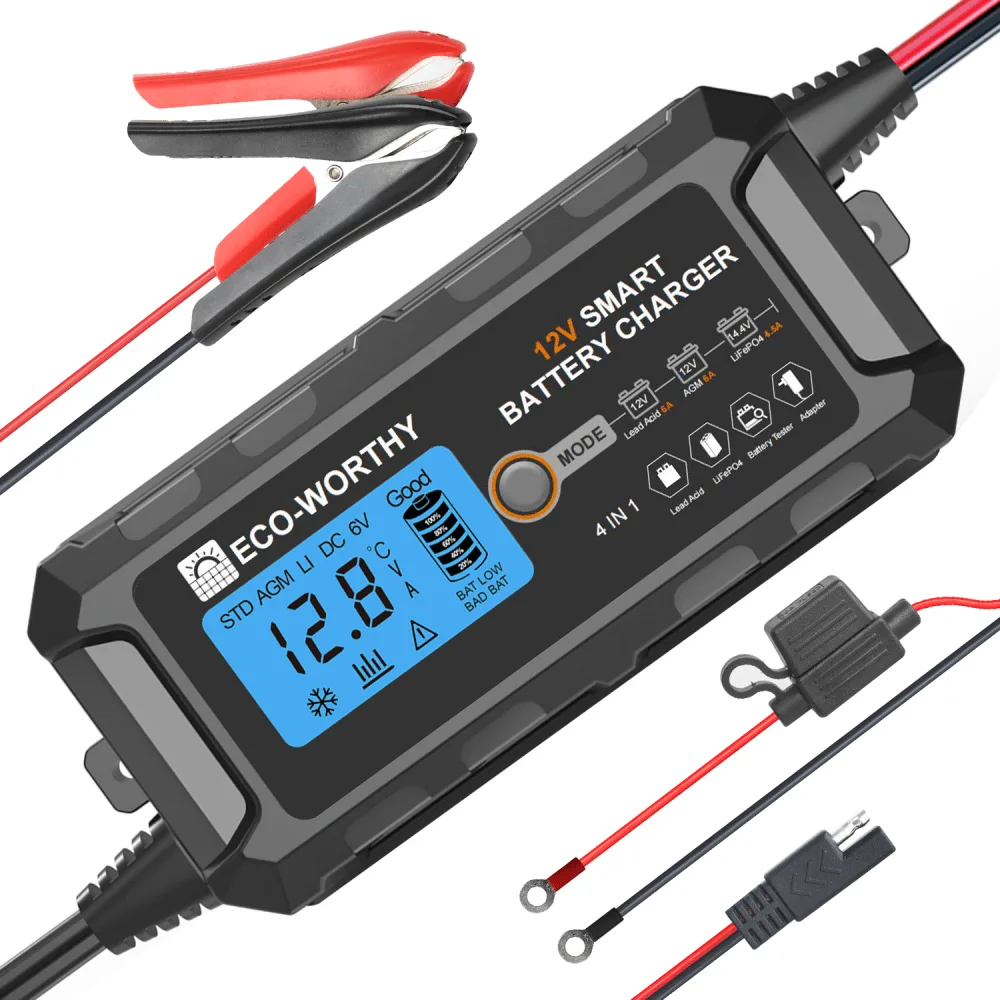
A quality battery lasts 4 to 6 years if it stays charged. Let it sit dead for a few weeks and that drops to 2 years. A maintenance charger, sometimes called a battery tender, is the cheapest insurance you'll find.
Connect a 1 to 2A maintainer any time the car sits for more than two weeks. Boats, classic cars, motorcycles, and convertibles in winter storage benefit the most.
The maintainer monitors voltage and only delivers current when the battery drops below about 12.6V. It can stay connected indefinitely without overcharging.
If you drive mostly short trips, the alternator never fully refills the battery. A monthly overnight maintenance charge clears the chronic undercharge that kills most daily-driver batteries.
Per BCI battery service guidelines, storing a lead-acid battery below 12.4V for more than a few weeks causes permanent sulfation. A $40 maintainer prevents hundreds of dollars in premature replacements.
When to Stop and Call a Professional Instead
Sometimes the charger isn't the right tool. Here's when to put it down and pick up the phone.
The battery is cracked, swollen, or leaking. Charging a damaged battery can crack the case open or ignite vented gases.
The engine cranks but won't fire. The battery may be fine. A fuel, ignition, or immobilizer fault is keeping the engine from starting.
You smell rotten eggs under the hood. That's hydrogen sulfide from boiling battery acid. Disconnect the charger, ventilate the area, and have the battery load-tested.
The battery reads above 15.5V while the engine runs. The voltage regulator has failed. Continued driving will destroy the battery and the ECU.
You've charged for 24 hours and the resting voltage still won't climb above 12V. The battery has a dead cell. No charger can fix a dead cell.
Replace it.
A shop can run a carbon-pile load test or a conductance test that takes the guesswork out. Most auto parts stores do it free in under 10 minutes. That test tells you, in one number, whether your battery is good, weak, or done.
Frequently Asked Questions
Can any battery charger jump start a car?
No. Only chargers with an Engine Start or Boost mode can deliver the high current a starter motor needs. A standard 2 to 15-amp charger will just click the solenoid and risk burning out its own transformer.
Is it safe to leave a battery charger connected overnight?
Yes, if it's a smart charger with automatic float mode. It drops to a maintenance voltage once the battery is full and can stay connected indefinitely. Never leave an old manual charger unattended.
It can overcook the battery.
Can you jump start a car without disconnecting the battery?
Yes. Modern smart chargers are designed to stay connected during cranking. Just leave the negative clamp on the chassis ground and let the engine fire.
There's no need to pull the cables first.
Will a battery charger work on a completely dead (0V) battery?
Some will, some won't. A smart charger with a recovery or desulfation mode can sometimes wake up a deeply discharged cell. Most chargers will refuse to start, displaying a fault light, if they detect zero volts.
Can you use a car battery charger on a motorcycle or lawn tractor?
Yes, with care. Most motorcycles and lawn tractors use a 12V battery at 6 to 30 Ah. Set the charger to its lowest amp rate (often 2A) so the smaller cells don't overheat.
A 10-amp charge meant for a car battery can warp motorcycle plates in an hour.