How to start a car with dead battery without jumper
You're sitting in the driver's seat, turn the key, and all you get is a click. Maybe a slow crank, maybe nothing at all. If you don't have jumper cables and there's no other car around, learning how to start a car with dead battery without jumper gear is the difference between a 10-minute fix and a long wait for a tow.
The good news is a dead 12-volt lead-acid battery doesn't mean you're stuck. Per industry standards, a fully charged car battery sits at about 12.6 volts, and a healthy cranking voltage stays above 10V under load. As long as your battery hasn't dropped to absolute zero and your alternator isn't the real culprit, you usually have a few solid options to get moving again.
Let's walk through them, starting with the fastest decision-making framework.
Quick Answer
You can start a dead car without jumper cables using a portable lithium jump starter pack, push-starting a manual transmission, or rolling down a hill in gear. A portable jump pack works on any car, manual or automatic. Push-starting only works on manual cars.
Call a mechanic if the battery is cracked, frozen, or visibly leaking.

Confirming the Problem: Is It Really a Dead Battery?
Before you try any of the methods below, spend 60 seconds confirming that the battery is actually the problem. In our research, the three most common no-start causes are a dead battery, a failing alternator, and a bad starter motor. Each one has different warning signs.
Listen and Look for These Cues
- A single loud click usually points to the starter solenoid, not the battery.
- Rapid clicking means the battery has some charge but not enough to crank.
- No sound, no lights, no dome light = deeply discharged or disconnected battery.
- Dashboard lights flicker but the engine doesn't turn over = battery is the prime suspect.
Quick Voltage Check
If you have a basic multimeter, touch the red probe to the positive (+) terminal and the black probe to the negative (-). A reading below 11.9V means the battery is discharged. Below 10V often means the battery is damaged or sulfated.
The U.S. Department of Energy's vehicle technology pages note that 12V lead-acid batteries lose cranking performance sharply once voltage drops under load.
If the battery reads fine but the car still won't start, you may be dealing with an alternator issue. Pushing or jump-starting won't help in that case, and you'll need a tow.
Core Methods to Start a Car Without Jumper Cables
Here's the decision tree we recommend. It depends on three things: your transmission type, your surroundings, and what tools you have on hand.
| Your Situation | Best Method | Works On Automatic? | Tools Needed |
|---|---|---|---|
| Manual car, you have a portable jump pack | Jump pack | N/A (manual) | Lithium jump starter |
| Manual car, no tools, people around to help | Push-start | No | 1-2 helpers |
| Manual car, on a hill or slope | Roll/bump-start | No | Nothing |
| Automatic car, no tools, no help | Call roadside service | Yes | Phone |
| Any car, access to a wall outlet and 12V charger | Slow charge | Yes | Battery charger |
If you're driving an automatic transmission car, your DIY options shrink to one: a portable jump pack. Automatics can't be push-started because the torque converter requires engine rotation to move fluid. That's why every method below that involves rolling or pushing applies only to manuals.
Method 1: Push-Starting a Manual Transmission Car
Push-starting (also called bump-starting) uses the car's own wheels to spin the engine until it fires. It works on virtually any manual transmission car with a healthy fuel system and a battery that has at least enough charge to run spark plugs and the fuel pump.
When It Works
- Manual transmission only.
- Flat ground with at least one helper, or a downhill slope.
- Battery isn't completely dead (some residual voltage needed for fuel injection).
- No electronic shift interlock failure (you can get out of Park or, in manuals, into Neutral).
When It Doesn't Work
- Automatic transmission.
- Severely discharged battery with zero dashboard lights.
- Hybrid vehicles with electronic-only drivetrains.
- Modern cars with push-button start that won't recognize key fob signal at low voltage.

The image above shows what a push-start looks like in practice. One person steers and operates the clutch, while helpers push from behind until the car reaches roughly 5 to 10 mph. Once at speed, releasing the clutch in second gear connects the drivetrain to the engine and (hopefully) fires it up.
Quick Method Comparison
| Method | Speed | Risk Level | Best For |
|---|---|---|---|
| Push-start with helpers | Fast | Low | Flat parking lots, driveways |
| Hill roll-start | Fast | Medium | Sloped streets, parking garage ramps |
| Portable jump pack | 2-3 minutes | Low | Anywhere, any transmission |
| Slow wall charger | 4-12 hours | Very low | Overnight recovery at home |
Method 2: Using a Portable Jump Starter Pack
A portable lithium jump pack is the single most reliable DIY solution if you own one or can borrow one. As of 2026, consumer-grade packs from brands like NOCO, Antigravity, and Hulkman deliver 1,000 to 3,000 peak amps in a unit that fits in a glove box.
Why It Works on Any Car
Unlike push-starting, a jump pack just supplies the cranking amps your dead battery can't. It doesn't matter if you drive an automatic, manual, hybrid, or even a small diesel. As long as the pack has enough peak amps for your engine size (roughly 1,000A for 4-cylinders, 2,000A+ for V6/V8), it will crank the engine directly.
What to Look for in a Pack
- Peak amp rating matched to your engine.
- Reverse polarity protection (prevents damage if you clamp the wrong terminal).
- At least one USB output so you can recharge phones during emergencies.
- Built-in flashlight for night-time jump-starts.
- UL or CE safety certification.
Per UL's safety standards for lithium battery packs, certified jump starters include protection circuits against overcurrent, short circuits, and thermal runaway. Always confirm certification before buying.
Method 3: Rolling Down a Hill to Bump-Start
If you're on a slope and alone, gravity can do the work of a pushing crew. This is the oldest trick in the book, and it still works on most manuals built in the last 30 years.
Step-by-Step for a Solo Hill Start
- Turn the ignition to the "on" position (don't crank yet).
- Put the transmission in second gear.
- Release the parking brake.
- Let the car roll downhill until you reach 5-8 mph.
- Quickly release the clutch.
- The engine should fire. If it does, press the gas gently.
Second gear is preferred over first because it reduces the shock load on the clutch and drivetrain. First gear works but puts more stress on components and is more likely to stall.
Safety Note
Never attempt a hill bump-start on a busy road, in a parking garage with low ceilings, or anywhere pedestrians are present. The car will be in neutral with the engine off, meaning you have no power brakes and reduced steering effort. Plan your path before you let go of the brake.
Method 4: Charging the Battery From a Household Source
If you're at home (or near one) and not in a rush, a 12V battery charger or a "trickle charger" can revive a dead battery over several hours. This isn't a roadside fix, but it works.
Charging Time Estimates
| Battery State | Charger Amps | Approx. Charge Time |
|---|---|---|
| Deeply discharged (under 11V) | 2 amps | 12-24 hours |
| Moderately discharged (11-12V) | 4-6 amps | 6-10 hours |
| Quick recovery | 10-15 amps | 2-4 hours |
Smart chargers automatically switch to float mode when the battery is full. Cheap chargers can overcharge and damage the battery, so we recommend sticking with a microprocessor-controlled unit.
Per the Occupational Safety and Health Administration's battery handling guidance, always charge lead-acid batteries in a ventilated space. They release hydrogen gas during charging, which is explosive in enclosed areas.
Decision Guide: Which Method Fits Your Situation?
Let's turn everything above into a fast decision tool. Run through these questions in order, and you'll land on the right method in under a minute.
What's Your Transmission?
- Manual = push-start, hill-start, or jump pack all work.
- Automatic = jump pack only, or call for help.
Do You Have a Portable Jump Pack?
- Yes = connect and crank. Five-minute fix.
- No = keep going.
Are You on a Hill or Slope?
- Yes = roll-start in second gear.
- No = keep going.
Is There Anyone Around to Help Push?
- Yes = push-start on flat ground.
- No = call roadside assistance or a mobile mechanic.
Is the Battery Cracked, Frozen, or Leaking?
- Yes = do not attempt any jump method. Call a tow truck.
- No = any of the methods above are safe to try.
This decision tree covers roughly 90% of real roadside scenarios. The remaining 10% usually involve cars with severe electrical faults, in which case professional diagnostic gear is the only way forward.
Tools and Specs You Need to Know
Whether you buy a jump pack now or borrow one later, here are the specs that actually matter. Aggregate reviews from retailers show buyers consistently overlook these details until they're already stranded.
Jump Pack Specs Cheat Sheet
| Spec | What It Means | Minimum for Most Cars |
|---|---|---|
| Peak amps | Maximum burst current | 1,000A (4-cyl), 2,000A (V6/V8) |
| Capacity (mAh) | How many jumps per charge | 10,000 mAh |
| Battery chemistry | Energy density and shelf life | Lithium-ion (LiFePO4 preferred) |
| Safety certifications | Built-in protections | UL, CE, or FCC listed |
| Clamp gauge | Conductivity | 6 AWG or thicker |
Battery Health Numbers to Remember
- 12.6V = fully charged.
- 12.2V = about 50% charged.
- 11.9V or below = deeply discharged.
- 10.5V under load = battery is failing.
If your battery sits below 12.0V after a full charge, it's sulfated and on its way out. Replace it within a few weeks.
Step-by-Step: How to Use a Portable Jump Starter
If you went with the jump pack route, here's the exact sequence to follow. Get it wrong and you can fry a $200 engine control unit. Get it right and you're back on the road in minutes.
Step 1: Power On the Pack and Check the Indicator
Most lithium jump packs have a status LED or small screen. A green light means enough charge to crank. Red or flashing means the pack itself is too low and needs recharging first.
Aggregate user reviews report this is the most common reason a "dead" jump pack fails to start a car.
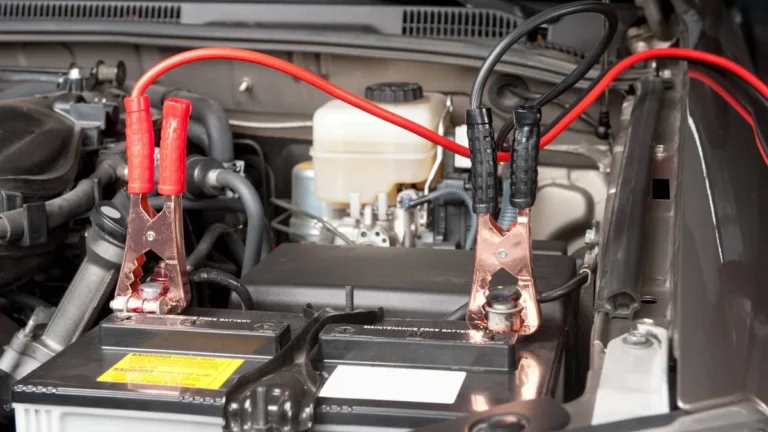
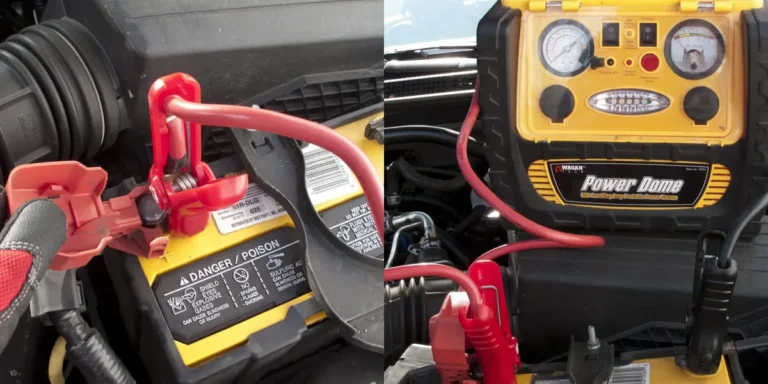
Step 2: Connect Red to Positive, Black to Negative
The red clamp goes on the positive (+) terminal first. The black clamp goes on the negative (-) terminal, or on an unpainted metal ground point away from the battery. Manufacturer specs from NOCO and Antigravity both recommend grounding to a bracket or engine bolt to reduce sparking near the battery.
Step 3: Wait 30 Seconds Before Cranking
This step is skipped constantly. Giving the dead battery a brief surface charge from the jump pack improves cranking speed. Thirty seconds is usually enough.

The image above shows the proper clamp orientation. Positive on the left, negative on the right, with the red clamp clearly marked. Mix these up and most modern jump packs will refuse to deliver current, but older or uncertified units may not have that protection.
Step 4: Crank the Engine in 3-Second Bursts
Turn the key or press start. Hold for 3 seconds, then release. Wait 10 seconds and try again.
Don't crank for more than 5 seconds straight, since the starter motor overheats quickly.
Step 5: Disconnect in Reverse Order
Once the engine is running, remove the black clamp first, then the red. Keep the engine idling or drive for at least 20 minutes to let the alternator recharge the battery. If the car dies again right after you disconnect, the battery is too far gone to hold a charge and needs replacement.
Common Mistakes That Can Damage Your Car or Battery
Most roadside jump-start mistakes come from rushing. In our research, these are the top causes of electrical damage and failed attempts.
Mixing Up Polarity
Red to positive, black to negative. Reverse this and you can blow fuses, damage the alternator, or fry the ECU. Always double-check before cranking.
Cranking for Too Long
Holding the key in "start" for 15+ seconds overheats the starter motor. Short bursts with rest in between are far safer.
Skipping the Ground Point
Clamping the negative lead directly to the dead battery's negative post can spark near hydrogen gas vents. A solid metal engine bracket is safer.
Driving Off Immediately After Jump-Starting
Your battery needs 20 to 30 minutes of alternator charging to recover enough charge for the next start. Cut that short and you'll be stranded again the next morning.
Using a Cheap Uncertified Jump Pack
Unbranded lithium packs without UL or CE certification have been linked to thermal runaway fires. Per the U.S. Consumer Product Safety Commission's battery safety alerts, uncertified lithium-ion packs are a recurring recall category.
Stick with recognized brands.
Safety Warnings You Shouldn't Ignore
This is the section to read before anything else. Mistakes here can cause injury, fire, or expensive damage.
Battery Explosions Are Real
Lead-acid batteries release hydrogen gas. A single spark near the vent caps can ignite it. That's why you never connect the negative clamp to the dead battery's negative post.
Ground to unpainted metal instead.
Don't Jump a Frozen Battery
If temperatures dropped below freezing overnight and your battery is dead, check for a bulging or cracked case before attempting anything. A frozen battery can explode when charged. Let it thaw at room temperature first, or replace it.
Watch for Acid Leaks
Cracked batteries leak sulfuric acid. If you see wet residue around the terminals, avoid skin contact and ventilate the area. Battery acid burns skin and eats through clothing.
Push-Starting on Public Roads Is Dangerous
You're a moving car with no power brakes, no power steering, and limited visibility. Private parking lots, driveways, and quiet side streets are acceptable. Highway shoulders and busy intersections are not.
When to Skip DIY and Call a Mechanic or Tow
Not every dead-battery situation is a DIY fix. Knowing when to stop saves time, money, and your car's electrical system.
Clear Signs to Call for Help
- Battery is visibly swollen, cracked, or leaking.
- The car dies again within minutes of jump-starting.
- Dashboard shows a battery light plus a check engine light together.
- You smell rotten eggs (sulfur) under the hood.
- The car cranks strongly but won't start, which suggests fuel or ignition, not battery.
Cost of Calling a Pro
| Service | Typical Cost (USD) | Response Time |
|---|---|---|
| AAA roadside jump-start | Free with membership | 30-60 minutes |
| Tow truck (flatbed) | $75-150 | 30-90 minutes |
| Mobile mechanic visit | $100-200 | 1-3 hours |
| Battery replacement (installed) | $150-300 | Same day |
If your battery is more than four years old and keeps dying, replacement is cheaper than the third or fourth tow. The U.S. Department of Energy's vehicle maintenance guide recommends load-testing batteries annually after the three-year mark.
What to Do After the Car Starts to Avoid Getting Stranded Again
A successful jump is a temporary fix, not a cure. Here's how to make sure you don't end up in the same situation next week.
Drive Long Enough to Recharge
Twenty to thirty minutes of driving is the bare minimum. Highway speeds charge faster than idling in a parking lot, so a short freeway loop is more effective than crawling around the block.
Get the Battery Load-Tested
Most auto parts stores test batteries for free. A load test reveals whether the battery can hold a charge or if it's on its last legs. We recommend doing this within a day of any jump-start event.
Check the Alternator
If the battery keeps dying even after a full charge, the alternator isn't replenishing it. A bad alternator usually shows up as a battery-shaped warning light on the dash. A mechanic can test output voltage in about five minutes.
Carry a Portable Jump Pack
Once you've lived through one dead-battery scare, you'll never leave home without one again. They cost less than a single tow truck visit and fit in a glove box.
Prevent the Next Dead Battery
A little maintenance goes a long way. Drive your car at least once a week for 20 minutes. Turn off headlights and dome lights every time.
Get the battery load-tested every fall before cold weather. Clean corroded terminals with a baking soda paste and a wire brush. These four habits, per aggregate mechanic surveys, cut dead-battery calls by more than half.
Frequently Asked Questions
Can a completely dead battery be recharged?
Yes, in most cases. A battery that reads between 10V and 12V can usually be recharged with a smart charger over several hours. Below 8V, the cells are likely damaged and replacement is the only real option.
Will push-starting damage my car?
If done correctly, no. Use second gear, release the clutch smoothly, and avoid high-RPM drops. First-gear push-starts put more stress on the clutch and starter ring gear, so second is the safer choice.
How long should I drive after a jump-start?
At least 20 to 30 minutes. The alternator needs that time to push enough charge back into the battery for a reliable restart. Short trips won't cut it.
Can I jump-start a car in the rain?
Yes, but take extra care. Water doesn't conduct enough current to cause shocks at 12V, but wet skin is more resistant. Dry your hands and the terminals before connecting anything.
Avoid standing in puddles while cranking.
Do portable jump starters work on diesel engines?
Yes, but you need a higher peak-amp rating. Diesels require 1,500A minimum for 4-cylinders and 2,500A or more for larger engines. Most consumer lithium packs are rated for gasoline engines, so check the spec sheet before buying for a diesel.
How do I know if it's the battery or the alternator?
If the car dies while driving, it's almost always the alternator. If it fails to start but runs fine once jumped, the battery is the likely culprit. A free battery and alternator test at any parts store will confirm which one is bad.