How to jump start rav4 hybrid: Easy Guide
A dead RAV4 Hybrid won't "Ready On," and that leaves most owners stuck, since the 12V battery isn't where you'd expect. Knowing how to jump start RAV4 Hybrid models is genuinely different from jump-starting a regular car, because there's a high-voltage hybrid system you have to actively avoid, and the jump-start terminals live under the hood, not on the battery itself.
The Toyota RAV4 Hybrid uses a 12-volt AGM auxiliary battery rated around 550 to 650 CCA, with the dedicated connection stud hidden under the fuse box cover in the engine bay. Manufacturer specs confirm the safe method uses that under-hood terminal, never the orange high-voltage cables that power the drivetrain. As of 2026, the procedure is identical across the 2019 through 2025 model years, and the gear you need costs less than $50.
Let's walk through what's really going on under the sheet metal, then get you back on the road.
Quick Answer
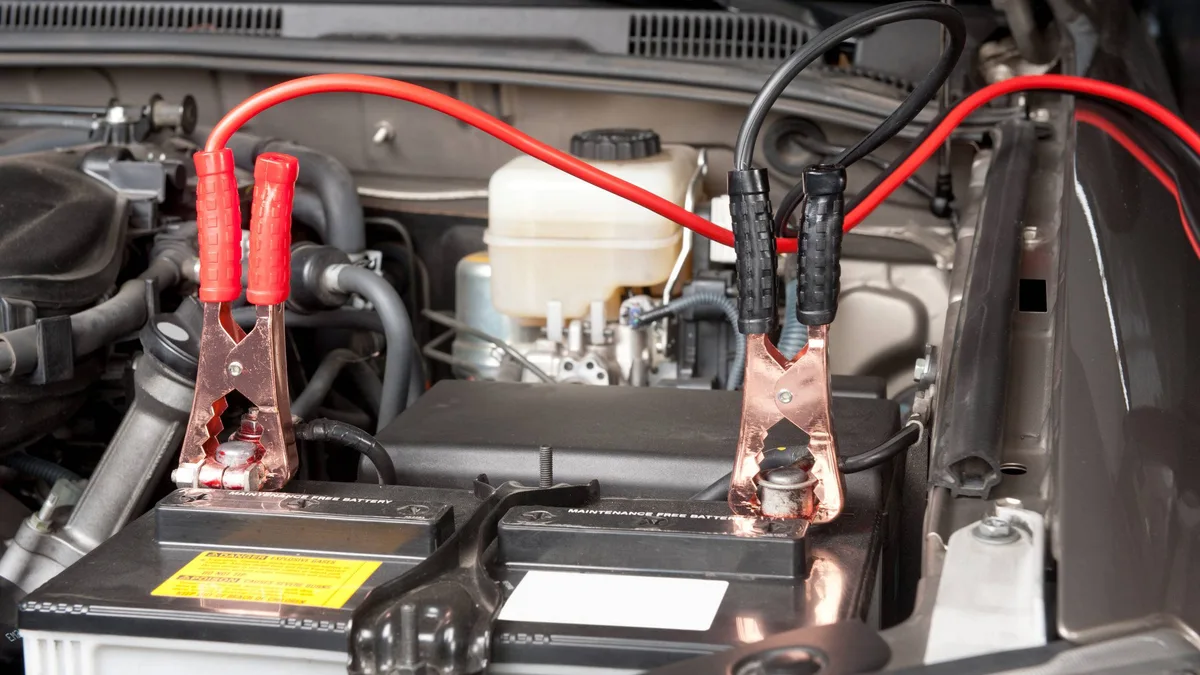
To jump start a RAV4 Hybrid, connect the red clamp to the positive jump-start terminal under the hood. Attach the other red clamp to the donor battery's positive post. Connect black to the donor's negative post, then to a solid metal ground on the RAV4.
Start the donor vehicle. Wait three to five minutes. Press the brake and push Start.
Drive for twenty minutes to recharge the 12V battery.
Why Your RAV4 Hybrid Won't Start (And What's Actually Happening)
Your RAV4 Hybrid has two completely separate electrical systems, and most owners only know about one. The big one is the hybrid synergy drive, a high-voltage traction pack that actually moves the wheels. The small one is the 12-volt auxiliary battery, and that's the battery you're here to jump.
That 12V battery does the same job it does in any normal car. It runs the lights, the infotainment, the door locks, and, critically, it powers up the computers that "wake up" the high-voltage system. Without a healthy 12V, the hybrid system can't initialize, no matter how charged the traction battery is.
Press the Start button and nothing happens, or you hear a click and the dash goes dark.
Common triggers we see in owner reports and Toyota service bulletins:
- Headlights or dome light left on overnight. The 12V has no idle charging when the car is off, so it drains fast.
- 30+ days of sitting unused. The auxiliary battery slowly self-discharges, especially in cold weather.
- An aging battery. Most 12V batteries last four to six years; once they're past that, failure comes without warning.
- A parasitic drain. An aftermarket accessory or stuck relay can pull the battery down while parked.
- A recent repair or software flash. Technicians sometimes leave a vehicle in a low-charge state.
The good news? The fix is the same for all of them. A dead 12V doesn't mean the hybrid system is broken.
It just needs a jump.
RAV4 Hybrid Battery Basics: What You're Actually Jump-Starting
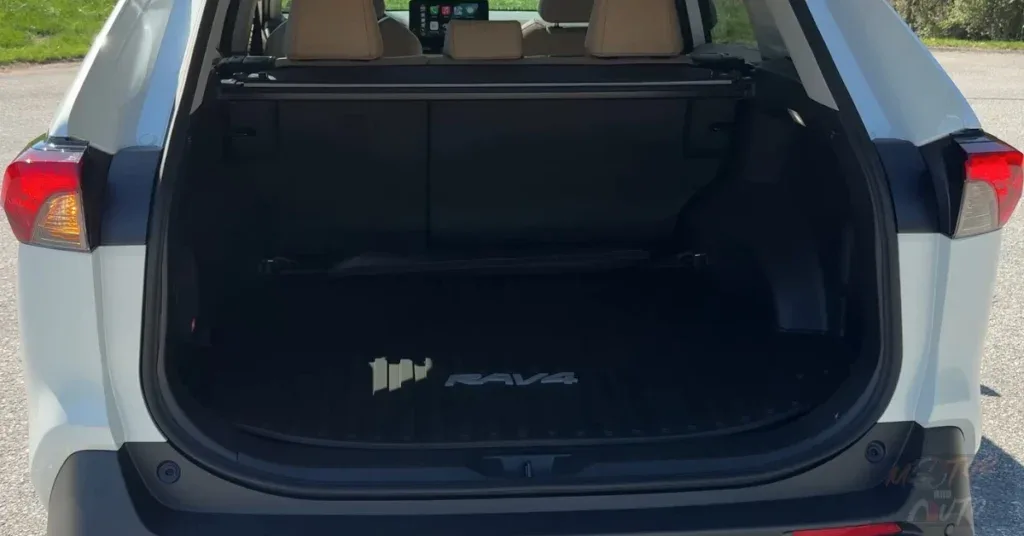
Here's where it gets interesting, and where most generic jump-start guides go wrong. The actual 12V battery in a RAV4 Hybrid is not under the hood. It's tucked under the cargo floor in the rear, behind a removable panel on the passenger side.
Most owners never see it, because there's no reason to access it for a jump.
Manufacturer specs confirm the auxiliary battery is a 12-volt Absorbent Glass Mat (AGM) unit, typically BCI group size 35 or 24, depending on model year. CCA sits in the 550 to 650 range, with reserve capacity around 80 to 100 minutes. AGM matters because it's spill-proof and handles deep discharges better than a flooded lead-acid battery.
It also costs more to replace, usually $180 to $350 installed.
You don't have to pull up that cargo floor to jump the car, though. Toyota engineered a dedicated jump-start terminal in the under-hood fuse box specifically so you can connect cables without exposing the high-voltage system or wrestling with a buried battery.
A few things worth knowing about that 12V:
| Spec | Typical Value |
|---|---|
| Voltage | 12V |
| Type | AGM (sealed) |
| CCA | 550 to 650 |
| Reserve capacity | 80 to 100 min |
| Group size | 35 or 24 |
| Expected life | 4 to 6 years |
| Replacement cost | $180 to $350 |
What About the High-Voltage Battery?
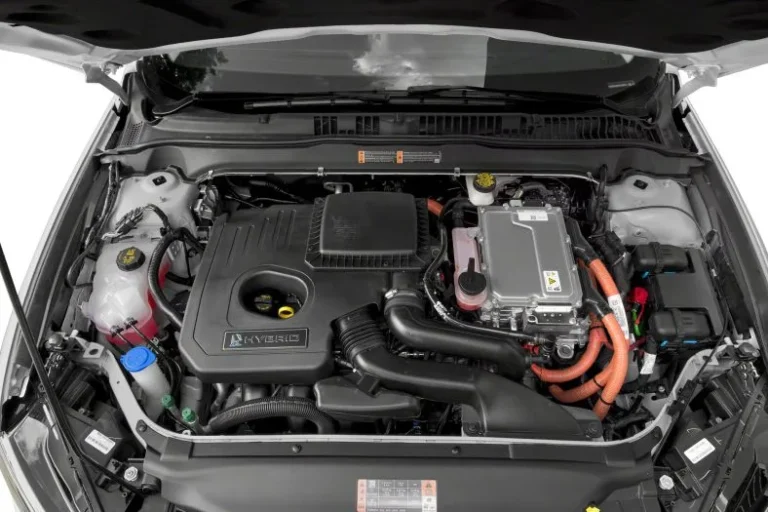
Ignore it for this procedure. The orange-cabled hybrid battery pack operates at around 245 volts, is sealed, and has no user-serviceable parts. Touching it can cause serious injury or death.
Jump-starting is strictly a 12V operation, and the under-hood terminal is designed to keep you safely away from anything high-voltage.
When the 12V Battery Is the Real Problem
A jump gets you moving, but if the battery is older than five years, expect it to fail again soon. A healthy 12V holds 12.6 to 12.8 volts at rest. If yours reads below 11.8 volts after a charge cycle, it's on its way out.
More on that in the troubleshooting section below.
Where to Connect Jumper Cables on a RAV4 Hybrid (The Right Terminal)

This is the step that separates a safe jump from a costly mistake. The RAV4 Hybrid's positive jump-start terminal lives inside the under-hood fuse box, not on a battery post, because the battery isn't even in this compartment. Pop the hood, look for the black plastic fuse box on the driver's side near the firewall, and lift the cover.
Underneath, you'll see a red plastic cover marked with a + symbol. Flip that cover up and you'll find the dedicated positive jump post. That's where the red clamp goes, every single time.
Some model years label it with a lightning-bolt icon instead, so check your owner's manual diagram if you don't see a plus sign.
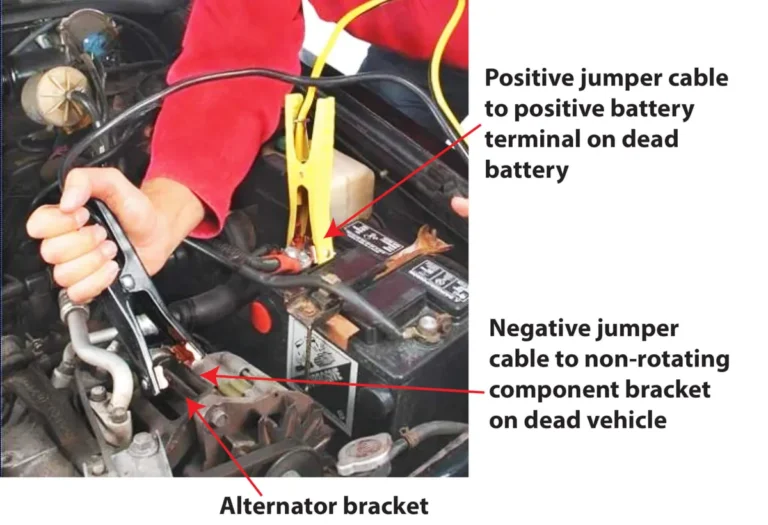
For the negative connection, do not use a random metal bracket under the hood. Toyota's official procedure calls for a clean, unpainted metal ground point on the engine block or chassis. A solid bolt on the engine lift bracket works.
So does the metal strut tower nut. Just make sure it's bare metal, no rust, no grease, no paint.
What NOT to Use as a Ground
- The negative battery post in the rear cargo area. You don't want to be back there with live cables.
- Fuel lines or fuel rail components. Spark risk.
- The orange high-voltage cables. Absolutely not. Lethal voltage.
- Moving parts like belts or pulleys. Cables can get snagged.
A Quick Visual Reference
If you're standing at the front of the car with the hood up, the fuse box sits on the left side (driver's side in North America). The positive post is on the inner edge, closest to the firewall. The metal ground point should be at least 12 inches away from the fuse box and the 12V cabling, to reduce any spark risk near the battery vent area.
Jump Starting With a Donor Vehicle (Traditional Method)
The classic method still works, and for most RAV4 Hybrid owners, it's the most familiar. You'll need a set of jumper cables (4 to 6 gauge is ideal) and a second vehicle with a healthy 12V battery. A donor car with at least 550 CCA is plenty.
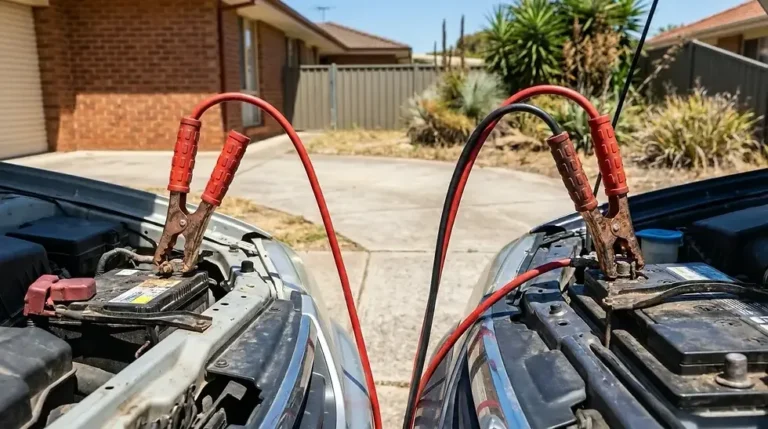
Park the donor vehicle close enough that the cables reach, but don't let the cars touch. Metal-to-metal contact between the two bodies can create a ground path you don't want. Turn both vehicles off, remove the keys, and engage both parking brakes.
Cable Connection Order
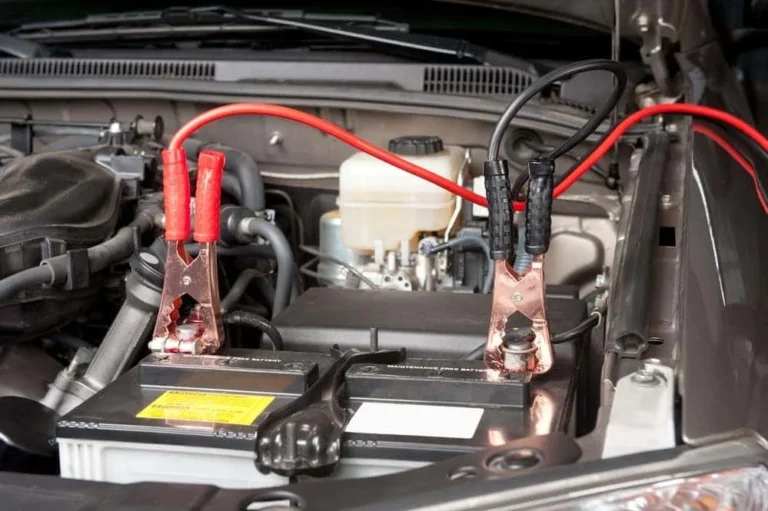
- Red clamp to the RAV4 Hybrid's positive jump terminal (under-hood fuse box).
- Red clamp to the donor battery's positive (+) post.
- Black clamp to the donor battery's negative (−) post.
- Black clamp to the ground point on the RAV4 Hybrid's engine block.
This order is intentional. The final black connection, on the RAV4's ground point, is the one most likely to spark. By placing it last and far from the battery, you minimize ignition risk from any hydrogen gas the 12V battery might vent.
Starting Sequence
Start the donor vehicle and let it idle for two to three minutes. This sends a slow, steady charge into the dead 12V. Then try to start the RAV4 Hybrid, press the brake pedal firmly and push the Start button.
If the dash lights up and the "Ready" indicator appears, you're good.
If it doesn't start on the first try, wait another two minutes and try again. Three attempts is usually the max before you need to investigate further. Once the RAV4 is running, leave both cars connected for another two to three minutes to stabilize the charge.
Disconnection Order
Reverse the connection steps exactly. Black clamp off the ground point first, then black off the donor battery. Red off the donor battery, then red off the RAV4's terminal.
Don't let the clamps touch each other or any metal surface while the other end is still connected.
Headlight Trick for Voltage Spikes
Here's a pro move that experienced techs use: turn on the RAV4's headlights before disconnecting the cables. The headlights act as a small load, absorbing any voltage spike from the donor vehicle being disconnected. It's a small thing, but it protects the RAV4's ECU from a transient surge that can occasionally trigger warning lights afterward.
Jump Starting With a Portable Jump Starter Pack (Solo Method)
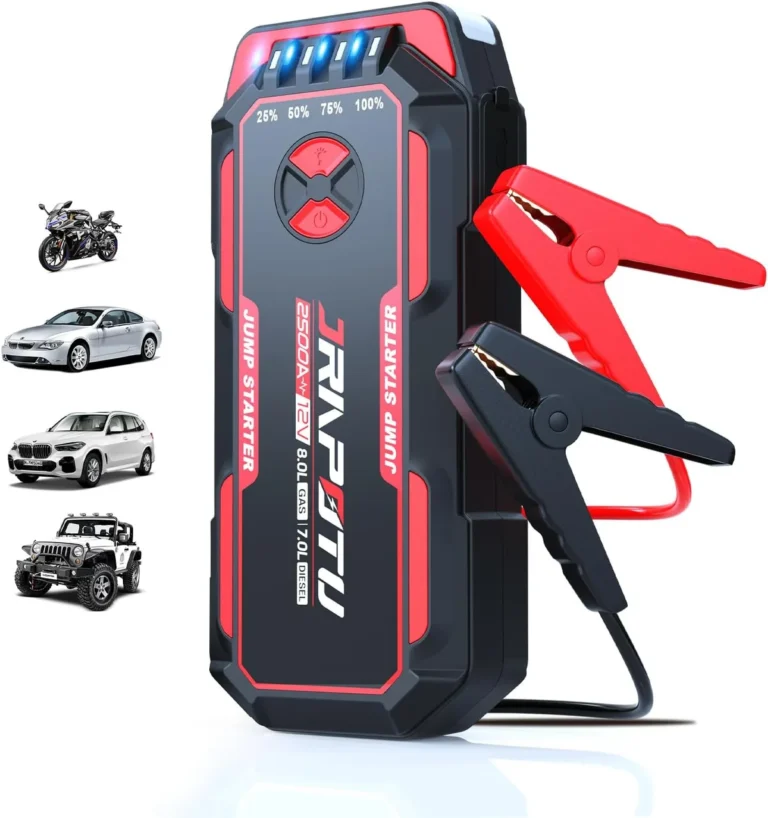
If you don't have a second car handy, a lithium jump pack is the cleanest option. Most modern packs are pocket-sized, hold a charge for months, and crank a dead 12V battery in seconds. They're also safer for solo use, no loose cables flopping around while you work.
Pick a pack rated at 1000 peak amps or higher, with a minimum of 400 cranking amps. The RAV4 Hybrid's 12V system doesn't demand huge current, but extra headroom helps in cold weather, when battery efficiency drops. Common picks in the $60 to $120 range include NOCO Boost, Antigravity, and Audew.
How to Jump With a Portable Pack
- Power on the jump pack and confirm it's charged (most have an LED indicator).
- Connect the red clamp to the under-hood positive terminal, exactly as you would with jumper cables.
- Connect the black clamp to the engine block ground point.
- Wait 30 to 60 seconds for the pack's "ready" light to confirm a solid connection.
- Press the brake and hit Start on the RAV4 Hybrid.
- Disconnect immediately once the car is running.
When a Jump Pack Shines
A pack is ideal for owners who park in remote lots, travel often, or live alone. It's also the safer option if you have to jump in a parking garage with no second vehicle nearby. The trade-off is cost, and the fact that lithium packs themselves can fail in extreme cold, so store it inside the cabin in winter, not the trunk.
Pre-Jump Checks for Solo Use
- Confirm the pack is fully charged before you need it. Test it every two months.
- Make sure the clamps are clean and free of corrosion.
- Don't use a swollen, punctured, or damaged battery pack. Lithium cells can vent or catch fire.
- Read the pack's manual. Some require you to press a "boost" button for deeply discharged batteries.
Jump Starting Decision Tree: Which Method Should You Use?
Not every situation calls for the same approach. Here's how we'd think through it:
Is Another Vehicle Available?
- Yes → Use traditional jumper cables. They're cheap, reliable, and you don't need to pre-charge anything.
- No → Use a portable jump pack. Keep one in the car for emergencies.
Is the Battery Old (5+ Years)?
- Yes → A jump might work once, but expect repeat failures. Plan a replacement soon.
- No → A jump should restore full function, especially if the discharge was caused by leaving lights on.
Is the Temperature Below 0°F (−18°C)?
- Yes → A jump pack with 1000+ peak amps is more reliable. Lead-acid donor vehicles lose cranking power in extreme cold too.
- No → Either method works fine.
Did the Car Sit Unused for 30+ Days?
- Yes → The 12V is deeply discharged. Plan for a 20-minute drive after the jump, and consider a battery tender if you'll be away again.
- No → A quick jump and a short drive is usually enough.
Are Dashboard Warning Lights Already Showing?
- Yes, hybrid system warning → Jump first. If the warning persists after a successful start, drive directly to a Toyota service center.
- No warnings → Standard jump procedure, no extra concerns.
This kind of branching matters because it prevents you from wasting time on the wrong method. A weak jump pack on a deeply discharged 12V will fail to start the car, and you'll think something's broken. It probably isn't.
The battery just needed more amperage than your pack delivered.
Step-by-Step: How to Jump Start a RAV4 Hybrid Safely
Here's the full sequence in one tight list, so you can run through it without flipping back and forth:
- Park both vehicles close, engines off, parking brakes on. Cars should not touch.
- Open the RAV4's hood and locate the under-hood fuse box (driver's side, near firewall).
- Lift the fuse box cover and flip open the red plastic cap marked + to expose the positive jump terminal.
- Identify a clean, unpainted metal ground point on the engine block, at least 12 inches from the fuse box.
- Connect red clamp to the RAV4's positive jump terminal.
- Connect red clamp to the donor battery's positive (+) post.
- Connect black clamp to the donor battery's negative (−) post.
- Connect black clamp to the ground point on the RAV4.
- Start the donor vehicle and let it idle for 2 to 3 minutes.
- Press the brake pedal and push the Start button on the RAV4 Hybrid.
- If it doesn't start, wait 2 more minutes and try again (max 3 attempts).
- Once "Ready" appears, leave cables connected for 2 more minutes to stabilize.
- Turn on the RAV4's headlights to absorb any voltage spike.
- Disconnect in reverse order: black from ground, black from donor, red from donor, red from RAV4.
- Drive for at least 20 to 30 minutes to recharge the 12V battery.
If you're using a portable jump pack instead, skip steps 9, 11, and 12. Press Start after step 8 once the pack's "ready" indicator shows a solid connection.
After the Jump: How Long to Drive and What to Watch For
A successful jump gets the engine "Ready," but it doesn't fully recharge the 12V battery. Toyota's hybrid system trickle-charges the 12V from the high-voltage pack while the car is running, but it's a slow process.
Manufacturer data and aggregate owner reports suggest you need at least 20 to 30 minutes of driving to bring a deeply discharged 12V back to a useful charge. Idle time on a hybrid counts too, though driving is more efficient. Highway driving at 40 to 60 mph is ideal.
Stop-and-go city traffic works, just slower.
What to Watch for in the First Hour
- Dashboard warning lights. A successful jump sometimes leaves residual icons, especially the hybrid system warning or the check-engine light. Most clear after a full drive cycle. Persistent lights mean a real fault.
- Battery voltage behavior. A healthy 12V reads 13.8 to 14.4 volts while the engine is running. Below 13.5 volts means the system isn't charging properly.
- Slow or weak restarts. If the car struggles to "Ready" again after sitting for an hour, the 12V isn't holding charge. Replacement is the next step.
What If the Battery Dies Again Tomorrow?
That's the clearest signal the battery is end-of-life. A 12V that takes a charge but won't hold one is internally sulfated or has a dead cell. Per BCI standards, a battery that drops below 12.0 volts at rest within 24 hours of a full charge should be replaced, not jumped again.
Common Mistakes to Avoid When Jump Starting a RAV4 Hybrid
Most jump-start failures aren't electrical. They're procedural. Here's where owners go wrong:
Reversing Polarity
Red to negative, black to positive. It happens more often than you'd think, and it can fry fuses, damage the ECU, or destroy the donor battery. Always double-check the colors before you connect.
Using the Wrong Ground Point
Grounding to a painted surface, a plastic bracket, or a moving part causes poor contact and possible damage. Pick bare metal, and confirm it's at least a foot away from the 12V battery vent.
Skipping the Wait Time
Cranking the RAV4 Hybrid within 30 seconds of connecting cables rarely works on a deeply discharged 12V. Let the donor vehicle (or jump pack) feed current for a few minutes first.
Leaving the Donor Vehicle Running During Disconnection
Turn the donor off before removing cables. A running engine with cables connected creates voltage fluctuations that can spike sensitive electronics in the RAV4. Once the RAV4 is "Ready," disconnect with the donor off.
Trying to "Boost" the High-Voltage Battery
This is the dangerous one. The 245V hybrid pack has its own service disconnect and is not user-serviceable. Don't try to jump it, charge it, or touch any orange cable.
It can kill you.
Assuming a Jump Fixes Everything
A jump is recovery, not repair. If your 12V died once, find out why. Recurring failures point to a worn battery, a parasitic drain, or a charging system fault.
Ignoring the root cause means you'll be stuck again.
Safety Warnings: What to NEVER Touch in a RAV4 Hybrid
The single biggest risk in any RAV4 Hybrid service procedure is the high-voltage system. The orange cables carry roughly 245 volts, more than enough to stop a heart. They're thick, heavily insulated, and routed through the underbody, but any sign of orange wiring means step back.
Other non-negotiables:
- Don't smoke or create sparks near the 12V battery. It can vent hydrogen gas, especially when discharged.
- Remove metal jewelry before handling cables. A ring across two terminals welds instantly and burns.
- Wear safety glasses if the battery looks swollen, cracked, or leaking. AGM batteries rarely fail this way, but it's worth the protection.
- Don't lean over the battery while making the final connection. Stand to the side so any spark is away from your face.
- Keep the key fob away from the vehicle while working. Accidental "Start" presses in accessory mode can trigger electrical events.
If anything looks off, like a burning smell, a hissing sound, or visible damage to the 12V battery, stop. Call Toyota Roadside Assistance at 1-800-331-4331, or a local service center. The RAV4 Hybrid is engineered to be safe to jump, but only when you respect the systems involved.
Signs the 12V Battery Needs Replacement, Not Just a Jump
Sometimes a jump is a band-aid on a much bigger problem. Watch for these signs that the 12V is on its way out:
- The engine cranks slowly or clicks repeatedly. A weak 12V can't deliver enough current to engage the hybrid computers.
- The car starts but dies within minutes. The battery can't hold enough charge to keep the system running.
- Dashboard lights flicker or reset randomly. Voltage drops below the threshold the ECUs need.
- The battery case is swollen or smells like rotten eggs. Internal damage. Replace immediately.
- The car sits for a week and is dead again. Either a parasitic drain or a battery that won't hold charge.
A simple voltage test tells the whole story. With the car off for at least an hour, a healthy 12V reads 12.6 to 12.8 volts. Below 12.4 volts means it's partly discharged.
Below 12.0 volts means it's failing. Below 11.8 volts means it's dead. Per SAE J537 testing standards, any 12V battery that drops below 10.5 volts under a load test is considered end-of-service-life.
How Often Does a RAV4 Hybrid 12V Battery Need Replacing?
Toyota doesn't publish a hard replacement interval, but aggregate service data and BCI standards suggest four to six years is the typical lifespan. Climate matters a lot. Hot regions (above 90°F average) shorten life to three or four years.
Mild climates stretch it past six.
A few habits help extend it:
- Drive the car at least once a week for 20+ minutes. Short trips never fully recharge the 12V.
- Use a battery tender if you'll be away for more than a month. A $30 tender keeps the 12V topped off.
- Avoid aftermarket accessories that tap into constant power. Dashcams, trackers, and alarm systems are common parasitic drain sources.
- Get the 12V tested annually after year three. Most Toyota dealers will do this for free during an oil change.
Replacement cost sits in the $180 to $350 range, installed, depending on whether you choose OEM Toyota or an aftermarket AGM equivalent. Aftermarket units from brands like Optima, Interstate, or DieHard work fine and usually cost less. Make sure the replacement matches the original group size (35 or 24) and CCA rating.
A weaker battery saves money upfront but fails sooner.
For sourcing OEM specs and service procedures, the Toyota USA owner's manual portal has model-year-specific documentation that's worth bookmarking.
Real-World Scenarios: When RAV4 Hybrid Batteries Die Most Often
Airport parking is the number one scenario we see in owner reports. A RAV4 Hybrid sits for two weeks while the family is on vacation, and the 12V drains below the threshold needed to wake the hybrid system. Same thing happens with snowbirds who leave their car in storage for the winter.
Cold weather accelerates the discharge, so a battery that would survive 30 days in summer might die in 14 days at 0°F.
The other common culprit is the "I just ran inside for five minutes" scenario. Five minutes turns into 45, the dome light stays on the entire time, and the 12V is too weak to start the car. With a conventional vehicle, a five-minute dome-light session barely makes a dent.
In a hybrid with no alternator constantly spinning, accessories pull directly from the 12V with no recharge path until the car is "Ready."
A third scenario shows up more than people expect: right after a dealership service visit. Software updates, hybrid system diagnostics, and infotainment reflashes can leave the 12V in a low state. If you pick up the car and it sits in your driveway for a week before you drive it, the 12V can drop into a non-start condition.
This is why many Toyota techs put a battery tender on cars that are sitting for service.
Each of these situations ends the same way. A jump gets you going, and the right follow-up prevents it from happening twice.
RAV4 Hybrid Jump Start FAQs
Can You Jump Start a RAV4 Hybrid From Another Hybrid?
Yes, any 12V source works, including another hybrid. Just make sure the donor vehicle is in Park and running long enough to stabilize its own 12V output before you start drawing current. The hybrid powertrain in the donor doesn't matter, only its 12V battery does.
Will Jump Starting a RAV4 Hybrid Damage the Hybrid System?
No, not when you use the under-hood jump terminal and follow the correct cable order. Toyota engineered this exact procedure into the fuse box design. Direct connection to the high-voltage pack, on the other hand, can absolutely damage the system, and you.
How Long Does a RAV4 Hybrid Need to Run After a Jump?
At least 20 minutes of driving to put a meaningful charge back into the 12V. Idle time works but is less efficient. A short 5-minute idle won't cut it, and the car may not restart once you turn it off.
Can You Push-Start a RAV4 Hybrid?
No. The RAV4 Hybrid uses an electronically controlled transmission with no direct mechanical link between the wheels and the engine. Push-starting, also called bump-starting, works on older manual-transmission cars, but not on this hybrid.
A jump or a replacement battery is the only fix.
Where Is the RAV4 Hybrid Battery Located?
The 12V auxiliary battery is under the cargo floor, on the passenger side, behind a removable access panel. The high-voltage traction battery is under the rear seat and is not user-serviceable. For jump-starting, you only need to access the under-hood fuse box terminal, not the cargo area.
Do You Need to Disconnect the 12V Battery Before Jump Starting?
No. Leave everything connected. Just attach the cables to the correct terminals and the designated ground point.
Disconnecting the 12V on a hybrid can cause ECU memory loss and trigger multiple warning lights that need a dealer reset.
When Should You Call Toyota Roadside Assistance Instead?
If the battery is swollen, leaking, or physically damaged, don't attempt a jump. Call Toyota Roadside Assistance at 1-800-331-4331 for a tow or on-site service. Same goes if you smell burning, see smoke, or if the high-voltage system shows a warning before you even try to start.
The complimentary coverage runs for two years or 25,000 miles on new vehicles.