How long does a jump start take: Best guide
How long does a jump start take? In most cases, the actual hookup and crank takes 2 to 5 minutes if the battery is only weak, or 10 to 20 minutes if the battery is fully dead. The full job, including the drive afterward, runs closer to 30 to 45 minutes.
The range is wide because your battery's state of charge, the cable gauge, the outside temperature, and whether the battery is sulfated all change the math. Per SAE J537 testing standards, a healthy 12V lead-acid battery holds 12.4 to 12.7 volts at rest, and anything below 11.9V behaves like a flat battery. As of 2026, with newer vehicles packing sensitive ECUs and start-stop systems, the process is roughly the same as a decade ago, just with a bit more caution around electronics.
Let's walk through what actually controls the clock.
Quick Answer
A jump start takes 2 to 5 minutes for a weak battery, or 10 to 20 minutes for a fully dead one. The full recovery includes a 20 to 30 minute drive. Cables and temperature change the timing.
Why Jump Start Time Varies More Than You Think
Two people can pull out the same jumper cables, hook them up the same way, and still finish at very different times. The reason comes down to what's happening inside the battery, not how fast you work.
A mildly discharged battery still has enough surface charge to assist the donor's electrical system. The donor pushes current across, the dead battery accepts a little, and the engine turns over on the first or second try. You're looking at 2 to 5 minutes total, including the cable hookup.
A fully dead battery with a reading under 11.9V has nothing to give back. The donor's alternator has to do all the work, the surface of the dead plates needs time to react, and the engine usually needs 2 or 3 crank attempts spaced a minute apart. That stretches the process to 10 or even 20 minutes.
Temperature is the silent variable most people miss. A battery at 0°F delivers roughly 30 to 50% less usable capacity than the same battery at 70°F. Cold weather also thickens engine oil, which makes the starter work harder.
In sub-zero conditions, expect the longer end of the timing range, and plan for a longer drive afterward to put meaningful charge back.
The Three Battery Conditions That Change Everything
Mildly Discharged Battery (Quick Start)
A battery in the 12.0 to 12.3V range is weak but not dead. The car might turn over slowly, click once, or start after a longer crank. With good 4 AWG jumper cables and a donor vehicle running, you can expect a successful start in 2 to 5 minutes.
If your headlights come on dim and slowly brighten, or if the dashboard lights flicker but the engine still cranks, you're in this category. The fix is fast.
Fully Drained Battery (Longer Recovery)
A battery reading below 11.9V at rest is considered deeply discharged. Lights may not come on at all, the doors won't unlock, and the only sound when you turn the key is a single click from the starter solenoid. This is the slow path.
Plan on 10 to 20 minutes before the engine fires. The dead battery needs time to absorb surface charge from the donor before it can help spin the starter. You'll typically crank 2 or 3 times, waiting about 60 seconds between each attempt, before the engine catches.
Sulfated or Damaged Battery (Won't Hold a Charge)
A battery that's been sitting dead for weeks, or one that's been deep-cycled many times, has lead sulfate crystals hardened onto the plates. This is called sulfation, and it's the silent killer of 12V batteries. The engine may start during the jump, then die again within minutes of disconnecting the cables.
If the engine starts, you disconnect, and it dies within 5 to 10 minutes, the battery is shot. No amount of jumping will fix it. Skip further attempts and replace the battery.
What Actually Happens During a Jump Start
The Electrical Transfer Process
When you connect jumper cables, current flows from the donor battery through the red (positive) cable, into the dead battery's positive terminal, through the dead battery's internal chemistry, out the negative terminal, and back to the donor via the black cable. The chassis ground on the dead vehicle completes the circuit.
That flow isn't instant. The dead battery's surface charge has to build up before the cells can deliver enough amps to crank the starter. That's why a brief "wait" between connecting and cranking makes such a big difference.
Manufacturer guidance from Interstate Batteries and Optima confirms 30 seconds to 2 minutes of connected rest helps with marginal batteries.
Why Voltage Matters More Than You Realize
Voltage tells you the state of charge. Amps tell you what the battery can deliver under load. A battery can show 12.2V at rest (looks okay) and still collapse under the 150 to 300 amp draw of a starter motor.
That's why voltage tests alone can fool you. If the engine barely cranks even with a donor connected, the battery's internal resistance is too high, and it needs replacement.
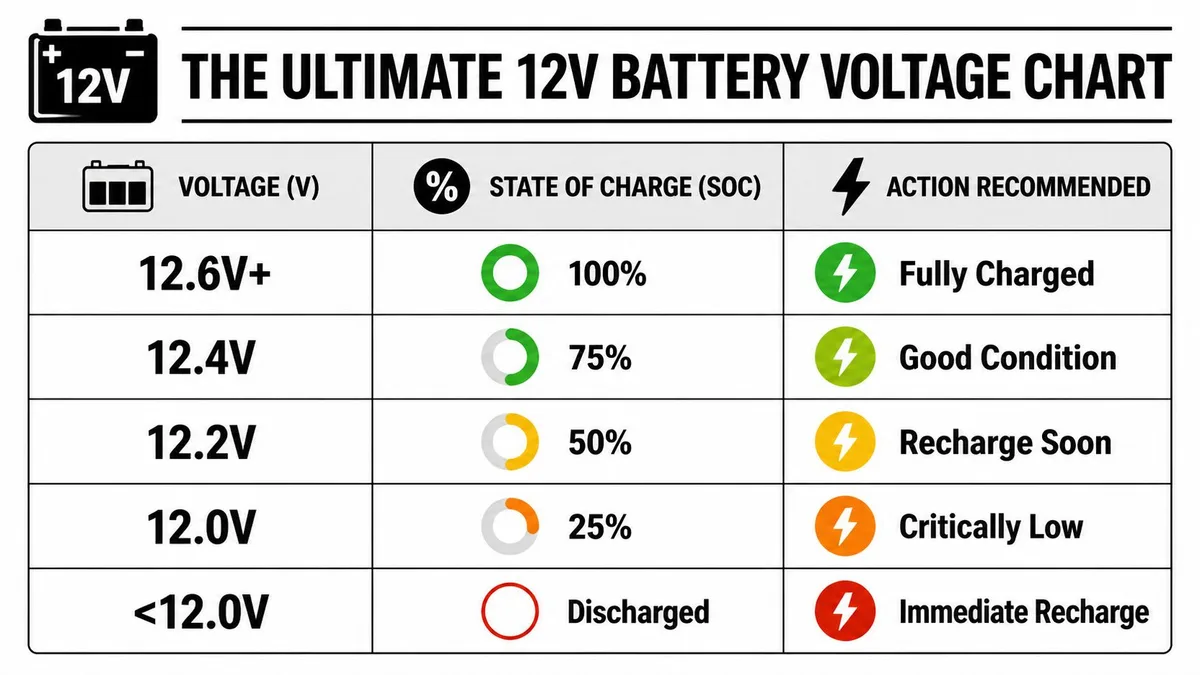
Healthy resting voltage for a 12V lead-acid battery sits between 12.4 and 12.7V. Below 12.0V, you're in trouble. Below 11.8V, the battery is functionally dead and may not recover, even with a long drive.

Step-by-Step: How to Jump Start a Car and What to Expect at Each Stage
Below is the actual timeline, stage by stage, so you know what "normal" looks like and where to slow down.
Pre-Jump Inspection (1–2 Minutes)
Look at the dead battery before you touch anything. If you see a swollen or cracked case, white powder caked around the terminals, or a strong sulfur smell, stop. A cracked case means acid leaks.
Heavy corrosion adds resistance. A rotten-egg smell signals a battery that's been overcharged or internally shorted. None of these batteries are safe to jump, per OSHA battery handling guidance.
If the battery looks intact, brush off heavy corrosion with a wire brush or old toothbrush so the clamps can make solid metal-to-metal contact.
Connecting the Cables (2–3 Minutes)
Park the donor vehicle nose-to-nose or side-by-side so the cables reach. Both cars off, both in Park or Neutral, parking brakes set.
Connection order matters:
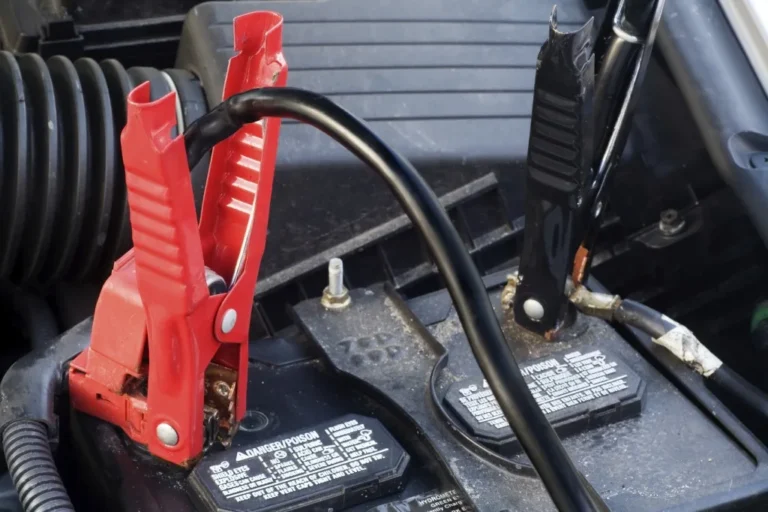
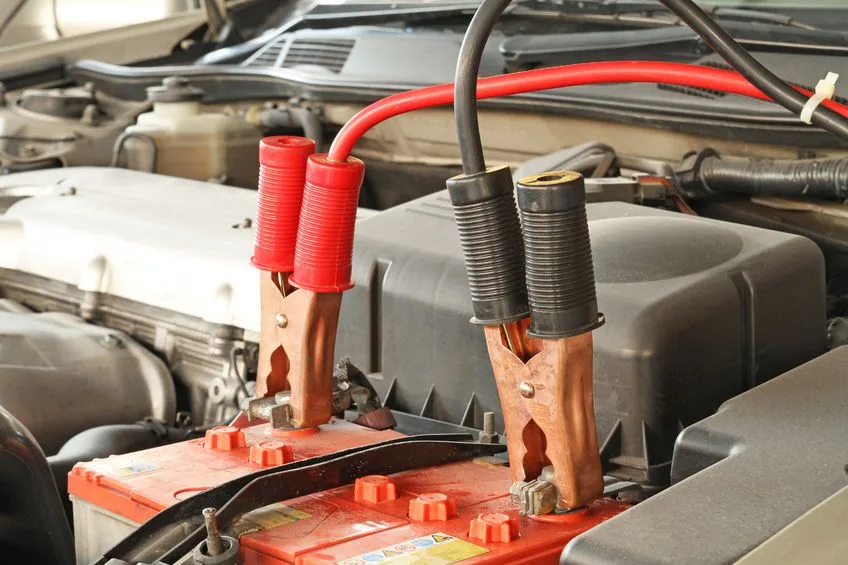
- Red clamp to the dead battery's positive (+) terminal.
- Red clamp to the donor battery's positive (+) terminal.
- Black clamp to the donor battery's negative (-) terminal.
- Black clamp to an unpainted metal ground on the dead vehicle, away from the battery. A bracket, bolt, or engine block works.
The ground-on-engine-block trick reduces the chance of igniting hydrogen gas that vents from the dead battery.
The Waiting Period (30 Seconds to 20 Minutes)
Start the donor vehicle and let it idle for 1 to 2 minutes. Rev the donor engine to about 1,500 to 2,000 RPM to push more alternator output into the dead battery. This is the "trickle" phase where the dead battery builds surface charge.
For a weak battery, 1 to 2 minutes is plenty. For a deeply discharged one, give it 5 to 10 minutes. Don't skip this step.
Cranking the dead engine immediately, without the wait, often just produces a sad click and drains the donor.
Cranking the Engine (3–10 Seconds)
Turn the key or press the start button. Crank for no more than 10 seconds. If the engine doesn't fire, stop.
Wait 60 seconds, then try again. Three attempts spaced a minute apart is the safe limit before you risk overheating the donor's starter or boiling the dead battery.
If it doesn't start on the third try, something else is wrong. Could be a bad starter, bad alternator, bad ground cable, or a battery so far gone it can't hold any charge. Stop and troubleshoot.
Disconnecting and Driving (20–30 Minutes)
Once the dead engine is running, let it idle for a minute or two to stabilize. Then disconnect in reverse order: black clamp from the ground, black clamp from the donor, red clamp from the donor, red clamp from the dead battery. Keep the jumped car running.
Now drive it for at least 20 to 30 minutes, ideally on the highway, to put a meaningful charge back. Short trips and idle time won't cut it. A typical alternator puts out 40 to 80 amps, but only a fraction of that goes to recharge the battery, with the rest running the car's electrical systems.
Jumper Cables vs. Portable Jump Starter: Time Differences
Using Jumper Cables with a Donor Vehicle
This is the classic method, and it's the fastest when you have access to another running car. The total time, from parking to driving off, usually runs 10 to 20 minutes for a fully dead battery, or under 5 minutes for a weak one. The bottleneck is the donor's availability and cable length.
Using a Lithium Jump Pack
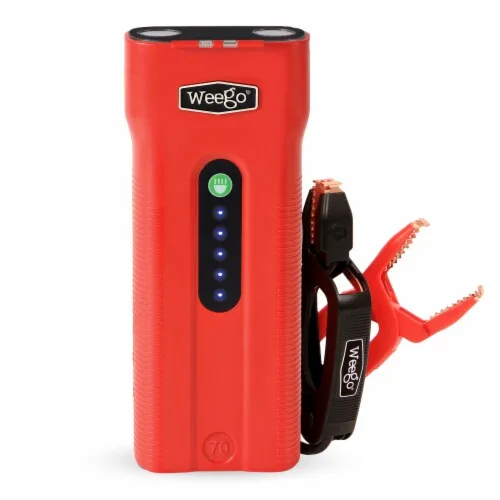
A modern lithium-ion jump pack skips the donor vehicle entirely. You connect the clamps to the dead battery and crank. The process is actually faster in some ways, often 3 to 5 minutes total, because there's no donor to start, idle, or rev.
The catch is capacity. A small 1,000-amp pack might only deliver 2 or 3 strong cranks before it's depleted. Larger 2,000 to 3,000-amp packs handle bigger engines and multiple jump attempts on the same charge.
In cold weather, lithium packs lose some output, so a "1,500-amp" pack at 0°F behaves like a 1,000-amp pack at room temp.
For diesel engines and large V8 trucks, you'll want a jump pack rated for at least 2,000 peak amps. Smaller packs may click the solenoid without spinning the engine.
Cold Weather vs. Warm Weather: How Climate Affects Jump Start Time
Cold is the enemy of every 12V battery. At 32°F (0°C), a fully charged lead-acid battery delivers about 80% of its rated capacity. At 0°F (-18°C), that drops to around 50%.
The chemistry slows down, the oil thickens, and the starter demands more current to turn the engine.
What this means for jump start time:
- Warm weather (60°F+): Standard timing, 2 to 5 minutes for a weak battery.
- Cool weather (40 to 60°F): Add 30 to 60 seconds to most steps.
- Cold weather (20 to 40°F): Expect 5 to 10 minutes for a weak battery, 15 to 25 for a dead one.
- Sub-zero (below 20°F): Plan for the long end, 20+ minutes, and accept that some batteries won't recover at all.
Hot climates kill batteries differently. Evaporation of the electrolyte lowers capacity, and chronic heat shortens overall battery life. If you're in Phoenix or Houston, your battery may die from heat damage even if it never saw a cold morning.
Diesel Engines and Large Trucks: Why They Take Longer
Diesel engines use glow plugs or grid heaters to warm the combustion chambers before cranking. That draws a huge current spike before the starter even engages. On top of that, diesel starters often need 800 to 1,000+ cranking amps versus 200 to 400 for a small gas engine.
A standard 4-cylinder donor car cannot safely jump a 6.7L Power Stroke or a Duramax. The donor's battery and alternator aren't built for that kind of draw. You need either a heavy-duty donor (another diesel or large truck) or a commercial-grade jump pack rated for diesel.
Timing differences:
- Small gas engine (4-cyl): 2 to 5 minutes weak, 10 to 15 minutes dead.
- Large gas engine (V8): 5 to 10 minutes weak, 15 to 20 minutes dead.
- Diesel (half-ton to one-ton): 10 to 20 minutes weak, 20 to 30 minutes dead, with glow plug cycle added.
Add the glow plug wait time (5 to 15 seconds on modern diesels) to your overall clock.
How Long Should You Drive After a Jump Start?
The jump gets you going, but it doesn't fully recharge a dead battery. A typical car battery holds 40 to 60 amp-hours of capacity, and the alternator only pushes back a fraction of that while driving.
Manufacturer guidance and AAA roadside service bulletins suggest:
- Minimum drive time: 20 to 30 minutes.
- Ideal: 30 to 60 minutes, mostly highway speeds.
- Idle time: counts, but inefficiently. A 30-minute idle puts back far less charge than a 30-minute drive.
If the battery was only mildly discharged, a single 20-minute drive may fully recover it. If it was deeply discharged (below 11.9V), you'll need an external charger or a long drive to bring it back to a healthy state of charge. A battery that won't hold a charge after a 60-minute drive is sulfated and needs replacement.
One more thing. Modern cars with start-stop systems and aggressive battery monitoring may not register a full charge even after a long drive. The Battery Management System (BMS) often needs a reset or a slow overnight charge to recalibrate.
If your start-stop system doesn't work after a jump, that's why.
Common Mistakes That Drag Out the Process
Connecting in the Wrong Order
Reverse polarity, meaning positive to negative and vice versa, can fry the donor vehicle's ECU, blow fuses, or destroy the dead battery. Always positive first on both ends, then negative on the donor, then a ground on the dead vehicle. This sequence minimizes spark risk near the battery.
Using Undersized Cables
Thin 10 AWG or 12 AWG cables can't deliver enough current to crank a large engine. They heat up, voltage drops, and the dead engine barely turns over. Use 4 AWG or 6 AWG for full-size vehicles.
Cheap cables turn a 5-minute job into a 30-minute frustration.
Cranking Too Long Without Rest
Hanging on the key for 20+ seconds overheats the donor's starter motor and boils the dead battery. Crank for 5 to 10 seconds, stop, wait 60 seconds, try again. The wait is part of the process.
Trying to Jump a Frozen or Damaged Battery
A frozen battery has ice inside the cells. Trying to jump it can crack the case and spill sulfuric acid. If you live in a cold climate, bring the battery inside to thaw before attempting a jump.
If the case is bulging, leaking, or smells like rotten eggs, don't jump it. Replace it.
When a Jump Start Won't Work: Warning Signs
Some batteries and electrical faults won't respond to a jump no matter how long you wait. The common red flags:
- Engine cranks fast and strong, then dies within seconds of disconnecting the cables. The battery has no reserve capacity.
- No sound at all when turning the key, even with cables connected. Could be a bad starter, bad solenoid, or bad ground cable.
- Battery reads 12.4V or higher at rest, but the car is dead. That's an alternator or wiring issue, not a battery problem.
- Clicking sound but no crank, repeatedly. Often a corroded ground strap or a failing starter, not a battery issue.
- Smoke or burning smell during the jump. Stop immediately and disconnect. Could be a shorted cell or reversed polarity damage.
Battery Voltage Reference: What Your Numbers Mean
A simple multimeter reading tells you most of what you need to know. Check the battery at rest, with the car off and no accessories running for at least 30 minutes.
| Voltage Reading | Battery State | Jump Start Time |
|---|---|---|
| 12.6 to 12.7V | Fully charged | No jump needed |
| 12.4 to 12.5V | 75 to 90% charged | Likely starts on its own |
| 12.2 to 12.3V | 50 to 75% charged | 2 to 5 minutes |
| 12.0 to 12.1V | 25 to 50% charged | 5 to 10 minutes |
| 11.8 to 11.9V | Deeply discharged | 10 to 20 minutes |
| Below 11.8V | Fully dead or damaged | Jump may not work |
These numbers are based on SAE J537 standards and consistent with specs published by manufacturers like Optima and Interstate. Voltage alone doesn't tell the whole story, but it's a fast first check.
Safety Precautions You Should Never Skip
Car batteries vent hydrogen gas, which is explosive in enclosed spaces. A spark near the battery can ignite it. Per OSHA battery handling guidelines, the safe approach is:
- No smoking, no open flames, no sparks near the battery.
- Wear safety glasses and gloves if you have them.
- Connect the final negative clamp to a ground on the engine block, not the battery's negative post, to keep sparks away from vented gas.
- Keep the donor and dead vehicles from touching each other.
- Turn off both vehicles before connecting cables.
- Never try to jump a frozen, cracked, or leaking battery.
- On hybrid vehicles, do not attempt to jump the high-voltage traction battery. Jump only the 12V auxiliary battery, and follow the procedures in the owner's manual. According to the U.S. Department of Energy's vehicle battery page, hybrid systems carry voltage that can injure or kill, even when the car is off.
Expert Tips to Speed Up the Process
- Keep your cables short and thick. 4 AWG, 12 to 16 feet is the sweet spot for most garages and driveways. Long cables waste current.
- Rev the donor to 1,500 to 2,000 RPM during the wait. Higher alternator output fills the dead battery faster.
- Turn off every accessory in the dead car before you crank. Headlights, blower fan, and infotainment draw amps you want going to the starter.
- If the first crank fails, wait 90 seconds, not 30. The dead battery needs time to recover surface charge.
- Keep a lithium jump pack in the trunk. As of 2026, 2,000-amp packs weigh under 5 pounds and fit in a glove box. They cut the donor-vehicle step out entirely.
Cost vs. Time: Is a Jump Start Worth It?
A basic set of jumper cables runs $20 to $40. A lithium jump pack runs $50 to $150. A tow to the nearest shop is $75 to $150 in most metro areas, more in rural regions.
A new battery is $100 to $250 installed.
If your battery is just weak from leaving the lights on, a jump is a no-brainer. The whole job takes under 15 minutes and costs nothing beyond the cables you already own. If the battery is more than 4 to 5 years old, or if it dies again within a day, replace it.
The cost of another jump and tow adds up fast.
Common Mistakes That Drag Out the Process (Extended)
A jump start that should take five minutes can stretch to half an hour if a few classic mistakes creep in. Most of them come from rushing, skipping the visual check, or trusting worn-out gear. Below are the slip-ups that cost the most time.
Connecting in the Wrong Order
The single biggest time-waster, and the one most likely to fry something expensive. If you connect the negative clamp to the dead battery's negative post instead of an engine ground, you risk a spark right where hydrogen gas vents. Worst case, you weld a clamp to a post, blow the donor's fusible link, or destroy the dead car's ECU.
Reversed polarity on a modern vehicle can mean a $1,500 repair instead of a 10-minute job.
Using Undersized Cables
A 10 AWG or 12 AWG jumper cable set works for a motorcycle or a small lawn tractor. It barely works for a 4-cylinder. On a V6 or V8, the voltage drop across thin cables is so severe that the starter just clicks.
The job then takes three times as long because every crank attempt fails. Save yourself the frustration. Use 4 AWG for full-size cars and trucks, 6 AWG is acceptable for compact vehicles.
Cranking Too Long Without Rest
Holding the key in the start position for 15 to 20 seconds feels like determination. It's actually damage. The donor's starter motor heats up fast, and the dead battery's surface charge gets hammered down to nothing.
Five to ten seconds of cranking, then a 60 to 90 second rest, is far more effective than one long, desperate hold. The pause is where the recovery happens.
Trying to Jump a Frozen or Damaged Battery
A frozen battery looks fine from the outside but has ice inside the cells. Cranking current can crack the case and spill acid. In really cold climates, bring the battery indoors for an hour to thaw before attempting a jump.
If the battery case is bulging, leaking, or smells like rotten eggs, don't jump it at all. Replace it and recycle the old one at any auto parts store that takes cores.
Maintenance to Prevent the Next Jump
The cheapest jump start is the one you never need. A few habits cut the odds of a dead battery dramatically.
Drive the car regularly. A battery that sits for two or more weeks self-discharges, especially in cold weather. If the vehicle is in storage, a Battery Tender Junior or similar float charger (around $30 to $50) keeps the battery topped off without overcharging.
Clean the terminals once a year. A wire brush and a terminal cleaner tool take five minutes. Corrosion adds resistance, makes the starter work harder, and hides the true state of charge.
Get the battery tested every fall. Most auto parts stores (AutoZone, O'Reilly, NAPA, Advance) test batteries for free with a Midtronics conductance tester. The test tells you cold cranking amp capacity and flags weak cells before deep winter.
A weak battery caught in October costs you 20 minutes of testing. The same battery caught in January costs you a tow and a 30-minute roadside wait.
Watch the age. A typical 12V lead-acid battery lasts 3 to 5 years in moderate climates and 2 to 4 years in extreme heat or cold. If yours is over four years old, the next no-start is probably not far off.
Replacing it on your schedule beats replacing it on a freezing Sunday morning.
Real-World Scenarios: How Timing Plays Out
Scenario 1: Headlights Left On Overnight
Sarah came out to a Honda Civic with the dome light and headlights still on. Battery voltage read 11.8V. She hooked up 4 AWG jumper cables to her neighbor's running SUV, waited 90 seconds, and the Civic fired on the first crank.
Total time: 4 minutes. The battery recovered fully after a 25-minute drive. Lesson: mildly discharged batteries respond fast.
Scenario 2: Two-Week Vacation in Winter
Mike returned to a Ford F-150 parked at the airport for 14 days. Temperature dropped to 10°F while he was gone. The truck was completely dead, no lights, no click.
He used a 2,000-amp lithium jump pack from his garage, let it connect for 8 minutes while he cleared snow, then cranked for 7 seconds. The truck started on the second attempt. Total time: 15 minutes.
He drove 45 minutes on the highway to recharge. The battery survived. Lesson: cold + long sit = slow jump, but a quality jump pack handles it.
Scenario 3: Old Battery That Wouldn't Stay Running
Linda's 6-year-old Toyota Camry needed a jump after a cold snap. The engine started, she disconnected the cables, and the car died within three minutes. Voltage at rest was 12.1V before the jump, 11.5V after.
The battery had lost a cell. No amount of jumping would fix it. She called a tow and replaced the battery for $140 installed.
Total wasted time: 35 minutes of trying before giving up. Lesson: batteries older than five years often need replacement, not jumping.
Choosing the Right Gear for Faster Jump Starts
| Tool | Best For | Typical Cost | Time Savings |
|---|---|---|---|
| 4 AWG jumper cables, 16 ft | Home use with a second vehicle available | $30 to $60 | Standard |
| 6 AWG jumper cables, 12 ft | Compact cars and motorcycles | $20 to $40 | Slight |
| Lithium jump pack, 1,000A | Sedans and small SUVs | $50 to $90 | 3 to 5 minutes |
| Lithium jump pack, 2,000A | Trucks, V8s, diesels | $90 to $150 | 5 to 10 minutes |
| Battery Tender (float charger) | Long-term storage | $30 to $50 | Prevents the jump entirely |
| Portable power station with jump function | RVers, overlanders | $200 to $400 | 5 to 10 minutes plus device charging |
If you can keep a single tool in your trunk, a 2,000-amp lithium jump pack is the best bang for the buck. It works on most vehicles, fits in a glove box, and removes the dependency on finding a willing donor at 2 a.m.
When to Call Roadside Assistance Instead
A jump start is fast, cheap, and satisfying. Sometimes it's not the right call. Skip the DIY and call for help when:
- The vehicle is in a dangerous location (active traffic lane, narrow shoulder).
- The battery is physically damaged (cracked, leaking, swollen).
- You've already tried three jump attempts with no crank at all.
- The vehicle is a hybrid and you're unsure which battery to jump (the 12V auxiliary or the high-voltage pack).
- You don't have the right cables and no donor is available.
- The car is in a locked garage with no ventilation (hydrogen gas buildup is a real risk).
AAA, OnStar, Ford Roadside Assistance, and most insurance roadside add-ons send a tech with a commercial-grade jump pack. Average response time in metro areas is 30 to 60 minutes. In rural areas, it can run 90 minutes to 2 hours.
Calling is sometimes faster than walking to find a stranger with jumper cables.
Hybrid and Start-Stop Vehicles: Different Rules
Hybrids and modern start-stop vehicles have two batteries. The high-voltage traction pack (200 to 400V) drives the electric motors. The 12V auxiliary battery runs the computers, lights, and accessories.
If the car won't start, you're almost always dealing with the 12V battery, and the jump procedure is nearly identical to a conventional car.
The catch is location. Some manufacturers hide the 12V battery under the rear seat, in the trunk, or behind a panel in the engine bay. The owner's manual shows the dedicated jump-start terminals, which look like red plastic posts, not the actual battery.
Use those. Connecting directly to the auxiliary battery's posts is sometimes possible, sometimes not.
High-voltage cables in hybrids are color-coded orange. Don't touch them, even if the car is off. The system stays live for several minutes after shutdown.
If the high-voltage pack itself is dead, a 12V jump won't help. That requires dealer-level diagnostics.
After the Jump: How to Know the Battery Is Actually Fine
A successful start is just step one. Confirming the battery is healthy saves you from another roadside call tomorrow.
- Voltage after 30 minutes of driving: should read 13.7 to 14.7V with the engine running. That's the alternator output.
- Voltage at rest, 30 minutes after shutdown: should hold 12.4V or higher. If it drops below 12.2V overnight, the battery is on its way out.
- Cranking speed the next morning: should sound strong and confident. Slow cranking or hesitation means the battery couldn't hold the charge you put in.
- Headlights at idle: should be bright, not dim. Dimming when you turn on the A/C or rear defroster points to a weak battery or failing alternator.
If any of those red flags show up, drive to an auto parts store for a free load test. The Midtronics tester they use simulates the starter draw and reports remaining capacity in percentage points. Anything below 60% means replace the battery soon.
A Note on Push Starting (Manual Transmissions Only)
If you drive a stick shift and the battery is weak but not totally dead, a push start skips the cables entirely. Put the car in second gear, hold the clutch down, get the car rolling at 5 to 10 mph, then release the clutch quickly while giving it some gas. The spinning wheels turn the engine, which spins the alternator, which provides enough spark to fire the engine.
Push starting doesn't recharge the battery much, but it gets you out of the parking lot. Drive for 30+ minutes afterward to put a real charge back. Don't try this in an automatic.
It doesn't work, and you'll just damage the transmission.
Quick Reference: Jump Start Time by Situation
| Situation | Estimated Jump Time | Recovery Drive |
|---|---|---|
| Weak battery (12.0V+), warm weather | 2 to 5 minutes | 20 minutes |
| Deeply discharged (11.5 to 11.9V) | 10 to 20 minutes | 30 to 60 minutes |
| Frozen or near-frozen battery | Skip the jump, thaw first | 30 to 60 minutes |
| Diesel truck, fully dead | 20 to 30 minutes | 45 to 60 minutes |
| Sulfated battery (won't hold charge) | Jump works, car dies after | Replace battery |
| Hybrid 12V auxiliary | 5 to 15 minutes | 20 to 30 minutes |
| Vehicle sat 2+ weeks in cold | 15 to 25 minutes | 45+ minutes |
Jump Starting a Car in the Rain: Is It Safe?
Yes, you can jump a car in the rain. The voltage involved (12V DC) is far too low to be affected by wet conditions. Water on the battery terminals or cables won't cause a short or a shock.
The real concern is standing water deep enough to reach your vehicle's electrical system, which is a different problem entirely.
A light drizzle or snow is fine. Just wipe the terminals so you can see the polarity markings clearly. The standard safety rules still apply: positive first, negative last, ground to the engine block, no smoking.
Rain doesn't change the timing of the jump either. Plan the same 2 to 20 minutes you'd plan for dry conditions.
What If the Jump Start Takes Longer Than Expected?
If you've followed the procedure and the engine still won't fire after 15 to 20 minutes of connection time, something beyond a simple dead battery is going on. The most common causes:
- Bad ground cable between the battery and chassis. Corrosion or a broken strap blocks current flow even with good jumper cables.
- Failing starter motor. A weak starter draws all available current and clicks instead of cranking.
- Bad alternator diode. A one-way current leak can drain a new battery overnight, making it look like a charging problem.
- Parasitic drain. A shorted accessory, stuck relay, or aftermarket device pulling current while the car is off.
- Wrong battery type installed. An undersized battery (group size too small) may not have the cranking amps to turn the engine even with donor help.
Diagnose before throwing more time at the jump. Check the voltage at the dead battery while the donor is running. If it reads above 14V, the donor is pushing current.
If the dead car still won't crank, the problem is downstream of the battery.
Myth vs. Fact: Common Jump Start Misconceptions
- "Revving the donor engine higher is always better." Moderate revving (1,500 to 2,000 RPM) helps. Redlining doesn't add meaningful extra current and just wastes fuel.
- "You should disconnect the battery before jumping." Old-school advice for carbureted cars. On modern vehicles with ECUs, disconnecting the battery resets the computer and erases stored settings. Leave both connected.
- "A jump can damage the donor vehicle." Rare, but possible if the donor has a marginal alternator or a weak battery. A 10-minute idle to recharge the donor afterward is enough.
- "Bigger jumper cables are always better." Yes, but only up to a point. 2 AWG cables are overkill for most passenger cars. 4 AWG handles anything up to a one-ton truck.
- "Once jumped, the battery is fixed." A jump restores enough charge to start. It doesn't reverse sulfation, repair a shorted cell, or undo age-related wear. The battery either holds a charge or it doesn't.
Your Decision Guide: What to Do Based on Your Situation
- Battery reads 12.0V or higher, and the car is just slow to crank: Jump with cables, expect 2 to 5 minutes, drive 20 minutes.
- Battery reads 11.5 to 11.9V, no lights, single click when turning the key: Jump with cables or a lithium pack, expect 10 to 20 minutes, drive 30 to 60 minutes.
- Battery is swollen, cracked, leaking, or smells like sulfur: Do not jump. Replace the battery and recycle the old one at any auto parts store.
- Engine jumped fine but died again within 10 minutes of disconnecting: Battery is sulfated. Replace it.
- No crank, no click, even with cables connected: Likely a bad starter, bad solenoid, or bad ground. Jump won't help. Tow to a shop.
- Diesel truck or large V8: Use a heavy-duty donor or a 2,000+ amp jump pack. Standard jumper cables from a small sedan won't work.
- Below 20°F outside: Plan for longer wait times, warm the battery indoors if possible, and let the donor idle for a full 5 minutes before cranking.
Frequently Asked Questions
How long does it take to jump start a completely dead battery?
A completely dead battery (below 11.9V) usually takes 10 to 20 minutes from cable hookup to engine start, plus 20 to 30 minutes of driving afterward. Cold weather can extend this to 30+ minutes. The wait between connecting and cranking is the biggest variable.
The dead battery needs time to absorb surface charge before it can help turn the starter.
Can you over-crank the engine during a jump start?
Yes, and it's a common mistake. Crank for no more than 10 seconds at a time, then wait 60 to 90 seconds before trying again. Three attempts is the safe limit.
Beyond that, you risk overheating the donor's starter motor and boiling the dead battery's electrolyte. If the engine doesn't start after three tries, stop and troubleshoot for other issues like a bad starter or ground cable.
How long should I let the donor car run before disconnecting?
Let the donor run for 1 to 2 minutes before you attempt to crank the dead vehicle. After the dead engine starts, let it idle for 1 to 2 minutes to stabilize before disconnecting. Then drive the jumped car for at least 20 to 30 minutes to recharge.
Short idle sessions in the driveway don't count as proper charging.
Does revving the donor car help?
Yes, moderately. Revving the donor engine to 1,500 to 2,000 RPM increases alternator output, which pushes more current into the dead battery during the wait phase. This can shave a few minutes off the recovery time.
Don't redline the donor, as that's unnecessary. A steady 1,500 to 2,000 RPM is the sweet spot.
How long until a dead battery recharges while driving?
A healthy alternator can put a meaningful charge back into a deeply discharged battery in 30 to 60 minutes of driving, mostly at highway speeds. Short trips and city driving take longer because the alternator is also powering all the electrical accessories. A battery that won't hold a charge after a 60-minute drive is likely sulfated and needs replacement.