How long should car run after jump start: Honest review
You turn the key after a jump, the engine fires up, and now you're wondering how long should car run after jump start before you can shut it off. The honest answer: it depends on why the battery died, how dead it actually is, and whether your alternator is healthy. A few minutes of idling won't cut it in most cases.
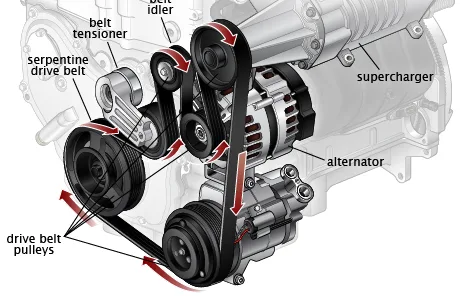
A standard automotive alternator puts out roughly 13.7 to 14.7 volts while the engine runs, with current delivery between 40 and 100 amps depending on the vehicle. That sounds like a lot, but a deeply discharged 12-volt battery needs sustained charging to recover, not just a quick top-off. The rest of this guide walks you through the conditions that change your answer, the right idle vs. drive time, and the warning signs that mean the battery or alternator won't recover at all.
Quick Answer
Let the car run at idle for at least 2 to 5 minutes, then drive for 20 to 30 minutes. A short idle stabilizes the charging system. Driving at road speed restores more usable capacity.
If the battery was fully dead, plan on 1 to 2 hours of total driving to reach a healthy resting voltage.
Why the Answer Isn't One-Size-Fits-All
The "30 minutes" rule you've probably heard is a rough average, not gospel. It's based on the assumption that your battery is mildly discharged and your alternator is working correctly. When either assumption breaks down, the right time changes.
A few real-world situations that throw the average off:
- The battery sat dead for days or weeks, and the plates have started to sulfate.
- The alternator is weak, putting out under 13.5 volts.
- You're in sub-freezing weather, which slows the chemical reaction inside the battery.
- You only drive short trips, and the battery never gets fully topped off between starts.
The rest of this article helps you figure out which situation you're in and what to do about it. Voltage measurements are based on electrical reference standards maintained by the National Institute of Standards and Technology, so any reading you take with a multimeter is traceable to that work.
What Actually Happens Inside Your Battery During Recovery
When your engine is running, the alternator pushes current back into the battery. The battery accepts that charge through a chemical reaction. Lead dioxide on the positive plate reacts with sulfuric acid to form lead sulfate, while the negative plate does the same in reverse.
That reaction is what stores energy.
A healthy battery accepts charge quickly at first, then tapers off as it nears full. A sulfated or deeply discharged battery accepts charge slowly because the internal chemistry has been disrupted. That's why a battery that sat dead for three weeks feels sluggish even after an hour of driving.
The key spec to understand is your alternator's voltage output. A healthy charging system runs between 13.7 and 14.7 volts at the battery terminals when the engine is on. If you're seeing under 13.5 volts, your alternator or voltage regulator is the bottleneck, not the recovery time.
Key Variables That Change the Right Idle and Drive Time
Battery Age and Condition
A battery under 3 years old with no prior issues usually recovers well from a single deep discharge. A battery over 5 years old, or one that's been jumped multiple times already, is a coin flip. As of 2026, most manufacturers rate flooded lead-acid batteries at 3 to 5 years of service life, and AGM batteries at 4 to 7 years, depending on climate and usage.
Alternator Health and Output
If your alternator is putting out the spec range above, charging is happening. If it's weak, no amount of idling or driving will fully recharge the battery. You'll need a load test on the alternator to know for sure.
Type of Battery (Flooded, AGM, Gel)
AGM batteries (absorbent glass mat) accept charge faster than flooded lead-acid, but they're also more sensitive to overvoltage. Gel batteries are the slowest to accept charge and the most particular about charging profile. Most modern cars with start-stop systems use AGM, and they recharge noticeably faster than the old flooded batteries.
How Dead the Battery Actually Is
A battery at 11.8 volts resting is deeply discharged. A battery at 12.2 volts is only moderately low. The first needs hours of recovery time.
The second can be back to normal in 30 minutes of driving.
Outside Temperature
Cold slows the chemical reaction. At 0°F, a fully charged battery only delivers about 65% of its rated capacity. That means a marginal battery in winter behaves like a much worse battery in summer.
Hot climates kill batteries faster through fluid loss, but cold climates make weak batteries fail more visibly.
Idling vs. Driving: Which Actually Charges Faster?
Driving charges faster, and it's not close. Here's why.
At idle (650 to 900 RPM), the alternator spins slowly and produces its minimum output, usually around 40 to 50 amps at 13.7 to 14.7 volts. The engine's computer, fuel pump, ignition, and accessories all draw from that output before any current reaches the battery.
At cruising speed (1,500 to 2,500 RPM), the alternator spins faster and produces its full rated output, often 70 to 100 amps or more. More of that current is available to the battery because the engine's accessory load is similar, and the surplus goes straight to charging.
The practical difference: 30 minutes of idling might add 20% to a deeply discharged battery, while 30 minutes of driving at road speed can add 40% or more.
| Condition | Idle (30 min) | City Driving (30 min) | Highway Driving (30 min) |
|---|---|---|---|
| Estimated charge added | 15 to 25% | 30 to 40% | 40 to 60% |
| Best for | Stabilizing after jump | Moderate recovery | Full recovery |
| Fuel cost (approx.) | $0.40 to $0.70 | $0.50 to $0.80 | $0.50 to $0.80 |
If you have the choice, drive the car rather than letting it sit in the driveway. The fuel cost is roughly the same, and you'll recover the battery meaningfully faster.
How Long to Drive to Fully Recharge a Dead Battery
A fully dead battery (under 11.8 volts resting) needs real driving time to come back. Aggregate service data and manufacturer recovery charts suggest:
- 1 hour of mixed driving restores roughly 60 to 70% of capacity.
- 2 to 3 hours of driving gets you to 85 to 95%.
- A full 100% charge from the alternator alone usually takes 4 to 8 hours of driving.
That last 5 to 10% takes disproportionately long because the battery's charge acceptance drops as it nears full. A plug-in trickle charger is the only practical way to hit a true 100% without leaving the car running overnight.
If you can't drive for hours, here's a reasonable priority list:
- Idle for 2 to 5 minutes after the jump to stabilize the system.
- Drive on the highway for 20 to 30 minutes minimum.
- Don't shut the engine off until you reach a charger or your destination.
- Plan to put the car on a battery maintainer overnight if you have one.
How to Tell If Your Battery Is Holding a Charge
You can't know if the jump worked long-term without checking voltage. Here's the test sequence that gives you a real answer.
Reading Voltage at Rest
Turn the engine off and wait at least 30 minutes. All accessories off, doors closed, no key in the ignition. Measure voltage across the battery terminals with a multimeter.
| Resting Voltage | State of Charge | What to Do |
|---|---|---|
| 12.6V or higher | 100% | Fully charged, no action needed |
| 12.4V | About 75% | Mostly fine, drive another hour |
| 12.2V | About 50% | Undercharged, needs more drive time |
| 12.0V or lower | 25% or less | Deeply discharged, possible damage |
Reading Voltage While Running
Start the engine and measure again. A healthy system reads 13.7 to 14.7 volts at the battery with the engine running. Anything under 13.5 volts suggests an alternator or voltage regulator problem, not just a dead battery.
The Headlight and Accessory Test
If you don't have a multimeter, here's a rough check. Start the engine and turn on the headlights and blower fan. Rev the engine to about 2,000 RPM.
If the lights stay bright and the blower sounds steady, the alternator is producing. If the lights dim or flicker as you rev, the alternator is weak.
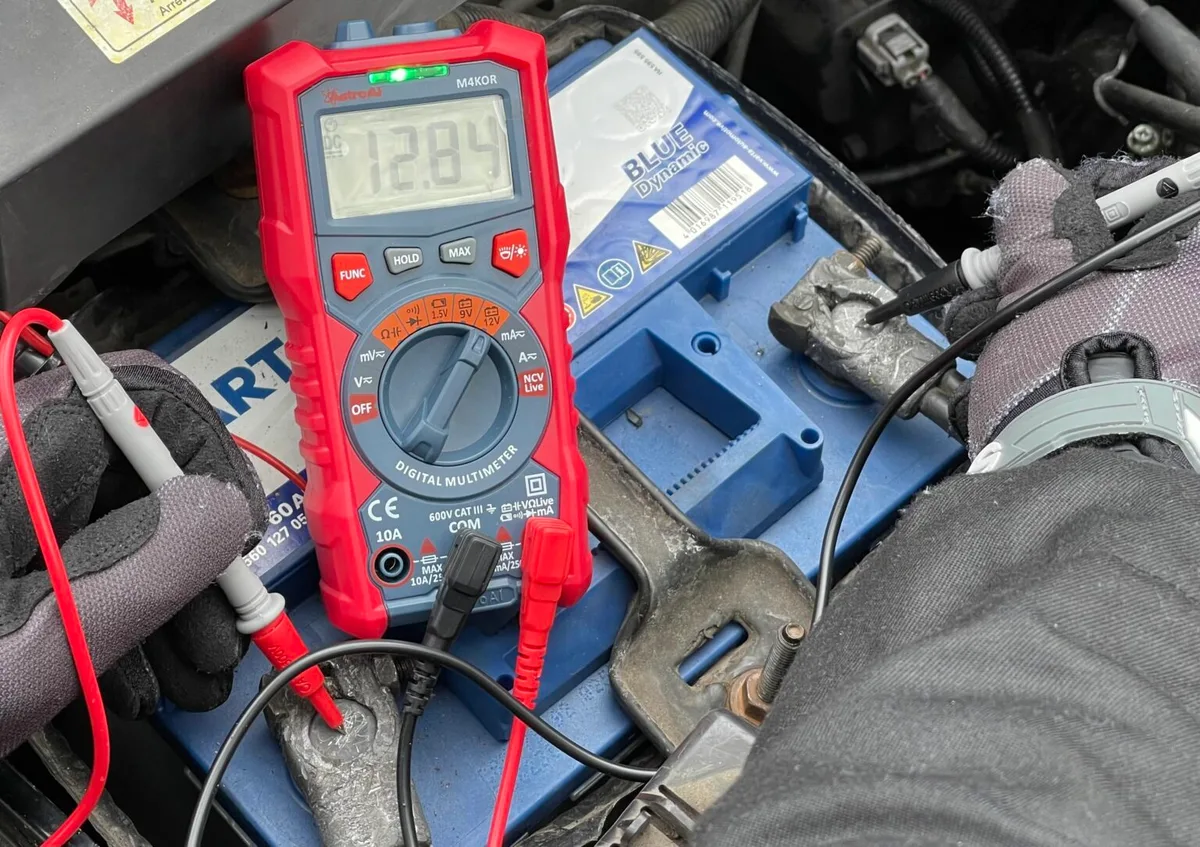
If the voltage check looks good but the battery still won't hold a charge after a few hours of driving, the battery itself is probably sulfated or worn out. A load test at an auto parts store (usually free) will tell you definitively.
Signs the Alternator (Not the Battery) Is the Real Problem
A bad battery will fail in a predictable way. A bad alternator is sneakier because it can mask itself as a battery issue. Here are the signs that point to the charging system, not the battery.
- The car dies while driving, not just while parked.
- The battery warning light stays on or flickers while the engine runs.
- Headlights brighten when you rev and dim at idle.
- The voltage reading while running is below 13.5 volts or above 15 volts.
- You smell a hot electrical or burning-rubber odor from the engine bay.
- Accessories behave erratically, like the radio resetting or power windows moving slowly.
If you see any of these, no amount of post-jump driving will fix the problem. The alternator is either not producing enough current or is overcharging, which destroys batteries fast. Get the charging system tested before driving the car any longer than necessary.
A simple rule: if the battery keeps dying overnight but tests fine after a full charge, you've got a parasitic drain or a bad cell in the battery. If the battery dies while the engine is running, it's almost always the alternator.
Should You Rev the Engine After a Jump Start?
You'll hear this advice a lot: "Rev the engine to 2,000 RPM for a few minutes to charge faster." It's not wrong, but it's mostly unnecessary on modern cars.
Here's what revving actually does. At higher RPM, the alternator spins faster and produces more current. That's real.
But on most modern vehicles with electronic voltage regulators, the alternator is already producing close to its maximum output at idle because the regulator controls the field current, not just the rotor speed.
Where revving helps:
- Older cars with mechanical voltage regulators (pre-1990s, roughly).
- Diesel trucks with high electrical loads and big alternators.
- Any vehicle where the idle voltage is below 13.5 volts and you want to confirm the alternator can produce under load.
Where revving doesn't matter:
- Modern cars with smart alternators or electronic regulators.
- Any vehicle where idle voltage is already in the 13.7 to 14.7 volt range.
If you do rev, keep it under 2,500 RPM for a few minutes. Don't redline the engine on a cold start. That just adds wear to an engine that hasn't had time to warm up yet.
Jump Starting in Cold Weather: What Changes
Cold weather does two things to a weak battery. It reduces the battery's ability to deliver current, and it thickens the engine oil, which makes the starter work harder. The combined effect is a marginal battery that cranks slowly or not at all on a 0°F morning.
When you jump start in cold weather, the recovery time goes up. A battery that would normally recover in 30 minutes of driving might need an hour because the chemical reaction inside the battery is slower at low temperatures.
Practical tips for cold-weather jump starts:
- Let the donor car run for a few minutes before attempting the jump, so its battery is at full charge.
- After the dead car starts, idle for at least 5 minutes before driving, longer than you'd need in warm weather.
- Drive for at least 30 minutes, and prefer highway driving to maximize alternator output.
- Expect the battery to show lower resting voltage for a few hours after recovery. Cold batteries read 0.1 to 0.2 volts lower than warm ones.
If your battery is more than 4 years old and you're jump-starting it in winter, that's a strong signal it's near end of life. Cold cranking amps (CCA) drop as batteries age, and the cold exposes it.
Step-by-Step: What to Do Right After a Successful Jump
Here's the workflow once the engine fires up after a jump start. Follow this in order.
- Leave both cars connected for 2 to 3 minutes. The donor car's alternator is charging your dead battery, which makes your car's alternator's job easier once you disconnect.
- Disconnect the cables in reverse order. Remove the negative clamp from your car first, then the positive. Then remove the donor's clamps.
- Let your car idle for 2 to 5 minutes. Don't drive yet. Let the idle stabilize and confirm the charging system is producing voltage.
- Check for warning lights. If the battery or check-engine light stays on, the charging system has a problem. Drive directly to a shop.
- Drive for 20 to 30 minutes minimum. Highway driving is best. Avoid short trips for the rest of the day.
- Park the car and leave it running if you're not sure the battery will hold. If you must shut it off and you don't have a charger, leave it running until you can put a maintainer on it overnight.
- Test the battery voltage the next morning. If it's below 12.4 volts after sitting overnight, the battery isn't holding charge and likely needs replacement.
Common Mistakes That Kill the Battery Again
A lot of people get the car running, drive it home, shut it off, and find it dead again the next morning. Here are the mistakes that cause that.
- Shutting the engine off too soon. If you only drove 10 minutes, the battery is still mostly discharged.
- Doing only short trips. If your normal driving is 5 minutes to the store, the alternator never tops the battery off.
- Ignoring a parasitic drain. A trunk light, glove box light, or aftermarket accessory can pull 50 milliamps or more continuously.
- Not checking the alternator first. If the alternator is bad, the car is running off the alternator's output alone, and once the battery is depleted, it dies.
- Recharging a battery that won't hold a charge. If the battery is sulfated from sitting dead for weeks, it may never recover.
Jump Start vs. Trickle Charger vs. Battery Booster
These three tools do different things, and using the right one matters.
| Method | Best For | Time to Full Charge | Risk to Battery |
|---|---|---|---|
| Jump start + drive | Emergency recovery | 2 to 8 hours of driving | Low if alternator is healthy |
| Trickle charger (1 to 4 amps) | Overnight recovery, deep discharge | 12 to 24 hours | Very low, gentle on plates |
| Battery booster pack | Emergency start without another car | No charging, just starts | None, doesn't recharge |
A jump start is for getting the engine running. A trickle charger is for actually restoring the battery to full. A booster pack is for getting you out of a parking lot when no one else is around.
If you've had to jump start your car, the best follow-up is a full overnight charge with a maintainer or trickle charger. That alone will extend the battery's life compared to relying on the alternator alone.
When a Jump Start Won't Be Enough
Some batteries are beyond recovery, no matter how long you let the car run. Here are the signs that mean replacement, not more driving.
- The battery is visibly swollen, cracked, or leaking.
- The voltage stays below 12.0 volts even after hours of driving.
- A load test shows the battery fails to hold above 9.6 volts under cranking load.
- The battery is more than 6 years old and has been jump-started more than once.
- The specific gravity of the cells varies by more than 0.05 between cells, meaning a dead cell.
In any of these cases, driving longer won't help. The battery is physically damaged, and a jump start is just delaying the inevitable. Replace it, and have the alternator output tested at the same time so you don't cook the new battery with a bad voltage regulator.
How Much Fuel You're Wasting While Idling
Idling uses a measurable amount of fuel, and it adds up if you're sitting in the driveway for 30 minutes "charging the battery."
A typical 2.0-liter four-cylinder burns about 0.2 to 0.3 gallons per hour at idle. A 5.7-liter V8 burns 0.5 to 0.8 gallons per hour. At $3.50 per gallon (as of early 2026), that's:
- 4-cylinder: roughly $0.70 to $1.05 per hour of idle
- V6: roughly $1.05 to $1.40 per hour of idle
- V8: roughly $1.75 to $2.80 per hour of idle
If you idle for 30 minutes instead of driving for 30 minutes, you're spending more for less charge. Drive the car instead. Same fuel cost, much more charge going to the battery, and your engine actually warms up properly.
Battery Voltage Reference Chart
Here's a single chart you can use for both at-rest and running checks.
| Reading | Meaning | Action |
|---|---|---|
| 11.8V resting | Severely discharged, possible permanent damage | Charge or replace |
| 12.0V resting | 25% charged, deeply discharged | Long charge cycle, test after |
| 12.2V resting | 50% charged | Drive 1 to 2 hours, retest |
| 12.4V resting | 75% charged | Drive 30 to 60 minutes, retest |
| 12.6V+ resting | Fully charged | No action needed |
| 13.5V running | Alternator weak or regulator issue | Test charging system |
| 13.7 to 14.7V running | Healthy charging system | Normal operation |
| 15.0V+ running | Overcharging, regulator failure | Stop driving, check immediately |
Safety Tips Most People Skip During and After a Jump
Most jump starts go fine, but the few that don't usually go wrong because of skipped safety steps. Here's what to do.
- Wear safety glasses. A car battery can vent hydrogen gas, and a spark can ignite it.
- Connect in the right order. Positive to positive first, then negative to a ground point on the dead car, not the negative terminal.
- Don't smoke near the battery. Same hydrogen gas issue.
- Make sure the cars aren't touching each other. A ground path through both chassis can cause a short.
- Keep the donor car running during the jump.
- Don't crank for more than 10 seconds at a time. If the engine doesn't start, wait 30 seconds before trying again.
After the jump, leave the engine bay closed for a few minutes if you smell sulfur or rotten eggs. That's the hydrogen gas venting. It dissipates quickly with airflow, but give it a moment.
How to Test If It's the Battery or the Alternator
Most people blame the battery for every electrical failure. Sometimes they're right. Often they're not.
Here's the fastest way to figure out which component is actually the problem.
Start the engine after the jump and measure voltage at the battery. If it reads 13.7 to 14.7 volts, the alternator is producing. Then turn on the headlights, blower, and rear defroster.
Rev to 2,000 RPM. If voltage stays above 13.5 volts under load, the alternator is healthy. The battery is the issue.
If voltage drops below 13.5 volts under load, or climbs above 15 volts, the alternator or voltage regulator is failing. Replace the alternator before it leaves you stranded, and have the new alternator's output checked after installation.
Why the Battery Keeps Dying the Next Morning
You drove for 30 minutes, the car started fine, you parked overnight, and now it's dead again. This is one of the most common battery complaints, and the cause is usually one of three things.
First, a parasitic drain. Modern cars draw a small current (20 to 50 milliamps) to keep the clock, alarm, and ECU memory alive. If something is pulling more than that, the battery drains overnight.
The fix is a parasitic draw test with a multimeter in series with the negative cable.
Second, a battery that won't hold a charge. If a load test shows the battery drops below 9.6 volts under cranking load, it has a dead cell or severe sulfation. No amount of driving will fix it.
Replace it.
Third, a failing alternator that puts out just enough to run the car but not enough to recharge the battery. The car runs fine until you shut it off, then the partially charged battery can't restart it. Test the alternator output with the engine running and accessories on.
Jump Starting a Car with a Completely Dead Battery (Zero Volts)
Most batteries won't drop to absolute zero volts, but a severely discharged one can read under 10 volts, which makes the car behave like the battery is missing entirely. Jump starting in this state works, but the donor car needs to spend more time connected before you try to crank.
Here's the sequence for a battery that reads under 10 volts:
- Connect the jumper cables in the correct order.
- Let the donor car run at 2,000 RPM for 5 to 10 minutes to push charge into the dead battery.
- Attempt to start the dead car. If it doesn't crank, wait another 5 minutes and try again.
- Once the dead car starts, leave both cars connected for 2 to 3 more minutes before disconnecting.
- Drive the dead car for at least 45 minutes, preferably on the highway.
Some modern cars with sensitive electronics will refuse to jump start if the battery voltage is below a certain threshold (usually 8 to 9 volts). In that case, the battery needs a slow charge from a plug-in charger before the car's computer will accept the jump. Check your owner's manual for any model-specific guidance.
How to Keep Your Battery Healthy So You Never Need a Jump
The best jump start is the one you never have to do. A few habits keep a battery out of trouble.
- Drive the car for at least 20 minutes at least once a week.
- Keep the terminals clean. Corroded terminals restrict current flow and prevent proper charging.
- If the car sits for more than two weeks, connect a battery maintainer (also called a float charger).
- Test the battery once a year after it's 3 years old. Most auto parts stores do this for free.
- Replace the battery proactively at 5 years for flooded batteries, 6 to 7 years for AGM.
A battery that dies from neglect almost always takes a chunk of the alternator's life with it. A weak battery makes the alternator work harder, which shortens its lifespan. Replacing a $120 battery on schedule is cheaper than replacing a $400 alternator.
What About Push Starting a Manual Transmission Car?
Push starting (or "bump starting") only works on manual transmissions, and it skips the battery entirely by using the rolling motion of the car to turn the engine over. Once the engine fires, the alternator takes over and starts charging the battery, same as a jump start.
The catch: push starting requires a flat or downhill surface, at least one or two helpers to push, and a clutch. You also need enough battery left to power the spark plugs and fuel injectors, which most cars need even during a push start. A completely dead battery (under 9 volts) usually won't allow a push start on a modern fuel-injected engine.
If you do push start successfully, follow the same rules as a jump start. Idle for 2 to 5 minutes, then drive for 20 to 30 minutes to recharge the battery. Push starting is a workaround, not a fix.
What If the Car Dies Again Right After the Jump?
If the engine dies within a few minutes of disconnecting the jumper cables, you have one of three problems.
The alternator isn't producing enough voltage. The car was running off the donor battery's surface charge, and once disconnected, your alternator couldn't sustain the engine. Test the alternator output with a multimeter.
The battery has a dead cell. A shorted cell creates a parasitic drain inside the battery itself. The alternator can run the engine, but the battery pulls voltage down faster than the alternator can supply it.
A major electrical load is failing. A short circuit in a component can pull enough current to drain the system in minutes. Check for hot wires or melting smells after the car dies.
In any of these cases, the car isn't drivable. Get it towed to a shop rather than trying to jump it again.
Will a Jump Start Damage the Car's Electronics?
On most modern cars, a properly performed jump start is safe. The risk comes from mistakes, not the procedure itself.
The two real dangers are reversed polarity (connecting positive to negative) and voltage spikes. Reversed polarity can blow fuses, damage the alternator's diodes, and in worst cases fry the ECU. Voltage spikes happen when a battery is disconnected while the engine is running, which can spike the system voltage to 40 volts or more and damage sensitive modules.
To avoid both, follow the connection order, never disconnect the cables while either engine is running, and don't try to jump a frozen battery. If the battery case is bulging or the electrolyte is frozen, don't jump it at all. Thaw it first or replace it.
Can You Jump Start a Car in the Rain?
Yes, rain doesn't make jump starting dangerous in any meaningful way. The voltage involved (12V DC) is too low to be affected by wet conditions. The only real concern is standing water deep enough to reach the battery, which would be a bigger problem than the jump itself.
If it's raining heavily and you need to jump start, just take a second to wipe the battery terminals so you can see what you're connecting to.
What's the Best Long-Term Fix for a Battery That Keeps Dying?
If you've jump-started the same car more than twice in six months, the battery is telling you something. Either it's at end of life, the alternator is undercharging it, or something is draining it while parked.
The right sequence is a parasitic draw test, an alternator output test, and a battery load test. Most auto parts stores will do all three in about 15 minutes. Once you know which one is failing, replace it.
Don't keep jumping the same dying battery and hoping it gets better.
For cars that sit for long periods, a solar battery maintainer is the cheapest insurance. A 5-watt panel on the dash keeps a stored car topped off without overcharging.
Quick Decision Guide: What to Do Based on Your Situation
Battery died from leaving lights on: idle 5 minutes, drive 30 minutes, retest the next morning.
Battery is more than 4 years old and died in cold weather: drive 60 minutes, put a maintainer on overnight, plan a replacement soon.
Car has needed multiple jump starts: stop jump starting and get a load test before the next failure.
Engine died while driving: don't keep driving, the alternator has failed and the car will stop again soon.
Battery was completely dead for days: expect partial recovery only, and have it tested before relying on the car.
How to Know When You're Dealing With a Smart Alternator
Most cars built after 2010 use a smart alternator (also called a variable-voltage or regulated-voltage alternator). The engine computer controls the alternator's output to save fuel, and that changes how the charging system behaves.
A smart alternator might only put out 12.5 to 13.0 volts at idle when the battery is full, then ramp up to 14.5 volts only when the battery actually needs charging. This is normal, and it doesn't mean the alternator is weak. The way to confirm a smart alternator is healthy is to measure voltage with multiple accessories on and the engine at 2,000 RPM.
If it climbs into the 13.5 to 14.7 volt range under load, the alternator is fine.
If your car has start-stop technology, it almost certainly has a smart alternator and an AGM battery. That combination recovers faster than older systems but is more sensitive to overvoltage from a failing voltage regulator.
The Real Cost of Skipping a Battery Test After a Jump
A jump start costs nothing. A new battery costs $120 to $200. A tow costs $100 to $200.
A new alternator costs $400 to $800 installed. A failed ECU from a voltage spike costs $1,000 or more.
Spending 10 minutes testing the battery and charging system after a jump start is the cheapest insurance you can buy. Most auto parts stores do it for free. The 10 minutes you spend now is the difference between catching a weak battery before it strands you and replacing an alternator because the dying battery pushed it past its limit.
What to Do If You Don't Have Jumper Cables
If you find yourself with a dead battery and no cables, you have a few options. A portable jump starter (also called a battery booster pack) is the most common solution. These are lithium-ion packs that fit in a glove box and can start most cars 10 to 20 times on a single charge.
A set of jumper cables costs $20 to $40 and lasts years. A portable jump starter costs $60 to $150 and needs to stay charged. For most drivers, cables are the better value, but a jump starter is the better convenience if you drive an older car or one that sits for long periods.
Calling a roadside service like AAA is the third option, and the most expensive. But if the battery is dead in a parking lot at 11 PM, it's also the only realistic option.
Putting It All Together: The Post-Jump Playbook
After a successful jump start, here's the entire workflow in order: idle 2 to 5 minutes, drive 20 to 30 minutes on the highway, test the battery voltage the next morning, and replace the battery or alternator if either fails the test. That's the whole playbook.
If the car died from a one-time mistake like leaving the lights on, the playbook gets you back to normal. If the battery is at end of life or the alternator is failing, the playbook reveals it within 24 hours instead of leaving you stranded. Either way, you end up with a car you can trust to start tomorrow morning.
Frequently Asked Questions
Can a completely dead battery be recharged by driving?
Yes, but it takes hours. A standard alternator will restore a deeply discharged battery to about 80% in 2 to 3 hours of driving. The last 20% is much slower and is best handled by a plug-in charger.
If the battery was below 11.8 volts for more than a few days, the plates may be permanently sulfated.
Is it bad to turn the car off right after a jump start?
Yes, usually. If you shut the engine off within a few minutes of a jump, the battery is still mostly discharged and likely won't restart the car. Drive for at least 20 to 30 minutes first.
How do I know if I need a new battery or just a recharge?
Measure the resting voltage after the car has been off for at least 4 hours. If it's above 12.4 volts, the battery is holding a charge. If it's below 12.2 volts, the battery is either still undercharged or has a dead cell.
A load test at an auto parts store will confirm which one.
Will idling for 10 minutes be enough?
In most cases, no. Ten minutes of idling adds about 10 to 15% of charge to a deeply discharged battery, which is not enough to reliably restart the car after you shut it off. Use idle only to stabilize the system, then drive for 20 to 30 minutes.
Can a bad alternator still jump start a car?
Yes, briefly. A weak alternator might put out enough current to start the engine but not enough to keep it running under load. If the car dies again 10 to 20 minutes after the jump, the alternator is the most likely cause.
Test the charging voltage with the engine running.