How long to drive a car after jump start
Your car just got jump-started, the engine is running, and now you're staring at the clock wondering if 20 minutes is enough. Here's the honest answer: how long to drive a car after jump start depends almost entirely on why the battery died in the first place. A battery drained by an accidentally left-on headlight behaves very differently from a battery that's been slowly failing for months.
Most manufacturer service manuals and AAA roadside guidance recommend at least 30 minutes of driving after a jump start, but that's a starting point, not a universal rule. A 12V lead-acid battery that's been deeply discharged below 11.8V can take 4 to 8 hours of driving to fully recover, and even then only if the alternator is actually working. As of 2026, the underlying electrical specs haven't changed, but more vehicles on the road now have start-stop systems and AGM batteries that charge a bit differently than the old flooded-cell units.
Quick Answer
Drive the car for at least 30 minutes after a jump start. Higher RPMs charge faster than idling. The battery may not fully recover in one drive.
Watch for warning signs like a glowing battery light. If the car dies again, the alternator or battery likely needs replacement.
Why the "30 Minutes" Rule Isn't Always Enough
That widely repeated 30-minute figure comes from a rough calculation. A typical car alternator puts out somewhere between 40 and 150 amps at engine speeds above 1,500 RPM. A dead 12V battery might accept 5 to 10 amps of charging current initially, then taper off as it fills up.
Do the math and you can see why 30 minutes of highway driving will top off a mildly discharged battery but barely put a dent in a deeply dead one.
Here's what that means in real terms:
- A battery drained by leaving headlights on for a couple hours usually recovers with 30 to 60 minutes of driving.
- A battery that's been sitting dead for a week or more needs several hours of driving, often across multiple trips, to climb back to a usable state of charge.
- A battery that won't hold any charge at all won't recover no matter how long you drive. It's a dead battery, period.
The 30-minute rule assumes the best-case scenario. Your situation might not be best-case. The rest of this article walks you through figuring out which scenario you're in.
What Actually Charges Your Battery (Alternator vs. Engine Idle)
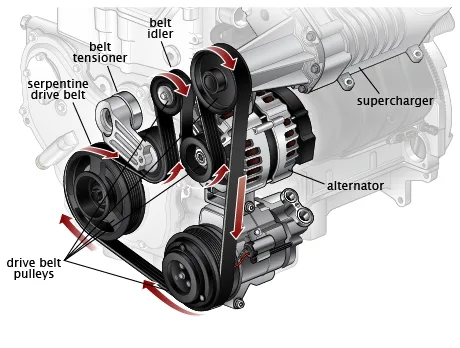
Your car's alternator is a generator turned by a belt connected to the engine crankshaft. The faster the engine spins, the faster the alternator spins, and the more electrical current it produces. That's the entire reason driving charges your battery faster than idling.
Here's a rough breakdown based on aggregate alternator specs across common vehicles:
| Engine Speed | Approx. Alternator Output | Charging Efficiency |
|---|---|---|
| Idle (~700 RPM) | 30 to 50 amps total, maybe 5 to 10 amps to battery | Low, most output runs accessories |
| City driving (1,500 to 2,000 RPM) | 60 to 100 amps available | Moderate, battery gets steady charge |
| Highway driving (2,000 to 3,000 RPM) | 80 to 150 amps available | High, battery charges quickly |
A couple of important details that often get missed:
- At idle, your alternator is already powering the ignition, fuel pump, radio, lights, and climate control. Not much is left over for the battery.
- The battery charges faster when you're above 1,500 RPM consistently, which is why highway driving beats sitting in a parking lot with the engine running.
- Revving the engine at a standstill to 2,000 RPM for a few minutes does help, but it's less efficient than actually driving because the accessories are still drawing power.
So if someone tells you to just let the car idle for an hour, they're not wrong, but they're leaving charge on the table. Driving is better.
The Decision Tree: How Long to Drive Based on Your Situation
This is the heart of the article. The right drive time depends on what actually killed your battery. Work through these branches based on your situation.
Situation 1: Battery Was Drained by Accident (Lights Left On)
This is the easy case. You left the headlights on, came back to a dead battery, got a jump, and now you're back on the road. The battery itself is probably fine.
It just needs to refill.
Drive time needed: 30 to 60 minutes of steady driving is usually enough to get the battery back above 12.4V, which is enough to start the car next time.
What to watch for: Nothing, usually. If the car starts fine the next morning, you're good. If it doesn't, you've got a deeper problem.
Situation 2: Battery Is Old and May Not Hold a Charge
Car batteries typically last 3 to 5 years. If yours is past that window, it might be the reason you needed a jump in the first place. Old batteries develop sulfation, a buildup of lead sulfate crystals that reduces capacity.
Drive time needed: Drive for at least 45 to 60 minutes, then get the battery tested at an auto parts store. Most will load-test it for free.
What to watch for: If the battery won't hold above 12.2V after an hour of driving, it's toast. Replace it before it strands you again.
Situation 3: Alternator Might Be the Real Problem
A bad alternator won't charge the battery no matter how long you drive. Common signs include a battery warning light on the dash, flickering headlights, or dim interior lights that get brighter as you rev the engine.
Drive time needed: Drive directly to a mechanic. Don't bother trying to "charge up" the battery because the alternator isn't doing its job. You're running on borrowed time.
What to watch for: Any electrical weirdness. Err on the side of caution and don't turn the car off until you're at a shop.
Situation 4: Cold Weather Jump Start
Cold temperatures reduce battery capacity by roughly 20% at 32°F and up to 35% at 0°F. A battery that was marginal in October can die in December. Cold also slows the chemical reaction inside the battery, so it accepts charge more slowly.
Drive time needed: Plan on 60+ minutes of driving. Keep the engine above 1,500 RPM for as much of that as possible to push charge into a sluggish battery.
What to watch for: If the battery is more than 4 years old and you needed a jump in freezing weather, replace it before the next cold snap. You'll be back out here otherwise.
Driving vs. Idling: Which Recharges Faster?
We touched on this in the alternator section, but it's worth its own breakdown because it's the single most common mistake people make after a jump start.
Idling for 30 minutes feels like the responsible thing to do. You're "letting the battery charge." But here's the problem: at idle, the alternator isn't producing much excess current. Most of what it makes goes right back to running the car.
The battery gets a slow trickle.
Driving for 30 minutes, especially on a highway where the engine holds 2,000+ RPM, floods the battery with charging current. The same 30 minutes can put two to three times more energy back into the battery compared to idling.
| Method | Time Needed for Partial Charge | Best Use Case |
|---|---|---|
| Idling in driveway | 60 to 90 minutes | Emergency only, no safe driving option |
| City driving | 30 to 45 minutes | Quick top-off after accidental drain |
| Highway driving | 20 to 30 minutes | Fastest recovery, preferred when possible |
One more thing: turn off every accessory you can while driving. Kill the radio, drop the AC, switch off the heated seats. Every amp you free up goes straight to the battery.
How to Tell If Your Battery Is Actually Charging
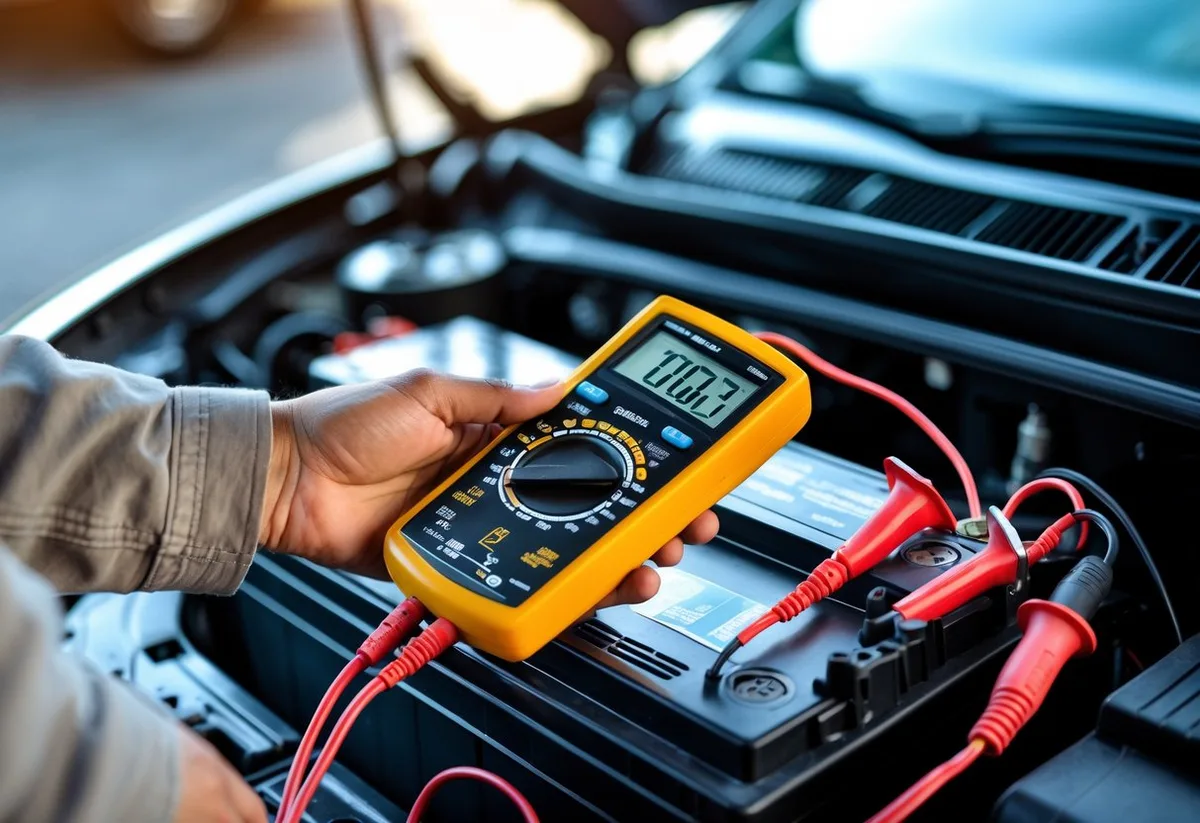
You can drive for an hour and still have a dead battery if the alternator isn't pushing voltage back into it. The fastest way to know what's happening is to measure it.
A healthy charging system shows 13.7 to 14.7 volts at the battery terminals while the engine runs. Anything below 13.5V suggests the alternator is underperforming or the battery has a dead cell. Anything above 15V points to a voltage regulator problem, which can cook your battery if ignored.
Here's the quick test:
- Set your multimeter to DC volts (20V range).
- Connect the red lead to the positive (+) terminal.
- Connect the black lead to the negative (-) terminal.
- Read the voltage with the engine running at 1,500+ RPM.
| Reading | What It Means |
|---|---|
| 13.7 to 14.7V | Alternator is charging normally |
| 12.0 to 13.5V | Alternator weak or battery heavily drained |
| Below 12.0V while running | Alternator not charging, drive to a shop immediately |
| Above 15.0V | Voltage regulator failing, stop driving soon |
No multimeter? Watch your dashboard. A battery light that stays on after the jump means the alternator isn't charging.
Headlights that brighten when you rev the engine confirm the alternator is struggling to keep up.
Step-by-Step: What to Do Right After the Jump Start
The first few minutes after a successful jump matter more than most people realize. A short routine here protects the battery, the alternator, and the electronics in your car.
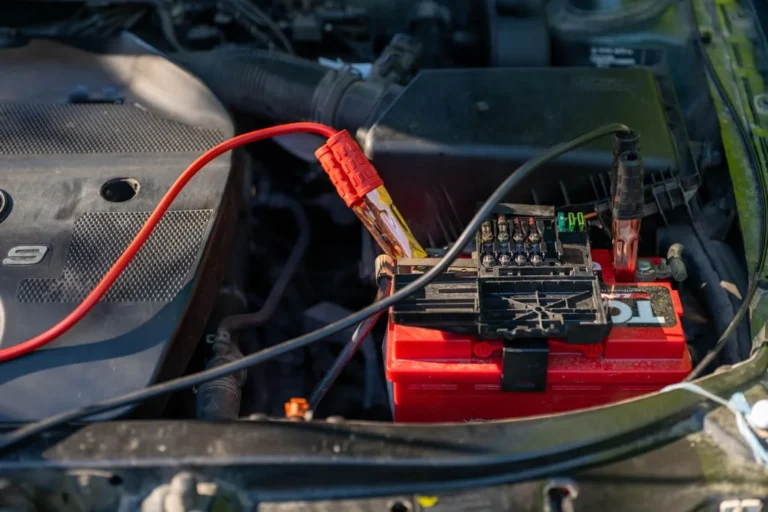
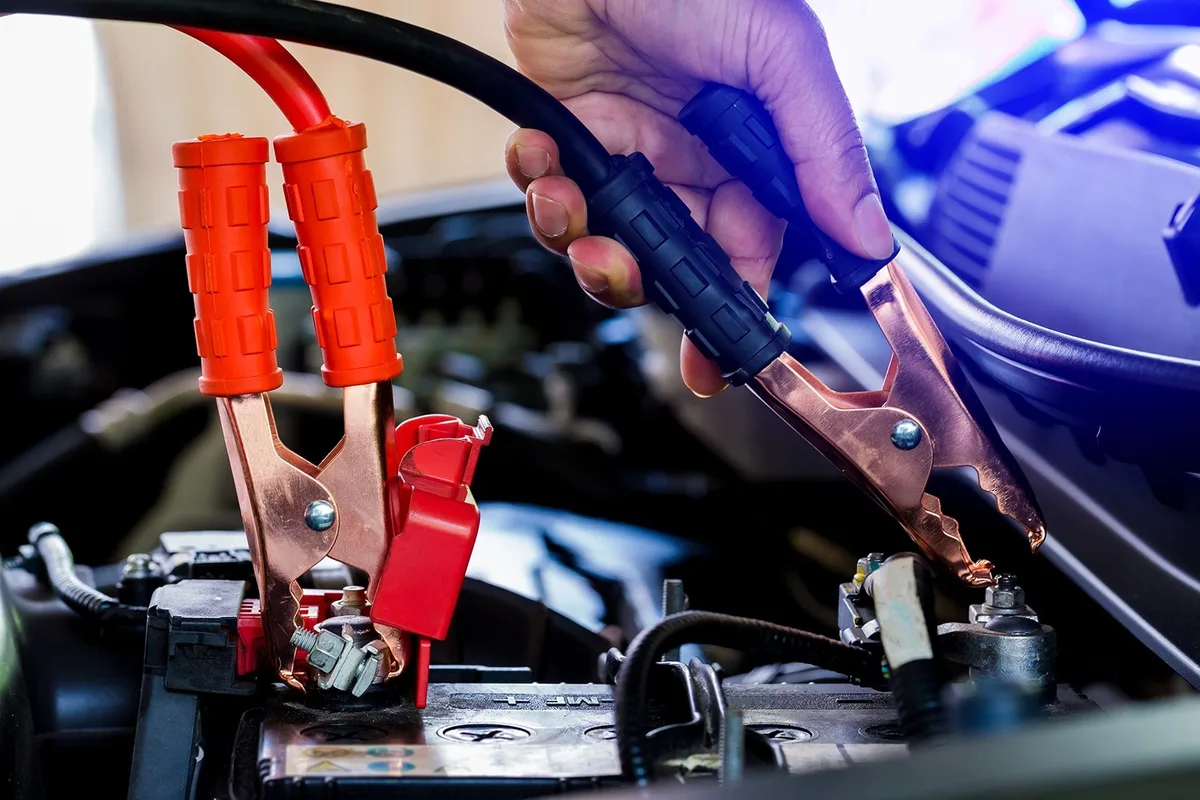
- Leave the jumper cables connected for 2 to 3 minutes with both engines running. This stabilizes voltage before you disconnect.
- Remove cables in reverse order: negative from the jumped car, then negative from the donor, then positive from the donor, then positive from the jumped car.
- Keep the jumped car running. Do not shut it off for at least 30 minutes.
- Turn off every non-essential accessory. That means radio, AC, heated seats, phone chargers, anything plugged into 12V outlets.
- Drive, don't idle. Get on a road where you can hold 2,000 RPM for 20+ minutes.
- Avoid stop-and-go traffic for the first 30 minutes if you can. Highway or rural roads are better.
- Monitor the dashboard. If the battery light comes on, head straight to a shop.
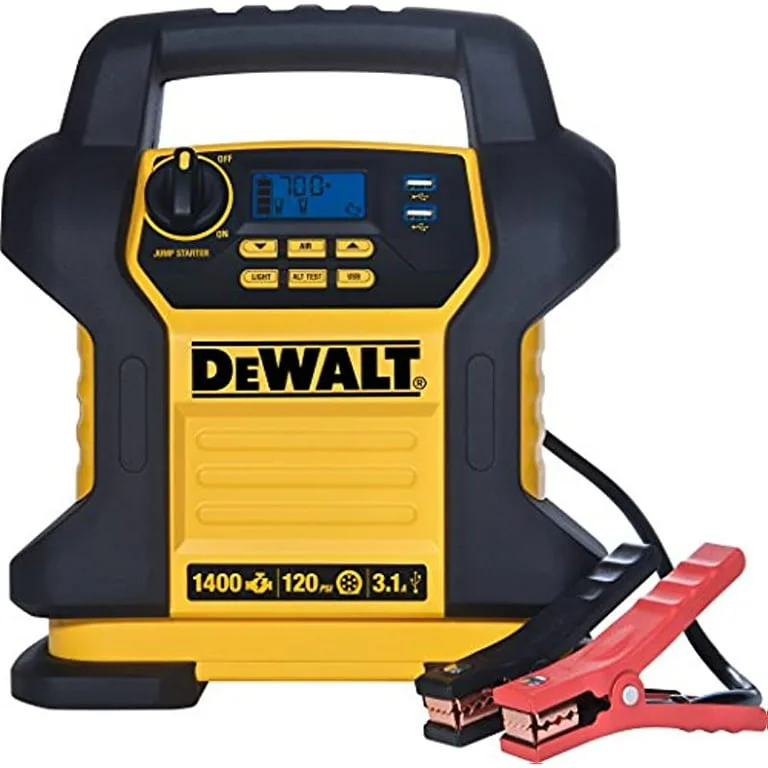
That sequence works whether you used jumper cables or a portable jump starter. The order of cable removal matters because it reduces the chance of a voltage spike frying a sensitive ECU.
Common Mistakes That Kill Your Battery Right After a Jump
Most jump-start failures happen in the first 24 hours, and they're almost always caused by one of these mistakes.
- Shutting the engine off too soon. If you jump the car and turn it off in the parking lot, you'll be jump-starting it again tomorrow.
- Only idling. We covered this. Idling barely puts a dent in a dead battery.
- Driving 5 minutes to "warm it up." Short trips don't recharge anything. They just use up fuel.
- Ignoring the battery light. If it stays lit, your alternator isn't doing its job, and driving on hope won't fix it.
- Leaving accessories on. A phone charger or dashcam can pull 1 to 3 amps continuously, enough to keep the battery from ever topping off.
- Skipping the battery test. People get jumped, drive around for a week, and ignore the dying battery until it strands them again.
One mistake worth flagging: connecting the jumper cables in the wrong order. Positive to positive, negative to a grounded metal surface on the dead car, never the negative terminal. A spark near a battery can ignite hydrogen gas and crack the case.
When 30 Minutes of Driving Isn't Enough (And What to Do Instead)
Sometimes you do everything right and the battery still won't hold a charge. Here are the signs that 30 minutes won't cut it:
- The car struggles to start the next morning.
- The battery light flickers on under load (AC, headlights, turning the wheel at a stop).
- Interior lights dim noticeably at idle but brighten when you rev the engine.
- Voltage at the battery drops below 12.4V after the drive.
If any of these apply, the 30-minute rule was never going to save you. What to do instead:
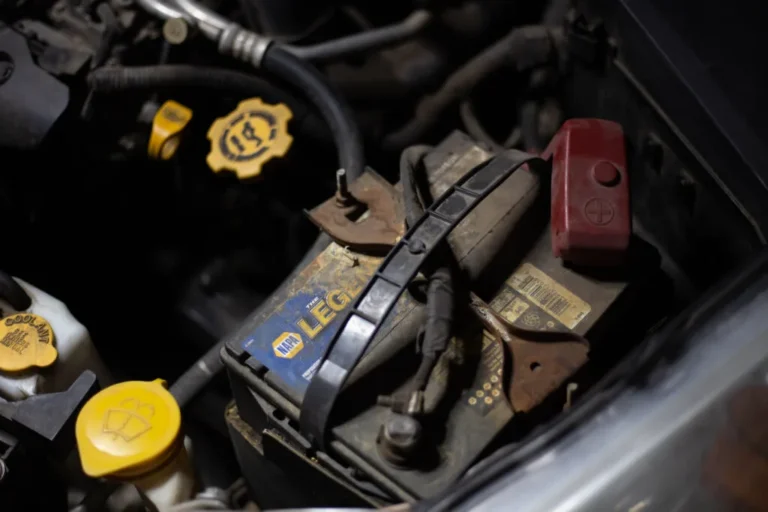
- Take the battery to an auto parts store for a free load test. This applies a simulated load and tells you whether the battery can hold capacity.
- If the battery fails the test, replace it. A new battery costs roughly $100 to $250 installed, depending on vehicle and battery type (AGM is pricier).
- If the battery passes but the alternator is weak, replace the alternator. Typical cost is $400 to $800 for parts and labor.
- Consider a trickle charger if the car sits for long periods. A $30 maintainer can keep a stored battery topped off for months.
The AAA roadside guidance on dead batteries recommends getting the charging system professionally tested after any jump start in cold weather, because that's when borderline batteries tend to fail first.
How to Know If You Need a New Battery vs. Just a Charge
Not every dead battery needs replacement. But some absolutely do. Here's how to tell the difference.
Signs the battery is fine and just needs a charge:
- The car started strong right after the jump.
- Voltage at the battery reads 13.7 to 14.7V while running.
- The car starts normally the next day without help.
- The battery is under 3 years old.
Signs the battery needs to be replaced:
- The car cranks slowly even right after a jump.
- Voltage drops below 12.2V within an hour of shutting off.
- The battery case looks swollen or bloated.
- There's a rotten egg smell around the battery (sulfation off-gassing).
- The battery is more than 5 years old.
- You've needed multiple jumps in the last few months.
A swollen battery is a safety issue, not just a performance one. It can crack and leak acid, which damages the tray, cables, and anything else nearby. Replace it immediately.
Per SAE International testing standards, a healthy 12V battery should hold above 12.6V at rest after a full charge and maintain at least 80% of its rated cold cranking amps (CCA) for the first three years of service.
Battery and Alternator Warning Signs to Watch For on the Drive
Stay alert during the first 30 minutes after the jump. These are the red flags that mean your charging system isn't working:
- Battery warning light stays on or flickers.
- Headlights dim at idle and brighten when you rev.
- Stereo resets or the clock resets randomly.
- Smell of burning rubber or hot wiring.
- Steering feels heavier (power steering electric assist dropping).
If the battery light comes on, the alternator has likely stopped charging. You have maybe 20 to 30 minutes of driving before the engine dies. Head straight to the nearest shop.
Don't shut the car off, because it may not restart.
Cold Weather Driving: Adjusting Your Recharge Time
Cold kills batteries. At 0°F, a lead-acid battery delivers roughly 35% less cranking amps than at 80°F. A battery that started fine in November can leave you stranded in January.
If you jump-started in cold weather, add at least 15 to 30 minutes to whatever drive time you'd otherwise plan. Keep the engine above 1,500 RPM for as much of that drive as possible. The slower chemical reaction inside a cold battery means it accepts charge less readily.
One trick: after the jump, let the car idle for 2 to 3 minutes before driving. This warms the battery slightly and improves charge acceptance. Then drive, don't idle longer.
For long-term cold-climate reliability, consider switching to an AGM (absorbed glass mat) battery. AGM handles deep discharge and cold better than standard flooded-cell batteries, though it costs more upfront.
FAQs: Jump Start Driving Questions Answered
Can I drive 10 minutes and be fine?
Sometimes, if the battery was only mildly discharged and the alternator is healthy. A 10-minute drive is rarely enough for a fully dead battery, but it might get you home. Don't count on it starting the next morning.
Should I drive or idle to recharge after a jump?
Drive whenever possible. Highway or sustained 2,000+ RPM driving charges the battery two to three times faster than idling. Idling works as a last resort, but it wastes time and fuel.
How long should I idle after a jump?
At least 20 to 30 minutes if driving isn't an option. Keep the engine above 1,500 RPM by gently revving in neutral if you're sitting still.
Will a jump start damage my car's computer?
Modern ECUs are sensitive to voltage spikes, but a standard jump start using proper cable order is safe. Connect positive first, ground the negative on the dead car to a metal surface, and disconnect in reverse. Avoid letting the donor car run with the jumped car off for extended periods.
How do I know if my battery is dead or just discharged?
A dead battery won't hold a charge. It drops below 12.2V within an hour of being charged. A discharged battery (left lights on) climbs back above 12.6V after driving.
Get a free load test at any auto parts store to know for sure.
Can I shut off the engine right after a jump?
No. Wait at least 5 to 10 minutes of driving before shutting it off, and ideally 30+ minutes. Shutting off too soon risks needing another jump immediately.
Your Post-Jump Start Action Plan
Here's the short version. After the jump, drive for at least 30 minutes above 1,500 RPM. Turn off accessories.
Watch the battery light and headlights. Test voltage with a multimeter if you have one. If the car struggles the next morning, get the battery and alternator tested the same day.
A jump start is a fix, not a solution. It gets you moving. The drive after it either buys you back reliability or exposes a problem you need to fix before it strands you again.