How to jump start car without jumper cables: Easy guide
A dead battery never picks a good time to show up. You walk out of the grocery store, turn the key, and all you get is a click. No other car in sight, no jumper cables in the trunk, just you and a driveway.
Here's the good news: knowing how to jump start a car without jumper cables is a real, learnable skill. It depends almost entirely on what kind of car you drive and what's around you. As of 2026, automotive battery technology hasn't changed the underlying physics, so the methods below still work.
Let's walk through what actually applies to your situation.
Quick Answer
Yes, you can jump start a car without jumper cables. Push start a manual transmission with a hill or helpers. Use a portable lithium jump starter pack if you own one.
Automatics cannot be push started, so a jump pack or roadside service is required. Always diagnose the battery first.
Why You Can't Jump Start the Normal Way (and What That Means for You)
Most people learn to jump start a car from another vehicle. You park nose to nose, clamp red to positive, black to ground, run the donor engine for a few minutes, then start yours. It works because the donor battery supplies the cranking amps your dead one can't produce.
Without that donor, the same trick falls apart. You're now solving a different problem: how do you supply enough rotational energy to the engine to get it firing on its own? Once the engine runs, the alternator takes over and recharges the battery.
So your real goal is just getting past that first 5 to 10 seconds of cranking.
That goal changes the entire playbook. Here's what it depends on:
- Your transmission type (manual or automatic)
- Whether you have a slope nearby
- Whether you have helpers to push
- Whether you own a portable jump starter
Each of those variables leads to a different method. We'll work through them in order, starting with the easiest and cheapest, then moving up to gear you might want to buy.
Your Realistic Options Without Cables
Let's get all the options on the table before you commit to one. As of 2026, these are the only realistic ways to start a dead car without another vehicle or a set of cables:
| Method | Works On | What You Need | Difficulty |
|---|---|---|---|
| Push start (bump start) | Manual transmission only | Helpers or a slope | Easy with help, harder solo |
| Hill roll start | Manual transmission only | A slope of 5%+ grade | Easy |
| Portable jump starter pack | Manual or automatic | A charged lithium jump pack | Very easy |
| Roadside assistance call | Any vehicle | Phone signal, service plan or cash | Easiest, slowest |
Two of those methods (push start and hill start) are free but require a manual transmission. The third method works on any car but costs you a piece of gear that lives in your trunk. The fourth option works on everything but means waiting around and possibly paying a tow fee.
If you drive an automatic and you don't own a portable jump pack, your realistic options shrink to one: call for help. We'll cover why in a dedicated section below.
First, Figure Out What Kind of Car You're Dealing With
Before you push anything or pull out any gear, you need to know your transmission type. This single fact decides which methods are even available to you.
Manual Transmission Drivers
If your car has a clutch pedal and a stick shift, you're in luck. Manual transmissions can be push started because the clutch physically disconnects the engine from the wheels. That lets you spin the engine by rolling the car.
Automatic Transmission Drivers (Read This Carefully)
If your car has a gear selector marked P-R-N-D-L (or similar) and no clutch pedal, you cannot push start it. Automatic transmissions use a torque converter or hydraulic coupling that won't reliably transfer rotational force from the wheels back to the engine. Even at 20 mph down a steep hill, the engine won't fire.
This is a hard limitation, not a technique issue. We'll cover your actual options later.
Method 1: Push Start (Bump Start) a Manual Car
Push starting is the oldest method in the book, and it still works on any manual transmission car built in the last 50 years. The idea is simple: roll the car fast enough that when you release the clutch, the spinning wheels turn the engine over fast enough to start.
What You Need to Make This Work
- A manual transmission car
- Enough rolling speed (typically 5 to 10 mph, or 8 to 16 km/h)
- Either a slope or at least two people to push
- A clear, flat area with no traffic
You don't need any tools, no cables, no battery power. Just physics and a working ignition switch.
Step-by-Step: How to Push Start Safely
- Turn the ignition key to the "on" position. Don't crank the starter, just power the dashboard.
- Depress the clutch pedal fully and shift into 2nd gear. (2nd is smoother than 1st and reduces jerk on the drivetrain.)
- Release the parking brake.
- Have your helpers push (or let the slope carry you) until you hit about 5 to 10 mph.
- Quickly release the clutch pedal while gently pressing the gas.
- Once the engine fires, press the clutch back in to avoid stalling.
- Let the car idle for 15 to 30 minutes to put charge back into the battery.
If the engine doesn't catch on the first try, depress the clutch, coast to a stop, and try again with more speed or in a different gear.
Going Solo Without Anyone to Push
This is where it gets tricky. If you don't have a slope and you don't have helpers, push starting becomes very difficult for one person. You physically cannot generate enough force to push a car to 5 mph alone in most cases.
Your only real solo options are:
- Find any downhill grade, even a slight one. Parking decks and ramps count.
- Use a portable jump starter (covered below).
- Call roadside assistance.
Don't try to muscle it alone. You'll waste energy and risk injury.
Method 2: Use a Gravity Roll Start (Hill Start)
A gravity roll start is just a push start where the slope does the pushing for you. If you have any kind of downhill grade nearby, this is the easiest zero-equipment method available to manual drivers.
Finding a Safe Slope
You don't need a mountain. Even a 5% grade (about 3 degrees) is enough to get a car rolling to push-start speed within 30 to 50 feet. Common spots that work:
- Parking garage ramps
- Slight residential hills
- Driveway slopes
- Highway exit ramps (only if safe and legal to stop on)
Avoid busy streets with no shoulder. You need a place where you can safely release the brake, coast down, and pull over if it doesn't work.
How to Execute a Hill Start Correctly
- Park at the top of the slope facing downhill.
- Press the brake, turn the key to "on," shift into 2nd gear, clutch in.
- Release the brake and let gravity accelerate the car.
- When you hit roughly 5 to 10 mph, release the clutch smoothly while adding light throttle.
- Once the engine fires, clutch in, brake to control speed, then drive normally.
If the engine sputters but doesn't catch, depress the clutch and try again from farther up the hill or in a lower gear.
Method 3: Use a Portable Jump Starter Pack
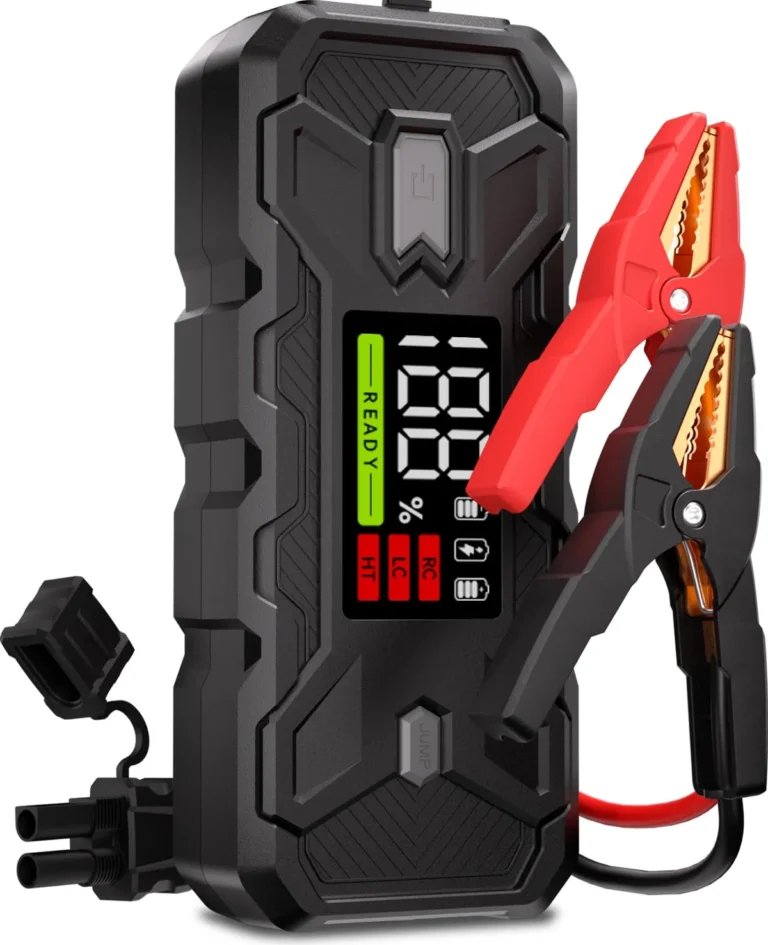
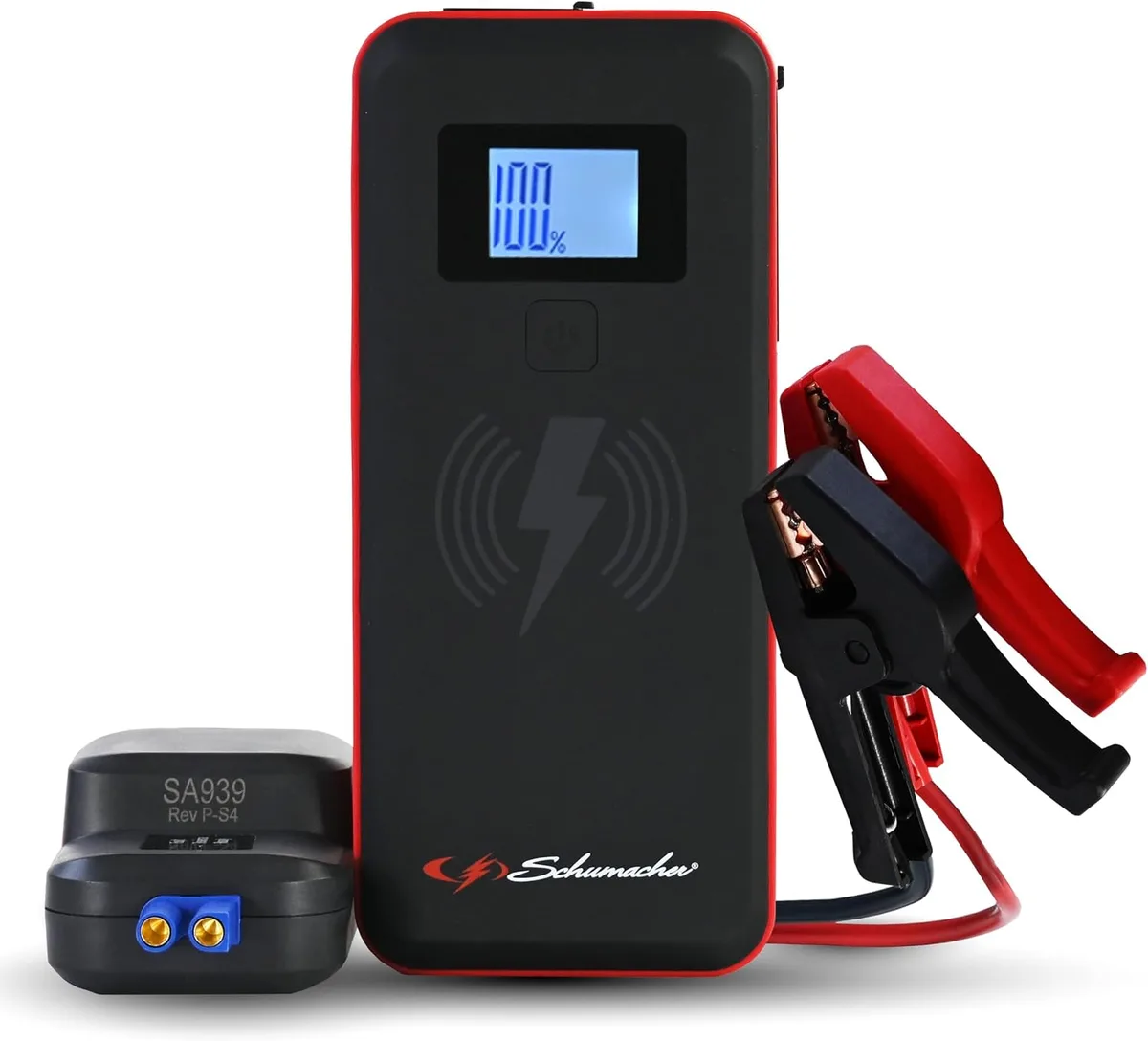
This is the method that works on any car, manual or automatic. A portable jump starter is a compact lithium battery pack with built-in jumper cables. You connect it directly to your battery and start the car without needing another vehicle.
What to Look for in a Jump Pack
Per manufacturer specifications, a quality portable jump starter should have:
- At least 1,000 peak amps for most 4-cylinder and V6 engines
- 2,000+ peak amps for larger V8 engines and trucks
- Reverse polarity protection (so it won't fry if you hook it up wrong)
- A built-in flashlight for nighttime emergencies
- USB ports so the same pack charges your phone
Capacity ratings typically range from 12,000 to 20,000 mAh in current 2026 models, which gives you 10 to 20 jump starts per charge depending on engine size and temperature.
How to Connect and Start Your Car With One
- Make sure the jump pack is charged (at least 50% is safer).
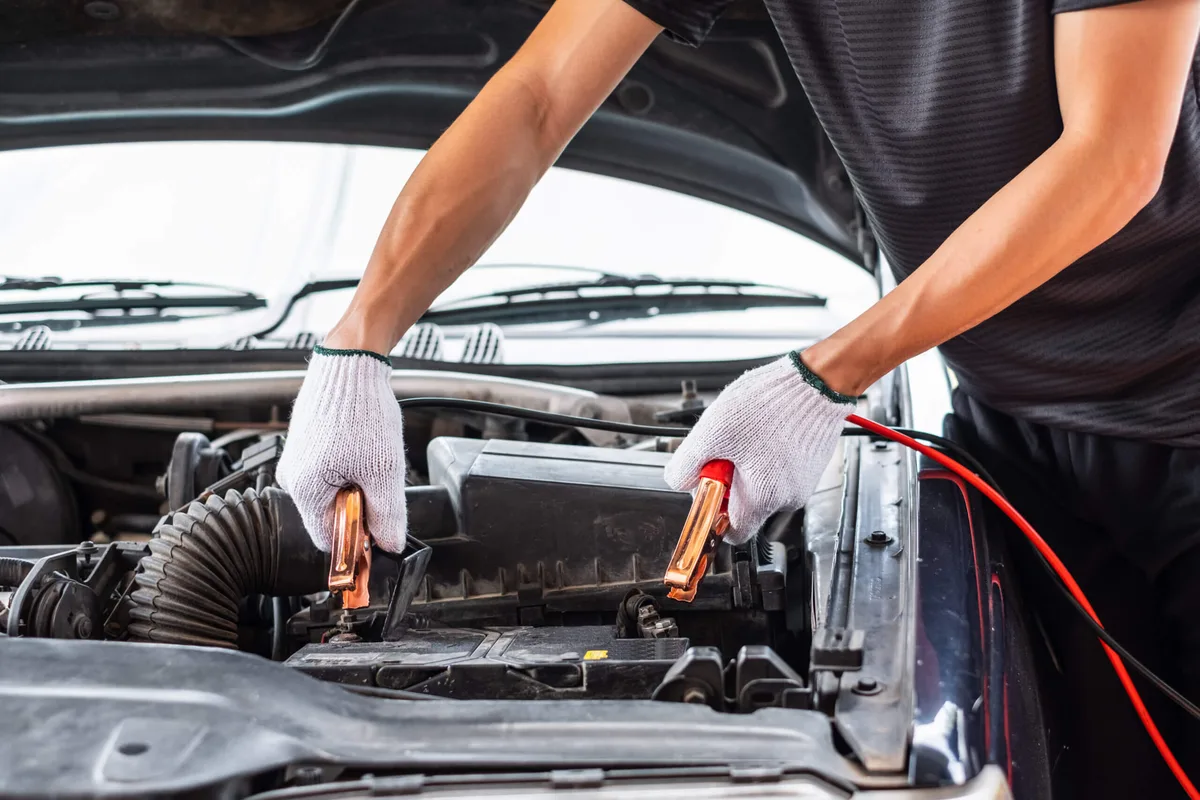
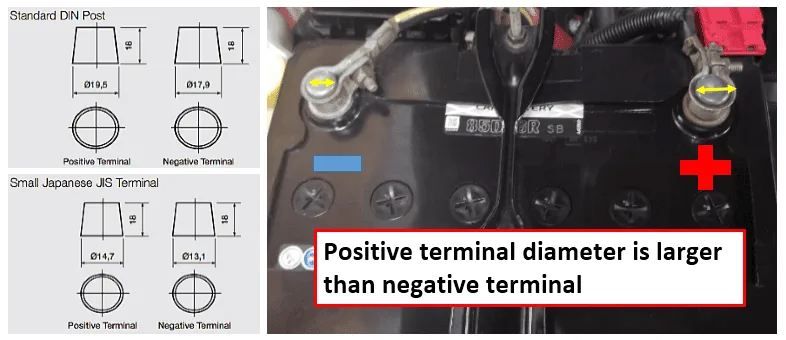
- Connect the red clamp to the positive (+) battery terminal.
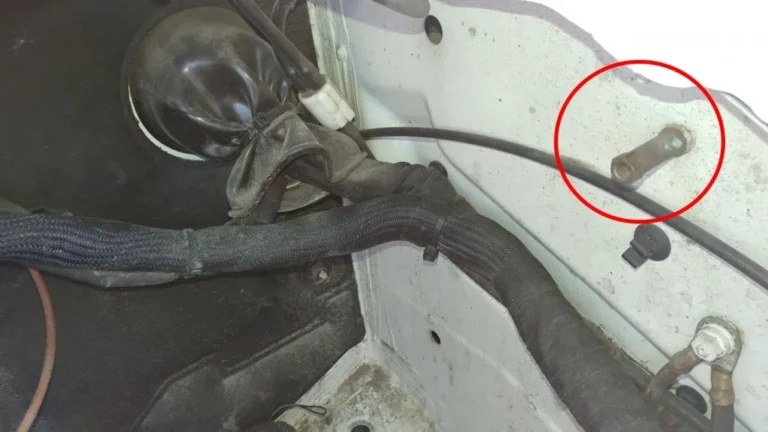
- Connect the black clamp to a clean, unpainted metal ground on the engine block, not the negative terminal.
- Turn on the jump pack.
- Wait 30 seconds for the pack to stabilize.
- Try to start the car.
- Once running, disconnect the black clamp first, then the red.
- Let the car idle for 15 to 30 minutes to recharge the battery.
If the car doesn't start on the first try, wait another minute with the pack connected before cranking again. Two or three short attempts is normal.
Safety Notes Specific to Jump Packs
Even though modern packs have spark-proof technology, never connect both clamps to each other. Don't use a frozen pack (cold damages lithium cells). And don't crank the starter for more than 5 seconds at a time.
Long cranking overheats the pack and the starter motor.
Why Push Starting Won't Work on an Automatic Transmission
This deserves its own section because it's the question we get most often. The short answer is the torque converter.
An automatic transmission doesn't have a direct mechanical link between the engine and the wheels. Instead, it uses a fluid coupling called a torque converter. That converter only transfers force from the engine to the wheels when the engine is already running.
It does not transfer force from the wheels back to the engine in any useful way.
So when you push an automatic car with the engine off, the wheels spin freely but the engine stays still. No cranking happens. The car just rolls.
What Automatic Drivers Should Actually Do
If you drive an automatic and your battery dies, your realistic paths are:
- Use a portable jump starter pack (works on any car)
- Call roadside assistance (AAA, your insurance provider, or a paid tow service)
- Flag down help and ask to use their jumper cables (then you need cables, so this defeats the purpose unless they're offering both)
Per NHTSA roadside safety guidance, the safest move in a busy area is to stay with the vehicle, turn on hazard lights, and call for professional help rather than attempting risky maneuvers.
Diagnose Why Your Battery Died Before You Try Anything
Before you push, roll, or jump anything, take 60 seconds to confirm the battery is actually the problem. A dead battery is the most common cause of no-start, but it's not the only one.
What a Dead Battery Looks Like
- You turn the key and hear a single click or nothing at all
- Dashboard lights are dim or don't appear
- Headlights are very weak when you turn them on
What an Alternator Problem Looks Like
- The car starts fine with a jump but dies shortly after
- A battery-shaped warning light glows on the dashboard
- Electrical accessories behave erratically
If the alternator is bad, no amount of push-starting or jump-starting will save you. The engine will run only as long as the battery holds residual charge, then die again within minutes.
Common Causes of Sudden Battery Death
- Left headlights or dome light on overnight
- A parasitic drain (interior light, trunk light, aftermarket accessory)
- An old battery that won't hold charge anymore
- Extreme cold (battery capacity drops up to 35% at 0°F)
If your battery is more than 4 to 5 years old, replacement is usually cheaper than the third or fourth jump start of the month.
Safety Warnings You Shouldn't Ignore
Push starting looks simple, but there are a few real risks worth knowing about before you try it.
Steering Wheel Lock Risk
Many cars lock the steering wheel when the key isn't in the "run" position. If the battery is fully drained, the steering column might stay locked even with the key turned. The first time you push the car, test steering before committing to the start.
You need to be able to steer.
Catalytic Converter Damage
Each failed cranking attempt floods the exhaust with raw fuel. That unburned fuel can overheat and damage the catalytic converter, which is an expensive repair. If the engine sputters and dies three times, stop trying and consider another method.
Rolling Vehicle Hazard
A car rolling in neutral with no engine power has reduced braking (some vacuum-boosted brakes need the engine running for full assist). Pump the brake pedal before relying on it. And always make sure the path ahead is empty.
Common Mistakes That Cost Drivers Money
A few small errors can turn a free push start into a costly repair. Here's what to avoid.
Dropping the Clutch Too Hard
Releasing the clutch aggressively at speed sends a shockwave through the transmission, driveshaft, and clutch. You can shear the transmission input shaft or crack the clutch disk. Smooth, fast release only.
Using 1st Gear Instead of 2nd
1st gear multiplies torque so aggressively that the rear wheels can lock up on a push start. 2nd gear provides enough reduction to spin the engine without violently jerking the drivetrain.
Flooding the Engine
If you pump the gas pedal before push starting, you'll flood a carbureted engine. Modern fuel-injected cars are more forgiving, but it still doesn't help. Just press the clutch, roll, release smoothly, and add throttle after the engine catches.
Mistaking an Alternator Problem for a Dead Battery
If the car starts but stalls within a few minutes, the alternator is suspect, not the battery. Continued push-starting won't fix it. You need a mechanic.
How Long to Drive After a Jump Start to Recharge
Once your engine is running, the alternator starts recharging the battery. But it takes longer than most drivers think.
| Method | Approximate Recharge Time |
|---|---|
| Idling in place | 2 to 4 hours for a full charge |
| Highway driving (55+ mph) | 30 to 60 minutes for a usable charge |
| City driving with stops | 1 to 2 hours for a usable charge |
Idling technically charges the battery, but slowly. Highway driving is more efficient because the alternator spins faster and produces more current.
If your battery was completely dead and old, even a long drive may not bring it back to full health. Plan on testing the battery at an auto parts store (most do this for free) within a day of the incident.
Portable Jump Starter vs. Push Start vs. Roadside Help
Each option has its place. Here's how to decide.
| Situation | Best Option |
|---|---|
| Manual, slope available, daylight | Hill roll start |
| Manual, flat lot, friends nearby | Push start with helpers |
| Automatic, any setting, jump pack in trunk | Portable jump starter |
| Automatic, no gear, safe location | Roadside assistance |
| Anywhere, cold weather, elderly driver | Roadside assistance |
If you drive a manual and want a permanent solution, a portable jump pack is the single best investment. It works on automatics too if you ever drive a different vehicle. As of 2026, reliable models from established manufacturers run $60 to $150 depending on capacity and cranking amps.
Best Portable Jump Starters Worth Buying
If you've decided a jump pack fits your situation, here's what separates the good from the junk. Aggregate user reviews consistently point to the same features.
Capacity vs. Peak Amps
These numbers sound similar but mean different things. Capacity (mAh) is how many phone charges the pack holds. Peak amps is how much current it can dump into your starter motor in one burst.
For jump starting, peak amps is what matters. Look for at least 1,000 peak amps for small engines, 2,000+ for V8s and diesel.
Safety Features Worth Paying For
- Reverse polarity alarm (beeps if you hook clamps up backward)
- Spark-proof clamps (no spark when you connect to a live terminal)
- Over-current protection (shuts off if the pack overheats)
- A built-in voltmeter or status display
Cheap no-name packs often skip these. The savings aren't worth frying your car's ECU.
Brands With Strong Track Records
Manufacturer documentation from NOCO, Antigravity, and Schumacher shows consistent quality control and warranty support. As of 2026, the NOCO Boost Plus GB40 (1,000A) and GB70 (2,000A) are two of the most commonly recommended units in owner forums and verified buyer reviews. Both include spark-proof clamps and USB charging ports.
Prices range from about $80 to $200 depending on capacity.
For larger trucks and diesels, the GB150 (4,000A) is the common upgrade. It costs more but reliably starts engines that smaller packs can't touch.
How to Maintain a Jump Pack
Store it in your trunk, not your house. Extreme cold permanently damages lithium cells. Charge it every 3 to 6 months even if you haven't used it.
Most packs self-discharge slowly and will be dead when you actually need them if you forget this step.
Roadside Assistance: When DIY Isn't Worth It
Sometimes the right call is to make the call. Roadside assistance is more expensive than any DIY method, but it eliminates the safety risks and saves your body from pushing a car in a parking lot.
What Roadside Service Actually Provides
Most roadside programs (AAA, insurance add-ons, manufacturer coverage like OnStar) will dispatch a technician with a portable jump pack or a booster battery. They'll get you running in 10 to 15 minutes, no effort on your part.
When It's the Only Realistic Option
- You drive an automatic and don't own a jump pack
- You're alone on flat ground with no slope in sight
- The car is in a busy or dangerous location (intersection, highway shoulder)
- You're not physically able to push or operate a clutch
- The battery is so dead that the dash lights don't appear at all (often means a parasitic drain issue that needs diagnosis)
The average cost for a non-member roadside jump start runs $50 to $100 as of 2026. AAA membership runs about $60 to $130 per year and includes several jump starts plus towing. If you drive an automatic and don't already have a portable jump pack, the AAA math usually wins.
Your Decision Guide: What to Do Right Now
Here's the cheat sheet for the moment your battery dies and you're standing in a parking lot.
If You Drive a Manual Transmission
- Check for a slope within 100 feet. If yes, roll start in 2nd gear.
- If no slope, recruit 2 to 3 bystanders and push start in 2nd gear.
- If you're alone on flat ground, use a portable jump pack if you have one.
- Otherwise, call roadside assistance.
If You Drive an Automatic Transmission
- Check your trunk for a portable jump pack. If you have one, connect it.
- If no jump pack, call roadside assistance, AAA, or your insurance provider.
- Do not waste time trying to push start. It will not work.
- Turn on hazard lights and stay with the vehicle if you're on a busy road.
The 30-Second Pre-Start Checklist
Before you try anything, confirm the problem really is the battery. Turn on headlights. Dim or no lights confirms a discharged battery.
Bright lights plus a no-crank click suggests a starter motor issue, which neither push starting nor a jump pack will fix.
After You Get Running
Don't shut the engine off for at least 15 to 30 minutes. Drive on the highway if possible, since the alternator charges faster at higher RPM. Plan to test the battery within a day or two.
Most auto parts stores will load-test it free and tell you whether it's holding charge or heading for the recycling bin.
Your Emergency No-Cables Checklist
Save this on your phone now, before you need it:
- Manual transmission, slope available: roll start in 2nd gear at 5 to 10 mph
- Manual, flat ground, helpers nearby: push start in 2nd gear
- Manual or automatic, jump pack in trunk: connect positive first, ground second, wait 30 seconds, crank
- Automatic, no jump pack, safe location: stay with vehicle, hazards on, call roadside service
- Engine cranks but won't fire after three tries: stop, suspect deeper electrical or fuel issue
The Bottom Line
Knowing how to jump start a car without jumper cables comes down to one question: do you drive a manual or an automatic? Manuals have three free options. Automatics need a portable jump pack or a phone call.
Either way, the right gear in your trunk (a quality lithium jump starter) eliminates the problem entirely for under $100. That single purchase is the difference between a 5-minute fix and an hour stranded in a parking lot.
Frequently Asked Questions
Can you push start a car alone without a hill?
Not really. A single person can't generate enough force to push most cars to the 5 to 10 mph needed for push starting. If you're alone on flat ground, your best bet is a portable jump starter or roadside assistance.
Does push starting damage the clutch?
It can, if done wrong. Dropping the clutch aggressively or using 1st gear puts heavy stress on the clutch and transmission. Smooth 2nd-gear releases are safe and standard practice.
What if the engine cranks but won't fire?
That usually means the battery has just enough charge to crank but not enough to ignite fuel. Try again with a longer rolling distance, more speed, or a portable jump pack. Repeated failed attempts can flood the engine or overheat the catalytic converter.
Is it safe to jump start a car in the rain?
Yes, with a portable jump pack. Modern packs are sealed and designed for wet conditions. Push starting in heavy rain is generally fine too, just be careful of slick surfaces when your helpers push.
How do I know if my battery is dead vs. my alternator?
A dead battery makes no sound or a single click when you turn the key. An alternator problem lets the car start (with help) but the engine dies within minutes. Dim headlights plus a battery warning light is a classic alternator signature.
Will a jump starter work on a completely dead battery?
Yes, that's exactly what they're built for. A fully dead 12V battery with zero residual charge will still take a jump from a quality portable pack rated at 1,000+ peak amps.