How to jump start a buick enclave
You turn the key (or push the start button) and nothing happens. Maybe the lights flicker, maybe you just hear a single sad click. If you need to know how to jump start a Buick Enclave right now, here's the short answer: connect the red clamp to the remote positive jump post under the hood, the other red clamp to the donor battery's positive, the black clamp to the donor battery's negative, and the final black clamp to an unpainted metal ground on the Enclave, then start the donor car and wait 2 to 5 minutes before trying to start the SUV.
A Buick Enclave uses a standard 12-volt flooded lead-acid or AGM battery, typically Group size H6 (also called Group 48), with cold cranking amps ranging from around 600 to 760 CCA depending on the model year and trim. The reason this matters: the battery is tucked under the driver's side front of the engine bay, partially hidden under the airbox, so most owners connect the positive cable to a remote positive jump post instead of reaching for the battery itself. As of 2026, GM service documentation still calls out this remote post as the preferred jump-start location to protect the battery monitoring sensor.
Knowing exactly where those points are is the difference between a 5-minute fix and a trip to the dealer, so let's walk through it.
Quick Answer
To jump start a Buick Enclave, park a donor vehicle close, shut both cars off, and attach jumper cables in this exact order: red to the Enclave's remote positive post (under the hood, not on the battery itself), red to the donor battery's positive, black to the donor battery's negative, and black to an unpainted metal ground on the Enclave. Start the donor car, let it idle for 2 to 5 minutes, then try the Enclave. Disconnect in reverse order once it starts.

Why Your Buick Enclave Won't Start (Common Causes)
Most dead-Enclave calls fall into one of a few buckets. If you can rule out the easy ones, you save yourself from chasing the wrong fix.
| Symptom | Likely Cause | Quick Check |
|---|---|---|
| Single click, no crank | Severely discharged battery | Interior lights dim or dead |
| Clicking in waves, no start | Weak battery, good cables | Headlights dim noticeably when key is turned |
| Nothing at all, no lights | Dead battery or corroded connection | Try the key fob; if it won't unlock doors, battery is flat |
| Cranks slow in winter | Cold-weakened battery | Check battery manufacture date sticker |
| Jump works, dies again next day | Parasitic drain or bad alternator | Voltage at battery drops below 13.5V while running |
Common causes include:
- Lights or a phone charger left plugged in. The Enclave's accessory ports stay live for a while after shutdown, and a phone cable left in the USB port is a known battery-killer on 2018+ GM SUVs.
- Cold weather. A battery that was marginal in October gives up in January. Below 32°F, available cranking amps drop by roughly 20%.
- An aged battery. Most Enclave batteries last 3 to 5 years. If yours is past four, assume it's the suspect.
- Long storage. Parked for two weeks or more is enough time for the battery management system to drain a tired battery.
- A faulty alternator. The alternator should hold voltage at 13.5 to 14.5V while running. If your Enclave dies while driving, that's almost always the alternator, not a jump-fixable problem.
If your situation is "click, click, nothing," you can confidently jump it. If it's "crank, crank, fires, dies," the jump is a temporary patch and you'll want a mechanic soon.
Before You Touch Anything: Safety Gear and Precautions
Modern vehicles like the Enclave have sensitive electronics. The Battery Council International publishes standard safety guidance that applies directly here. A few minutes of caution prevents fried modules and burned hands.
Do this before you connect a single clamp:
- Park both cars in Park with parking brakes set, headlights and accessories off.
- Make sure the batteries aren't cracked, leaking, or bulging. If they are, do not jump. Call for a tow.
- Pull off any rings, watches, or metal belts that could brush the terminals.
- Keep the donor and dead batteries apart in terms of any shared metal. The cars should not be touching.
Wear or have on hand:
- Safety glasses (battery acid and hydrogen gas are real concerns).
- Mechanic's gloves if you have them.
- A flashlight if you're under the hood at night.
Stay away from these:
- Open flames or sparks anywhere near the battery.
- Smoking, period.
- Leaning directly over the battery when making the final connection.
Two minutes of prep is the difference between a clean fix and an expensive tow.
Find the Battery and Jump Points on Your Enclave
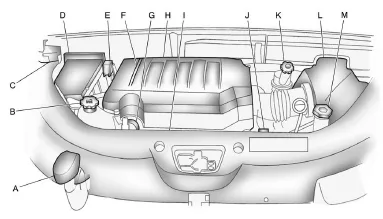
Here's where the Enclave throws people off: the battery isn't in the usual front-corner spot. It's tucked deep on the driver's side, partially covered by the air intake box. Reaching down to the posts works, but it's awkward, and there's a battery current sensor on the negative terminal you don't want to clamp onto.
GM gives you a better option: a remote positive jump post mounted up high on the passenger side of the bay. That's the post you want.
How to find each point:
- Remote positive (+) post: Look on the passenger side of the engine bay, near the fuse box. You'll see a red plastic cover labeled with a "+" symbol. Flip the cover up. That's your positive hookup point.
- Negative ground point: Look for an unpainted metal bracket, bolt, or stud on the engine block or strut tower on the driver's side, away from the battery and any moving belts. A bare metal surface is what you want, not a painted bolt head.
- The actual battery: If you do choose to clamp directly to the battery (the 2008 to 2017 models are a little more accessible), the positive post is on the side closer to the front of the vehicle, and the negative post has a small current sensor module attached.
The layout matters because on 2018+ Enclaves with the Battery Management System sensor, clamping the negative jumper directly to the battery post can confuse the BMS and trigger warning lights later. The factory-recommended ground is an unpainted chassis point.
A quick sanity check before you grab the cables:
- Confirm the dead battery is actually 12V. A reading under 9V often means a bad cell, and jumping won't help much.
- Confirm the cables you're using are 4 to 6 gauge for an SUV. Thin 8-gauge cables lose too much current to spin a 3.6L V6.
- If you have a portable jump box instead, make sure it's rated for at least 1000 peak amps for a V6 engine.
Jumper Cables vs. Portable Jump Starter: Which Should You Use?
You have two real options, and the right one depends on your situation. Neither is wrong, but they're built for different moments.
| Option | Best For | Pros | Watch Out For |
|---|---|---|---|
| Jumper cables + donor vehicle | Home, driveway, parking lot with a friend | Free, reliable, high current | Need a second car, both cars close together |
| Portable lithium jump box | Solo driver, road trip, bad neighborhood | No second car needed, compact | Needs to be charged, low peak amps on cheap units |
| Calling roadside assistance (OnStar or AAA) | First-time jumpers, anyone unsure | A pro handles the wiring | Wait time, membership cost |
If you're a one-car household (or just don't want to flag someone down), a portable jump starter is worth the $80 to $150. Look for one rated 1500 to 2000 peak amps with at least a 10,000 mAh battery. Anything below 1000 peak amps is risky for a V6.
If you have access to a second car and you're in a safe spot, jumper cables are still the most reliable option. A running donor car delivers more current than most jump packs, and you don't have to worry about the pack dying mid-start.
For a hybrid Enclave (if applicable to your model year): only the 12V battery gets jumped. The high-voltage hybrid system is separate and isolated. The process is identical to the gas model, just on the smaller 12V battery under the hood.
The rest of this guide works for either method. The cable connection sequence is the same whether you're hooking up to another car or a jump box.
What You'll Need (Tools and Donor Vehicle Setup)
Gather everything before you pop a hood. Wrenching around for a missing cable clamp while the donor car is running is how people cause electrical mistakes.
Tools and materials checklist:
- 4 to 6 gauge jumper cables, 12 to 20 feet long (longer is fine, shorter is risky on the Enclave's wide engine bay).
- A donor vehicle with a healthy 12V battery. Gas or diesel doesn't matter, voltage is voltage.
- A flat, paved surface with room for both cars to face each other or sit nose-to-nose.
- Wire brush or old toothbrush for cleaning corroded terminals.
- Safety glasses and gloves.
If you're using a portable jump box instead:
- A unit rated at 1500+ peak amps (minimum 1000A for the 3.6L V6).
- A charged pack (most hold a charge 3 to 6 months, so check the indicator lights).
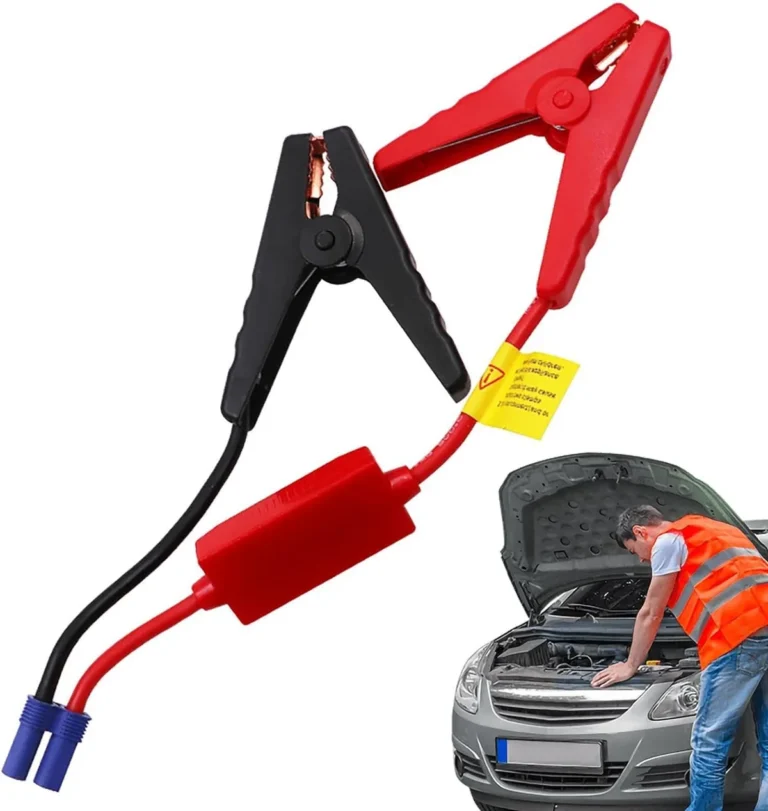
- The right adapter: most jump packs ship with smart clamps that have reverse-polarity and spark protection built in.
Donor vehicle setup:
- Park within cable reach, ideally with the cars offset slightly so the hoods line up.
- Turn the donor car off before connecting. You'll start it after the cables are on.
- Switch off headlights, climate, radio, and any USB chargers on both cars.
- Set both parking brakes.
The Enclave's wide stance means shorter 8-foot cables often won't reach between donor and dead battery. If you regularly jump SUVs, 16-foot cables save a lot of repositioning.
Cable Order and Polarity: How to Hook Everything Up Correctly
Here's where the magic (and the damage) happens. The order matters because every clamp you attach while the donor is off carries zero risk of spark. The instant the donor starts, both batteries are live, and a reversed clamp can fry modules worth thousands of dollars.

The correct sequence:
- Red clamp to the Enclave's remote positive (+) post under the hood (passenger side, red plastic cover).
- Red clamp to the donor vehicle's positive (+) battery terminal.
- Black clamp to the donor vehicle's negative (, ) battery terminal.
- Black clamp to a bare metal ground on the Enclave (engine bracket, strut bolt, or chassis stud away from belts).
Why this order specifically:
- Connecting positive first reduces the chance of accidentally shorting the chassis with the negative clamp while you're still moving cables around.
- The last ground on the Enclave is on the chassis, not the battery, because GM's battery management sensor lives on the negative post. Skipping the sensor keeps the BMS happy.
Polarity check before you start the donor:
- Red cable end goes to red post. Red cable end goes to red post. Say it twice.
- If the smart clamps beep or flash red, stop. Reverse-polarity protection just saved you a thousand-dollar repair.
Common reversal mistakes to avoid:
- Black on the Enclave's positive post. This is the classic fried-ECU mistake.
- Last clamp on the donor's negative instead of the Enclave's ground. You'll see a spark and the donor's computer can glitch.
- Letting the clamps touch each other while one end is live. It happens more often than you'd think.
Starting Sequence: Donor Car First, Then the Enclave
Now that everything's connected, here's the rhythm that actually works. Trying to crank the Enclave before the donor has had time to top off its battery is the #1 reason people think their jump "didn't take."
Step-by-step:
- Start the donor vehicle. Let it idle, do not rev it.
- Wait 2 to 5 minutes. This gives the donor's alternator time to push a small amount of charge into the Enclave's dead battery.
- Optional: gently raise the donor's idle to about 1500 RPM for the last minute. This isn't strictly required, but it helps on colder mornings.
- Try to start the Enclave. Crank for no more than 10 to 15 seconds.
- If it doesn't fire, wait 60 seconds and try again. Don't crank repeatedly without a break.
- Once the Enclave starts, let both engines idle together for another 2 minutes before you disconnect anything.
If it cranks but won't catch:
- A deeply discharged battery might need a full 10 minutes of donor charging before the Enclave's starter can turn it over fast enough.
- If it still won't start after two or three attempts with proper breaks, the problem probably isn't a dead battery. See the troubleshooting section below.
Why idling matters: idling the donor first builds up enough surface charge in the dead battery to run the starter motor. Skipping this is like trying to siphon a swimming pool with a coffee straw, technically possible, painfully slow.
Disconnecting the Cables Safely (Reverse Order)
This part goes fast, which is exactly when mistakes happen. Tired hands, a running engine on both sides, and clamps that are now hot to the touch. Slow down for 60 seconds.
The reverse order matters even more than the install order:
- Disconnect the black clamp from the Enclave's ground point.
- Disconnect the black clamp from the donor's negative terminal.
- Disconnect the red clamp from the donor's positive terminal.
- Disconnect the red clamp from the Enclave's remote positive post.
Close the red plastic cap over the Enclave's positive post so it doesn't get knocked loose later.
Why reverse order:
- The donor car is still running, so its electrical system is active. Disconnecting the chassis ground first breaks the circuit through the Enclave and reduces spark chance at the donor's terminals.
- It also keeps the Enclave's electronics protected until the very last moment.
After both cars are free of cables:
- Keep the Enclave running for at least 20 minutes, ideally by driving it. Idling charges slowly; driving at 25+ MPH spins the alternator faster and tops the battery quicker.
- Don't shut the Enclave off for at least 20 minutes, or you risk a no-start again.
A small but important detail: as you pull the clamps off, keep them from swinging into anything. The red clamp on a live donor positive terminal will arc if it touches the body.
After the Jump: How Long to Drive and How to Recharge
The jump got you going, but the battery isn't fully charged yet. Think of it like filling a gas tank with a cup. It'll run, briefly, but it needs more.
Realistic charging numbers:
- 20 minutes of driving gets you about 50 to 60% charge.
- 30 minutes of driving gets you close to 75%.
- 1 hour of highway driving gets you roughly 90%+.
- A full charge from a deep discharge takes 4 to 8 hours of driving or a proper battery charger.
Idling vs. driving:
- Idling charges the slowest because the alternator only outputs a fraction of its capacity at low RPM.
- Driving at road speed (1500+ engine RPM) is two to three times faster.
A useful rule of thumb: if your Enclave sat for two or three weeks and died from that alone, a 30 to 45 minute drive should fully recover it. If it's been dying repeatedly, the battery itself is probably the problem, and a drive won't fix it.
If you have a battery charger at home:
- A 2 to 10 amp smart charger will fully charge the battery overnight.
- AGM batteries (common in 2018+ Enclaves) need a charger with an AGM mode. A standard flooded-only charger can undercharge them.
Reset systems that often need attention after a deep discharge:
- Power windows may need a recalibration. Roll them all the way down, then all the way up, holding the switch for a few seconds at the top.
- Radio presets and station memory may be wiped.
- The clock will need resetting.
- The Enclave's battery monitor may show a "Service Battery Charging System" message for a short drive cycle. This usually clears itself once the BMS sees the battery fully charged.
The 20-to-30-minute drive is non-negotiable if you don't want to repeat this tomorrow morning.
Common Mistakes That Damage the Enclave's Electrical System
Most electrical damage from jump-starts comes from one of four errors. They're all preventable if you slow down for the 90 seconds the cables take to hook up.
- Clamping the negative directly to the dead battery's negative post on a 2018+ Enclave. The battery current sensor gets confused, and you'll see false battery warnings for days.
- Reverse polarity. A red clamp on the negative terminal can pop fuses and damage the alternator's voltage regulator in seconds.
- Letting the clamps dangle and touch each other or the bodywork while one end is connected to a running donor.
- Skipping the 2 to 5 minute wait. Cranking before the donor has charged the dead battery at all wastes current and can overheat the donor's alternator.
What If It Still Won't Start? Troubleshooting Beyond a Dead Battery
If a clean jump doesn't fire the Enclave, the dead battery is a symptom, not the cause. Walk through these checks in order before calling a tow.
Why won't my Enclave crank even with a jump?
A no-crank after a proper jump usually means one of three things: a battery with a dead cell that won't hold charge, a corroded or loose cable connection somewhere in the starting circuit, or a failing starter motor. Tap the starter lightly with a wrench while someone turns the key. If it spins, the starter brushes are worn.
If nothing happens, check the battery voltage under load. A reading below 10V under crank load means the battery can't deliver starting current even with a donor attached.
Could a bad alternator be the real culprit?
Yes, and this is the trap. A jump starts the engine, you drive 10 minutes, then the car dies at a red light. The alternator isn't recharging the battery while you drive.
Test the charging voltage at the battery posts with the engine running. Anything between 13.5 and 14.5V means the alternator is fine. Below 13V means it's failing.
Above 15V means the voltage regulator is overcharging and cooking the battery.
Buick Enclave Hybrid: How the Jump-Start Process Differs
If your Enclave is a hybrid model, the jump procedure is almost identical to the gas version. The 12V battery under the hood is what you jump, not the high-voltage pack. The hybrid system is fully isolated and will not back-feed into your jumper cables.
Same hookup order, same ground point, same 2 to 5 minute wait.
The high-voltage battery sits behind the rear seats and uses orange cables to mark its wiring. Under no circumstances touch those cables, even if the SUV is dead. The 12V jump procedure never gets close to them.
Winter and Cold-Weather Jump Starting Tips
Cold cuts available cranking amps, thickens engine oil, and kills marginal batteries. A few adjustments make winter jump-starts faster and safer.
| Winter Issue | What Helps |
|---|---|
| Battery cranking amps drop ~20% at 32°F | Let donor run 5+ min before cranking |
| Engine oil thickens, harder to spin | Pulse crank (5–10 sec on, 30 sec rest) |
| Cables stiffen in extreme cold | Warm them in the cabin before connecting |
| Battery terminal corrosion worse | Clean posts with baking soda and water before clamping |
If the Enclave sits outside in freezing temps and isn't driven daily, a $30 trickle charger with an AGM mode is cheaper than a single tow. Plug it in overnight once a week through winter and the battery stays topped up.
Signs You Need a New Battery Instead of a Jump
A jump is a patch. Knowing when to stop patching saves you the cycle of dead-battery mornings.
The clearest signs:
- Battery is more than 4 years old (check the date sticker on the case).
- Engine cranks slowly even after a full jump charge.
- Voltage at the posts drops below 12V overnight with nothing on.
- Swollen battery sides, often a sign of internal damage from heat or overcharge.
- Repeated jump-starts needed within a single week.
If any of these show up, swap the battery before it strands you somewhere worse. A Group H6 (Group 48) battery with 600+ CCA fits the Enclave and runs $130 to $220 depending on brand and AGM vs. flooded.
Battery Specs for the Buick Enclave (Group Size, CCA, Voltage)
Specs matter when you replace, not when you jump. But knowing what should be under the hood helps you spot a problem.
| Spec | Standard Value |
|---|---|
| Voltage | 12V (12.6V fully charged, 11.8V discharged) |
| Group size | H6 / Group 48 |
| Cold cranking amps (CCA) | 600 to 760 CCA depending on trim |
| Reserve capacity (RC) | 100 to 120 minutes |
| Battery type | Flooded lead-acid (most); AGM on some 2018+ trims |
| Terminal layout | Positive on front-of-case, negative on rear |
If you replace, match the group size exactly. A physically smaller battery won't seat properly in the tray, and a larger one can stress the hold-down bracket.
Maintenance: Making Sure It Doesn't Die Again
A jump-start is a fix, not a cure. The five minutes of maintenance below keep the Enclave's battery healthy for its full lifespan.
- Drive the Enclave at least once a week for 20+ minutes. Short trips don't fully recharge.
- Clean the terminals once a year with a wire brush. Corrosion adds resistance and slowly starves the starter.
- Check the battery's resting voltage monthly. Anything below 12.4V means it's undercharged.
- If the SUV sits for more than two weeks, plug in a trickle/maintainer charger.
- Replace the battery every 4 to 5 years, or sooner if voltage tests weak.
The cheapest tow is the one you never need. A $30 trickle charger and an annual terminal cleaning are the difference between "how to jump start a Buick Enclave" being a yearly routine and a one-time event.
Frequently Asked Questions
Can you jump start a Buick Enclave in the rain?
Yes, the procedure is unaffected by light rain. Just keep the battery terminals and clamps from being submerged. Water on the posts won't hurt anything, but standing water is a different story.
How long should I let the donor car run before trying to start my Enclave?
Two to five minutes is the standard. In cold weather, push it to five minutes so the dead battery builds up enough surface charge to crank the V6.
Where is the negative jump point on a Buick Enclave?
The factory-recommended ground is any unpainted metal bracket, bolt, or strut tower stud on the engine. Avoid the negative battery post itself if your Enclave has the battery current sensor module.
Will jump starting my Enclave damage the alternator?
Done correctly, no. Reversed polarity or a spark from a loose clamp can spike the alternator's regulator. That's why the sequence matters and why smart jumper cables are worth the small upgrade.
Do I need to replace my battery after jump starting?
Not necessarily. A one-off dead battery from leaving lights on usually recovers with driving. If the battery dies again within a week, replace it.
Most Enclave batteries last 3 to 5 years.
What if jump starting doesn't work at all?
If the Enclave still won't crank after two or three clean attempts, the battery is probably too far gone. A reading under 9V at the posts usually means a shorted cell. Time for a new battery or a tow to a shop that can test the charging circuit under load.
Can I use a portable jump box on my Enclave?
Yes, and it's often easier than finding a second car. Pick a pack rated for at least 1000 peak amps for the V6. Anything below that risks not spinning the engine over fast enough.
Is it safe to jump start an Enclave with the engine running in the donor?
It's actually preferred. The donor's alternator provides steady voltage during the wait period, which charges the dead battery faster than the donor's resting battery alone.
Will jump starting reset the radio or power windows?
It can. The clock, radio presets, and sometimes the power window auto-up feature reset during a deep discharge. Windows usually relearn after a full up-and-down cycle.
Should I worry about the battery management sensor after a jump?
Only if you clamped the negative jumper directly to the battery post on a 2018+ Enclave. The BMS can throw a false "Service Battery Charging System" message for a few drive cycles. It usually clears once the system sees the battery fully charged again.
If it persists past a week, have the BMS reset with a scan tool at a shop.
Can a dead Enclave battery stop the key fob from working?
Yes, and this trips people up. If the key fob won't unlock the doors, the battery in the SUV is too dead for the fob receiver to function. Use the mechanical key blade hidden in the fob to get in, then jump the car before trying the fob again.
How do I know if it's the battery or the alternator?
A jump that "takes" and the car dies again while driving points to the alternator. A jump that works and the car keeps running but dies the next morning points to the battery. A quick voltage check at the battery with the engine running tells you a lot: 13.5 to 14.5V means the alternator is fine.
Below 13V with the engine running means it's failing.
Is it safe to jump start an Enclave from another SUV or truck?
Yes, the bigger engine in the donor doesn't matter. Voltage is voltage at 12V, and the Enclave's charging system regulates current once the cables come off. A truck or larger SUV is actually a slightly better donor because its alternator can output more amps during the wait period.
How often should I replace my Enclave's battery to avoid jump starts?
Every 4 to 5 years is the safe window for most Enclave owners in mixed climates. In hot climates, batteries typically die sooner because heat accelerates internal corrosion. In cold climates, a marginal battery fails the moment temperatures drop below freezing.
Either way, replacing the battery proactively before it strands you is cheaper than a single tow.
Can I jump start an Enclave with a dead key fob battery?
The Enclave's key fob has a hidden backup: many 2018+ models let you hold the dead fob against the start button while pressing the brake, and the vehicle will recognize it and start. This only works if the car's 12V battery has enough charge to power the ignition system, so a completely dead vehicle still needs a jump, not just a new fob battery. If the SUV itself is completely dead, you'll still need to jump the 12V battery first, then test the fob.
A new CR2032 fob battery runs about $3 and takes 30 seconds to swap once the Enclave is running again.
What should I do right after a successful jump start?
Drive it for at least 20 to 30 minutes before shutting the engine off. Avoid short trips or letting it idle for five minutes and then parking it. The alternator needs sustained RPM to push meaningful charge back into the battery.
If you shut it down too soon, you'll be jump-starting it again tomorrow morning.
Is there a way to jump start my Enclave without another car?
Yes, a portable lithium jump starter is the standalone option. Keep it charged, store it in the cargo area, and you can jump without flagging down a stranger or waiting for roadside assistance. Most packs rated 1500 to 2000 peak amps will spin a 3.6L V6 Enclave without trouble.
The downside is the pack itself needs to be recharged every few months, even when unused.
Can extreme cold permanently damage my Enclave's battery?
A single deep freeze won't kill a healthy battery, but repeated freeze-thaw cycles on a weak battery can crack the case or warp the internal plates. If your battery is more than four years old and you're heading into a cold snap, a $30 trickle charger left on it overnight is cheap insurance against a morning no-start.