How to jump start battery in car: Easy guide
You turn the key and hear a single sad click. The dashboard lights barely glow, or maybe nothing happens at all. That fast clicking or silence is the classic sign your car needs a jump, and learning how to jump start battery in car is one of those skills that pays for itself the very first time you need it.
A 12-volt lead-acid battery delivers hundreds of cold cranking amps when healthy, but drops to almost nothing after a few cold nights, a forgotten dome light, or a failing alternator. The good news is the actual fix takes about ten minutes with the right tools, and the rules haven't changed in decades. Here's exactly how to do it safely, starting with what your car is actually trying to tell you.
Quick Answer
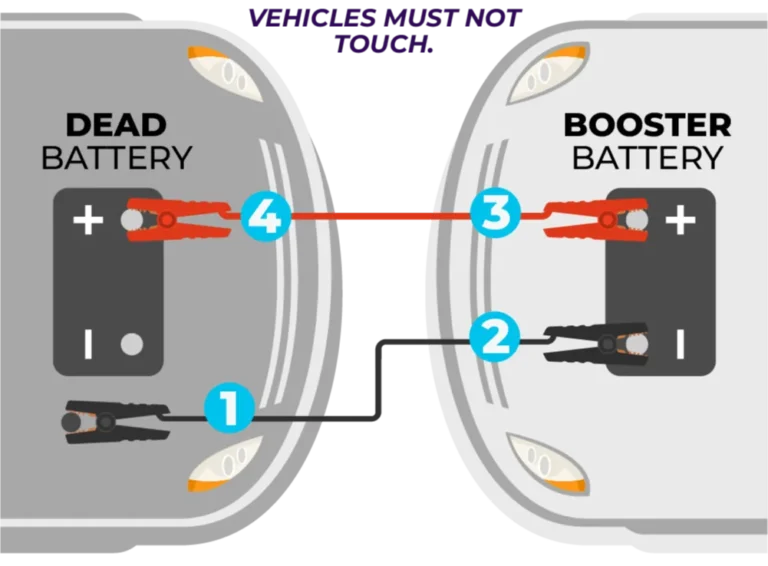
To jump start a car, park a donor vehicle nose-to-nose, turn both ignitions off, and connect red clamps to both positive (+) terminals. Connect the black clamp to the donor's negative terminal, then attach the final black clamp to an unpainted metal ground on the dead car. Start the donor, wait two minutes, then crank the dead car for up to ten seconds.
Disconnect in reverse order, and let the jumped car idle or drive for at least 20 minutes.

Signs Your Battery Needs a Jump (And What They Mean)
Batteries rarely die without warning. If you know what to listen and look for, you can usually tell whether the jump will actually solve the problem or whether something deeper is wrong.
- Rapid clicking when you turn the key. That's the starter solenoid trying to engage without enough current. Solid sign of a dead battery, not a failed starter.
- Dim or flickering dashboard lights. Interior electronics run on lower voltage than the starter. If the radio is sluggish but the headlights still work, the battery is weak but not fully dead.
- No lights, no clicks, no response. Usually a deeply discharged battery, but can also point to a broken battery cable or corroded terminal.
- Engine cranks slowly, like syrup. Battery is on its last legs. A jump may get you going, but replacement is coming soon.
- Click once, then nothing. Battery has just enough to engage the solenoid once but not enough to hold it.
If your headlights look normal but the engine won't crank, the issue is probably the starter or ignition switch, not the battery. A jump won't fix that. If you recently replaced the battery and it's already dead, you likely have a parasitic drain or a weak alternator that isn't recharging it while you drive.
AAA's battery and electrical service documentation is a solid reference for these symptoms and the typical voltage thresholds behind them.
What You Need Before You Start: Tools and Vehicle Check
Grabbing tools after the hood is open wastes time. Get your kit sorted before you connect anything.
| Tool | What to look for | Why it matters |
|---|---|---|
| Jumper cables | 4 to 6 AWG gauge, at least 12 ft long, 400A+ rating | Thicker cable handles more current and doesn't overheat on larger engines |
| Portable jump starter | 1000A+ peak, lithium, with reverse polarity alarm | Works without a second car, fits in a glovebox |
| Safety glasses | Any ANSI-rated pair | Hydrogen gas vents from batteries, especially during charging |
| Wire brush or terminal cleaner | Small brass brush | Removes corrosion that blocks current flow |
| Mechanic gloves | Nitrile or rubber-coated | Keeps skin off corroded metal and accidental sparks |
Before you connect a single clamp, do a quick safety inspection. Look at the dead battery for cracks in the case, bulging sides, or leaking fluid. A cracked battery can explode if you try to jump it.
Smell for sulfur or rotten eggs. That's hydrogen sulfide, and the battery is venting gas. If the case is frozen or swollen in cold weather, do not jump.
Warm the battery first or replace it. The National Highway Traffic Safety Administration publishes consumer guidance on vehicle battery safety that lines up with these checks.
Also make sure both cars are in Park or Neutral with the parking brake set. Turn off every accessory, headlights, radio, climate control, phone chargers. Accessories pull voltage that should be going to the starter.
If you're using a portable jump starter, confirm it's at least 50% charged. A half-charged jump box often won't crank a V8 in cold weather.
How to Jump Start a Car With Jumper Cables (Step-by-Step)
This is the classic method and still the most reliable in 2026. Two cars, a set of cables, and about ten minutes of your time.
- Position the donor car. Park it so the batteries are close, usually nose-to-nose or side-by-side. Both cars off, parking brakes on, transmissions in Park or Neutral.
- Identify the terminals. Positive (+) is almost always red and slightly larger. Negative (-) is black. On many cars the negative cable bolts directly to the chassis, so there may not be a clear "-" symbol on the battery itself.
- Connect red to dead positive. Clamp one red handle to the positive terminal of the dead battery. Wiggle it to make sure it's biting metal, not plastic.
- Connect red to donor positive. Take the other red clamp and attach it to the donor battery's positive terminal.
- Connect black to donor negative. Clamp one black handle to the donor battery's negative terminal.
- Connect black to a ground point on the dead car. This is the step most people get wrong. Do not clamp to the dead battery's negative terminal. Clamp to an unpainted metal engine bracket, a bolt on the alternator bracket, or a dedicated ground point. This routes any spark away from the battery where hydrogen gas can ignite.
- Start the donor car. Let it idle for two to three minutes. Revving to about 1500 to 2000 RPM helps push more current into the dead battery, but isn't required.
- Crank the dead car. Turn the key for up to 10 seconds. If it doesn't start, wait 60 to 90 seconds and try again. Three attempts is the practical maximum before you stop and troubleshoot.
- Disconnect in reverse order. Black from ground, black from donor negative, red from donor positive, red from dead positive. Keep the clamps from touching each other during removal.
- Keep the jumped car running. Don't turn it off. Idle for 20 minutes minimum, or drive for 30 minutes, to put enough charge back into the battery for a normal restart.
If the engine turns over but won't catch, the issue isn't the battery. It's probably fuel delivery or a sensor problem. A jump won't help and continuing to crank only drains what little charge you just put in.
How to Jump Start a Car With a Portable Jump Starter
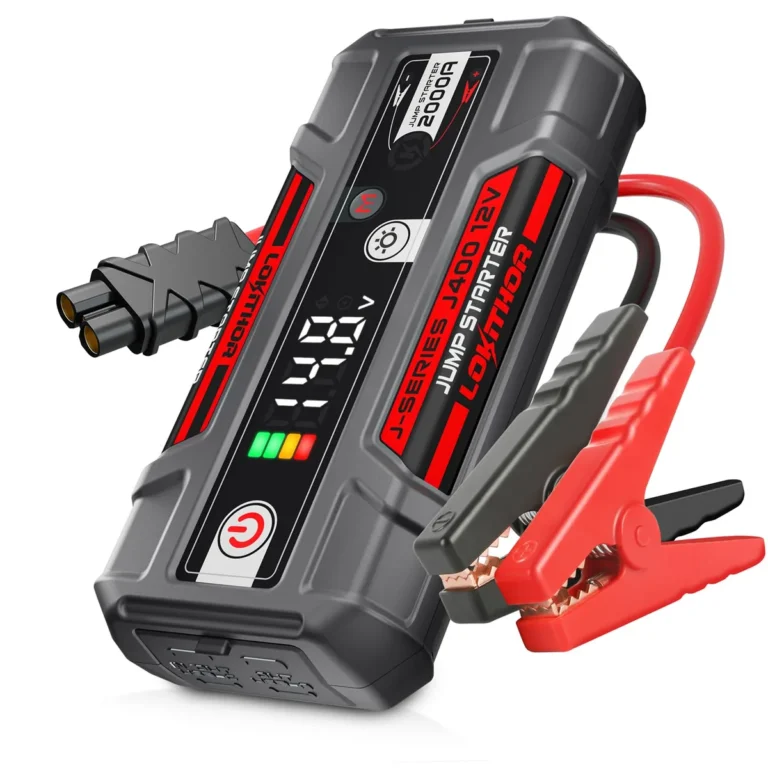
No donor car in sight? A portable jump starter handles it solo, and the lithium units sold today are small enough to live in your glovebox year-round. This method also avoids the risk of running two electrical systems together, which matters on cars with sensitive electronics.
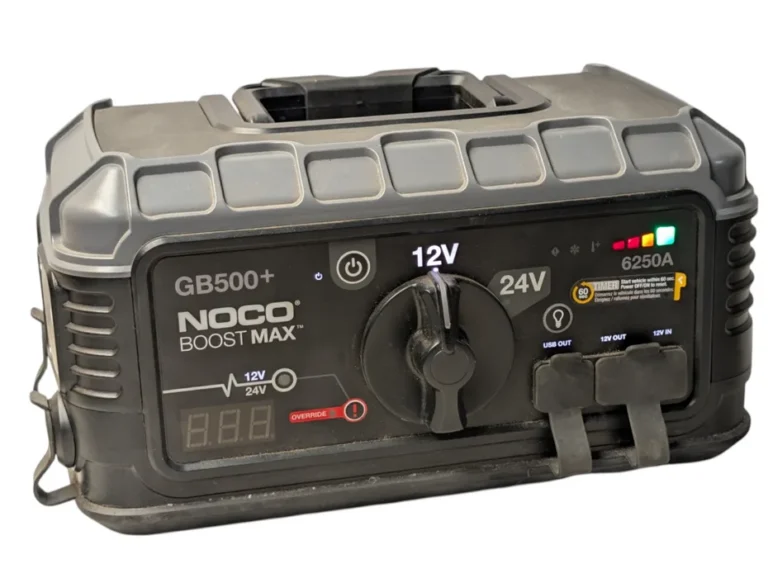
The workflow is shorter but the order is just as strict. Manufacturer specs for units like the NOCO Boost series and Antigravity XP-10 confirm the same reverse-polarity and short-circuit protections have been standard since around 2022, so any current production unit will shut itself off if you make a mistake.

Step by step:
- Confirm the jump starter is charged. Most units show a percentage or LED bar. Below 50% is risky in cold weather or on large engines.
- Turn off the car's accessories and remove the key.
- Connect the red clamp to the battery's positive terminal.
- Connect the black clamp to a chassis ground, not the negative terminal. Same reason as the cable method, to keep any spark away from battery gases.
- Power on the jump starter. Wait for the green "ready" light.
- Crank the car for up to 10 seconds. If it doesn't start, wait 60 seconds and try again.
- Once the engine runs, turn off the jump starter, disconnect the black clamp first, then the red.
- Let the car idle or drive to recharge, same 20 to 30 minute rule as before.
Lithium jump starters hold their charge for months, but check the unit every 60 days. A dead jump box in the trunk is the same as not owning one. Charge it fully after every use, and store it somewhere that doesn't get below freezing.
Repeated cold storage permanently damages the lithium cells.
Which method is right depends on what you have access to. Cables are cheaper and never run out of power. A portable jump starter is faster and works in parking garages where you can't get a second car close enough.
Most experienced drivers keep both.
How to Jump Start a Car Without Cables (Push Starting a Manual)
If you drive a manual transmission, you've got a third option that costs nothing. Push starting, also called bump starting, uses the rolling motion of the car to spin the engine fast enough to fire the cylinders. No cables, no donor vehicle, no jump box.
It only works on manuals because automatics can't be safely spun this way. Trying it on an automatic can damage the torque converter, and on many modern cars it won't even work mechanically.
Here's the process:
- Find a slight downhill or grab two helpers to push. A gentle slope is ideal, but a flat surface with pushers works fine.
- Turn the key to the On position, but don't crank the engine.
- Press the clutch in and shift into second gear. Second is smoother than first and reduces the jolt to the drivetrain.
- Release the parking brake.
- Let the car roll to about 5 mph, or have your pushers get you moving.
- Quickly release the clutch while gently pressing the gas.
- Once the engine catches, press the clutch back in and drive normally.
If the engine doesn't fire on the first try, repeat. Give it three to four attempts before assuming the battery is too dead even for a bump start. If you need constant revs to keep it running afterward, the alternator is suspect, not the battery.
Which Method Should You Use? A Quick Decision Guide
| Situation | Best method | Why |
|---|---|---|
| Another car is available | Jumper cables | Most reliable, works on any vehicle, no capacity limits |
| No second car nearby | Portable jump starter | Solo operation, fast, fits in any vehicle |
| Manual transmission, no tools | Push start | Free, works in remote areas, no equipment needed |
| Battery is frozen or cracked | None, replace the battery | Jump starting a damaged battery risks explosion |
| Modern car with start-stop system | Portable jump starter or smart charger | Donor-cable method can confuse battery management systems |
| Car won't crank at all | Cables or jump starter with high peak amps | Push start requires some residual battery power for spark |
The decision comes down to what you have, what you drive, and how dead the battery is. For daily drivers, our research shows a 1500A to 2000A lithium jump starter handles roughly 95% of typical jump situations in 2026, including small V8 engines in mild cold.
Jumper Cables vs. Portable Jump Starter vs. Roadside Assistance
Each option has a clear best-fit scenario. Picking the right one depends on how often you expect to need it and what kind of driving you do.
Jumper Cables
Pros:
- Cheap, often $20 to $40 for a solid set
- Unlimited uses, no batteries to recharge
- Work on any 12V vehicle, including trucks and diesels
Cons:
- Require a second vehicle
- 10 to 25 ft of cable is bulky to store
- Longer cables lose voltage, so cheap thin ones struggle with big engines
Portable Jump Starter
Pros:
- Works alone, no second car needed
- Lithium units weigh 2 to 4 pounds and fit in a glovebox
- Doubles as a power bank for phones and laptops
- Built-in reverse polarity protection on all current models
Cons:
- Costs $70 to $200 for a reliable unit
- Self-discharges over months, needs periodic recharging
- Peak amp ratings can be inflated. Look for verified specs, not marketing claims
Roadside Assistance
Pros:
- Zero effort on your part
- Technicians carry professional-grade equipment
- Often bundled with insurance or auto club memberships
Cons:
- Wait times of 30 minutes to 2 hours, longer in rural areas
- Service fees of $50 to $150 if not covered by a membership
- May not be available in remote areas or extreme weather
If you drive mostly in cities and have AAA or insurance coverage, roadside assistance is your backup. For everyone else, a quality jump starter paired with a basic set of cables covers nearly every scenario.
The Correct Cable Order (And Why Reversing It Destroys Electronics)
Cable order isn't a suggestion. It's the difference between a working jump and a fried ECU. The sequence exists to keep any spark as far from the battery as possible, because batteries off-gas hydrogen while discharging, and hydrogen plus spark equals an explosion.

The correct order:
- Red clamp to dead battery's positive (+) terminal
- Red clamp to donor battery's positive (+) terminal
- Black clamp to donor battery's negative (-) terminal
- Black clamp to an unpainted metal ground on the dead car
The order matters because the dead battery is the one venting gas. By connecting the negative to ground last, any spark from making that final connection happens away from the battery itself. Connect positive first, negative last, disconnect negative first, positive last.
That symmetry keeps the live circuit isolated until both clamps are secure.
Reverse polarity, hooking red to negative and black to positive, is the most expensive mistake. It sends current backward through the electrical system and can blow fusible links, destroy the alternator's rectifier, and in modern cars brick the ECU. Repairs regularly run $1,000 to $3,000.
The good news: most portable jump starters now have reverse polarity alarms that refuse to deliver current until you fix the connection. SAE International's J537 standard for automotive batteries documents the polarity and venting requirements these protections are built around.
Common Jump-Start Mistakes That Damage Your Car
Even experienced drivers slip on these. Each one can cost you a tow, a battery, or a trip to the mechanic.
- Connecting the last black clamp to the dead battery's negative terminal. This can ignite hydrogen gas at the battery. Always use a chassis ground.
- Smoking near the battery. Hydrogen gas is invisible. A cigarette or a phone screen flash near a venting battery is a real risk.
- Cranking for more than 10 seconds. The starter motor overheats fast. Three long attempts and you're cooking windings.
- Touching clamps together while connected. A direct short dumps hundreds of amps through the cables. Weld marks on the clamps are a giveaway.
- Skipping the post-jump idle. Turn the car off too soon and it won't restart. Drive for 30 minutes or idle for 20.
- Jump starting a frozen battery. The ice inside expands the case, and jump current can crack it open. Thaw first, or replace.
- Reconnecting cables in the wrong order on disconnect. Same spark risk as connection, just in reverse.
- Using thin, cheap cables on a large engine. 10 AWG cable is borderline for a 5.0L V8. Go 6 or 4 AWG for anything over a 4-cylinder.
If you smell sulfur, hear a hissing sound, or see any swelling, stop immediately and disconnect. A venting battery can explode without warning, throwing sulfuric acid and plastic shrapnel.
How Long to Let the Car Run After a Jump
The jump gets you running, but the battery is still mostly empty. Idling or driving for the right amount of time is what keeps you from getting stranded again in the next parking lot.
A healthy charging system pushes 13.7 to 14.7 volts back into the battery at idle. That sounds like a lot, but a deeply discharged 12V battery can absorb that current for 30 minutes or more before reaching a usable state of charge.
Here are the practical benchmarks:
- 20 minutes of idling. Minimum to put back enough charge for a restart after a short stop. Works in warm weather on small engines.
- 30 minutes of driving. Better than idling because engine RPM is higher, the alternator spins faster, and the charging system runs closer to its peak output.
- 1 to 2 hours of driving. Full recharge from a deeply discharged state. Anything less and you may still be running on borrowed time.
- Use a battery tender. If the car will sit for days, a smart charger or trickle charger at 2 to 10 amps finishes the job properly and prevents sulfation.
If the car won't restart after a 30-minute drive, the battery is sulfated or the alternator isn't charging. A multimeter across the battery terminals while the engine runs should read 13.7 to 14.7 volts. Anything below 13.5V and you're driving on a battery that's slowly dying.
Jump Starting a Frozen, Sulfated, or Damaged Battery
Not every dead battery deserves a jump. Some are damaged in ways that make the process dangerous or pointless.
Frozen Battery
In temperatures below 0°F, a deeply discharged battery can freeze solid. The ice expands the case and cracks the internal plates. Trying to jump a frozen battery can shatter the case and spray acid.
Bring the battery inside, let it warm for several hours, then test it. If the case is bulged or cracked, replace it. If it recovers, charge it slowly with a 2-amp trickle charger before driving.
Sulfated Battery
Sulfation happens when a battery sits discharged for weeks. Lead sulfate crystals build up on the plates and reduce capacity. A sulfated battery may accept a jump but won't hold the charge.
After 30 minutes of driving it dies again. The fix is a slow charge over 24 to 48 hours with a desulfation-capable charger. If the battery is more than 4 to 5 years old, replacement is usually cheaper.
Damaged Case
Any crack, bulge, or active leak means the battery is done. A jump won't repair physical damage, and the acid leak will eat your car's frame and components. Replace immediately and dispose of the old battery at any auto parts store.
Most states require a core deposit refund, and retailers like Interstate Batteries and O'Reilly accept old units for recycling.
A quick pre-jump check takes 30 seconds and can prevent a trip to the emergency room or a $200 tow.
Jump Starting Modern, Hybrid, and Start-Stop Vehicles
Cars built in the last decade have more complex electrical systems than older vehicles. The jump procedure is similar, but a few details trip people up.
Start-Stop Systems
Many 2018 and newer cars with automatic start-stop use an AGM (absorbed glass mat) battery and a battery management system (BMS) that monitors state of charge through a current sensor on the negative terminal. Jump starting these cars with a donor vehicle works, but the BMS may need 2 to 8 hours of driving to recalibrate. If the start-stop function doesn't work after a jump, that's normal.
It will return on its own.
A portable jump starter is often the cleaner option here because it doesn't introduce a second charging system into the equation.
Hybrid and Plug-In Hybrid Vehicles
Hybrids have two batteries. A high-voltage pack for the electric motor and a small 12V auxiliary battery that powers lights, computers, and the system that wakes up the high-voltage system. When a hybrid won't start, it's almost always the 12V battery, not the high-voltage pack.
Jump the 12V battery the same way as any car, but never touch the orange high-voltage cables. The high-voltage system can deliver a lethal shock even when the car is off. Manufacturers like Toyota, Honda, and Ford publish specific jump-start procedures in the owner's manual, and following them is non-negotiable.
Toyota's hybrid jump-start guide is a good example of the manufacturer-specific instructions involved.
Luxury and German Vehicles
BMW, Mercedes, Audi, and similar brands have sensitive ECUs and complex bus systems. A voltage spike during a jump can throw dozens of fault codes. The safe approach is a lithium jump starter with surge protection, or a smart charger that conditions the voltage.
Always check the owner's manual for the recommended jump point, which is often a dedicated post under the hood, not the battery itself.
Post-Jump Battery Test: Battery or Alternator, Which One Failed?
A jump gets you moving, but it doesn't tell you why the battery died in the first place. Answering that question saves you from the same problem next week.
The two main suspects are the battery and the alternator. Quick way to tell which:
Alternator Test (Engine Running)
With the engine running, measure voltage at the battery terminals.
- 13.7 to 14.7V. Alternator is charging normally.
- Below 13.5V. Alternator is weak or failing.
- Above 15V. Voltage regulator is bad. Stop driving and replace the alternator to avoid cooking the battery.
Battery Test (Engine Off, 30 Minutes After Driving)
Turn the engine off and wait 30 minutes for surface charge to dissipate. Then measure voltage.
- 12.6V or higher. Battery is healthy and fully charged.
- 12.2 to 12.5V. Battery is partially discharged. Charge it and recheck.
- Below 12.0V. Battery is severely discharged or sulfated. Likely needs replacement.
- Reading drops fast under load. Battery has a dead cell. Replace immediately.
Cranking Test
Have a helper crank the engine while you watch the voltage.
- Above 9.6V during cranking. Battery is strong enough.
- Below 9.6V during cranking. Battery can't deliver starting current. Replace it.
Most auto parts stores will run a free load test if you'd rather not do it yourself. It's a 5-minute test that tells you whether the battery is reusable or scrap.
Safety Rules Every Driver Should Know
Jumping a battery is low risk when done right. It's dangerous when shortcuts get taken. These rules are non-negotiable.
- Wear safety glasses. Battery acid and plastic shrapnel do real eye damage.
- No smoking, no open flames. Hydrogen gas ignites easily.
- Remove jewelry. Rings and bracelets conduct current and can weld to metal.
- Match voltages. Never jump a 12V battery with a 6V system or vice versa. Most classic British cars and some vintage motorcycles run 6V.
- Keep the donor car's engine off during connection. Less spark risk.
- Don't lean over the battery. Stand to the side when making the final connection.
- If the battery is hot, swollen, or smells like rotten eggs, do not jump it. Replace it.
- Keep clamps from touching each other or any metal surface during connection.
- Read the owner's manual first on newer cars. Some manufacturers specify a particular jump point under the hood.
These rules are the same ones AAA and most manufacturer service manuals publish. They're boring, and they work.
Storing Your Jump Cables and Starter So They Work Next Time
A jump kit that doesn't work when you need it is just dead weight. Coil cables loosely, never folded tight, and store them in a dry trunk compartment. Check portable units every 60 days and top them off.
Cold kills lithium cells faster than anything else, so bring the jump box inside during winter.
Jump Starting a Diesel Truck or Dual-Battery Vehicle
Diesels and heavy-duty trucks often run two batteries in parallel. Same procedure as a single battery, but connect to the battery closest to the starter for the strongest current draw. Use 4 AWG cables minimum.
Cranking amps on a 6.7L Power Stroke can hit 1,500A in cold weather, and thin cables will overheat and fail.
Jump Starting a Car With a Keyless Push-Button Start
Push-button cars still have a 12V battery under the hood, and the jump procedure is identical. The difference is you won't see a "click" from the starter. Watch the dashboard instead.
When the electronics fully power up, press the brake and push the start button to crank.
Why the Battery Keeps Dying After a Jump
Three repeat offenders. Parasitic drain from a stuck relay, trunk light, or aftermarket accessory. A weak alternator that can't keep up with the battery's needs.
Or a battery past its service life that won't hold a charge anymore. A 10-minute parasitic draw test at a shop finds the first one. A charging system test finds the second.
Age plus voltage testing finds the third.
When to Replace the Battery Instead of Jumping It
If the battery is more than 4 to 5 years old, struggles to hold 12.4V after a full charge, or dies within a day of being jumped, replacement is the smarter move. A new battery runs $100 to $250 installed and saves you from the next roadside surprise.
Frequently Asked Questions
Can you jump start a car in the rain?
Yes, rain doesn't change the procedure. Water doesn't conduct enough current to cause a problem. The spark risk is the same as in dry conditions.
The hydrogen gas from the battery is the real hazard, not the rain.
How long does a jump-started car need to run?
A minimum of 20 minutes of idling or 30 minutes of driving. Anything shorter and the battery may not have enough charge to restart the engine next time you stop. Deeply discharged batteries benefit from 1 to 2 hours of driving or a slow charge with a battery tender.
Will a jump starter damage a modern car's computer?
Quality lithium jump starters from established brands have surge protection and voltage regulation that match the donor-cable method. They are actually safer for modern cars with sensitive ECUs than a poorly regulated donor vehicle. Avoid no-name brands with unrealistic peak amp claims.
Can a completely dead battery be jumped?
Sometimes, but not always. A battery at 0V may be deeply discharged or internally shorted. Try the jump.
If the car won't crank after 10 seconds of connection time, the battery is likely shorted and needs replacement. A shorted battery can also pull voltage down so far that the donor car's electrical system struggles.
Is it safe to jump start a car with a frozen battery?
No. A frozen battery has expanded ice inside the case, and jump current can crack it open or cause an explosion. Warm the battery to room temperature for several hours, then test it.
If the case is bulged or cracked, replace it without attempting a jump.
How many times can you jump the same battery?
There is no fixed number, but as a rule of thumb, a healthy battery should not need frequent jumps. If you're jumping the same battery more than two or three times in a month, it has either lost a cell, is sulfated, or your alternator isn't charging it. Get the battery and charging system tested before you end up stranded again.