How to jump start a ford escape: Easy guide
Knowing how to jump start a Ford Escape the right way can save you a tow bill and a long wait on the side of the road. The good news is the job is short, the tools are basic, and the whole thing takes about ten minutes once you've got everything lined up.
Before you pop the hood, the single biggest decision point is which Ford Escape you actually own. Per Ford's own owner's manual coverage (2001 through current models, as of 2026), the 12V battery sits in different spots depending on generation and drivetrain, and the Escape Hybrid has a high-voltage system that changes the safety math. Get that part right first, and the rest of the process is almost identical to any modern SUV.
Quick Answer
Yes, you can jump start a Ford Escape using standard jumper cables. Connect the red clamp to the dead battery's positive terminal, then to the donor's positive terminal. Connect the black clamp to the donor's negative terminal, then to an unpainted metal ground on the Escape.
Crank for up to 10 seconds. Disconnect in reverse order.
What You'll Need Before Jump Starting a Ford Escape
Most readers don't realize the prep work is what separates a clean five-minute job from a fried alternator. A little time spent here pays off when the cables are live.
Here's the short list:
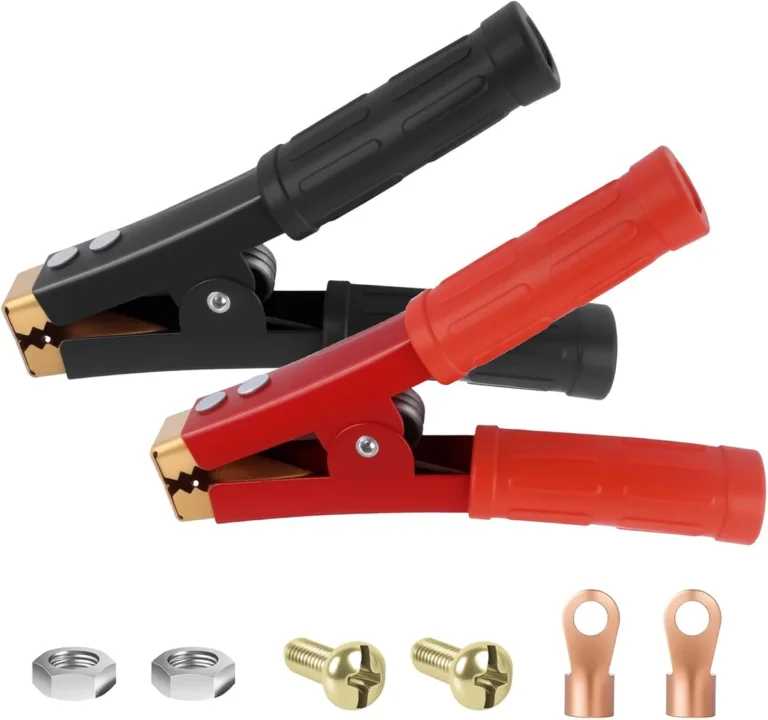
- Jumper cables (4 or 6 AWG gauge is ideal)
- A donor vehicle OR a portable lithium jump starter
- Safety glasses
- A wire brush or old toothbrush (for corrosion)
- Your Escape's owner's manual (optional but smart)
Gauge matters more than people think. Per Battery Council International group-sizing standards, thinner 10-gauge cables can deliver enough current for a small sedan, but a Ford Escape battery typically needs 4 or 6 AWG cable to crank a cold engine without voltage drop. Thinner cables get hot, lose current, and leave you wondering why nothing happens.
If you're using a portable booster pack, anything rated for at least 1,000 peak amps will spin an Escape's 2.5L or 1.5L EcoBoost without complaint. Smaller 400-amp packs are technically rated for "small engines" and will leave you cranking for twenty seconds at a time, which is rough on the starter motor.
One more thing: check the dead battery visually before you clamp anything. If the case is bulging, cracked, or you smell sulfur, don't jump it. That battery is dead in the truest sense and needs replacement, not a jump.
Where the Battery Actually Lives in a Ford Escape
This trips up more first-time Escape owners than anything else in the process. Ford moved it around across generations, so guessing costs you time.
Here's how it breaks down:
| Model Year | Battery Location | Notes |
|---|---|---|
| 2001–2012 (1st & 2nd gen) | Under-hood, driver-side front | Easy access, near the fuse box |
| 2013–2019 (3rd gen) | Under-hood, driver-side front | Slightly buried under air intake duct |
| 2020+ Gas (4th gen) | Under-hood, driver-side rear | Covered by a plastic shroud |
| 2020+ Hybrid (4th gen) | Under-hood, driver-side rear (12V auxiliary) | 12V is for accessories only |
| 2005–2012 Hybrid | Under-hood, driver-side front | Orange HV cables run nearby |
If you can't spot the battery at first glance, follow the positive cable. It runs straight from the battery to the fuse box and starter. That's a faster way to locate it than looking for the rectangular black box.
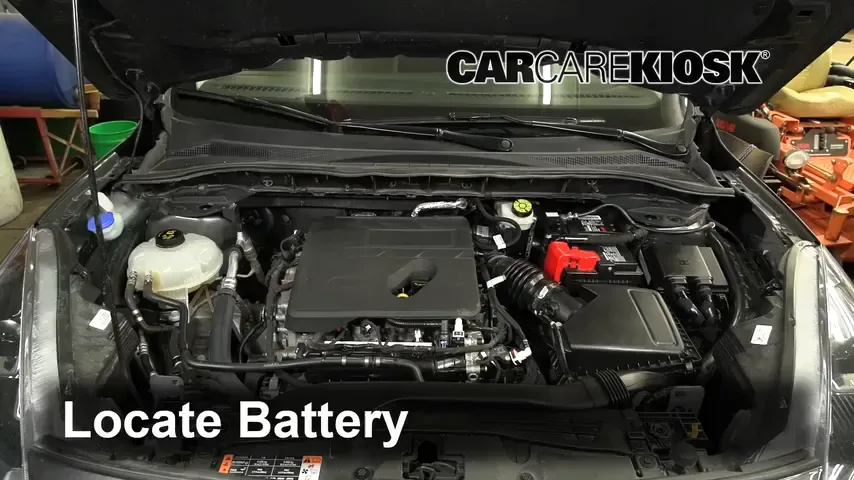
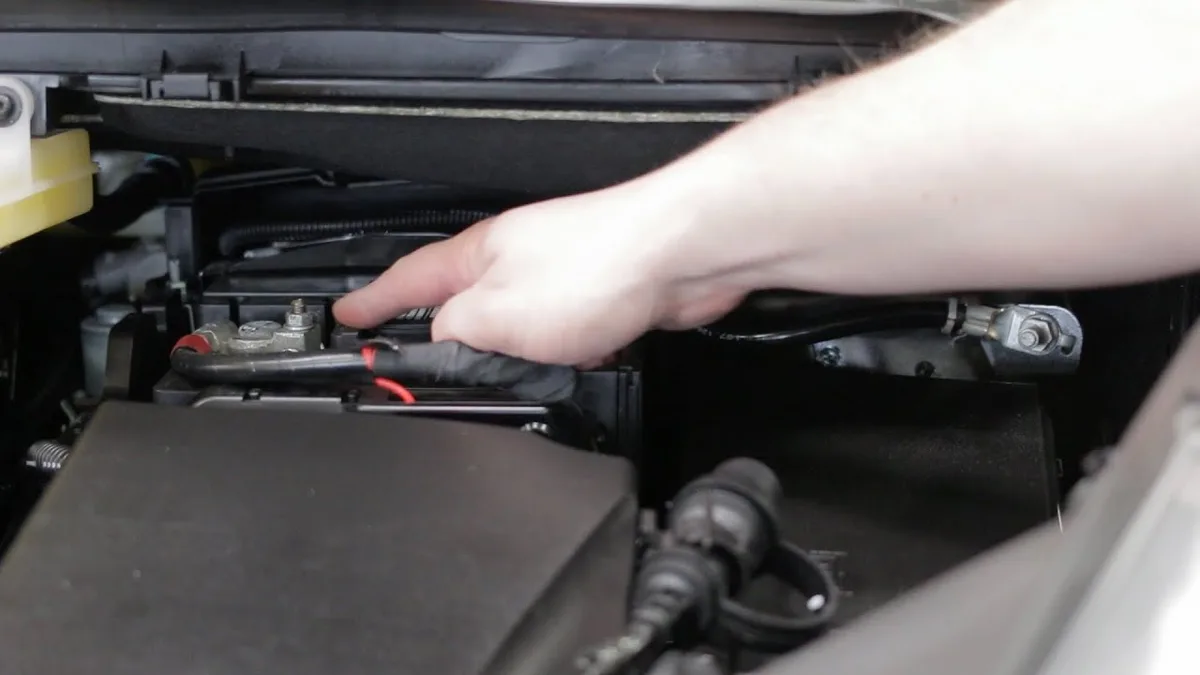
A quick visual test: look for two thick cables bolted to a square black or gray case, with a red plastic cover over the positive terminal. That's your battery. On 2020+ models, you may need to lift a plastic cover or remove an air duct to get full access.
Per Ford's 2020 Escape owner's manual, removing that cover takes about ten seconds and no tools.
Ford Escape Gas vs. Hybrid: Which Jump Start Procedure Applies to You
This is the single most important question to get right, and it's where generic guides fall apart. The jump-start procedure is almost identical for both, but the safety rules and which battery you're touching are not.
If You Drive a Gas-Only Ford Escape
You're in the simple path. The single 12V battery under the hood powers the starter motor directly, so a jump start spins the engine like any other car. Follow the standard procedure and you're done in minutes.
If You Drive a Ford Escape Hybrid
Stop and read this part twice.
The Ford Escape Hybrid has two battery systems:
- A high-voltage traction pack (300V+ on older models, varies by generation)
- A 12V auxiliary battery for accessories and computer modules
You're only jump-starting the 12V battery. You never, under any circumstances, touch the high-voltage system. The orange cables are your visual signal that you're looking at high voltage, and per Ford's hybrid safety documentation, contact with those cables can cause serious injury or death.
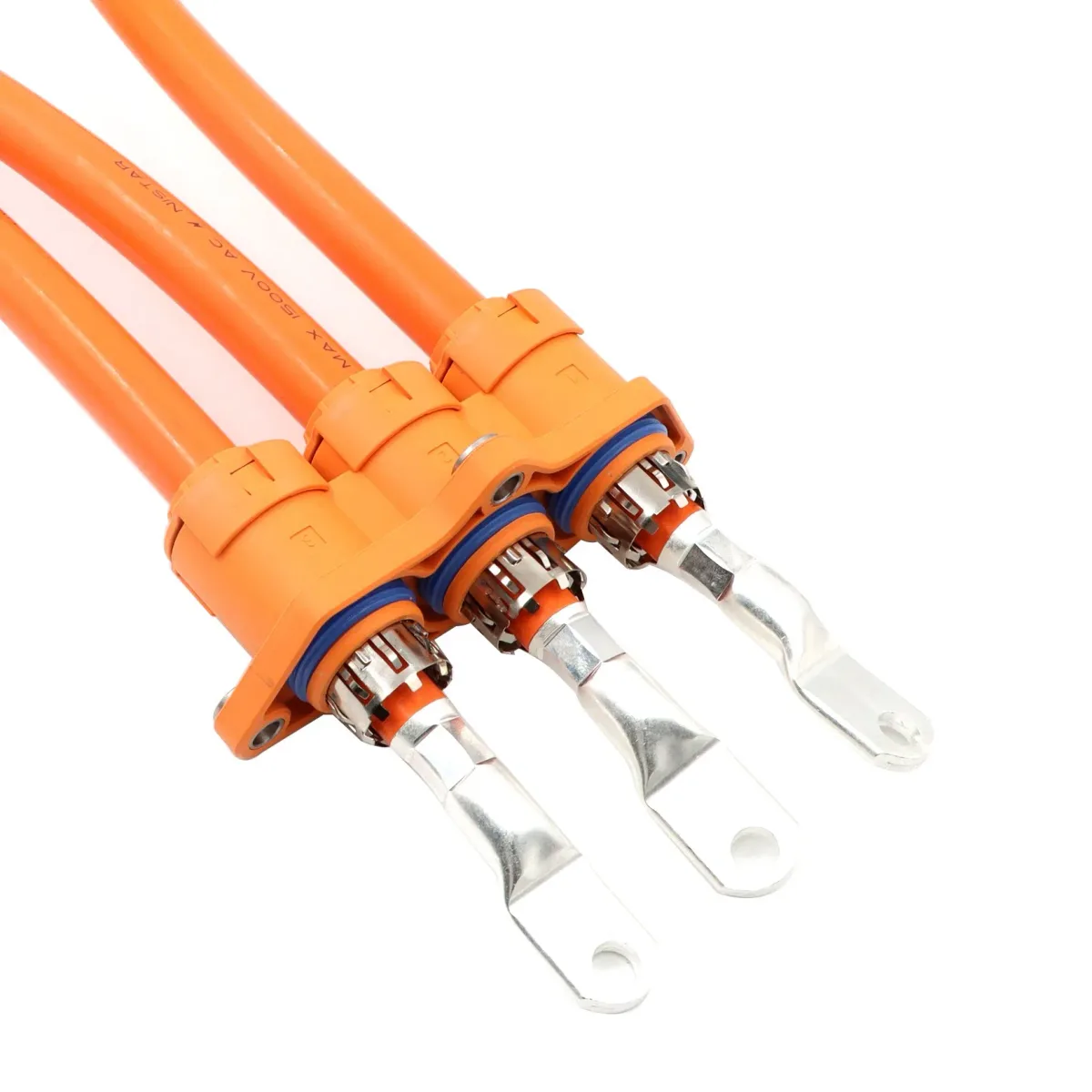
The reason hybrids need a 12V jump is simple: the 12V battery powers the computers that wake up the high-voltage system. If the 12V is dead, the hybrid system can't start, even if the traction pack is fully charged.
How to Tell Which You Have
Look at the engine bay for orange cables. If you see thick, neon-orange wires running to a silver or black box (the inverter or traction pack), you have a hybrid. If everything is black or colored conventional wire, you have a gas model.
Quick rule of thumb:
- 2005, 2012 Escape Hybrid: orange cables present, hybrid badge on the liftgate
- 2013, 2019 Escape: no hybrid offered (gas-only)
- 2020+ Escape Hybrid: orange cables, hybrid badge, slightly different front grille
Jump Starting a Ford Escape With Jumper Cables (Step by Step)
Once you've confirmed you're dealing with a 12V battery and you've got the right gear, the actual process is straightforward. Take your time, work in sequence, and don't rush the cable order.
Step 1: Position Both Vehicles
Park the donor car close enough that the cables reach comfortably without stretching. Both cars should be in Park (or Neutral for a manual), parking brakes set, and ignitions off. Turn off every accessory in both vehicles: headlights, radio, climate control, heated seats, phone chargers.
All of it.
Step 2: Identify the Terminals
Pop the hood on the Escape and locate the 12V battery. The positive terminal has a "+" marking and usually a red plastic cover. The negative terminal has a "-" marking and is typically black or unmarked.
Clean off any corrosion with your wire brush. A terminal covered in white or green fuzz blocks current and makes the whole process feel broken when it isn't.
Step 3: Connect in This Exact Order
This is where most mistakes happen, so take a breath and follow the sequence:
- Red clamp to the dead Escape's positive (+) terminal
- Red clamp to the donor vehicle's positive (+) terminal
- Black clamp to the donor vehicle's negative (-) terminal
- Black clamp to an unpainted metal ground on the Escape (engine bracket, strut bolt, or chassis bracket)
Never connect the final black clamp directly to the dead battery's negative terminal. Modern best practice (and Ford's recommended procedure in the owner's manual) is to use a chassis ground away from the battery. This reduces the chance of igniting hydrogen gas that vents from lead-acid batteries.
Step 4: Start the Donor Vehicle
Run the donor car for two to three minutes before attempting to start the Escape. This lets the donor's alternator send a small charging current into the Escape's battery, warming it up and building surface charge. Skipping this step often results in a no-start that confuses people when everything is actually fine.
Step 5: Crank the Escape
Turn the key (or press the start button) for up to 10 seconds. If it doesn't start, wait 30 seconds and try again. Don't crank continuously, as that overheats the starter motor and can weld the contacts.
Most Escapes will fire within two or three attempts. If it doesn't start after five tries, something else is wrong (fuel, ignition, starter), and continued cranking isn't going to fix it.
Step 6: Disconnect in Reverse Order
Once the Escape is running:
- Black clamp off the Escape's ground point
- Black clamp off the donor's negative terminal
- Red clamp off the donor's positive terminal
- Red clamp off the Escape's positive terminal
Keep the cables clear of any moving parts, especially belts and fans. A dangling clamp that swings into a belt can throw it off or damage the accessory drive, turning a simple jump into a $400 repair.
Jump Starting a Ford Escape With a Portable Booster Pack
A portable lithium jump starter changes the workflow because there's no donor vehicle involved. It's just you, the booster, and the Escape. That also means there's no second engine to act as a backup power source if something goes sideways.
Here's the order of operations:
- Turn off the Escape completely and remove the key
- Make sure the booster pack is fully charged (most have a status LED)
- Connect the red clamp to the Escape's positive (+) terminal
- Connect the black clamp to a chassis ground on the Escape
- Power on the booster pack
- Start the Escape
- Disconnect in reverse order within 30 seconds of starting
The reverse-polarity protection on most modern boosters is a real safety net, but don't rely on it as a substitute for paying attention. Reversed clamps still cause voltage spikes on older boosters without that feature.
One advantage of a booster pack that owners rarely think about: it works in parking garages, on remote trails, or anywhere a second vehicle can't reach. If your Escape dies in a garage, you can't push another car next to it. A 15,000 mAh booster fits in a glove box and handles that scenario in seconds.
Per aggregate user reviews of top-selling boosters, units in the 1,500 to 2,000 peak amp range are the sweet spot for the Escape. Smaller 800-amp units sometimes spin a warm engine but struggle when it's below freezing.
What to Do Right After a Successful Jump Start
The Escape is running. Don't shut it off yet. The 12V battery is still mostly drained, and the alternator needs time to push enough charge back into it to crank the engine on its own next time.
Here's the standard recovery sequence:
- Let the Escape idle for at least 15 minutes
- Drive it for 30+ minutes if you can (alternators charge faster under load)
- Avoid shutting the engine off until you can do a full drive cycle
- Keep accessories off during this recharge window (no A/C, no heated seats)
The reason a 30-minute drive beats a 30-minute idle is RPM. At idle, the alternator spins slowly and produces maybe 40 to 60 amps. At cruising RPM, output climbs to 80 to 120 amps, which means the battery gets back to a usable state of charge in half the time.
If you shut the Escape off too soon, it won't restart. That second "dead battery" is what sends most people to the parts counter for a replacement they didn't actually need.
Common Mistakes That Can Fry the Alternator or Modules
We've covered the right way. Now let's cover the ways that turn a 10-minute job into a multi-day repair.
| Mistake | What Happens |
|---|---|
| Last clamp on dead battery negative | Hydrogen gas ignites, battery vents or explodes |
| Reverse polarity (red/black swapped) | Blown fuses, fried alternator diodes, BCM damage |
| Cranking 30+ seconds straight | Welded starter contacts, overheated starter |
| Donor engine off during jump | Dead donor battery, no help at all |
| Touching clamps together after connected | Spark, possible battery explosion |
| Clamping onto painted body panel | Poor ground, no current flow, false sense of effort |
The reverse-polarity mistake is the expensive one. Per Ford service documentation, a reversed jump on a modern Escape can blow the 200-amp mega-fuse, damage the Body Control Module (BCM), and in some cases cook the alternator's voltage regulator. Repairs range from a $40 fuse to a $900 module replacement.
The starter overheating mistake happens most often in cold weather. People crank, the engine doesn't catch, they keep cranking. Ten seconds is the safe limit.
Thirty seconds of cranking can warp the starter's copper windings.
Signs Your Ford Escape Battery Is Actually Dead, Not Just Drained
A jump start solves a drained battery. It does nothing for a battery that has failed internally. Knowing the difference saves you from jumping the same Escape three times before accepting reality.
How Old Is the Battery?
Most 12V car batteries last 3 to 5 years. If yours is older than five years, the jump may start the car today, but the battery is at the end of its service life. Replace it on your schedule, not when it strands you.
Did the Battery Hold Charge Overnight?
Drained batteries bounce back with a jump. Dead batteries hold no charge. If you jump the Escape, drive it for an hour, park it overnight, and it won't start the next morning, the battery is shot.
A healthy battery should hold charge for weeks without use.
Is the Battery Visibly Damaged?
Bulging, cracking, or a sulfur smell all mean the battery is dead. A jump start is unsafe on a damaged battery because the internal short can cause it to overheat, vent toxic gas, or in rare cases explode.
Does the Alternator Show Signs of Failure?
Dim headlights while idling, a battery warning light that stays on after the jump, or a sulfur smell under the hood all point to a bad alternator, not a bad battery. If the alternator isn't charging, no jump start will fix the underlying problem.
Quick diagnostic rule: if the Escape runs after the jump but the battery light stays on, the alternator is the suspect, not the battery.
Resetting Electronics After a Battery Jump (Clock, Radio, Windows)
Modern Escapes lose a few settings when the 12V battery goes fully dead. Most reset themselves within a drive cycle, but a handful need manual attention.
Here's the typical reset list:
- Clock and date: reset manually through the infotainment menu
- Radio presets: reprogrammed by hand (most cars don't save them through a dead battery)
- Window auto-up/down: hold the window switch up for 5 seconds at the top, then down for 5 seconds at the bottom
- Power liftgate (if equipped): reprogram by opening fully and pressing the close button until it beeps
- Adaptive memory features: seat memory, mirror memory, and climate presets reset and relearn after one drive cycle
The window reset is the one that frustrates most people. After a dead battery, the auto-up function stops working until the motor relearns its limits. Per Ford's body control module behavior documentation, that relearn takes about ten seconds of holding the switch at each extreme.
The radio is usually the most annoying. If your Escape has SYNC, the infotainment system may take 30 to 90 seconds to fully boot after a battery reconnect. That's normal.
Don't keep pressing buttons trying to "wake it up."
Frequently Asked Questions About Jump Starting a Ford Escape
Can You Jump Start a Ford Escape in the Rain?
Yes. Water on the battery terminals doesn't create a dangerous jump-start condition the way some old guides claim. Modern 12V systems run at voltages too low to be affected by rain.
Dry the terminals with a rag so the clamps make good contact, then proceed normally.
How Long Does a Jump Start Take to Recharge the Battery?
A jump alone does not recharge a battery. Idling for 15 to 20 minutes puts a small surface charge back. A 30 to 60 minute drive at road speed is what actually brings the battery back to a usable state.
Anything shorter and the battery may not restart the engine next time.
Will Jump Starting a Ford Escape Damage the Computer?
No, not when done correctly. The risk only appears if you reverse polarity, skip the donor-idle step, or crank for 30+ seconds. A standard sequence (positive first, ground last, 10-second cranking limit) keeps the BCM and PCM safe.
What Color Is the Battery Terminal on a Ford Escape?
The positive terminal has a red plastic cover or a red "+" marking. The negative terminal is black or marked with a "-". On 2020+ models, both terminals sit under a single plastic shroud that snaps off by hand.
Can You Push Start a Ford Escape Hybrid?
No. Ford Escape Hybrids use an electronic CVT, not a manual transmission. There is no gear to drop and no clutch to release.
The 12V auxiliary battery must power the computers before the hybrid system can engage, which is why a jump is the only recovery option for a dead hybrid.
When to Call Ford Roadside Instead of Doing It Yourself
DIY isn't always the right call. Some situations are safer and cheaper with a tow or a service truck, even if you own the tools.
Call Ford Roadside Assistance or a similar service if:
- The battery is visibly damaged, swollen, or leaking
- You smell sulfur or see white vapor from the battery
- The Escape is parked in a way that's unsafe to access the battery
- You've attempted three jump starts with no success
- The key fob won't unlock the doors (you can't get in to pop the hood)
- You drive a hybrid and the orange high-voltage warning light is active
Per Ford Roadside Assistance program terms, new Escapes come with complimentary towing for a limited period. Membership plans extend that coverage. The typical roadside call fee for a non-member runs $75 to $150 depending on region, which is often cheaper than a single misjump that damages a $400 BCM.
The honest truth is that most dead-battery situations are easy fixes. But when the situation looks off, smells off, or you're stuck in an unsafe spot, the smartest move is a phone call rather than improvisation.