How to get a free jump start: Easy guide
A dead battery always shows up at the worst time, and the first question most drivers ask is simple: how to get a free jump start without paying a tow truck or a mobile mechanic. The good news is that in 2026, drivers have more no-cost options than ever, from insurance roadside coverage to campus safety teams, and knowing which one fits your situation is what saves the day.
Most drivers spend $50 to $150 for a basic jump-start from a paid service, but AAA membership tiers and insurance roadside add-ons commonly include 3 to 4 free service calls per year. Battery Council International guidance notes that a healthy 12V battery lasts 3 to 5 years, which means almost every driver will deal with this problem at some point. Let's walk through the right path based on where you are, what you have, and who's around to help.
Quick Answer
Yes, you can get a free jump start in most situations. Your best options are roadside assistance through insurance or an auto club like AAA, on-demand apps, a portable booster pack you already own, or a willing bystander with jumper cables. Your exact path depends on where you're stuck, what you have available, and whether you have a second vehicle nearby.
First, Figure Out If the Battery Is Really the Problem
Before you call anyone, confirm the battery is the culprit. A jump won't help if the issue is a bad starter, a failed alternator, or no fuel.
Common Signs of a Dead Battery
- You turn the key and hear a rapid clicking sound, but the engine doesn't crank.
- The dashboard lights dim or flicker when you try to start.
- The radio and interior electronics work, but nothing happens on ignition.
- The car started fine yesterday but won't turn over this morning.
Signs It's Probably NOT the Battery
- You hear a single loud click, then complete silence. That points to the starter motor.
- The engine cranks normally but won't fire. That's fuel or ignition, not battery.
- The check engine light flashes with cranking. It suggests a deeper electrical fault.
If the symptoms match the first list, you're almost certainly dealing with a dead 12V battery and a jump-start will get you moving.
Free Jump Start Options Based on Your Situation
Your location and what you have on hand decide which option actually works. Here's how to pick the right one fast.
You Have a Friend or Second Car Nearby
This is the cheapest, fastest option. If someone nearby can pull up close enough for cables to reach, you're looking at a 5-minute fix.
What you need:
- A set of jumper cables (4-gauge or 6-gauge is ideal)
- A donor vehicle with a working battery
What it costs:
- Nothing, if you already own cables
- A basic set runs $15 to $30 at any auto parts store if you don't have one
If you don't own cables, ask the other driver. Most experienced drivers keep a set in the trunk.
You're Stuck Alone in a Parking Lot or Driveway
Alone with no cables? You still have several no-cost paths.
| Option | Cost | Best For |
|---|---|---|
| Insurance roadside add-on | Free with coverage | Most drivers, fastest response |
| Auto club (AAA, etc.) | Free with membership | Members within service area |
| Portable jump starter (your own) | Free if you own one | Solo drivers, frequent travelers |
| Auto parts store (AutoZone, O'Reilly) | Often free if you bring the battery in | Drivers near a store |
| Campus or workplace safety team | Free | College students, office workers |
| Ask a passerby for help | Free | Daytime, safe locations |
If none of those work, a tow truck jump-start typically runs $50 to $150 depending on your region and time of day.
You're on the Road, Highway, or an Unfamiliar Area
Highway breakdowns need a safety-first approach.
- Pull fully off the road and turn on your hazard lights.
- Stay inside the vehicle with your seatbelt on if traffic is moving fast.
- Call your roadside service through your insurance app or AAA.
- Average response time is 20 to 45 minutes in metro areas, longer in rural zones.
Per NHTSA roadside safety guidance, staying buckled and visible is the priority while you wait. Never stand between your car and oncoming traffic to flag down help.
You Drive an Older Car or Live in a Cold Climate
Cold weather is the #1 killer of car batteries. Sub-zero temps cut a battery's cranking power by 30 to 60%. If your car is more than 3 years old and you park outside, expect at least one dead-battery incident per winter.
If you live in a cold state, the cheapest insurance is a $60 portable jump starter you can keep in your trunk. It pays for itself the first time you use it.
Free and Low-Cost Services That Actually Cover Jump Starts
Not all "free" services are equal. Some cover unlimited jump-starts, others give you 3 to 4 calls per year, and a few only cover tows.
Roadside Assistance Through Insurance or Auto Clubs
Most major insurers offer roadside coverage as a $10 to $30 per year add-on. It usually covers jump-starts, flat tires, fuel delivery, and lockouts.
AAA Classic membership runs about $65 to $130 per year and covers 3 to 4 service calls. Higher tiers bump that to unlimited calls within your region.
What's typically covered:
- Jump-starts
- Flat tire changes
- Fuel delivery (you pay for the fuel)
- Lockout help
- Towing (limited mileage per tier)
Apps and On-Demand Roadside Services
Modern apps connect you to nearby drivers who can help. Some charge a small fee, others work through your existing membership.
| Service | Cost Structure | Notes |
|---|---|---|
| HONK | Pay per use, ~$49 to $89 | Live ETAs, no membership |
| Urgently | Pay per use | Similar to HONK |
| AAA Mobile App | Free with membership | Best for AAA members |
| Geico Roadside | Free with policy add-on | Geico policyholders only |
If you don't already have a membership, a pay-per-use app costs more than the jump itself. The real savings come from insurance or auto club coverage you already pay for.
Dealerships, Auto Parts Stores, and Local Shops
Many AutoZone and O'Reilly locations will jump your car for free in their parking lot, especially if you buy the battery from them. Independent shops often do the same for regular customers.
Tip: Call ahead. Some locations only jump cars during business hours, and others require you to come inside first.
Good Samaritan Strangers and Campus or Workplace Safety
If you're in a safe, populated area, asking for help works. Most drivers have cables and are happy to spend 5 minutes helping. College campus police, apartment complex management, and workplace security teams will often jump your car for free.
Safety first: Stay in your car with the doors locked if you don't feel comfortable. Wave a stranger over only in well-lit, busy areas.
How to Jump Start a Car Safely (Step-by-Step)
If you've got cables and a donor car, here's the safe sequence. Getting the order wrong can fry your car's electronics, so follow it carefully.
Connecting the Cables the Right Way
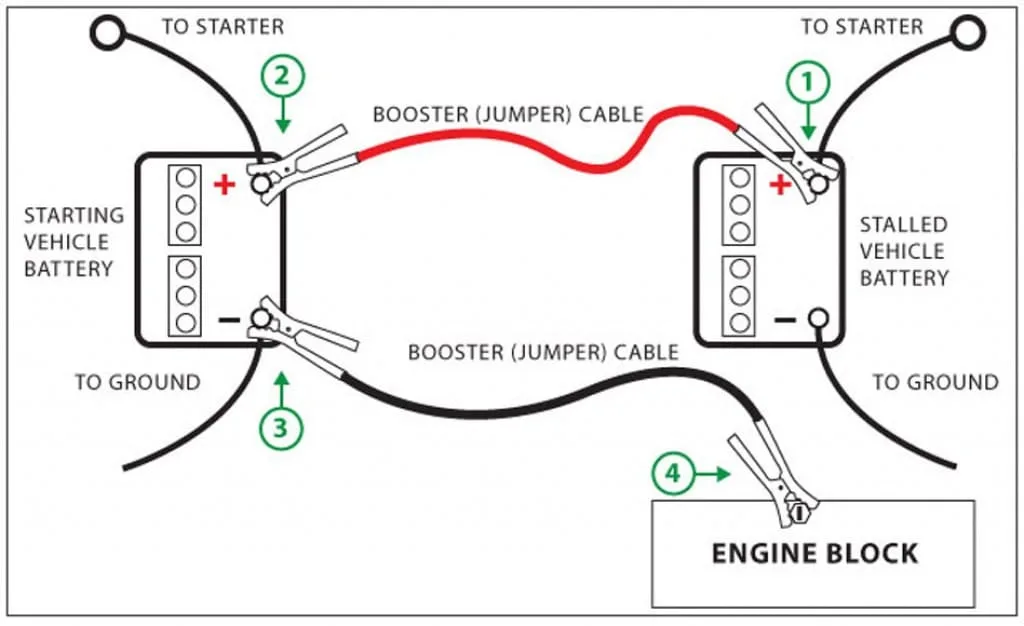
- Park the donor car close enough that cables reach, but make sure the two cars don't touch.
- Turn both cars off and remove the keys.
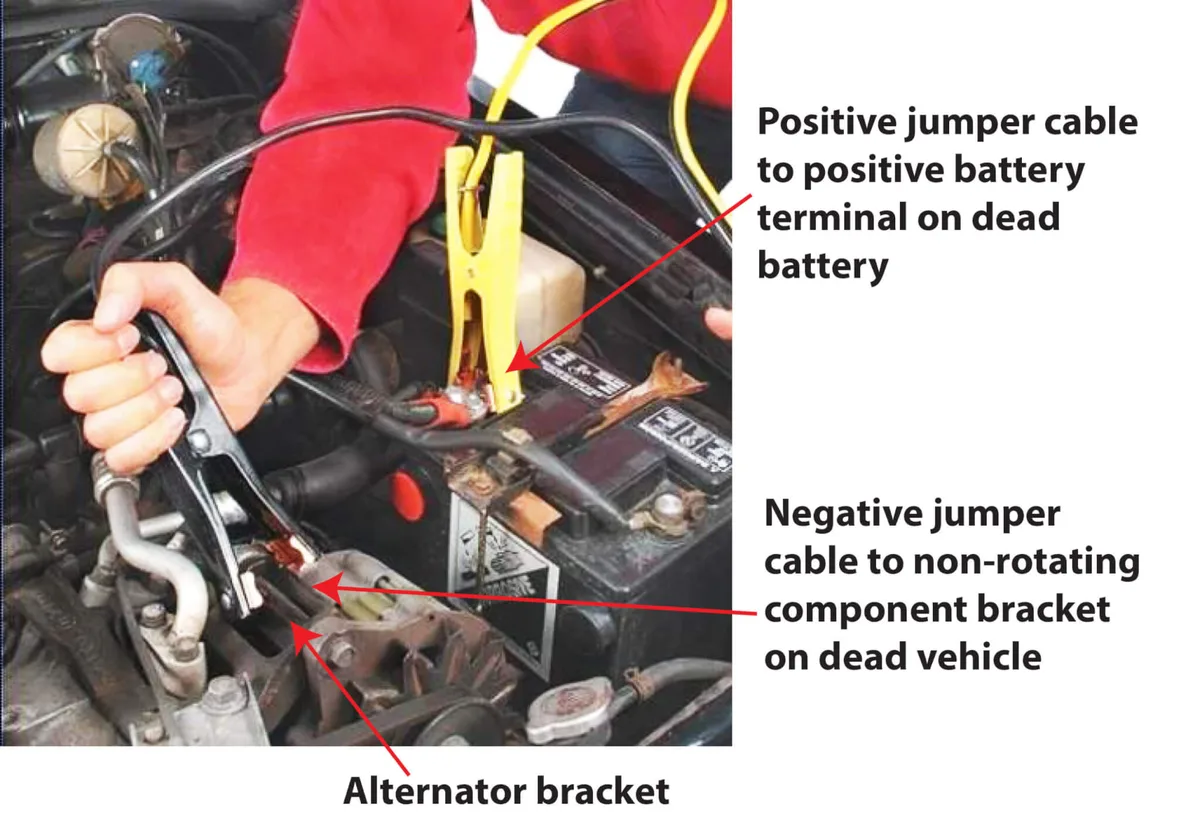
- Connect the red (positive) clamp to the dead battery's positive terminal (+).
- Connect the other red clamp to the donor battery's positive terminal (+).
- Connect the black (negative) clamp to the donor battery's negative terminal (−).
- Connect the last black clamp to an unpainted metal ground on the dead car, like a bolt on the engine block. Don't connect it to the dead battery's negative terminal.
Per NHTSA vehicle battery safety guidance, connecting the final ground away from the battery reduces the chance of igniting hydrogen gas that batteries vent.
Starting the Dead Vehicle and Disconnecting Safely
- Start the donor car and let it idle for 2 to 3 minutes.
- Try to start the dead car. If it doesn't crank, wait another 2 minutes and try again.
- Once the dead car is running, leave both engines on while you disconnect.
- Remove the cables in reverse order: ground clamp on dead car first, then negative on donor, then positive on donor, then positive on dead car.
- Keep the jumped car running. Don't shut it off for at least 15 to 30 minutes.
What to Do Right After a Successful Jump
Your battery needs to recharge, and short drives don't cut it.
- Drive for at least 15 to 30 minutes of continuous running to put meaningful charge back.
- Avoid turning the engine off until you're at your destination, ideally a mechanic or your home garage.
- If the car dies again shortly after, the battery is likely past saving. Most auto parts stores will test it free in about 5 minutes.
- A battery older than 4 to 5 years that dies once will usually die again within weeks.
Jump Starting Without Another Car (Portable Boosters)
If you're alone with no donor vehicle, a portable jump starter (also called a booster pack) is your best friend. These lithium battery packs are small enough to fit in a glove box and powerful enough to start a 12V engine without any second car.
What a Booster Pack Actually Does
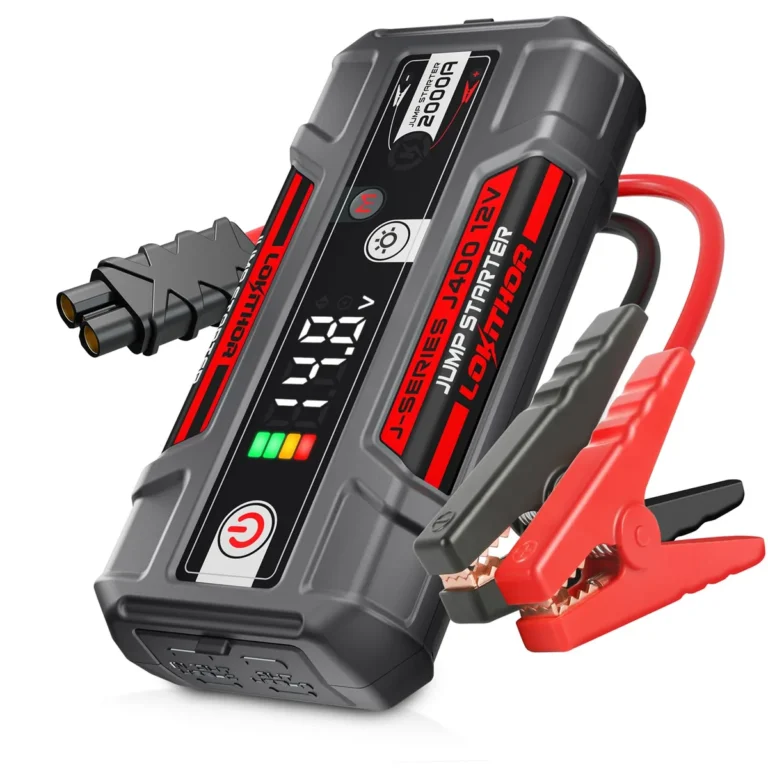
A booster pack contains a lithium battery rated for high peak amps, typically 1000A to 2000A. It delivers a short, powerful burst through its own cables straight to your battery terminals. Most modern units also work as a USB power bank for phones.
Key features to look for:
- 1000A peak amps minimum for a 4-cylinder car, 1500A+ for V6 and V8 engines
- Built-in safety features like reverse polarity protection and spark-proof clamps
- USB ports for charging phones
- LED flashlight for nighttime emergencies
- A charge indicator so you know it's ready when you need it
When a Booster Is Worth Buying vs. Calling for Help
A portable booster pays for itself the first time you avoid a $75 tow truck. If you drive daily, park outside, or own an older car, it's a no-brainer. If you rarely drive and always have roadside coverage, the membership is probably enough.
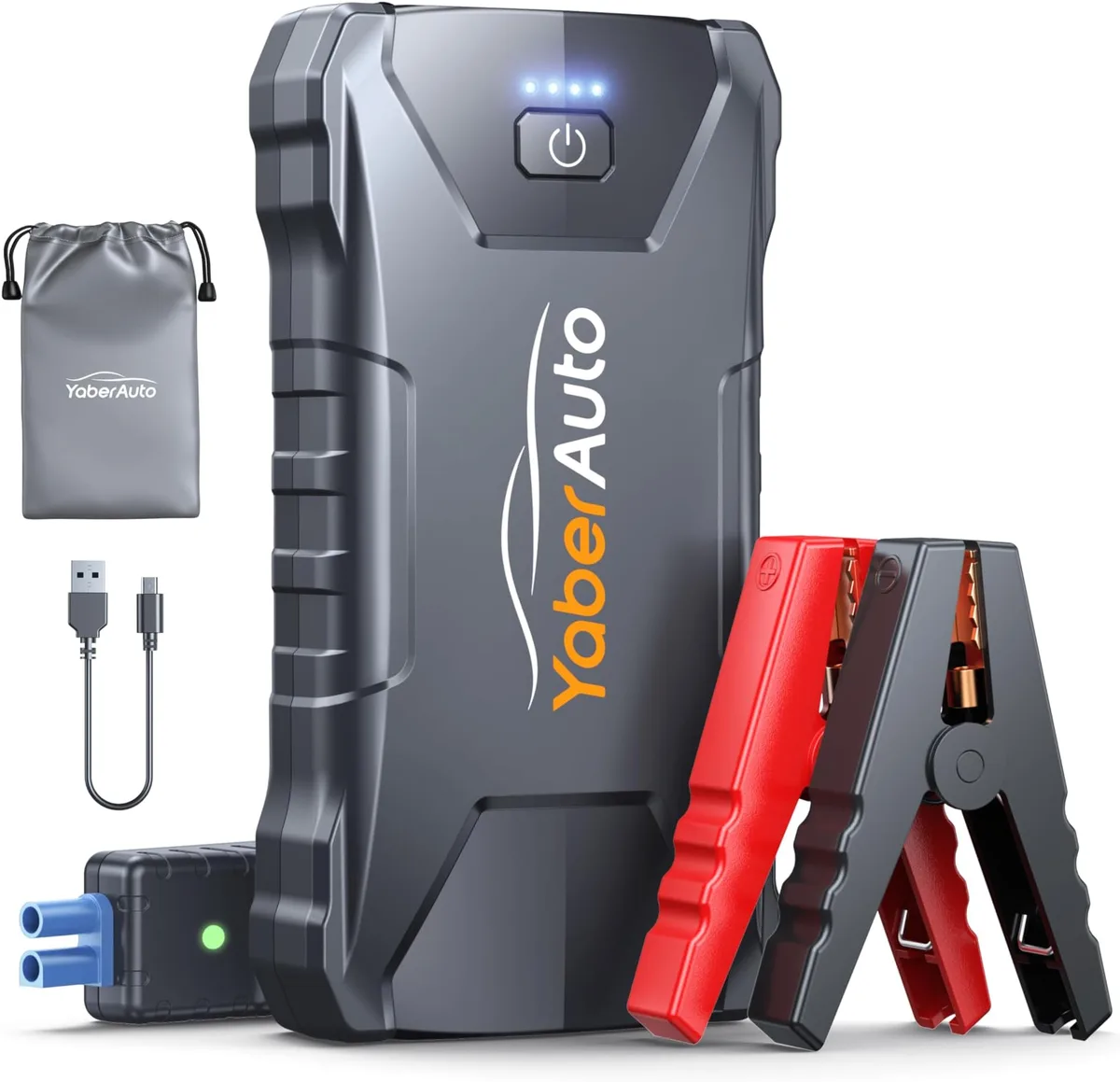
Consumer-grade units run $40 to $150. Premium models with higher cranking power and built-in air compressors can hit $200, but most drivers don't need that level of kit.
How to use one:
- Make sure the booster is fully charged (most hold charge for 3 to 6 months).
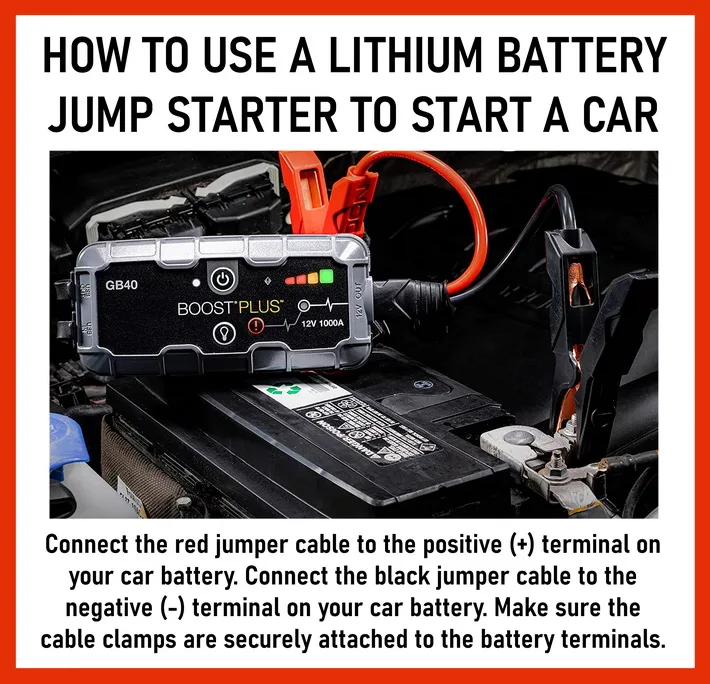
- Connect the booster's clamps to your battery, red to positive, black to negative or ground.
- Turn on the booster.
- Start your car.
- Disconnect and let the engine idle for at least 15 minutes.
Common Mistakes That Can Damage Your Car
A wrong move during a jump can damage the alternator, ECU, or other electronics. Here's what to avoid.
Reverse Polarity and Electrical Damage
Mixing up positive and negative is the most expensive mistake. It can:
- Fry the alternator
- Damage the ECU (engine control unit)
- Blow multiple fuses
- Damage the donor car's electrical system too
If you hear a loud pop or see sparks when connecting, stop and recheck the clamps. Modern boosters and many newer cables have reverse polarity alarms for this reason.
Jumping a Battery That Shouldn't Be Jumped
Some batteries shouldn't be jumped at all.
- Cracked or leaking battery: Visible acid or a bulging case means it's done. Replace it.
- Frozen battery: In extreme cold, the electrolyte can freeze. Trying to jump a frozen battery can cause it to explode.
- Dry battery cells: Old batteries with low fluid levels can vent hydrogen gas when jumped.
Skipping the Recharge Step After a Jump
If you jump the car, drive 5 minutes to the store, and shut it off, the battery won't have enough charge to restart. You need at least 15 to 30 minutes of driving to put meaningful charge back.
A battery that dies once and won't hold a charge after a 30-minute drive is at end of life. Replace it.
What Free Jump Start Services Typically Cost You (and Save You)
The whole point of going free is to avoid paying for help. Here's what you're saving.
Tow Truck vs. Free Jump Start Pricing
| Service Type | Average Cost | Wait Time |
|---|---|---|
| Tow truck jump-start | $50 to $150 | 20 to 45 min |
| Insurance roadside add-on | $10 to $30/year | 20 to 45 min |
| AAA Classic membership | $65 to $130/year | 20 to 45 min |
| On-demand app (HONK, etc.) | $49 to $89 per call | 15 to 30 min |
| Portable booster (one-time) | $40 to $150 | Immediate |
If you only need one jump per decade, a membership doesn't pencil out. If you drive daily or your car is aging, a portable booster or insurance add-on saves money fast.
Membership Costs and What's Included
AAA Classic is the benchmark, but most insurance roadside add-ons cover the same basics.
- AAA Classic: ~$65 to $130/year, 3 to 4 service calls, 3 tows up to a mileage cap
- AAA Plus: ~$110 to $190/year, more calls, longer tows
- Insurance roadside add-on: ~$10 to $30/year, usually 3 to 5 service calls
- Credit card roadside (some cards): Free, but limited service area and slow dispatch
Safety Warnings You Shouldn't Ignore
Batteries are small, but they're loaded with energy. A few rules keep you out of trouble.
Battery Explosions, Sparks, and Acid Exposure
Lead-acid batteries vent hydrogen gas. A spark near the wrong terminal can ignite it.
- No smoking or open flames near the battery.
- Wear gloves and eye protection if you have them.
- If acid splashes on skin or eyes, flush with water for 15 minutes and seek medical help.
- If you smell rotten eggs (sulfur), the battery is venting heavily. Stop and ventilate the area.
Hybrid and Start-Stop Vehicle Precautions
Hybrids and cars with start-stop systems often have two batteries: a 12V auxiliary and a high-voltage hybrid pack. The 12V is what you jump, and it's usually marked with a red cover.
Never touch the orange high-voltage cables in a hybrid. They're 200V+ and lethal. If your hybrid needs a jump, follow the manual's exact procedure for the 12V jump points.
Stranger Safety at Night or in Isolated Areas
If you're alone at night in a quiet parking lot, use extra caution.
- Stay in your car with doors locked while waiting for help.
- Don't accept help from anyone who makes you uncomfortable.
- Use your hazard lights to stay visible to passing drivers.
- Call a friend or family member and let them know your location while you wait.
Quick Decision Guide: What to Do Based on Your Situation
Here's the at-a-glance cheat sheet for when you're stuck.
| Your Situation | Best Free Option | Backup Plan |
|---|---|---|
| Friend with car nearby | Jump with their car using cables | Ask them for cables |
| Alone at home, have a booster | Use the booster | Call insurance roadside |
| Alone, no booster, parking lot | Call insurance or AAA | Ask auto parts store nearby |
| Highway breakdown | Pull off, hazards on, call roadside | Stay buckled inside |
| College campus | Campus police or safety team | Ask a classmate |
| Apartment complex | Property management office | Neighbors in the lot |
| Cold climate, older car | Buy a booster (one-time cost) | AAA membership |
Frequently Asked Questions
Can I get a free jump start without a membership?
Yes. Many auto parts stores, dealerships, and campus safety teams will jump your car for free. Some insurance policies include roadside coverage as a built-in perk, no extra membership needed.
How long does it take to recharge a battery after a jump?
At least 15 to 30 minutes of continuous driving. Short trips don't recharge a deeply depleted battery enough to restart the car.
How do I know if my battery is dead or just weak?
If the engine clicks rapidly but won't crank, the battery is dead. If it cranks slowly but eventually starts, the battery is weak and on its way out. Most auto parts stores test it free in about 5 minutes.
Will jumping a car damage my electronics?
Not if you connect the cables in the right order. Reverse polarity (mixing up positive and negative) can fry the alternator or ECU, so double-check each clamp before connecting.
Are portable jump starters worth buying?
Yes, if you drive daily or own an older car. A $60 booster pays for itself the first time you avoid a $75 tow. It's the cheapest insurance against being stranded alone.
What should I do if my car dies again right after a jump?
The battery is likely at end of life, especially if it's 4 or more years old. Drive directly to an auto parts store for a free battery test, and plan to replace it within a few days if it's failing.