How to jump start a mercedes sprinter: Best guide
A dead Mercedes Sprinter battery can stop your whole day. The good news is that learning how to jump start a Mercedes Sprinter is a quick fix once you know the right procedure. The bad news is that guessing can cost you a $1,000+ ECU replacement if you connect to the wrong post on a newer model.
Most 2010+ Sprinters run a Battery Management System (BMS) that monitors voltage, state of charge, and temperature. The factory jump-start terminal under the hood routes current through this module, so skipping it can send a voltage spike straight to the SAM (Signal Acquisition Module) unit. Per Mercedes-Benz owner documentation, every NCV3 and VS30 Sprinter leaves the factory with a designated remote positive post and a dedicated ground point, both clearly marked under the hood.
The procedure below works on every Sprinter generation from 2001 onward, with notes on what changes between them.
Quick Answer
You can jump start a Mercedes Sprinter using the remote positive terminal under the hood, not the battery itself. Connect positive first, then attach the negative clamp to a designated ground point, not the battery's negative post. Start the donor vehicle, wait 3 to 5 minutes, then crank the Sprinter.
On diesel models, wait for the glow plug light to go out before cranking.
Why a Mercedes Sprinter Jump Start Isn't Like a Regular Car
Most cars follow the same basic jump-start logic that drivers learn early on. You pop the hood, see two battery posts, and clamp on. A Sprinter breaks that habit because of two design choices: the battery is hidden under the driver's seat, and the factory added a BMS to manage charging.
The BMS is the reason this article exists. On 2010 and newer Sprinters, the system tracks battery health and regulates alternator output. It also expects jump-starts to happen at a specific terminal under the hood, not at the battery.
Hooking cables straight to the battery posts on these models can confuse the BMS, trigger warning lights, or in worst cases, send a current surge into the SAM unit that controls windows, locks, and lighting.
The practical takeaway: you need to know your generation, find the right posts, and follow a slightly different cable order than a Toyota Corolla. The rest of this guide walks through each piece in order.
Find Your Sprinter Generation (T1N, NCV3, or VS30)
The jump-start procedure is almost identical across all three Sprinter generations, but the location of the jump-start terminal and the presence of a BMS changes the risk level.
| Generation | Model Years | Battery Location | BMS Equipped | Jump Post Location |
|---|---|---|---|---|
| T1N | 2001 to 2006 | Under hood or floor pan | No | At or near the battery |
| NCV3 | 2007 to 2018 | Under driver's seat | Yes (2010+) | Under hood, red-capped |
| VS30 | 2019 to present | Under driver's seat | Yes | Under hood, red-capped |
If you drive a 2010 or newer Sprinter, treat this as a BMS-protected vehicle. That means you use the remote posts and avoid direct battery connections. If you drive a pre-2010 T1N, the procedure is more forgiving, but you still want to identify a clean ground point.
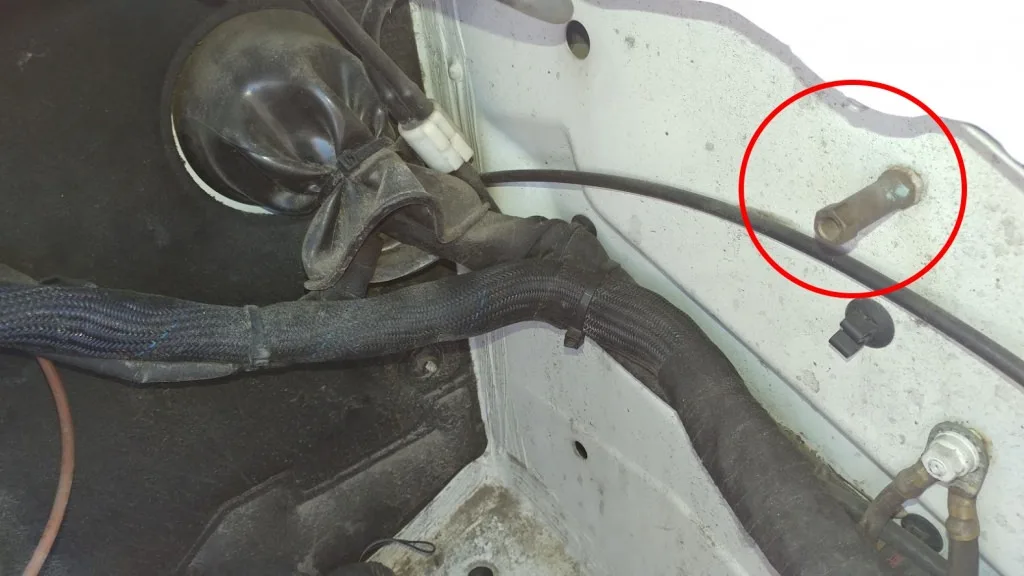
A quick way to confirm: pop the hood and look for a red plastic cap on a stud near the firewall. If it's there, that's your positive jump post. No red cap usually means a pre-BMS model where the battery is more accessible.
Where the Battery and Jump Points Are on a Sprinter
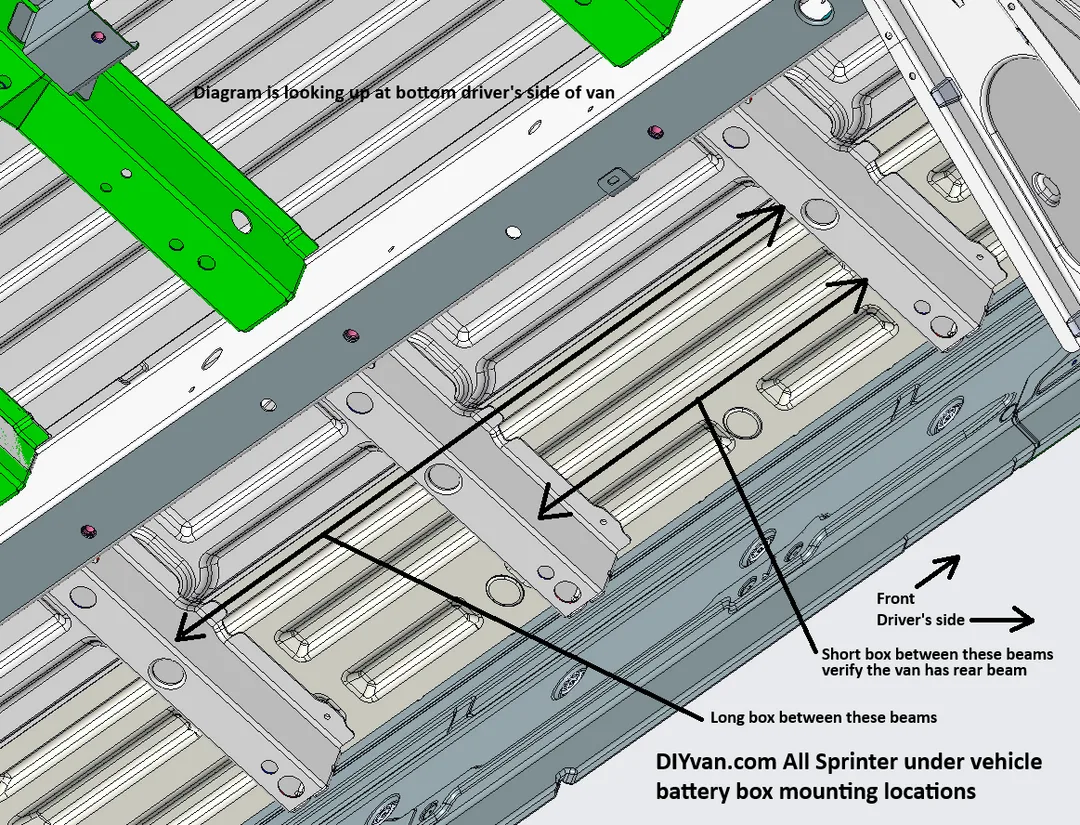
On most NCV3 and VS30 Sprinters, the main battery lives under the driver's seat, mounted in a plastic tray. To see it, you slide the seat forward and lift the access panel. The terminals sit on top, usually covered by a red (+) and black (-) plastic cap.
You will not connect your jumper cables here. Instead, walk around to the front and open the hood. Look near the firewall on the driver's side for a red-capped stud.
That is the positive jump-start terminal. Nearby, you'll find an unpainted metal bracket or stud labeled with a ground symbol. That is your ground point.
For T1N models (2001 to 2006), the battery is more accessible and the jump-start post may sit right next to it. The procedure below still applies, but you can connect directly to the battery if the under-hood posts aren't present.
Diesel Sprinters also have an auxiliary battery in many configurations. This smaller battery powers accessories like the radio and interior lights when the engine is off. You don't jump from it, but a failure here can mimic a dead main battery, so it's worth knowing it exists.
Tools and Equipment That Actually Work on a Sprinter
You don't need specialty Mercedes tools, but cable quality and jump-starter specs matter more on a Sprinter than on a typical sedan. Diesels draw serious cranking amps, and a weak connection can leave you stranded.
Jumper Cables: Gauge, Length, and Clamp Quality
Look for 4-gauge cables at minimum. 2-gauge is better for the 3.0L V6 diesel. Thinner 8 or 10-gauge cables will get hot and may not deliver enough current. A length of 15 to 20 feet gives you flexibility when parking two large vans nose-to-nose.
Copper-clad clamps grip better than aluminum, and insulation matters. Cheap clamps slip off terminals, which kills the connection mid-crank.
Portable Jump Starters: What Specs Matter for Diesels
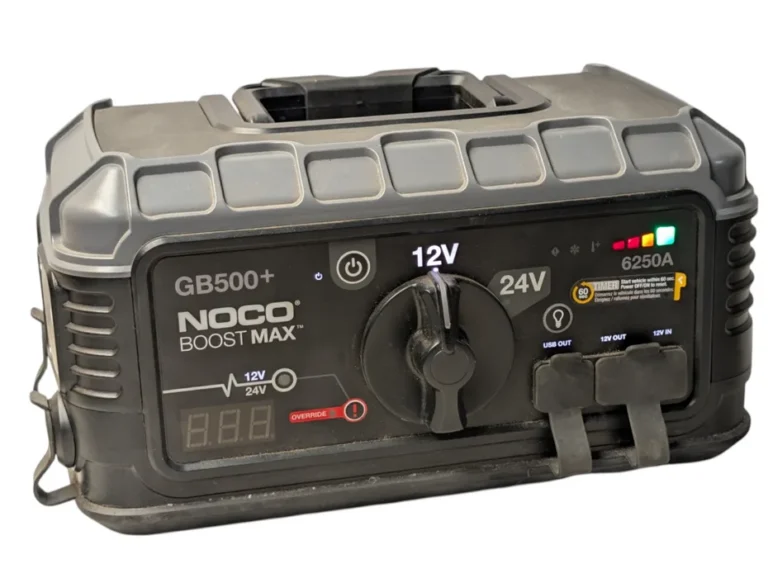
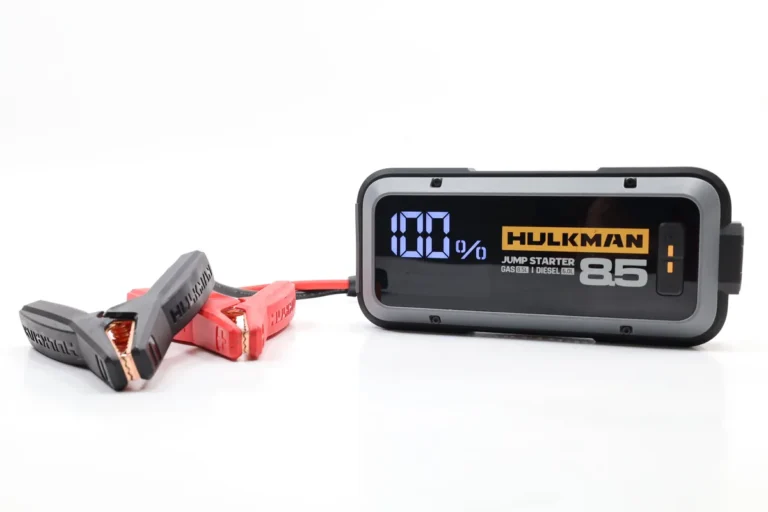
A pocket-sized 400A jump starter that works on a Honda Civic will not start a Sprinter diesel. You need a unit rated for at least 1,000 peak amps, and 2,000A is the safer pick for cold weather. Lithium-ion units from brands like NOCO, Antigravity, and Clore Automotive all make models in this range.
Manufacturer specs confirm that most diesel Sprinter starters draw 600 to 800 amps during cranking. Anything under 1,000 peak amps risks overheating the jump starter or failing to turn the engine over. If you camp or travel off-grid in your Sprinter, a portable jump starter is a smart backup even if you also carry cables.
Step-by-Step: How to Jump Start a Mercedes Sprinter Safely
Follow this exact order. Skipping a step or reversing the sequence is the most common way people damage a Sprinter's electrical system.
Step 1: Position Both Vehicles and Prep
Park the donor vehicle close enough that your cables reach without stretching. Both vehicles should be in Park (automatic) or Neutral (manual) with the parking brake set. Turn off both ignitions, all accessories, headlights, and climate control.
Remove the key from the Sprinter's ignition so the BMS isn't active during hookup.
Pop the hood on both vehicles and locate the jump-start terminals. On the donor, that's the regular battery. On the Sprinter, that's the red-capped positive post and the nearby ground stud.
Put on safety glasses before you handle the cables.
Step 2: Connect the Cables in the Right Order
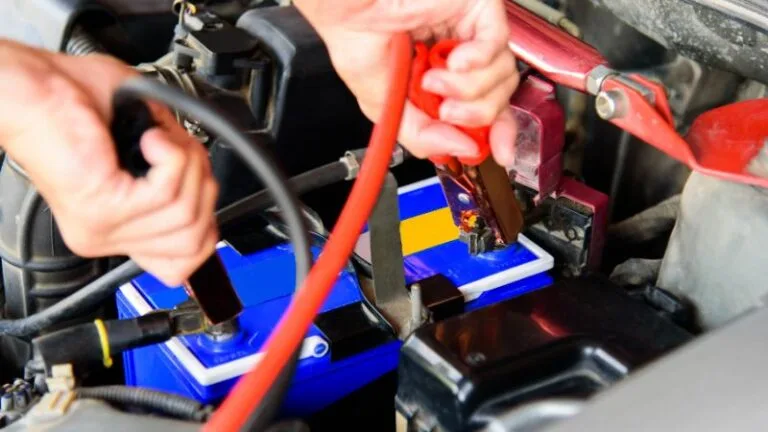
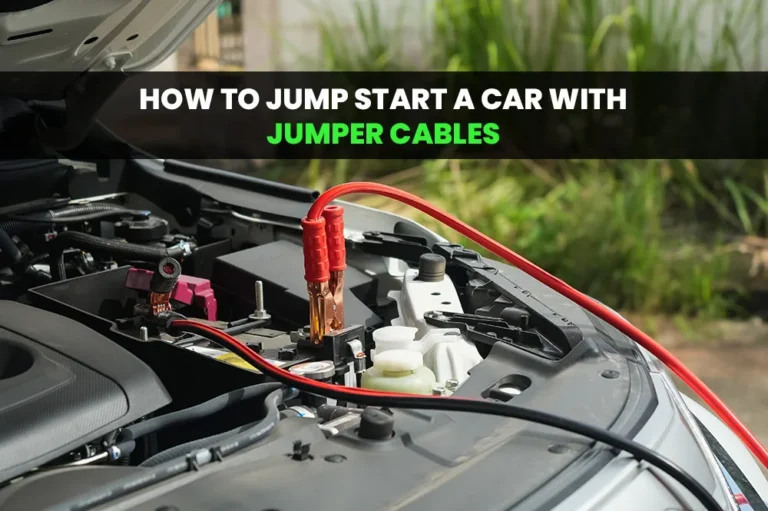
The sequence matters. Always connect positive first, and always connect the negative clamp to ground last. This minimizes sparking near the battery, where hydrogen gas can ignite.
- Red clamp to the Sprinter's positive jump post (red cap).
- Red clamp to the donor battery's positive terminal.
- Black clamp to the donor battery's negative terminal.
- Black clamp to the Sprinter's designated ground point (unpainted metal bracket).
Step 3: Start the Donor Vehicle and Wait
Start the donor vehicle and let it idle at a slightly elevated RPM (1,500 to 2,000) for 3 to 5 minutes. This pushes charge into the dead battery. On a deeply discharged Sprinter, give it a full 5 minutes before trying to crank.
Step 4: Start the Sprinter (Diesel Glow Plug Sequence)
For gasoline Sprinters, turn the key and crank as normal. For diesel models, turn the key to the on position first. Wait for the glow plug light (a coiled wire symbol) to go out, which usually takes 2 to 10 seconds in cold weather.
Then crank the engine for no more than 10 to 15 seconds. If it doesn't start, wait 30 seconds before trying again.
Step 5: Disconnect in Reverse Order
Once the Sprinter is running, disconnect in reverse: black from ground, black from donor, red from donor, red from Sprinter. Let the Sprinter idle or drive for at least 20 minutes to let the BMS relearn the battery's state of charge.

Using a Portable Jump Starter Instead of a Donor Vehicle
A portable jump starter is the easier option when you're alone or parked away from other vehicles. The hookup sequence is identical, except there's no donor vehicle running. You connect the cables to the jump starter's positive and negative outputs, then follow the same order to the Sprinter's posts.
One difference: most lithium jump starters need to be powered on before they deliver current. A button press or a twist of a switch activates the unit. Some models have a "boost" or "override" mode for deeply discharged batteries below 2V.
Use that mode only if the standard setting doesn't detect the battery.
Manufacturer specs confirm that a 2,000A peak lithium unit will start a Sprinter diesel in temperatures down to about 0°F. Below that, capacity drops and you may need a second attempt. Keep the jump starter warm (inside the cab) until use in extreme cold.
The BMS Reset: What to Do After a Successful Jump
A successful jump doesn't always mean the BMS agrees. After a deep discharge, the system can stay in a protective mode, leaving warning lights on or preventing the alternator from charging at full output.
When the Battery Light Stays On
If the red battery warning light stays illuminated after driving for 20+ minutes, the BMS hasn't recognized the battery's state of charge. Turn the ignition off, wait 60 seconds, then restart. This often triggers a relearn cycle.
If the light persists, drive continuously for 30 to 60 minutes. That usually clears it.
When the Key Isn't Recognized
A dead battery can scramble the immobilizer's memory. After reconnecting power, the key fob may not be recognized on the first try. Remove the key, wait 30 seconds, and try again.
In stubborn cases, a Mercedes STAR diagnostic tool or an aftermarket scanner (iCarsoft MBII, Autel AP200H) can force a key relearn.
Common Mistakes That Fry a Sprinter's Electrical System
These are the errors that turn a 10-minute fix into a $1,500 repair. Each one shows up in mechanic forums and dealer service write-ups again and again.
Connecting to the Battery Directly on BMS Models
On 2010+ Sprinters, connecting jumper cables straight to the under-seat battery bypasses the BMS's current monitoring. Voltage spikes can damage the SAM unit, the convenience control module, or the instrument cluster. Per Mercedes-Benz service bulletins, the remote jump post is the only approved connection point.
Last Cable Connection to the Negative Terminal
Attaching the final black clamp to the dead battery's negative post creates a spark right next to the battery. Hydrogen gas venting from a discharged battery can ignite. Always use a ground point at least 12 inches from the battery.
Skipping the Glow Plug Wait on Diesels
Cranking a diesel before the glow plug cycle finishes floods the cylinders and can hydrolock the engine. Wait for the glow plug light to extinguish every time, even on a warm day.
Troubleshooting: Why Your Sprinter Won't Start Even After a Jump
Sometimes a jump gets you nothing. Before you call a tow truck, run through these checks.
Parasitic Drain Tests
A healthy Sprinter draws 30 to 50 milliamps when parked. Anything above 80mA means something is draining the battery overnight. Common culprits include aftermarket accessories, a stuck relay, or a failing auxiliary battery.
A multimeter in series with the negative terminal tells you the draw in real time.
Alternator and Voltage Regulator Issues
If the Sprinter starts but dies within a few minutes, the alternator isn't charging. With the engine running, you should see 13.8 to 14.4V at the battery. Below 13.5V, the alternator or voltage regulator is failing.
On 2010+ models, the regulator is often internal and requires a new alternator assembly.
Auxiliary Battery Failure on Diesel Models
Diesel Sprinters have a secondary battery that powers accessories when the engine is off. If it fails, the main battery can drain trying to compensate. Disconnect the auxiliary battery and retest.
If the main battery holds charge after that, replace the auxiliary unit.
Jump Starting vs. Battery Replacement: How to Decide
A jump start buys you a restart, not a fix. If the battery dies once and the alternator tests good, a jump is all you need. If it dies again within a week, the battery is likely at the end of its life and needs replacement.
Use this quick decision rule. If the battery is more than four years old, replacement is smarter than another jump. If the battery is younger and the drain came from leaving lights on, a jump is fine.
If the battery tests below 12.2V after a full charge cycle, it's sulfated and won't hold a useful reserve.
Cost of Getting It Wrong (and Right)
A proper jump start costs you nothing beyond the cables or jump starter you already own. A botched jump on a BMS-equipped Sprinter can run $1,000 to $2,500 for a new SAM unit, ECU, or instrument cluster. Per the Occupational Safety and Health Administration battery safety guidance, reverse polarity connections are among the top causes of vehicle electrical fires, so the cost risk is real on both ends.
Replacement batteries themselves run $250 to $450 for an OEM Mercedes AGM unit. Aftermarket AGM equivalents from Odyssey, Interstate, or Optima land in the $180 to $300 range. Add $50 to $150 for dealer or shop installation if you skip the DIY route.
Best Portable Jump Starters for a Sprinter Diesel
For a Sprinter diesel, peak amp rating matters more than battery capacity. Look for a lithium unit rated at 2,000A peak or higher. Capacity above 20,000mAh gives you multiple jump attempts and room to charge a phone or run a light.
Three widely available models meet these specs as of 2026. The NOCO Boost HD GB150 delivers 3,000A peak and works in sub-zero temps. The Antigravity XP-20 offers 2,000A in a smaller case.
The Clore Automotive Jump-N-Carry JNC1224 is a lead-acid workhorse that handles repeated jumps without capacity loss in extreme cold.
If you only camp in moderate climates, a 1,500A unit is enough. In northern US or Canadian winters, go bigger.
Safety Practices Specific to Mercedes Sprinters
The BMS makes Sprinters more sensitive to voltage events than older vehicles. A few habits reduce your risk.
Always use the remote jump post, never the battery directly, on 2010+ models. Always connect the final negative clamp to a ground point away from the battery. Wear safety glasses and keep metal tools clear of the terminals.
If the battery is cracked, leaking, or frozen, don't jump it. A frozen battery can explode under cranking current. Call for a tow instead.
Battery Maintenance to Prevent the Next Dead Start
A few minutes of prevention every few months keeps the next jump from happening.
Check resting voltage monthly. A healthy battery reads 12.6V or higher after sitting overnight. Anything below 12.4V means it's losing charge.
Clean the terminals under the driver's seat once a year. Corrosion builds up there because of the enclosed space, and dirty terminals mimic a dead battery.
If you store the Sprinter for more than two weeks, connect a trickle charger or a battery maintainer. A 1 to 2A maintainer keeps the BMS happy without overcharging. Standard Battery Tender and CTEK brands both make units compatible with AGM chemistry.
Real Scenarios: When a Jump Isn't Enough
A few common situations where a jump only delays the inevitable. The first is repeated overnight drain, which usually means an aftermarket accessory wired directly to the battery without a relay. The second is a battery older than five years that won't hold above 12.0V after a full charge.
The third is a charging system reading above 14.7V while running, which means the voltage regulator is overcharging and cooking the battery.
In each case, a jump gets the engine running, but the underlying problem returns within days. Diagnose and fix the root cause before relying on the van for a trip.
Frequently Asked Questions
Can you jump start a Sprinter from another car?
Yes, a standard 12V vehicle can jump a Sprinter. The donor's alternator only needs to push enough current to top off the dead battery over a few minutes. The Sprinter's larger battery doesn't require a matching donor, just a working 12V system.
Where is the jump start point on a 2019+ Sprinter?
On 2019 and newer VS30 Sprinters, the positive jump-start post is under the hood on the driver's side near the firewall, covered by a red cap. The ground point is an unpainted metal bracket within a foot of the post. The main battery stays under the driver's seat.
Why does my Sprinter battery keep dying?
The most common causes are parasitic drain from aftermarket accessories, a failing auxiliary battery on diesel models, or a battery that has reached the end of its service life. A multimeter draw test tells you which one you're dealing with.
Do I need to register a new battery in a Sprinter?
Yes, on 2010+ models with a BMS, the new battery must be registered using a STAR diagnostic tool or a compatible aftermarket scanner. Skipping registration means the BMS doesn't know the battery's age or capacity, which shortens the new battery's life and can trigger warning lights.
Can you push start a Mercedes Sprinter diesel?
No. Automatic transmission Sprinters cannot be push started. The torque converter doesn't transfer engine rotation to the transmission the way a manual does.
A jump start or a charged battery is the only realistic option for an auto-equipped Sprinter diesel.
Final Word: Get It Right the First Time
Jump starting a Mercedes Sprinter isn't hard once you know the layout and the BMS rules. Use the under-hood posts, follow the cable order, wait for the glow plug light on diesels, and give the BMS time to relearn after a successful start. Keep a quality 2,000A jump starter in the van if you travel or camp, and check resting voltage once a month.
Those habits will save you from being stranded and from a four-figure repair bill.