What to do after you jump start your car: Easy Guide
You just got your car jumped, the engine is running, and now you're staring at a question every driver faces: what to do after you jump start your car so it actually stays running. The first few minutes matter, because a jump start is a temporary rescue, not a fix. If you shut the engine off too soon, you'll be right back where you started, stranded with a dead battery.
Here's what most people miss: a healthy car alternator charges a 12V battery at roughly 13.7 to 14.7 volts while the engine runs. That means the car needs sustained engine time to put meaningful charge back into the battery. As of 2026, manufacturer guidance and battery-council standards still point to the same core post-jump steps: let it idle, then drive it.
Let's walk through exactly how to handle those next 30 minutes so you don't end up stuck again.
Quick Answer
After you jump start your car, leave the engine running for at least 15 to 30 minutes. Drive instead of idling when possible. Remove the jumper cables in reverse order.
Watch for the battery light. Test the battery and alternator soon. If the car won't restart later, the battery is probably dead, not just drained.
What to Do Right After a Successful Jump Start
The cables are still on, the donor car is idling next to you, and your engine just coughed back to life. Here's the order of operations for the next two minutes, because the sequence matters more than people think.
Step 1: Leave both cars running for 2 to 5 minutes. Don't yank the cables the second your engine catches. Let the dead battery take some charge from the donor car first. This stabilizes the voltage and prevents a voltage spike that can confuse sensitive electronics.
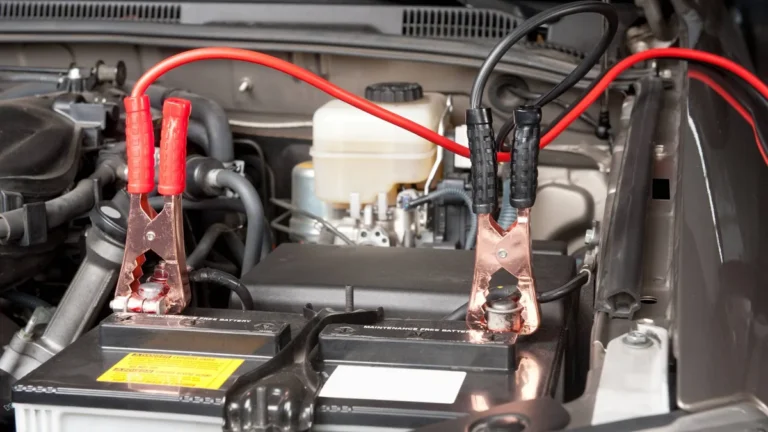
Step 2: Remove the cables in reverse order. Negative cable from your car first, then negative from the donor. Positive from the donor, then positive from yours. This sequence prevents a stray spark near the battery, which can ignite hydrogen gas that lead-acid batteries vent.
Step 3: Keep your engine running. Don't shut it off. Drive away or let it idle. If you kill the engine now, the battery has nowhere near enough charge to crank it again.
A quick reality check on what "successful" actually means here: the car stayed running for at least 60 seconds after cable removal. Anything less, and you haven't really cleared the hurdle yet.
How Long Should You Let a Jump-Started Car Run?
This is the single most asked follow-up question, and the honest answer is more than most people want to hear. The car's alternator puts charge back into the battery at a slow rate when the engine is just idling. Manufacturer specs and battery-council data both show that meaningful recharge takes real driving time, not just sitting in the driveway.
Here's a practical guide based on how depleted the battery actually was:
| Battery State | Idling Time Needed | Driving Time Needed |
|---|---|---|
| Slightly drained (lights left on) | 15–20 minutes | 10–15 minutes |
| Moderately drained (cold start fail) | 30–45 minutes | 20–30 minutes |
| Deeply discharged (sat dead for days) | 60+ minutes | 45–60 minutes |
The faster you drive, the more amps the alternator pushes back into the battery. Highway speeds at roughly 2,000 RPM generate noticeably more charging current than a 700 RPM idle. Aggregate owner reports and battery-maker guidance both agree: a 30-minute drive is the realistic minimum for a moderately dead battery.
If you absolutely can't drive, idle with as many electrical loads turned off as possible. That means no radio, no AC blower on high, no heated seats, no phone charging. Every accessory pulls amps the battery needs.
Driving vs. Idling: Which Recharges the Battery Faster?
Driving wins, and it's not close. The alternator is belt-driven off the crankshaft, so engine RPM directly controls charging output. At idle, you're getting maybe 2 amps of net charge into a depleted battery.
At cruising speed on the highway, you're pushing 5 to 10 amps back in.
This matters because a typical car battery holds around 45 to 60 amp-hours of capacity. A deeply discharged battery needs roughly 30 amp-hours to come back to a usable state. At idle, that takes hours.
On the highway, it takes under an hour of actual driving.
If your only option is to sit in a parking lot, here's how to make idling slightly more effective:
- Rev the engine lightly to around 1,500 to 2,000 RPM for a minute at a time. This bumps alternator output without much fuel cost.
- Turn off every accessory you can live without.
- Shift into park or neutral so the transmission isn't loading the engine.
A 20-minute highway drive does more for your battery than an hour of idling in a driveway. If you have somewhere to be, take the highway.
Why Your Car Won't Restart After a Jump (and What to Do Next)
This is the branch point that separates a minor inconvenience from a real problem. If you jump the car, drive it, shut it off, and it won't start again, you're dealing with one of three likely culprits. The decision tree below covers the most common scenarios.
If the engine clicks but won't crank: The battery is still too dead to turn the starter. This usually means the battery has a dead cell or is past its useful life. A 3 to 5 year old battery that won't hold charge after a jump is almost always due for replacement.
If the engine cranks but won't fire: The battery has enough juice to turn the starter, but the ignition or fuel system isn't getting what it needs. This is less common after a simple drain, more common if the battery was deeply discharged for a long time and the engine computer lost its learned parameters. Let it idle 10 more minutes and try again.
If the engine starts but dies within seconds: The alternator is failing. The engine is running purely off battery power, and the moment the battery can't keep up, the engine shuts down. This is the dangerous one because driving on a failed alternator will leave you stranded again within minutes.
If none of the above matches and it just won't restart: Suspect a parasitic drain. Something is pulling current from the battery when the car is off. Common culprits are a stuck trunk light, a glove box switch, an aftermarket accessory wired directly to the battery, or a faulty relay.
The decision rule that catches most cases: if the car starts and stays running after a jump, the problem is usually the battery's age or a one-time drain. If the car won't stay running on its own, the problem is usually the alternator or a deeper electrical fault, and you need a mechanic, not another jump.
Battery Warning Light Stays On: What It Means Now
The battery light, sometimes shaped like a little battery icon, sometimes labeled "ALT" or "CHG," is one of the most commonly ignored dashboard warnings. After a jump start, that light is telling you something specific and you should not ignore it.
If the light goes off within 30 seconds of starting, the alternator is probably fine and you just had a low-voltage moment during the jump. Drive normally and monitor.
If the light stays on solid while driving, the alternator is not charging. You're running purely off the battery, and how long you can keep driving depends on how much charge the battery started with and what electrical loads you're running. Realistic range with the light on: 15 to 45 minutes before the engine dies.
If the light flickers or comes and goes, the alternator is intermittent. The brushes or voltage regulator are likely worn. You can sometimes make it home, but treat every start-stop cycle as risky.
A quick check you can do yourself: with the engine running, look at your dashboard lights. Are they slightly brighter than usual? A failing alternator often causes headlights and interior lights to dim because the battery isn't being topped up.
If your headlights look weak at idle and brighten when you rev the engine, that's a textbook alternator symptom. Get the alternator bench-tested before relying on that car for any long trip.
How to Tell If It's the Battery or the Alternator
This is the question mechanics hear every week, and the good news is you can narrow it down at home without special tools. The split-second diagnostic comes down to what happens when you remove the jumper cables and what happens after you shut the engine off.
The battery fails when it can't hold a charge. The alternator fails when it can't generate one. Here's how to tell which one is the actual problem using just observation:
- Car won't start in the morning but drives fine once jumped: battery.
- Car drives fine after a jump but dies while driving: alternator.
- Car cranks slowly even after a long drive: battery.
- Car cranks normally but the battery light is on: alternator.
- Headlights dim noticeably at idle and brighten with RPM: alternator.
- Battery is more than 4 years old and keeps dying: battery.
A simple field test you can do right now: with the engine off, turn on the headlights for 10 minutes. Then try to start the car. If the headlights were bright and the engine still won't crank, the battery is the problem.
If the headlights were already dim before you tried to start, the battery was depleted because the alternator wasn't filling it back up.
For anyone with a multimeter, two voltage readings will settle it. With the engine off, a healthy battery reads 12.4 to 12.7 volts. Anything below 12.2 volts means the battery is undercharged or failing.
With the engine running, the alternator should push 13.7 to 14.7 volts at the battery terminals. Below 13.5 volts, the alternator is suspect. Above 15 volts, the voltage regulator is overcharging and will cook the battery.

Signs Your Battery Is Too Old to Hold a Charge
Batteries don't die on a schedule. They fade. The average lifespan is 3 to 5 years depending on climate, driving habits, and battery type, but most drivers don't notice the slow decline until they're stranded.
Knowing the warning signs in advance saves you the next jump start.
Here are the giveaways that your battery is at end of life:
- Engine cranks slowly, especially in cold weather
- Headlights dim noticeably when the engine is off but brighten when running
- Battery case looks swollen or bloated
- You smell a rotten-egg sulfur odor near the battery
- The battery is more than 4 years old and has needed a jump in the last 6 months
- Voltage reads below 12.2 volts after a full overnight rest
- Terminals are heavily corroded despite recent cleaning
A battery that survives a jump and then holds charge for weeks is a healthy battery that just had a one-time drain. A battery that needs jumping every few days or every cold morning is a battery that's lost capacity and is no longer reliable. Replace it before it strands you somewhere inconvenient.
Climate matters too. Hot climates kill batteries faster than cold ones, even though cold weather is what triggers the visible failure. Heat evaporates the electrolyte and corrodes internal plates.
If you live somewhere hot, plan on the shorter end of the lifespan range. AAA's battery maintenance guidance reinforces this, noting that heat is the single biggest factor in shortened battery life.
Cleaning and Inspecting Battery Terminals Post-Jump
After a successful jump start, the terminals deserve a 5-minute look. Corrosion, looseness, or damage at the terminals can mimic every symptom of a bad battery and leave you stranded even with a brand-new battery installed.
What you're looking for: a white, blue, or greenish powdery crust around the terminal posts. That's lead sulfate and corrosion, and it creates resistance that prevents the battery from delivering full current. A loose terminal, one you can wiggle by hand, won't make solid contact and will cause intermittent starts no matter how good the battery is.
Cleaning is straightforward:
- Turn off the engine and remove the key.
- Disconnect the negative terminal first, then the positive.
- Mix a tablespoon of baking soda with a cup of water.
- Scrub the terminals and posts with an old toothbrush.
- Rinse with clean water and dry with a rag.
- Reconnect positive first, then negative.
- Smear a thin layer of dielectric grease or petroleum jelly on the terminals to slow future corrosion.
A 5-minute terminal cleaning is the cheapest insurance in car maintenance. It costs nothing, takes almost no time, and routinely fixes cars that "need a new battery" when the actual battery is fine.

How to Test Your Alternator With a Multimeter
A multimeter turns alternator diagnosis from guesswork into a 5-minute job. You don't need an expensive unit. Any basic digital multimeter from a hardware store will work, and the procedure is the same regardless of car make or model.
Set the multimeter to DC volts, 20V scale. With the engine off, touch the red lead to the positive terminal and the black lead to the negative terminal. A healthy battery reads 12.4 to 12.7 volts.
Anything below 12.2 volts means the battery is undercharged before you even start testing the alternator.
Start the engine and let it idle. Take the same reading at the battery terminals. A working alternator should read 13.7 to 14.7 volts.
If you see 14.0 to 14.5 volts, you're in the sweet spot. Above 15 volts means the voltage regulator is overcharging, which will damage the battery. Below 13.5 volts means the alternator is undercharging, and your battery is slowly draining even while you drive.
Repeat the test at 2,000 RPM. The voltage should hold steady or climb slightly. If the reading drops when you rev the engine, the alternator has an internal issue.
If the reading spikes above 15 volts, the regulator is shot.
For a load test, turn on the headlights, the AC blower on high, the rear defroster, and the heated seats if you have them. With all that load, the alternator should still hold 13.5 volts or higher. If voltage drops below 13.0 volts under load, the alternator is failing and won't keep up with real-world driving demands.
This is one of those tests worth doing at any auto parts store for free. Most stores will bench-test your alternator off the car, which gives a definitive answer in under 10 minutes.
Parasitic Drain: Why Your Battery Keeps Dying
A parasitic drain is the silent killer of batteries. Something electrical keeps drawing current when the car is off, and over a few days the battery drains below the threshold needed to start the engine. The jump start gets you going, but the drain is still there, waiting.
Normal parasitic drain on a modern car is 20 to 50 milliamps. That's enough to keep the computer memory, key fob receiver, and clock running without flattening the battery for weeks. Anything over 100 milliamps is a problem.
Common culprits:
- A trunk, glove box, or hood light that stays on because the switch is faulty
- An aftermarket stereo, alarm, or phone charger wired directly to constant battery power
- A relay that's stuck closed
- A stuck seat heater or seat adjustment module
- A malfunctioning infotainment system that doesn't fully sleep
Diagnosing a parasitic drain takes an hour and a multimeter set to milliamps. Pull the negative battery cable, connect the multimeter in series between the cable and the post, and wait 15 to 30 minutes for all the modules to go to sleep. Then start pulling fuses one at a time.
When the current draw drops, you've found the circuit. The job from there is tracing the wiring on that circuit to find the actual component.
For most drivers, the practical move is this: if your battery keeps dying and the alternator tests good, take it to a shop and ask for a parasitic draw test. It's a standard diagnostic and shouldn't cost more than an hour of labor.
Common Mistakes People Make Right After a Jump Start
The jump start worked. The engine is running. The relief is real, and that relief is exactly when drivers make the mistakes that put them right back where they started.
Here are the ones we see over and over.
Shutting off the engine too soon. The number one mistake. People drive 5 minutes, park, shut off, and the battery doesn't have enough charge to crank again. Don't shut the engine off until you've driven at least 20 minutes.
Assuming the problem is fixed. A jump start is a rescue, not a repair. The underlying issue, whether it's a weak battery, a failing alternator, or a parasitic drain, is still there. Plan on testing the battery and alternator within a day or two.
Leaving accessories running. Headlights, dome lights, phone chargers, and infotainment systems all draw current. If you killed the battery by leaving something on, leave that thing off until you're sure the battery is back up to charge.
Revving the engine hard right after the jump. Lightly revving to 1,500 RPM can help, but redlining a cold engine that just came back to life isn't doing your battery any favors. Drive normally.
Ignoring the battery light. If the battery light stays on after a jump, the alternator is suspect. Don't drive cross-country hoping it sorts itself out.
Reversing the cable order on removal. Negative first on removal is the safe sequence. Pulling positive first risks a spark across the wrench and a short circuit if the wrench contacts the body.
Skipping the terminal inspection. Corroded terminals will cause the same dead-battery symptoms even on a healthy battery. A 5-minute cleaning fixes a problem people often pay $150 to diagnose at a shop.
How Long to Drive Before You Can Safely Turn Off the Engine
The honest answer is as long as you can. The longer the engine runs, the more charge goes back into the battery. There is no scenario where turning off the engine early helps.
Practical guidelines based on what you're trying to do:
| Goal | Recommended Drive Time |
|---|---|
| Get home and park for an hour | 30 minutes minimum |
| Get to work and shut off for 8 hours | 45 minutes minimum |
| Get on the highway for a longer trip | Drive at least 20 minutes before stopping |
| Diagnose whether the battery holds charge | Drive 30+ minutes, shut off, restart in 1 hour |
The 1-hour test is the one that separates battery problems from alternator problems. Drive 30 minutes, park, shut off, wait an hour, and try to restart. If the engine cranks normally, the battery held its charge and the alternator is doing its job.
If the engine cranks slowly or won't start, the battery is dead.
Don't skip this test. It's free, takes no tools, and tells you in one attempt whether you need to budget for a new battery or whether the issue was a one-time drain.
When to Replace the Battery vs. Just Recharge It
A jump start and a long drive will recharge a healthy battery. They will not bring back a dead one. Knowing which situation you're in saves you from buying a battery you don't need or waiting on a replacement you do.
Replace the battery if:
- It's more than 4 years old
- It needed a jump and you've already recharged it once
- Voltage drops below 12.0 volts after a full overnight rest
- The case is swollen, cracked, or leaking
- The terminals are corroded beyond cleaning
- The engine cranks slowly even after a 30-minute drive
Just recharge it if:
- The battery is less than 3 years old
- The cause of the dead battery was obvious (headlights left on, sat unused for a month)
- Voltage holds above 12.4 volts after a rest
- The engine cranks normally after the jump and a short drive
A new battery runs $100 to $250 for most cars, plus installation. Battery makers like Interstate and Optima publish fitment guides by vehicle, year, and engine so you can match the right group size and CCA rating. The cost of a tow is usually more than the cost of a battery, so when in doubt, replace it.
Safety Precautions During and After a Jump Start
Lead-acid batteries vent hydrogen gas. That gas is flammable, and a spark near the battery can ignite it. Most jump starts go fine, but the small number that don't can cause serious injury.
Here's how to keep it safe.
Before connecting cables:
- Park both cars in park or neutral with parking brakes set
- Turn off both ignitions
- Remove any jewelry that could contact the terminals
- Don't smoke near the battery
During the jump:
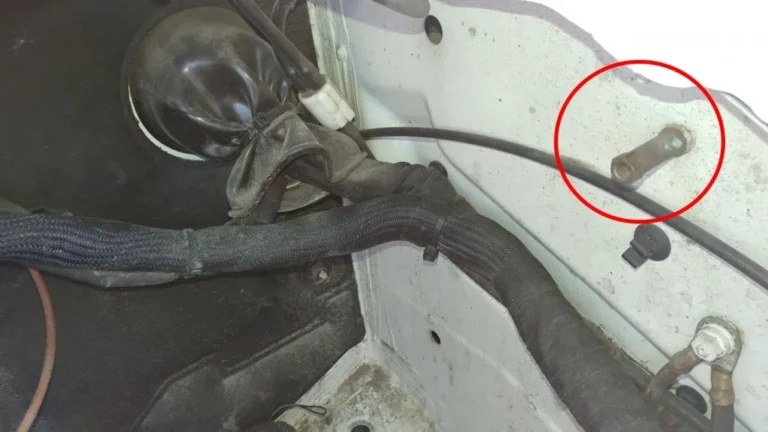
- Connect positive to positive first, then negative to a grounded metal point on the dead car, not the dead battery's negative post
- Keep the cables clear of moving engine parts like belts and fans
- If the battery is cracked or leaking, don't jump it. Call for service.
After the jump:
- Remove cables in reverse order: negative first
- Wash your hands after handling cables and terminals
- Dispose of old batteries at an auto parts store or recycling center. Lead-acid batteries are nearly 100% recyclable and are classified as hazardous waste in most states.
A pair of safety glasses and a pair of nitrile gloves cost a few dollars and are worth keeping in the trunk with your jumper cables. They take up no space and protect you from the two real risks: a battery explosion and sulfuric acid exposure.
Maintenance and Long-Term Battery Health
A jump start is a moment, not a maintenance plan. The drivers who rarely need one are doing a few simple things the rest skip. None of them are expensive, and none take more than 10 minutes a month.
Keep the terminals clean. Once a quarter, pop the hood and look at the battery. A quick wipe-down and a check for corrosion takes 5 minutes and prevents 90% of the slow-failure symptoms that look like a bad battery.
Drive the car regularly. A car that sits for 2 weeks loses more charge than most people realize. If you have a second vehicle that doesn't get daily use, a $30 battery maintainer (also called a trickle charger) will keep the battery topped up without overcharging it.
Battery Council International supports the use of maintainers for stored vehicles.
Avoid short trips when possible. A 5-minute drive doesn't put back what a 5-minute crank took. If most of your driving is short hops, expect the battery to age faster.
Plan a 30-minute highway drive once a week to keep it healthy.
Get the battery tested once a year after year 3. Most auto parts stores test for free. The test takes 2 minutes and tells you exactly how much capacity the battery has left.
Replacing a battery on your schedule costs $150. Replacing it after you've been stranded costs $150 plus a tow.
Cost of a Jump Start vs. Calling Roadside Assistance
If you don't have jumper cables or a portable jump starter, the practical choice is between buying the gear or calling for help. Here's what each option actually costs.
| Option | Cost | Best For |
|---|---|---|
| Buy jumper cables | $20 to $40, one-time | Anyone who drives a car over 3 years old |
| Buy a portable jump starter | $60 to $150, one-time | Anyone who drives alone or in low-traffic areas |
| Call AAA or roadside service | $75 to $150 per call, plus membership fee | Rare dead-battery events, no DIY confidence |
| Tow to a shop | $75 to $200 depending on distance | Car won't jump at all, suspect bigger problem |
For most drivers, the math comes out in favor of owning a set of jumper cables and knowing how to use them. A $30 cable set pays for itself the first time you avoid a service call, and the cables last for years.
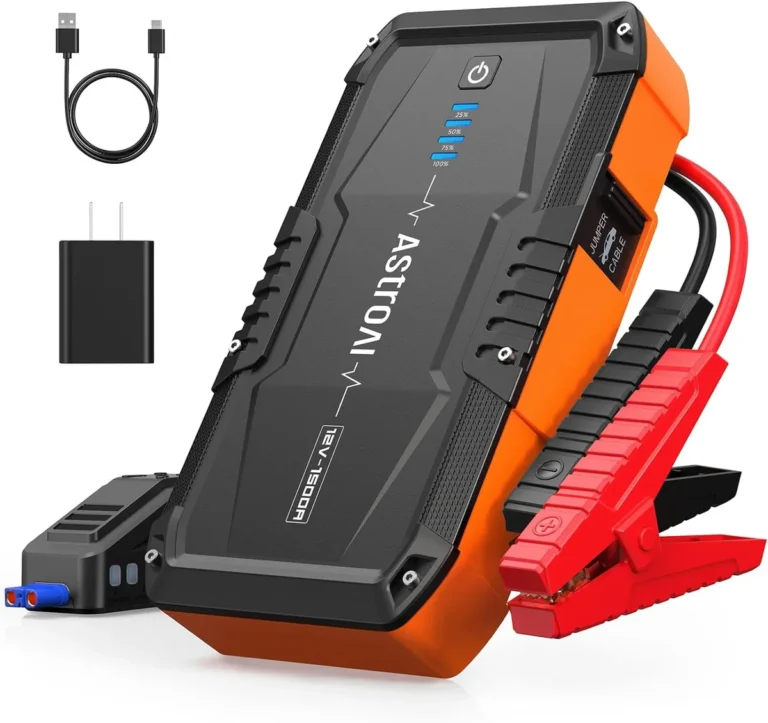
Portable jump starters have gotten cheap and small enough to keep in the glove box. Modern lithium units weigh 2 to 3 pounds and can start a V8 engine on a single charge. They also work as a USB power bank for phones, which is a nice bonus on long road trips.
For drivers who frequently park in lots, garages, or remote areas, a portable jump starter is the better buy.
Real-World Scenarios: What Usually Happens After the Jump
Walking through the most common situations drivers actually face after a successful jump start. The "right" next step depends entirely on which scenario you're in.
If you left the headlights on and the car started right up: drive for 30 minutes, park, and forget about it. The battery was simply drained, not damaged. One-time event, no follow-up needed beyond making sure the headlights actually turn off next time.
If the car sat unused for 3 weeks and is now dead: drive for 45 minutes to an hour. The battery is deeply discharged and needs a full recharge cycle. Watch for sluggish cranking over the next few days.
If the car struggles to start a week later, the battery may have permanent capacity loss from sitting dead too long.
If you replaced the battery recently and it died anyway: suspect a parasitic drain or a failing alternator. New batteries don't die on their own. A brand-new battery that goes flat within a few weeks has something pulling current that shouldn't be.
If the car died while driving: this is the scenario that warrants the most caution. Don't keep driving hoping it sorts itself out. Get to the nearest shop or safe pull-off and have the alternator tested before going any further.
If you jumped the car and it ran for 20 minutes, then died again: don't jump it a third time. Two failed attempts in a row means the alternator isn't charging, and every jump risks frying the electronics with a voltage spike. Call a tow.
When to Skip the Jump and Call a Tow Instead
Most dead batteries are jump-startable. Some aren't, and knowing the difference keeps you from making a bad situation worse.
Skip the jump and call for help if:
- The battery is visibly cracked, swollen, or leaking fluid
- The battery terminals are melted or damaged
- You smell a strong sulfur or rotten-egg odor
- The car was in a flood or has water in the engine bay
- You've already tried twice and the engine won't stay running
- The dashboard shows warning lights you don't recognize
- The car is a hybrid or EV and shows a high-voltage system warning
A damaged battery can explode if you try to jump it. A car with electrical damage from water needs a professional inspection before any power is applied. Two failed jumps means the issue isn't the battery, it's something downstream, and continued jumping risks burning out a $400 ECU or $800 infotainment module.
The cost of a tow is almost always less than the cost of the electronics you can damage by forcing the issue. When in doubt, call for service.
Cold Weather Jump Starts: What Changes in Winter
Cold cuts battery capacity by roughly 20% at 32°F and up to 50% at 0°F. A borderline battery in October becomes a dead battery in January. The post-jump steps in winter are the same as summer, but a few details matter more.
A frozen battery won't accept a charge. If temperatures dropped below freezing overnight and the car was dead in the morning, the battery electrolyte may be frozen. Trying to jump a frozen battery can crack the case.
Bring the battery indoors for an hour to thaw, or have it tested before jumping.
Once the car is running in cold weather, drive it longer. Plan on 45 to 60 minutes of driving rather than the summer minimum of 30. The alternator has to work harder in cold conditions, and the battery needs a deeper recharge to compensate for the capacity loss.
Keep the battery warm if possible. A battery blanket or even parking in a garage makes a noticeable difference in winter reliability. Battery Council International notes that engines in cold climates require roughly twice as much cranking power, which is why cold mornings expose weak batteries that seemed fine in October.
The One Thing Most Drivers Forget After a Jump Start
The single most common post-jump mistake is forgetting to reset the car's learned parameters. Modern vehicles store adaptive memory in the engine computer, the transmission, the radio, and the body control module. A deep battery discharge wipes some of that memory.
The symptoms show up subtly. The transmission may shift oddly for the first few drives. The engine idle may hunt slightly.
The radio presets and clock need resetting. The power windows may need to be relearned, which means holding them up or down for 5 seconds after the first restart.
None of this is a repair issue. It's the car relearning your driving patterns and resetting its comfort settings. Drive normally for a week and the adaptive memory fills back in.
Reset the clock and radio presets manually and you've handled 90% of what drivers notice.
If the car drives and shifts oddly for more than a week after a deep discharge, that's worth a checkup. A battery that fully discharged once may have a weak cell that takes a few weeks to fully fail, so keep an eye on the starting behavior over the next month.
The 30-Minute Post-Jump Checklist
A simple checklist to run through right after the jump so you walk away knowing the car is good to go.
- Cables removed in reverse order. Negative first, then positive.
- Engine idling smoothly with no warning lights.
- Battery light is OFF. If it's on, the alternator is the suspect.
- Headlights and interior lights look normal brightness at idle.
- Drive for at least 30 minutes before shutting off.
- Note the date and mileage of the jump in your phone for future reference.
- Schedule a free battery and alternator test within the next week.
- Buy a set of jumper cables or a portable jump starter if you don't have one.
That checklist covers 95% of what drivers actually need to handle after a jump start. Anything beyond it is troubleshooting a deeper problem that a shop should look at.
Frequently Asked Questions
How long does a car battery last after a jump start?
A healthy battery that needed a jump will last as long as the battery itself does, often several more years. A weak battery that needed a jump may last anywhere from a few days to a few months before failing again. Test the battery within a week of any jump start to know which category yours falls into.
Can I shut off my car right after a jump start?
No. Drive for at least 20 to 30 minutes first so the alternator can put meaningful charge back into the battery. Shutting off too soon is the most common reason drivers end up needing a second jump the same day.
Is it better to idle or drive after a jump start?
Driving charges the battery significantly faster than idling. The alternator output scales with engine RPM, so highway driving at around 2,000 RPM pushes 5 to 10 amps back into the battery compared to roughly 2 amps at idle. A 30-minute drive does what an hour of idling barely manages.
Why won't my car start after a jump but the battery is good?
The alternator is the most likely culprit when a battery tests good and the car still won't start. The engine runs on the battery alone and dies when the charge runs out. Get the alternator bench-tested at any auto parts store.
The test is free and takes about 10 minutes.
Does revving the engine help charge the battery faster after a jump?
Lightly revving to 1,500 to 2,000 RPM raises alternator output compared to a 700 RPM idle. Highway driving achieves the same effect more efficiently and puts real miles on the car. Aggressive revving in park doesn't help more than moderate revving and just burns fuel.
How do I know if my alternator is bad after a jump start?
The battery warning light staying on while driving is the most reliable sign. Headlights dimming at idle and brightening with RPM is another. A multimeter reading below 13.5 volts at the battery with the engine running confirms it.
Free bench testing at any auto parts store gives a definitive answer.
Is it safe to jump start a car in the rain?
Yes. Water doesn't increase the electrical risk meaningfully because the voltage involved is low (12V) and the current follows the cable path regardless of moisture on the battery case. Just keep the cables themselves from getting wet at the connection points and dry the terminals if they're visibly wet before clamping.
Can a jump start damage my car's electronics?
A properly executed jump start doesn't damage electronics. Reversed polarity (cables crossed positive to negative) can blow fuses and damage the ECU, which is why following the connection sequence matters. Modern cars with sensitive electronics benefit from a surge-protected portable jump starter instead of another vehicle.