What to do after jump starting car: Best Guide
So your car finally coughed to life after a jump. Now you're sitting in the driver's seat wondering what to do after jump starting a car without ending up stranded again tomorrow morning. Here's the honest truth: the ten minutes right after the cables come off matter more than the jump itself.
Most repeat breakdowns trace back to skipping the post-jump checks, not the jump procedure.
A healthy 12V lead-acid car battery should rest at 12.4 to 12.7 volts once the surface charge dissipates, and a working alternator typically pushes 13.7 to 14.7 volts into the system while the engine runs (SAE International's J537 standard covers these electrical tests). If those numbers don't line up after a jump, the battery is only part of your problem. Let's walk through exactly what to do next, in the order a real mechanic would.
Quick Answer
After jump starting a car, keep the engine running and drive for at least 20 to 30 minutes to recharge the battery. Turn off all accessories, check the dashboard for warning lights, and test the battery voltage at rest. 12.4 to 12.7V is healthy. If the car dies again shortly after, the issue is likely the alternator, not the battery.
Recheck all connections and clean corroded terminals before driving normally.
Keep the Engine Running — What to Do the Moment After a Jump Start
Don't shut the engine off right away. The alternator needs time to push current back into a depleted battery, and killing the ignition mid-recovery can leave you with a battery that won't crank again.
Here's the immediate post-jump checklist, in this exact order:
- Leave the engine idling for 2 to 3 minutes before touching anything else. This lets the alternator stabilize.
- Keep accessories OFF: no headlights, no AC, no infotainment, no seat heaters. Every amp you save goes back into the battery.
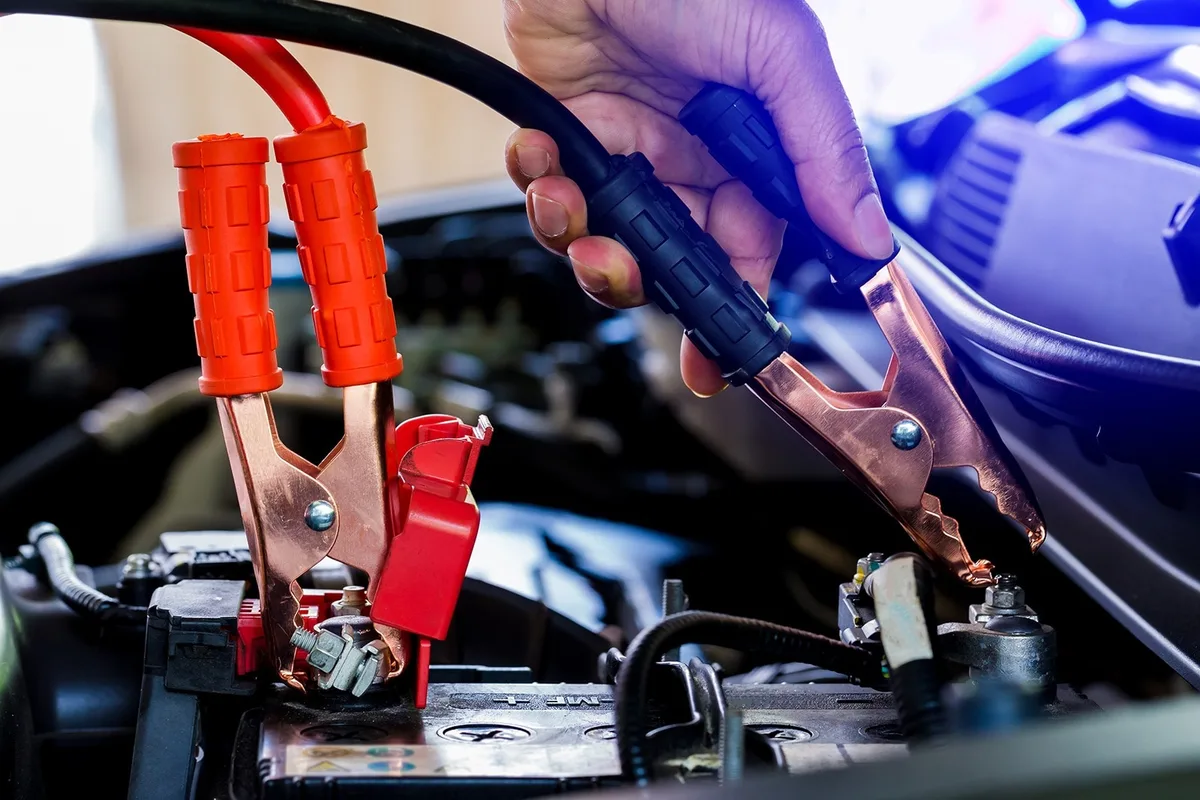
- Disconnect the jumper cables in reverse order: negative clamp on the donor car first, then negative on your car, then positive on the donor, then positive on yours. Touching the clamps together mid-removal can throw a wrench at sensitive ECUs in modern vehicles.
- Watch the dashboard. A battery warning light that stays on means the alternator isn't charging. A light that disappears after a few minutes is normal.
- Rev the engine gently to around 1500 RPM for 30 seconds. This speeds up the alternator's output and helps clear any leftover surface charge.
If you smell rotten eggs (sulfur) or hear a hissing sound, shut everything down and step back. A jump can overheat a battery that's already on its last leg, and hydrogen gas buildup near the posts is explosive.
Don't Just Drive Away — How Long and How Far to Recharge the Battery
Idling alone won't cut it. A typical car alternator produces around 40 to 70 amps at idle, but most of that goes to running the car's electrical systems, not recharging. Driving at road speeds gets the alternator spinning faster and pushing meaningfully more current into the battery.
The rule of thumb in our research and across most auto-partner resources: drive at least 20 to 30 minutes of continuous road driving after a jump. That's enough for a healthy alternator to push a meaningful charge back into a moderately drained battery.
| Recharge Method | Time Needed | Charge Restored (Approx.) | Best For |
|---|---|---|---|
| Idling in park | 1+ hour | 5 to 10% | Emergency only |
| Highway driving (30+ min) | 20 to 30 min | 30 to 50% | Standard recovery |
| Trickle charger (2A) | 12 to 24 hours | 100% | Long-term fix |
| Smart battery maintainer | 24 to 48 hours | 100% plus conditioning | Stored vehicles |
A short trip to the grocery store won't do it. If your battery was deeply discharged (under 11.8V before the jump), plan for at least 45 minutes of driving or hook up a real charger that night.
Is It the Battery or the Alternator? How to Tell in 5 Minutes
This is the question that decides whether you're buying a $120 battery or a $400 alternator. The fastest way to know: check voltage twice, once with the engine off, once with it running.
With the engine OFF, measure resting voltage at the battery posts. A healthy battery reads 12.4 to 12.7V. Anything under 12.2V means the battery is either discharged or has a dead cell.
Now start the engine and measure again. If voltage climbs to 13.7 to 14.7V, the alternator is fine. The battery was just depleted and needs charging or replacing.
If voltage stays at or below battery resting voltage with the engine running, the alternator isn't charging. Drive to a mechanic immediately, because the car will die the moment the battery runs out.
Here are the giveaway symptoms for each:
- Battery problem. Engine cranks slowly next time, headlights dim at idle, battery is more than 4 years old.
- Alternator problem. Battery light stays on, lights pulse with engine RPM, whining sound from the engine bay, electronics flicker.
A battery can pass a voltage test and still be bad if it can't hold a load. That's why the next step matters.
Check Your Battery Voltage at Rest (And What the Numbers Mean)
Voltage tells you charge level. To know battery health, you need a load test. Most auto-parts stores run a free load test in about 5 minutes.
Worth the trip.
For a quick home check, here's what the numbers mean:
| Resting Voltage | State of Charge | What to Do |
|---|---|---|
| 12.6V or higher | 100% | Healthy, no action needed |
| 12.4 to 12.6V | 75 to 100% | Good, drive normally |
| 12.2 to 12.4V | 50 to 75% | Drive 30+ min to recharge |
| 12.0 to 12.2V | 25 to 50% | Recharge with a charger tonight |
| Below 12.0V | Under 25% | Battery is deeply discharged, possible damage |
Per manufacturer specs from major battery makers, a reading below 10.5V under cranking load typically means the battery has at least one dead cell and needs replacement regardless of how well it recharges. As of 2026, AGM batteries (common in start-stop vehicles) hold voltage slightly higher than flooded lead-acid at the same charge level, but they also fail more abruptly when they go.

The Drive Cycle vs. Idling Myth: Which Actually Recharges Faster
The old advice was to let the car idle for 30 minutes. That's outdated and inefficient. Idling produces just enough alternator output to cover the car's running electronics, leaving very little surplus for the battery.
Driving at 1,500 to 2,000 RPM (normal street speeds) spins the alternator 2 to 3 times faster, producing substantially more current. Highway driving recharges a battery roughly 3 to 5 times faster than sitting in the driveway, per typical alternator efficiency curves.
If you're stuck idling (snowstorm, broken-down road, traffic), rev the engine gently to about 1,500 RPM. It helps, but it still won't match real driving.
The bigger picture: a single jump-start and a 30-minute drive restores maybe 30 to 50% of a deeply discharged battery. To get back to 100%, you really need a proper plug-in charger overnight.
Dashboard Warning Lights After a Jump — What They Really Mean
The dashboard tells a story, if you know how to read it. A battery warning light that flicks on for a second at startup is normal. One that stays lit means the charging system isn't replenishing what the starter pulled out.
Battery Light Stays Illuminated
The alternator isn't producing enough voltage. Drive immediately to a shop, because the car is running on battery reserve alone and will stall within 20 to 60 minutes depending on your accessories.
Check Engine Light Comes On After a Jump
Usually a voltage spike tripped a sensor. Don't ignore it long-term, but it's rarely urgent. Most codes clear after a few drive cycles.
If the light stays on after three days, run an OBD-II scan.
Lights Dim or Flicker With RPM Changes
Alternator diode or voltage regulator failure. The output isn't stable. Replace the alternator before it strands you.
Inspect the Battery Terminals and Connections Before Anything Else
A jump-start can reveal a problem hiding in plain sight: corroded or loose terminals. Corrosion looks like a white, blue, or green powdery crust on the posts. It blocks current flow, and a battery can read fully charged on a multimeter and still crank weakly if the connections are bad.
Pop the hood and look closely at both terminals. If you see any crust, here's the safe cleaning sequence:
- Disconnect the negative cable first, then the positive. Reversing this risks shorting your wrench to the chassis.
- Mix a tablespoon of baking soda with a cup of water. Pour it over the terminals. It'll fizz and neutralize the acid.
- Scrub with an old toothbrush or a dedicated terminal brush until the metal shines.
- Rinse with clean water, dry thoroughly, and reconnect positive first, then negative.
Tighten the terminals so they don't wiggle. A loose terminal can arc, which kills batteries slowly and fries alternators fast. If the cables themselves are frayed, cracked, or swollen, replace them.
New terminals cost a few dollars, but they prevent hundreds in electrical headaches.

When It's Time to Replace the Battery (And How to Be Sure)
Batteries don't last forever. Most flooded lead-acid batteries live 3 to 5 years. AGM batteries stretch that to 5 to 7 years in moderate climates.
Hot climates cut life expectancy roughly in half. Cold climates don't damage batteries directly, but cold cranking demands expose weak ones fast.
Replace the Battery If
- It's more than 4 years old AND just needed a jump.
- A load test fails (most auto-parts stores do this free).
- Resting voltage drops below 12.0V after a full recharge.
- The battery case is swollen, cracked, or smells like sulfur.
- You needed two or more jumps within a month.
Don't Replace the Battery If
- The car started fine the day before and hasn't shown any prior symptoms.
- The jump was caused by leaving headlights on or sitting for weeks.
- Resting voltage reads 12.4V or higher after the post-jump drive.
CCA (cold cranking amps) ratings matter when buying a replacement. Match or exceed the original spec from your owner's manual. Going higher is fine.
Going lower leaves you stranded on the first cold morning.
When It's Time to Replace the Alternator (Not the Battery)
A bad alternator can mimic a bad battery perfectly. The car starts with a jump, then dies again because nothing is being replenished. The mistake most drivers make: replacing the battery first, then wondering why they're still stuck.
Test the Alternator Before Swapping the Battery
If your jump-start was unprovoked and the car died within an hour of driving, the alternator is the prime suspect. A free bench test at any major parts store takes 5 minutes and tells you output voltage and ripple. Both need to be in spec.
Symptoms That Point to the Alternator
- Battery light on while driving.
- Headlights brighten when you rev and dim at idle.
- Whining or grinding noise from the engine bay.
- Electronics reset randomly (radio, clock, windows).
Alternator replacement runs $400 to $800 at most shops (parts and labor, as of 2026). It's not cheap, but it's cheaper than the tow truck you'll need when it finally leaves you walking.
Parasitic Drain — The Hidden Reason Your Battery Won't Stay Charged
Sometimes the battery and alternator are both fine, and the car still goes flat overnight. That's parasitic drain: something electrical keeps pulling current after the ignition is off.
A healthy car draws 20 to 50 milliamps to keep memories alive (radio presets, alarm system, ECU). Anything consistently above 50 milliamps is a leak. Common culprits:
- Trunk, glove box, or under-hood lights stuck on.
- Aftermarket accessories wired directly to constant power (dashcams, stereos, phone chargers).
- Faulty relays that don't fully disengage.
- Stuck door switches telling the car a door is open.
Finding a parasitic drain requires a multimeter, a wrench to disconnect the negative terminal, and patience. Pull one fuse at a time while monitoring the ammeter. When the draw drops to normal, that circuit is your leak.
If DIY isn't your thing, any mechanic or auto-electric specialist can track it down in under an hour.
Portable Jump Starter vs. Jumper Cables vs. Battery Tender
Each tool solves a different problem, and choosing the wrong one for the situation can leave you stuck. Here's how they stack up.
| Tool | Best For | Limitations |
|---|---|---|
| Jumper cables + another vehicle | One-time emergency | Need a donor car, risk of reverse polarity |
| Portable lithium jump starter | Solo drivers, road emergencies | Needs to stay charged, limited jump cycles per charge |
| Battery tender / maintainer | Long-term storage, recovery | Slow (hours to days), not an emergency tool |
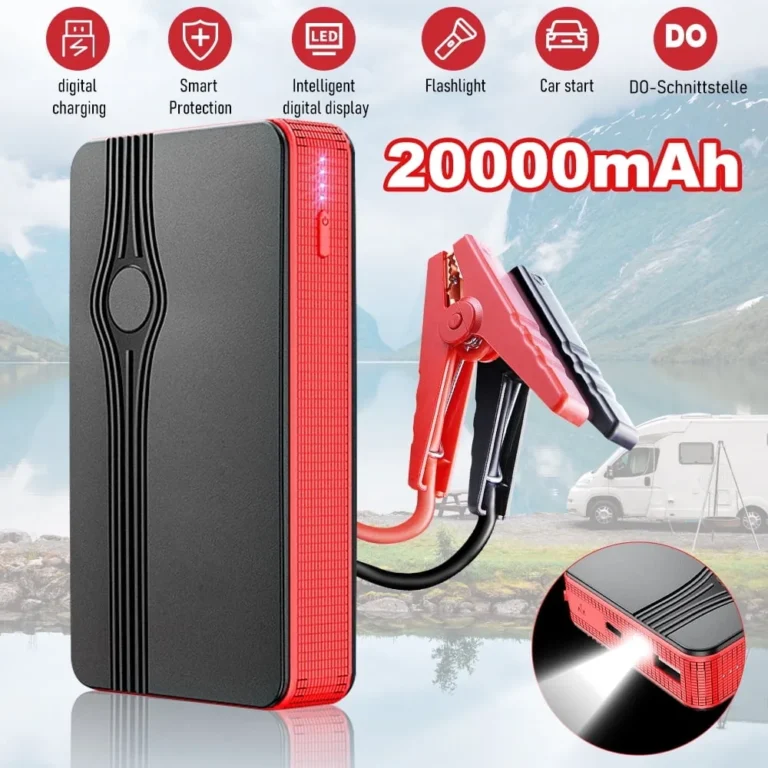
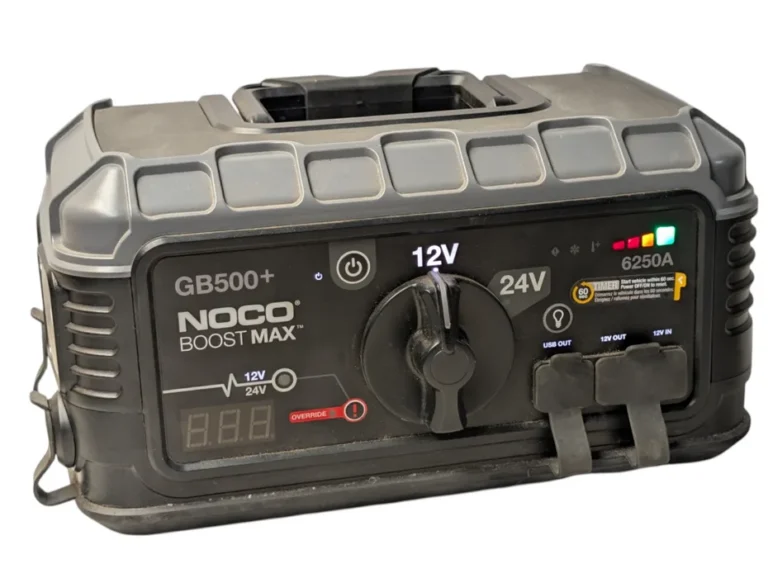
For most daily drivers, a portable jump starter in the trunk is the sweet spot. Modern lithium units weigh 2 to 3 pounds, hold charge for 6+ months, and can start a V8 up to 30 times per top-up.
A battery tender is a recovery and prevention tool, not an emergency tool. It plugs into a wall outlet and slowly brings a deeply discharged battery back over 12 to 24 hours. Pair one if you store a car, ride a motorcycle seasonally, or have a known weak battery.
How to Safely Disconnect Jumper Cables in the Right Order
Reverse polarity is one of the most expensive mistakes in DIY auto care. A single wrong clamp can fry an ECU, blow fuses, or destroy a body control module that costs more than the car.
Follow this sequence every time:
- Donor car negative, then your car positive.
- Wait. With your engine running, disconnect in this order: your negative clamp, donor negative, your positive clamp, donor positive.
- Keep the clamps from touching each other or any metal surface until they're all off.
- Store cables dry, off the floor, and away from battery acid residue.
Modern cars with start-stop systems and AGM batteries are especially sensitive. If you aren't sure, let a pro handle the jump.
Common Mistakes That Kill Your Battery After a Jump Start
We've seen the same handful of errors behind most repeat breakdowns. Avoid these and your post-jump recovery usually sticks.
- Shutting the engine off too soon. Five minutes of idling isn't enough. Plan a real 30-minute drive.
- Ignoring the battery light. If it stays on, the alternator isn't charging. Don't drive far from help.
- Skipping terminal cleaning. Corrosion is the silent killer of post-jump recoveries.
- Using the wrong CCA replacement battery. Going cheap or undersized guarantees the next cold morning fails.
- Jump-starting a frozen battery. Ice inside a frozen battery can crack the case. Thaw it first.
- Reversing polarity. Red to positive, black to negative. Every. Single. Time.
If you avoid these, the jump-start becomes a one-time fix instead of a recurring subscription.
Free Battery Testing — Where to Get It Done Locally
Most drivers don't need to buy any tools to verify a battery's health. Major parts chains run free diagnostic checks year-round. In the US, AutoZone, O'Reilly Auto Parts, and Advance Auto Parts will test your battery, alternator, and starter on the spot with no appointment.
In the UK, Halfords offers the same service.
A proper test takes about 5 minutes and includes:
- Resting voltage measurement.
- Cold cranking amp capacity check.
- Alternator output under load.
- Starter draw test.
Take the car in right after your post-jump drive so the battery has some charge. They'll give you a printout or screen readout you can use to decide whether to replace the battery, replace the alternator, or just keep driving.
What to Do If the Car Dies Again Right After a Jump
If the engine cuts out within minutes of disconnecting the cables, the alternator is almost certainly not charging. Don't try another jump. Get a tow or roadside assistance instead.
If it dies after 15 to 30 minutes of driving, the battery is too far gone to hold the alternator's output. Drive straight to a shop, leave the engine running while you park, and ask for an immediate charging system test.
If it restarts the next morning but dies again within a few days, you're dealing with either a marginal battery or a parasitic drain. Both are diagnosable in under an hour with a multimeter.
The pattern tells the story. Track it and you'll know exactly what part to replace.
Frequently Asked Questions
How long should I drive after jump starting a car?
At least 20 to 30 minutes of steady road driving. Idling alone isn't enough.
Can idling recharge a dead battery?
Partially, very slowly. Driving is 3 to 5 times faster at restoring charge.
Will jump starting damage my car's computer?
It can, if you reverse polarity. Match red to positive and black to negative.
How do I know if it's the battery or the alternator?
Test voltage at rest (12.4 to 12.7V is healthy) and again running (13.7 to 14.7V means alternator is fine).
How long do car batteries last?
Typically 3 to 5 years. Hot climates can halve that.
Decision Guide: Your Post-Jump Action Plan Based on What Happened
| What Happened | First Action | Likely Cause | Next Step |
|---|---|---|---|
| Jumped, drove fine, restarted hours later | Drive 30+ min to recharge | Headlights or accessory left on | Inspect for parasitic drain |
| Jumped, died again within minutes | Tow to a shop | Alternator failure | Replace alternator ($400 to $800) |
| Jumped, drove 20+ min, died next morning | Free battery test at parts store | Old or sulfated battery | Replace battery ($120 to $250) |
| Jumped, battery light stays on | Drive immediately to mechanic | Bad alternator or loose belt | Test charging system |
| Jumped, car won't restart but cranks slowly | Clean terminals, recharge overnight | Corroded or depleted battery | Slow charge with a tender |
Whatever path your situation falls into, the right answer is the same: drive the car, watch the dashboard, test the voltage, then act on what you find. That sequence catches most post-jump problems before they turn into roadside emergencies.