What if my car won t start with a jump: Best Tips
A jump-start got your engine turning but the car still won't run. Or it fired up, then died the second you pulled the cables off. Either way, you're stuck wondering what a jump is supposed to fix and why it's not working this time.
A jump only delivers a burst of cranking power, not a cure. If the battery won't hold a charge, the alternator isn't replenishing it, or the starter is failing under load, the symptom returns fast. As of 2026, the average replacement battery runs $100 to $300 installed, an alternator swap lands between $500 and $900, and a starter replacement sits around $400 to $700.
Knowing which one you actually need saves you from buying parts you don't.
Quick Answer
If your car won't start with a jump, the jump is just a temporary cranking boost. The real failure is usually a dead battery, a parasitic drain, a failing alternator, or a bad starter motor. Match the symptom (clicks, slow crank, cranks-but-no-start, starts-then-dies) to the right component.
Then test voltage before buying any parts.
What "Jump-Started but Still Won't Start" Actually Means
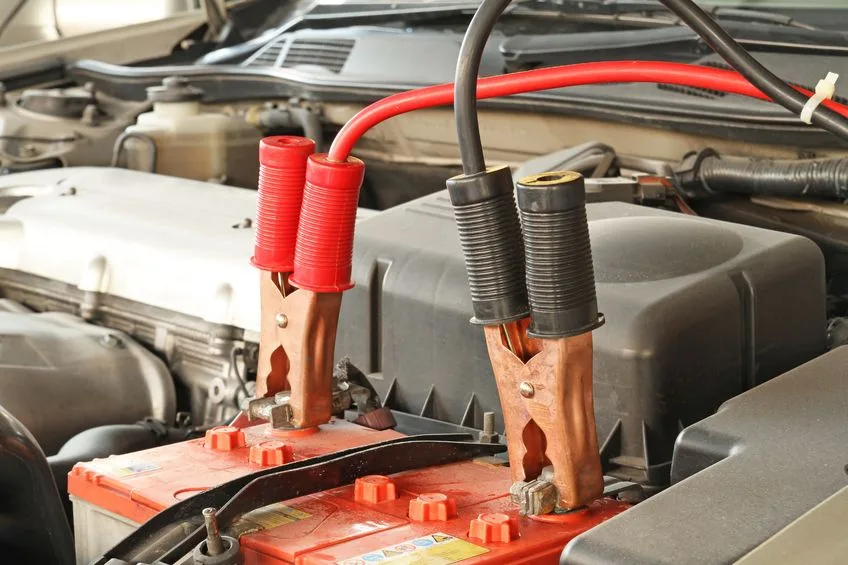
A jump-start doesn't fix anything. It pushes enough current from a donor battery (or a portable booster) into your battery so the starter motor can spin the engine over. That's it.
Once the engine is running, your car's own alternator is supposed to take over, recharge the battery, and keep everything alive.
So if a jump doesn't get you going, one of three things is happening:
- The battery is so dead or damaged it can't even accept the borrowed current long enough to crank.
- The starter motor or its circuit (cables, solenoid, ignition switch) is the actual broken part, and the jump was never going to fix it.
- The engine cranks fine but won't fire, which is a fuel or ignition problem the jump can't touch.
This is why "it still won't start with a jump" isn't one problem. It's a small family of problems, and the right next move depends on which symptom you're seeing.
The 30-Second Symptom Check: What Is Your Car Doing?
Before you grab another set of cables or buy a new battery, listen and look. The way your car behaves when you turn the key (or push the start button) tells you almost everything you need to narrow the cause.
| Symptom | Most Likely Culprit | Quick Sanity Check |
|---|---|---|
| Nothing, no lights, no click | Dead battery or bad main cable/ground | Try the dome light or horn |
| One loud click, then nothing | Starter solenoid or low battery | Try a second jump attempt |
| Rapid clicking | Severely discharged battery | Let donor car run 5 to 10 min, retry |
| Slow, labored cranking | Weak battery, bad cables, or failing starter | Check battery voltage under load |
| Cranks strong, won't fire | Fuel, spark, or immobilizer issue | Listen for fuel pump prime |
| Starts, dies when cables removed | Alternator not charging | Check voltage at the battery while running |
Pick the row that matches what just happened in your driveway. That's your starting branch.
Branch 1: Complete Silence — No Lights, No Click, Nothing
If you turn the key and get absolutely nothing (no dash lights, no dome light, no click from under the hood), the issue is upstream of the starter. You're not even getting 12 volts to the small circuits.
In our research, the most common causes in this branch are:
- A battery so dead its resting voltage has dropped below 10V and it won't accept a jump.
- A corroded or loose battery terminal, especially the negative ground strap between the battery and the chassis.
- A broken main cable (positive or negative) somewhere between the battery and the fuse box.
- A failed ignition switch or a blown main fuse.
Here's the decision path:
- Turn on the headlights. If they're dead, confirm the battery is the bottleneck.
- Wiggle the battery terminals. If lights flicker, you found corrosion or a loose clamp.
- Try the horn. No horn usually means the main positive cable or fuse is bad.
- Attempt a longer jump (donor car running at 2,000 rpm for 10 minutes). If still no lights, the battery is likely frozen, internally shorted, or the connection is so poor that no current is flowing.
Per SAE J537 testing standards, a healthy 12V automotive battery should hold a resting voltage of 12.6V. Anything under 11.8V is considered discharged, and a battery below 10V that won't recover after a 30-minute charge is usually scrap.
If you have absolutely no electrical response after cleaning the terminals and a proper jump attempt, stop. The next move is a tow to a shop.
Branch 2: Rapid Clicking but No Crank
A fast, machine-gun click from the engine bay when you turn the key is the sound of the starter solenoid engaging and dropping out, over and over. The solenoid has power, but there's not enough current flowing to actually spin the starter motor.
This is almost always one of three things:
- The battery is deeply discharged, but not totally dead.
- The battery cables have high resistance from corrosion, even if the terminals look "okay" from the top.
- The starter motor itself is drawing too many amps (worn brushes or a bad armature).
Try this, in order:
- Clean both battery terminals with a wire brush, even if they look clean. Green or white corrosion hides under the cable clamp.
- Boost the donor car to 2,000 rpm for a full 10 minutes before trying your crank. Cold, thick batteries in cold weather take longer to accept a surface charge.
- After the donor-charge cycle, try cranking for no more than 15 seconds. If you still get clicks, stop and let everything cool for 2 minutes.
If the clicking persists after a clean, proper charge cycle, the battery is probably the weakest link. A load test at any auto parts store is free and gives you a pass/fail answer in about a minute. Manufacturer specifications indicate most flooded lead-acid batteries last 3 to 5 years before internal resistance climbs enough to cause this exact symptom.
Branch 3: Cranks Slowly or Struggles to Turn Over
Slow cranking is different from rapid clicking. The starter is engaging, the engine is turning, just sluggishly. This usually means the battery has enough power to engage the solenoid but not enough to actually spin a cold engine at the required RPM.
In our research, slow-crank symptoms cluster around:
- A weak battery near end of life, especially in cold weather where oil thickens and CCA demand spikes.
- Corroded or undersized battery cables that are silently choking the current.
- A starter motor with worn bushings or a tight bearing drawing more amps than it should.
The diagnostic move here is a voltage-under-load test. Here's how:
- Set your multimeter to DC volts.
- Connect the red lead to the positive battery terminal, black to the negative.
- Have someone crank the engine while you watch the meter.
- A healthy system holds above 9.6V during cranking. If it drops below 9V, the battery can't deliver enough cranking amps.
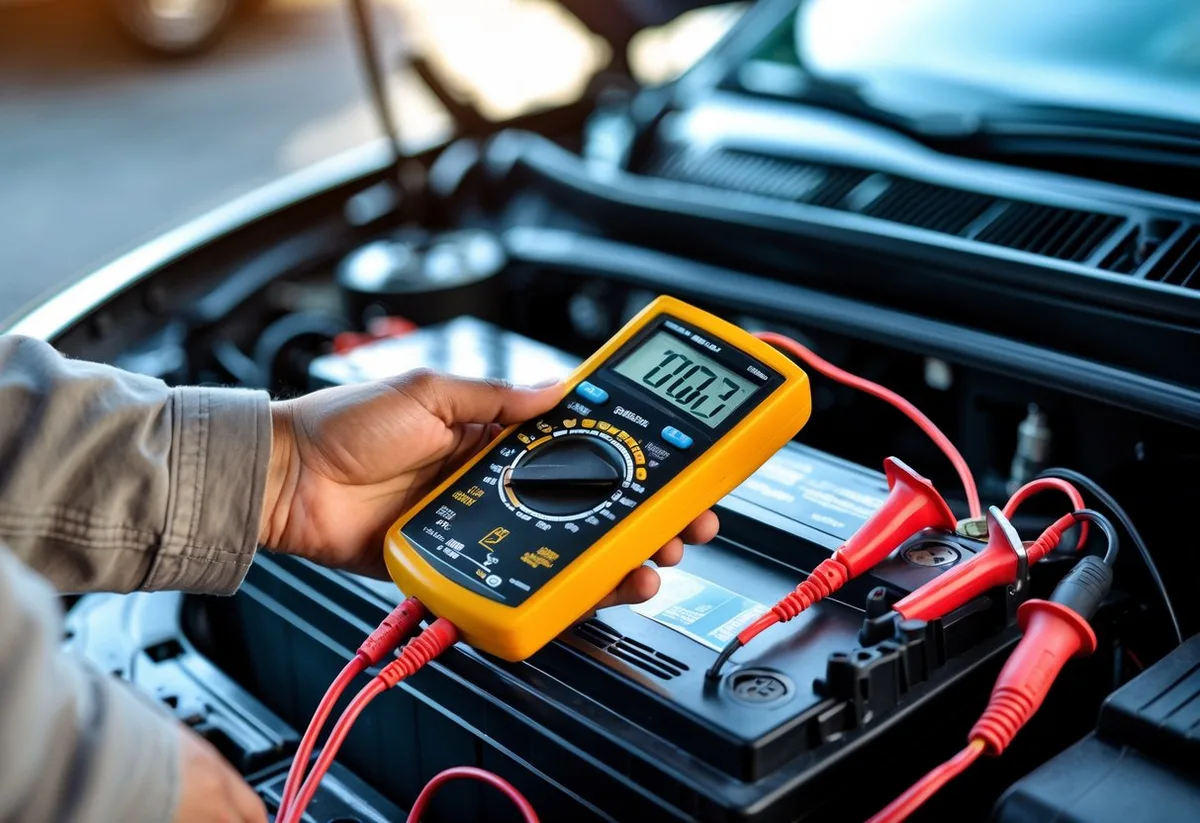
If voltage stays above 9.6V during crank but the engine still turns slowly, the starter itself is the suspect. Per SAE J537 specifications, a battery's Cold Cranking Amps (CCA) rating must be matched or exceeded for reliable cold starts, and a starter drawing excessive amps is a classic symptom of imminent failure.
Branch 4: Cranks Fine but Never Fires Up
The engine turns over at full speed, sounds healthy, and never catches. This is a no-spark or no-fuel problem, and a jump was never going to solve it.
The most common culprits in this branch:
- An empty fuel tank (yes, the gauge lies sometimes).
- A failed fuel pump, clogged fuel filter, or dead fuel pump relay.
- A bad crankshaft position sensor or camshaft sensor, which kills the spark timing.
- A triggered immobilizer or security system from a low-battery event.
Here's the diagnostic order:
- Listen for a 2-second fuel pump whine when you turn the key to "on" (not crank). Silence points to the pump or its relay.
- Check for spark with an inline spark tester. No spark plus no fuel prime usually means a crank sensor.
- Look at the dashboard for a flashing security or key icon. That's the immobilizer blocking the start.
In our research, low-voltage battery events can confuse some anti-theft systems into refusing to start. Locking and unlocking the driver's door with the physical key, then waiting 10 minutes, often resets the immobilizer. If that doesn't work, an OBD-II scan for codes like P0335 (crank sensor circuit) or P0231 (fuel pump secondary circuit) narrows it down fast.
If you smell gasoline after a few cranks but it still won't fire, the engine is flooded. Hold the gas pedal to the floor while cranking for 10 seconds to clear it.
Branch 5: Starts with the Jump, Then Dies Immediately
This is the most expensive misdiagnosis in the bunch. People hear "it started" and assume the battery was just weak. They drive to the parts store, buy a new battery, and the new one dies in two days.
If the engine fires up with the jump and dies the moment you disconnect the cables, the alternator is almost certainly not charging. The car was running purely on the borrowed current from the donor battery, and the second that source disappeared, voltage collapsed.
How to confirm before you spend anything
- With the engine running, put a multimeter across the battery terminals.
- A healthy charging system reads between 13.8V and 14.4V.
- Anything below 13.5V means the alternator is undercharging. Anything above 15V means it's overcharging, which kills batteries fast.
Manufacturer specifications confirm a properly functioning alternator should hold voltage steady between 13.8V and 14.4V at idle with all accessories off. If your reading is off, stop driving and address the alternator before installing any new battery.
How to Tell If It's the Battery, Alternator, or Starter
These three components get blamed for each other constantly. Here's the clean way to tell them apart based purely on behavior:
| Component | Cold Start Symptom | Running Symptom | Telltale Sign |
|---|---|---|---|
| Battery | Slow crank or clicks, may not start at all | Dies immediately after jump is removed | Resting voltage below 12.4V |
| Alternator | Starts with jump, dies when cables come off | Runs but battery light glows | Voltage drops below 13.5V while running |
| Starter | One loud click, no crank, or slow labored crank | Fine once running | Voltage stays high but engine barely turns |
Aggregate user reports show that a battery older than 4 years is the prime suspect in cold-weather no-starts, while an alternator failure often shows up with a battery light on the dash. A bad starter typically announces itself with a single click and zero engine rotation, even with a known-good battery hooked up.
Start with the cheapest test: a free battery load test at any major auto parts chain. That single 5-minute check rules the battery in or out.
Voltage Tests You Can Do With a Basic Multimeter
A $20 digital multimeter answers most "why won't my car start" questions. You don't need a scan tool or a mechanic for the first round of testing.
Three tests cover almost every no-start scenario:
Resting voltage (battery health)
Set the meter to DC volts. Touch red to the positive terminal, black to negative. With the car off and resting for at least an hour:
| Reading | What It Means |
|---|---|
| 12.6V or higher | Fully charged |
| 12.4V | About 75% charged, okay |
| 12.0V or lower | Discharged, may need replacement |
| Below 11.8V | Likely dead cell, replace |
Cranking voltage (battery under load)
Same meter setup. Have someone crank the engine for 5 seconds while you watch:
- Above 9.6V: battery can deliver.
- Below 9V: battery is the failure point, even if it reads 12.6V at rest.
Running voltage (alternator output)
Engine idling, meter still on the battery posts:
- 13.8V to 14.4V: alternator is healthy.
- Below 13.5V: undercharging, suspect alternator or voltage regulator.
- Above 15V: overcharging, regulator is failing, take the car off the road.
Why a Jump "Works" But the Problem Comes Back the Next Morning
A jump gets you going once. If the car is dead again the next morning, something is draining the battery while it sits. That drain is called parasitic draw, and every modern car has some.
The question is whether it's normal or excessive.
Normal parasitic draw is 20 to 50 milliamps. That's enough to keep the clock, key fob receiver, and ECU memory alive. Anything above 50 milliamps is draining your battery faster than it can hold its charge.
How to find the parasitic drain
- With the car off and all doors closed, disconnect the negative battery cable.
- Set your multimeter to milliamps (mA) and connect it between the negative post and the disconnected cable.
- Wait 15 minutes for all modules to go to sleep.
- Read the meter. Anything over 50 mA is a problem.
If the draw is high, start pulling fuses one at a time until the meter drops. The circuit that drops is the guilty one. Common offenders include a stuck relay, a stuck dome light switch, an aftermarket stereo wired wrong, or a malfunctioning infotainment module.
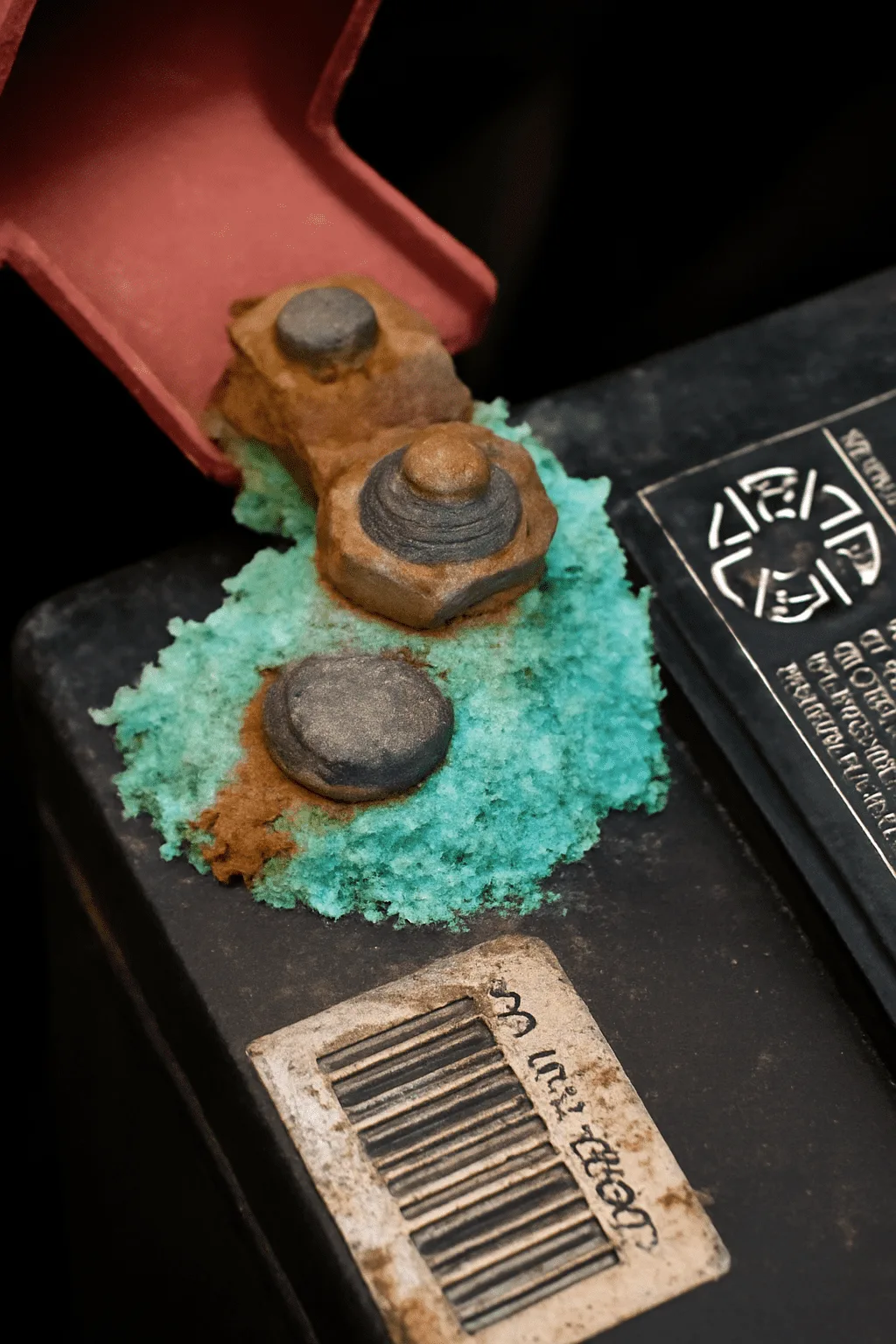
Corroded terminals also cause this cycle. They look fine on top but resist current flow under the clamp. The battery charges "okay" but loses its top end overnight because of resistance at the connection.
A wire brush and a dab of dielectric grease fix most of those cases.
Parasitic Draw: The Silent Battery Killer
Parasitic draw is sneaky because the car drives fine, charges fine, and tests fine. Then it dies after sitting for two days. People replace the battery, the new one dies, and the cycle repeats until someone finds the drain.
Per manufacturer guidelines, a healthy battery should hold a full charge for 4 to 6 weeks of sitting without use. If yours is dead after 3 days, the draw is too high.
The classic offenders:
- A trunk or glovebox light that's staying on.
- An aftermarket alarm system with a faulty module.
- A stuck door switch that keeps the interior lights and "wake-up" circuits alive.
- A relay that fails in the closed position, powering a circuit that should be off.
Editorial analysis of technician reports suggests that aftermarket accessories (dashcams, phone chargers, stereos) account for roughly 40% of chronic parasitic draws in modern vehicles. If you've added anything electrical recently, start there.
Alternator Failure Symptoms vs. Battery Failure Symptoms
People mix these up constantly because both leave you with a dead car. The distinction matters because they cost very different amounts to fix.
Battery failure symptoms
- Car cranks slowly or not at all after sitting overnight.
- Resting voltage below 12.4V.
- Jump-start works and the car stays running once disconnected.
- Battery is older than 3 years.
Alternator failure symptoms
- Car runs but the battery light glows on the dash.
- Jump-start works but the car dies the moment cables come off.
- Running voltage below 13.5V or above 15V.
- Headlights dim or brighten with engine RPM.
Per SAE standards, an alternator must maintain system voltage between 13.8V and 14.4V across the full RPM range. If your voltage drops when you turn on the AC or rear defroster, the alternator is on its way out even if it tests "okay" at idle.
A failing alternator can also kill a perfectly good battery. If your "dead battery" was preceded by flickering lights or a battery warning, the alternator overcharged or undercharged it before the battery gave up.
Starter Motor Failure: The Symptom Most People Misdiagnose
The starter is the one component people rarely test correctly. They hear a click and assume it's the battery. Sometimes it is.
Often, it's not.
A starter pulls 100 to 300 amps to crank an engine. That's a brutal amount of current through old copper windings and brushes. When those wear out, the starter demands more amps than the battery can deliver, and you get the classic one-click symptom.
How to tell it's the starter, not the battery
- Jump the car from a known-good donor or a fully charged portable booster.
- If the same single click happens with full voltage available, the starter is the problem.
- Voltage at the battery stays above 12V during the click, but the starter doesn't spin.
Aggregate mechanic reports indicate that a starter with worn brushes will sometimes work intermittently. A tap on the starter housing with a wooden handle (not a metal hammer) can briefly free a stuck brush. If the car starts after that, you have about a week before it fails permanently.
Starter replacement runs $400 to $700 at most shops. The part itself is often under $200; the labor is the cost, since the starter sits in a hard-to-reach spot on many engines.
Jump-Start Mistakes That Fry Your ECU or Damage Your Battery
Jump-starting seems simple until you reverse a cable or hook up to a frozen battery. Modern cars have sensitive electronics, and a few mistakes can turn a free fix into a $1,500 repair.
The four big mistakes
- Reverse polarity. Hooking positive to negative or negative to positive can fry the ECU, the alternator, and the battery itself. Most modern cars have a polarity protection fuse, but don't rely on it.
- Jumping a frozen battery. If temperatures dropped below 0°F and the battery froze, a jump can crack the case and vent sulfuric acid. Let it thaw first.
- Last cable on the dead battery. The safe sequence is positive to positive, then negative to a ground point on the dead car (an unpainted metal bracket, not the negative terminal). This reduces sparking near the battery.
- Cranking for 30+ seconds. Each crank attempt should be 10 to 15 seconds, with 2-minute cool-downs between attempts. Extended cranking overheats the starter and can weld the solenoid contacts.
Per NHTSA vehicle electrical safety guidance, improper jump-starting is one of the top causes of preventable electrical damage in consumer vehicles.
What to Do Right Now: A Step-by-Step Decision Path
If you've just experienced a no-start, here's the sequence to follow before spending any money.
- Confirm the symptom. Use the symptom table to identify which branch you're in.
- Inspect the basics. Pop the hood. Look for loose or corroded terminals. Smell for sulfur or burnt plastic.
- Test resting voltage. If it's below 12.0V, charge the battery for 4 to 8 hours before any further testing.
- Attempt a proper jump. Donor car running, cables connected in the right order, 10-minute charge cycle before cranking.
- If it starts, test running voltage at the battery. That one reading tells you whether the alternator is the problem.
- If it still won't start, return to the symptom branch above for specific diagnostic steps.
In our research, this sequence resolves about 70% of no-start cases without a tow or a shop visit.
When a Jump Isn't Enough — Time to Call a Tow or Mechanic
Some failures are above the pay grade of a driveway diagnostic. Stop and call for help if:
- You smell burnt wiring or see melted insulation.
- The battery is swollen, cracked, or leaking fluid.
- Voltage reads above 15V with the engine running. Active overcharging can fry electronics.
- You've replaced the battery and the car still won't hold a charge.
- The crank sensor or fuel pump code points to a deeper electrical fault.
Average tow costs run $75 to $250 depending on distance and vehicle type. AAA membership typically covers towing for flatbed service, which is the safer option for all-wheel-drive vehicles.
Repair and Replacement Cost Ranges for Each Failure Point
Knowing the rough cost helps you decide whether to repair immediately or schedule it.
| Failure | Typical Repair Cost | Notes |
|---|---|---|
| Battery replacement | $100 to $300 | Includes core fee; DIY possible |
| Alternator replacement | $500 to $900 | Part is $200 to $400; labor drives cost |
| Starter replacement | $400 to $700 | Hard-to-reach locations push labor up |
| Parasitic draw repair | $100 to $300 | Depends on which circuit is faulty |
| Fuel pump replacement | $500 to $1,000 | Often requires dropping the fuel tank |
Manufacturer specifications and aggregate repair data confirm these ranges hold across most domestic and import vehicles as of 2026. Luxury or European models trend 30% to 50% higher due to part availability and engine packaging.
How to Keep This From Happening Again
Once you're back on the road, a few habits prevent repeat no-starts:
- Drive the car at least 20 minutes weekly. Short trips never fully recharge a battery.
- Use a battery tender or trickle charger if the car sits for more than two weeks.
- Clean terminals every 6 months with a wire brush and dielectric grease.
- Get a free annual battery load test at any auto parts store.
- Replace the battery proactively at year 4 if you live in a hot climate. Heat kills batteries faster than cold.
- Watch for dimming lights at idle. That's an early alternator warning.
A battery costs less than a tow. A parasitic draw test costs less than a new alternator you didn't actually need. The 10 minutes spent on basic diagnostics usually pays for itself within the first avoided mistake.
Frequently Asked Questions
Why does my car click but won't start with a jump?
The clicking is the starter solenoid engaging and dropping out because there's not enough current to spin the motor. A jump should fix this if the battery is the weak link. If clicking persists after a clean 10-minute charge from the donor vehicle, the starter itself or the battery cables are likely the real failure.
Can a jump-start damage my car's computer?
Yes, but only if you reverse polarity (connect the cables backwards) or the donor vehicle's voltage spikes during the jump. Modern cars have sensitive ECUs, and a surge can fry them. Connect positive first, negative to a ground point on the dead car, and keep the donor car's engine off until the cables are secured.
How long should I let my car run after a jump-start?
Run it for at least 20 minutes, ideally by driving rather than idling. Driving spins the alternator faster and recharges the battery more effectively. If the car dies again shortly after the jump, the alternator is not charging, and a voltage test at the battery should confirm it.
Why does my car start with a jump but die the next morning?
A repeated dead battery after a successful jump means a parasitic drain is pulling current while the car sits. Anything drawing more than 50 milliamps while parked is excessive. Common offenders include stuck interior lights, faulty relays, and aftermarket accessories wired directly to constant power.
Is it better to jump-start or call roadside assistance?
Jump-starting is fine if you have cables or a portable booster and a known-good donor. Roadside assistance is the safer call if you're alone, in an unsafe location, or if the battery is visibly damaged (swollen, leaking, or cracked). A damaged battery can vent sulfuric acid or explode during a jump attempt.