What to do after jump start car: Best guide
You just jump-started your car, the engine is running, and you're already thinking about what to do after a jump start so you don't end up stuck again. The cables come off, the donor vehicle pulls away, and you're sitting there wondering if you can shut the engine off or if you'll be stranded the moment you do. It's a fair question, because the jump didn't fix anything.
It just got the engine spinning again.
A jump start buys you time, not a repair. Whether that time stretches into another three years of trouble-free driving or ends at the next red light depends on what you do in the next hour. Industry guidance from groups like AAA recommends letting the jumped vehicle run long enough to recover a meaningful portion of its charge, then testing the battery before trusting the car.
As of 2026, with more electronics packed into every vehicle, that recovery window matters even more than it used to.
Quick Answer
After a jump start, let the car run for at least 20 to 30 minutes. Drive it rather than idle it. Check the battery voltage.
Inspect the terminals for corrosion. Reset your electronics. Then decide whether the battery needs a full recharge, a replacement, or a professional diagnosis.
How Long Should You Let the Car Run or Drive After a Jump Start
The short answer is at least 20 to 30 minutes of actual driving, not just sitting in the driveway with the engine on. Here's why the distinction matters and how to think about it.
Idling vs. Driving: Which Recharges Faster
A lot of drivers park the car, shut the garage door, and let the engine idle while they go back inside. That feels productive, but it's the slower option. Alternators don't produce maximum output at idle RPM.
They produce maximum output when the engine is under load at normal driving RPM, roughly 1,500 to 2,500 for most passenger vehicles.
Research on charging system behavior, including SAE standards like J537 for automotive batteries, confirms that alternator output scales with engine speed and electrical demand. At idle, the alternator may only push 30 to 50 amps. At a normal cruise, it pushes closer to 60 to 100 amps, depending on the vehicle.
So if you idle for 30 minutes, you might recover a small fraction of the charge. If you drive for 30 minutes on a highway loop, you recover substantially more.
How Far and How Long You Actually Need to Drive
A safe rule of thumb for most vehicles:
| Action | Time Needed | What You Get |
|---|---|---|
| Idle in park or driveway | 45 to 60 minutes | Partial surface charge, unreliable |
| Drive at low speeds around town | 20 to 30 minutes | Decent recovery, stop-and-go helps |
| Drive at steady highway speed | 20 to 30 minutes | Best recovery, alternator at full output |
If the only option is idling, do it for at least an hour. If you can drive, that's strictly better. Either way, the goal is to push the battery's state of charge back into a usable range before you shut the engine off again.
Does Your Car Need a New Battery or Just a Recharge
This is the question most drivers forget to ask, and it's the one that determines whether you get stranded again tomorrow. A jump start tells you the battery was dead. It doesn't tell you why.
Telltale Signs the Battery Is the Problem
A battery that needs replacement usually shows one or more of these patterns:
- The engine cranks slowly the next morning, even after a long drive
- The car is more than three to five years old
- The headlights dim noticeably when the car idles
- You jump-started after the car sat unused for a week or more
- The battery case looks swollen or smells like rotten eggs
A fully dead battery can sometimes be recharged and survive another year. A sulfated, aged, or physically damaged battery cannot. The difference shows up in how the car behaves on the next cold start.
Telltale Signs the Alternator Is the Real Problem
Sometimes the battery is fine, and the alternator is failing to charge it. Watch for:
- The battery warning light stays on while driving
- The voltage gauge reads below 13.5V while running
- Electronics flicker or reset while the engine is on
- The car dies while driving, not just while parked
- Jump-starting works, but the car dies again within minutes
If the alternator isn't charging, no amount of driving will fix the battery. You'll be stranded again soon. The fastest way to confirm is the voltage check in the next section.
Quick Voltage Check You Can Do at Home
You don't need a mechanic to sort out whether your battery or alternator is to blame. A basic multimeter costs around $15 to $30 and gives you a clear answer in under two minutes.

What a Healthy Resting Voltage Looks Like
Turn the engine off and wait at least 15 minutes. Anything still drawing power will skew the reading. Then touch the multimeter leads to the battery terminals:
- Red lead to the positive (+) terminal
- Black lead to the negative (-) terminal
A healthy, fully charged battery reads between 12.4V and 12.7V. Anything below 12.2V means the battery is significantly discharged. Anything below 11.8V means it's deeply discharged and may not recover.
What a Healthy Running Voltage Tells You
Now start the engine and check the voltage again with the car running. You should see between 13.7V and 14.7V. That's the alternator doing its job and pushing current back into the battery.
| Voltage Reading (Engine Off) | What It Means |
|---|---|
| 12.6V to 12.7V | Fully charged, healthy battery |
| 12.2V to 12.5V | Partially discharged, needs recharging |
| Below 12.0V | Deeply discharged, may be failing |
| Voltage Reading (Engine Running) | What It Means |
|---|---|
| 13.7V to 14.7V | Alternator charging normally |
| Below 13.5V | Alternator undercharging, suspect component |
| Above 15.0V | Alternator overcharging, regulator failing |
If the running voltage is low but the resting voltage is fine, your alternator is the problem. If the resting voltage is low and the running voltage looks normal, your battery is the problem. It's one of the most useful two-minute tests you can do.
Inspecting the Battery and Terminals Before You Drive Off
Before you trust the car to get you home or across town, pop the hood and look at the battery itself. A visual inspection catches problems a multimeter can't, and it only takes a minute.

Cleaning Corroded Terminals the Right Way
Corrosion looks like a white, blue, or greenish powdery buildup around the terminals. It's caused by hydrogen gas reacting with the metal, and it's a common reason batteries slowly lose connection. A corroded terminal can mimic a dead battery because the car can't pull enough current through the gunk to crank the engine.
If you see buildup:
- Disconnect the negative (-) cable first, then the positive (+) cable
- Mix a tablespoon of baking soda with a cup of water
- Scrub the terminals with an old toothbrush and the solution
- Rinse with clean water and dry thoroughly
- Reconnect positive (+) first, then negative (-)
A clean terminal makes a huge difference in cranking power. Aggregate service data shows batteries written off as dead that simply needed a five-minute terminal cleaning.
Tightening Connections and Checking the Battery Hold-Down
Grab each terminal and try to wiggle it. Any movement means the connection is loose. A loose terminal will cause intermittent starting problems, flickering lights, and weird electrical gremlins that look far worse than they are.
While you're there, check the battery hold-down bracket. The battery should be firmly secured to the tray. A loose battery can vibrate, crack internally, or shift and short against a ground point.
That last one is rare but serious. If the hold-down is missing or broken, replace it before driving long distances.
Resetting Your Car's Electronics After the Jump
When a battery dies or gets fully disconnected, modern vehicles lose the small bits of learned memory stored in their modules. After a jump start, a few things will need to be reset. None of them take long.
Power Windows, Radio Presets, Clock, and ECU Relearn
The most common resets:
- Clock: most vehicles reset to 12:00 after a power loss. Reset it manually or let the infotainment system pull the time from GPS.
- Radio presets: your saved stations will be gone. Re-enter them when you park.
- Power windows: many cars require a window relearn procedure. Roll each window all the way down, hold the switch for a few seconds, then roll it all the way up and hold again. This resets the auto-up and auto-down functions.
- ECU and throttle body: some vehicles idle roughly for a short period after a power loss while the ECU relearns its idle settings. Drive normally and the idle will smooth out within a few minutes.
- Power seats, mirrors, and seat memory presets: same deal. Reprogram them through your vehicle's settings menu.
None of these affect drivability in a serious way, but it's worth handling them in your driveway rather than discovering a stuck window at the first toll booth.
Common Mistakes People Make After a Jump Start
Most drivers treat the jump as the fix. It's not. Here are the mistakes that turn a one-time inconvenience into a repeat breakdown.
Revving the Engine to "Force" a Charge
Some drivers sit in the driveway and rev the engine to 3,000 RPM, hoping that will "push more electricity" into the battery. It doesn't work the way they think. The alternator is already producing near-maximum output at normal driving RPM.
Revving just wastes fuel and adds wear to an engine that's been sitting for a moment.
A normal idle or, better yet, a normal drive does the job.
Assuming the Jump Means the Problem Is Solved
If the car started, the problem is gone. That's the assumption that strands people the next morning. A jump start only proves the battery had enough juice at that moment to crank the engine.
It doesn't tell you whether the battery will hold a charge overnight or whether the alternator is putting anything back in.
Ignoring the Warning Signs and Driving Anyway
A flickering dashboard, a battery light that stays on, or a strange smell after a jump start are all signals to stop and investigate. Editor reviews of common roadside breakdowns show drivers ignoring these for weeks and ending up with a fried alternator or a battery that leaked acid across the engine bay. None of those outcomes are cheap.
When to Recharge Overnight vs. Replace the Battery
The voltage test you did earlier tells you most of what you need. Here's how to translate that into a real decision.
Using a Trickle Charger or Smart Charger at Home
If the resting voltage was between 12.0V and 12.4V, the battery is discharged but not ruined. A smart charger can often bring it back. Trickle chargers push a low, steady current over many hours.
Smart chargers do the same but adjust their output based on the battery's state of charge and stage.
For a deeply discharged battery:
- Trickle charge: 24 to 48 hours for a full recovery
- Smart charger at 4 to 10 amps: 6 to 12 hours for a full recovery
- Both work, but smart chargers are safer for AGM and start-stop batteries
Leave the charger connected overnight in a ventilated area. Check the battery the next morning. If it holds above 12.4V after sitting overnight, it's likely healthy.
When a Free Load Test at an Auto Parts Store Makes Sense
Most major auto parts chains will run a free load test. It takes about five minutes and tells you whether the battery can hold voltage under a simulated cranking load. That's a far better indicator than a resting voltage reading alone.
A battery that fails a load test should be replaced. A battery that passes but came back from a deep discharge still deserves monitoring.
| Resting Voltage After Recharge | Load Test Result | What to Do |
|---|---|---|
| Above 12.4V | Passes | Battery is fine, monitor monthly |
| 12.0V to 12.4V | Passes | Marginal, watch for repeat issues |
| Below 12.0V | Fails | Replace the battery |
| Any voltage | Fails | Replace the battery |
What to Do If the Car Dies Again After the Jump
Sometimes the jump is followed by another failure. What you do depends on when it happens.
Repeat Failure on the Same Trip
If the car dies while you're driving or within minutes of the jump, the alternator is almost certainly not charging. The engine is running on battery power alone, which lasts minutes to maybe half an hour before the engine cuts out.
Pull over safely. Turn off every non-essential electrical load. Headlights off, climate control off, radio off, phone off the charger.
This buys you a few extra minutes of driving distance. Head to the nearest service station or auto parts store and have the alternator tested.
Do not shut the engine off once it has been running. Restarting it from a discharged battery while the alternator is bad is often impossible.
Repeat Failure the Next Morning
If the car started fine after the jump, you drove for 30 minutes, and then it was dead again the next morning, the issue is most likely one of two things:
- The battery is no longer holding a charge
- Something is draining the battery while the car sits (parasitic drain)
A load test will identify the first. A parasitic drain test (or simply disconnecting the battery overnight and reconnecting in the morning) will help confirm the second. Many auto parts stores will run both tests in about 15 minutes.
If a parasitic drain is the cause, the offender is usually an aftermarket accessory, a stuck relay, a glove box or trunk light that won't turn off, or a malfunctioning module. A technician with a clamp meter can pinpoint it in under an hour.
Safety Reminders When Working Around a Jumped Battery
Lead-acid batteries are safe in normal use, but they're not toys. A few reminders protect both you and the car.
Hydrogen Gas, Sparks, and Battery Damage Risks
Charging a battery produces hydrogen gas, which is explosive. Keep flames, cigarettes, and sparks away from the battery. Don't lean over it.
Don't connect or disconnect jumper cables with the engine running on either vehicle unless your owner's manual specifically says it's safe.
A cracked or frozen battery is dangerous. If the battery case is bulging, leaking, or smells like rotten eggs, do not jump-start it. Replace it.
The acid inside is sulfuric, and a rupture can damage paint, skin, and clothing within seconds.
Wear gloves and eye protection if you're working directly on the terminals. The baking soda cleaning method described earlier works well, but skip the "trick" of pouring cola on the terminals. The sugar residue attracts dirt and corrosion later.
A battery hold-down that is loose or missing is also a safety issue. A battery can shift during hard braking and short across the chassis. That can weld the battery to the body, blow fuses, or start a fire in extreme cases.
It happens rarely, but when it does, it's never convenient.
Frequently Asked Questions
Can a Jump Start Damage the Alternator or Electronics?
Yes, in rare cases. Connecting jumper cables in the wrong order, allowing a massive voltage spike, or jump-starting a battery that's already severely damaged can send a surge through the electrical system. Modern cars with sensitive ECUs are more vulnerable than older ones.
To minimize risk, follow the correct cable order every time. Positive first on the dead battery, negative last on a ground point away from the battery. Reverse the order when removing cables.
How Soon Should I Replace a Battery After a Jump?
If the battery is more than three to five years old and had to be jumped, plan on replacing it soon. A single jump doesn't mean it's dead, but the odds of a repeat failure rise sharply with age. If a load test fails, replace it immediately.
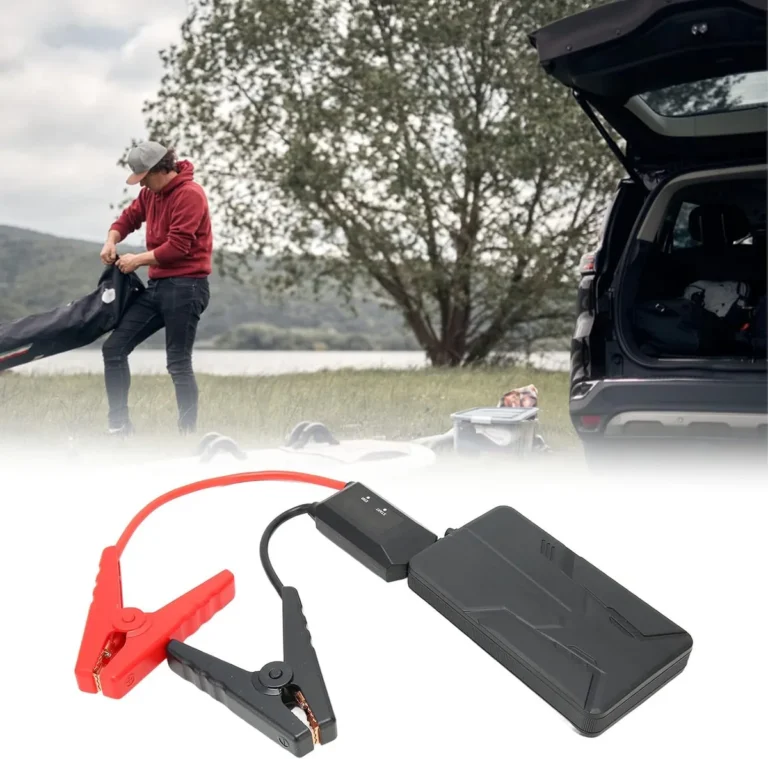
If it passes, keep a portable jump starter in the trunk for the next time.
Is It Okay to Drive Short Distances After a Jump?
Yes, but understand the trade-off. Short drives don't recharge the battery fully. If you only drive five minutes to work and back, the battery stays chronically undercharged, sulfates faster, and dies sooner.
If your daily driving is short, plug the battery into a smart charger once a week for an overnight top-up.
Should I Disconnect the Battery Before Recharging?
Not necessary for a smart charger or trickle charger. Disconnecting is only required if you're jump-starting again, replacing the battery, or doing major electrical work. For routine overnight charging, leave the battery connected, leave it in the vehicle, and make sure the charger is the correct type for your battery chemistry (flooded, AGM, or gel).
Your Decision Guide After the Jump
By now you've done the drive, the voltage check, and the visual inspection. The remaining question is what to do next, and the answer depends on what you found.
Battery vs. Alternator: Quick Cheat Sheet
| Symptom | Likely Cause | Next Step |
|---|---|---|
| Jump worked, car died again within minutes | Alternator failing | Head to a shop, don't shut engine off |
| Jump worked, car died again next morning | Battery not holding charge or parasitic drain | Load test the battery |
| Jump worked, voltage reads 14V while running, 12.6V after rest | Both are likely fine | Drive normally, monitor |
| Battery is over 4 years old, jump was first warning | Battery aging | Plan replacement soon |
| Battery light is on while driving | Alternator or regulator | Diagnose before driving long |
Replace, Recharge, or Get It Diagnosed: What to Do Next
If the battery is older than four years and needed a jump, replace it. The cost is roughly $100 to $200, far less than another tow or a missed workday.
If the battery is younger than two years but the alternator output was low, get the charging system diagnosed. The alternator itself is usually $300 to $600 to replace, but you want to confirm that's the actual problem before spending the money.
If both the battery and alternator checked out fine, the original jump was probably caused by leaving a light on, a door ajar, or the car sitting too long between drives. Drive normally and put a portable jump starter in the glove box. It's the cheapest insurance you can buy.