How long to leave jumper cables on after starting
You asked how long to leave jumper cables on after starting, and the honest answer is that it depends on what kind of battery you're dealing with and how dead it really is. Most drivers don't need to leave the cables connected for long at all, but a deeply discharged battery needs a longer boost to take a charge. We'll break down the exact wait time for each situation, plus what to do the moment you pull the cables off.
A mildly drained 12V car battery usually needs the cables connected for roughly 2 to 5 minutes after the dead vehicle fires up, while a deeply discharged unit benefits from 10 to 15 minutes of connected charging before disconnecting. Manufacturer guidance from brands like Interstate and Optima supports keeping the donor engine running at a fast idle during this window so the dead battery picks up enough surface charge to run the starter on its own. Once the cables come off, plan on driving at least 20 to 30 minutes to put a meaningful charge back into the battery.
As of 2026, vehicle charging systems haven't changed fundamentally, so these timeframes still hold.
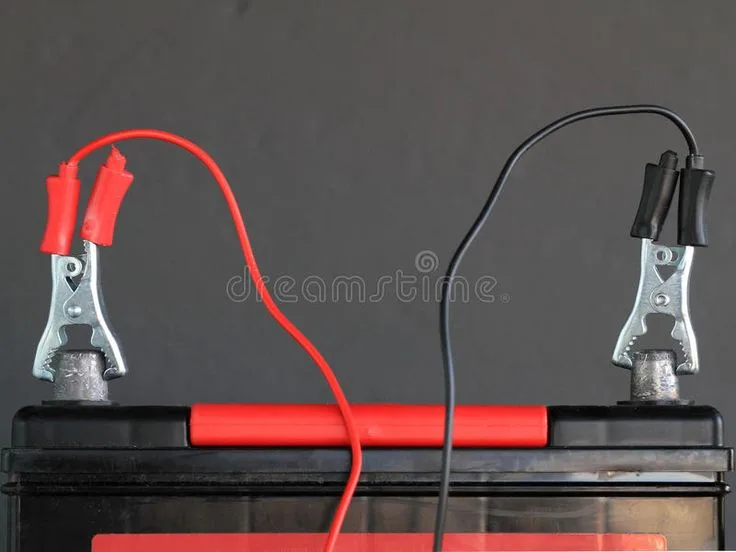
Quick Answer
Leave jumper cables connected for 2 to 5 minutes after the engine fires. Deeply discharged batteries need 10 to 15 minutes. Keep the donor engine running at 1,500 RPM during the wait.
Drive 20 to 30 minutes after disconnecting.
Why This Question Has More Than One Right Answer
The reason this question trips people up is simple. The wait time depends on three live variables. Battery state of charge, alternator output from the helper car, and ambient temperature all shift the answer.
If the dead battery still holds above 12.2 volts resting, the cables barely need a minute. The starter motor pulls hundreds of amps, but once the engine is running, the alternator picks up the load.
If the battery sits below 11.8 volts, it's deeply discharged. The cables need more time to push enough charge back into the cells before you pull them. Pulling too early in this case causes an immediate stall.
Here's the practical decision rule we use in our research:
- Battery voltage above 12.2V → wait 1 to 2 minutes.
- Battery voltage between 11.8V and 12.2V → wait 5 to 10 minutes.
- Battery voltage below 11.8V → wait 10 to 15 minutes, and consider a full recharge after.
The Battery Council International publishes group-size and CCA standards that align with these voltage thresholds for a healthy 12V lead-acid battery.
The Key Variables That Decide Your Wait Time
Battery Condition (Mildly Discharged vs. Deeply Dead)
A battery that died from leaving the headlights on for 20 minutes usually recovers fast. The plates still hold most of their active material. Five minutes of connected charging is plenty.
A battery drained over weeks, from a parasitic draw or a forgotten dome light, sits much lower. The cells need longer to accept charge. Ten to 15 minutes is the safer call here.
If the battery is older than 4 to 5 years, even a long boost won't help much. Sulfation builds up on the plates, and the battery won't hold charge regardless of wait time. Plan a replacement.
Donor Vehicle Output and Engine RPM
The donor car's alternator is doing the heavy lifting during the wait. At idle, most alternators put out 40 to 60 amps. At 1,500 RPM, output climbs to 80 to 120 amps depending on the vehicle.
This is why keeping the donor engine at a fast idle matters. More amps flowing into the dead battery during the connected window means the engine in the dead car is more likely to stay running once the cables come off.
Ambient Temperature and Battery Chemistry
Cold weather slows the chemical reaction inside a lead-acid battery. A battery that works fine at 70°F can drop 30 to 40% of its cranking power at 0°F.
This means cold mornings often require longer connected waits. The battery accepts charge more slowly when it's cold. Budget an extra 5 minutes for sub-freezing starts.
AGM and EFB batteries (common in newer vehicles with start-stop systems) charge slightly faster than flooded lead-acid. The wait time stays roughly the same in practice, but recovery driving after the jump is faster.
How the Jump-Start Process Actually Works
What Happens When You Connect the Cables
The moment the last clamp connects, current starts flowing from the donor battery into the dead one. The dead battery is essentially the recipient in a parallel circuit.
The donor alternator sees the added load and ramps up output to compensate. This is why keeping the donor engine at a higher RPM helps. The alternator produces more amperage at higher RPM, which flows through the cables into the dead battery.
During this phase, the dead battery is gaining voltage. A battery that sat at 11.5V might climb to 12.0V within the first minute.
What Happens When the Dead Engine Fires Up
The starter motor stops drawing current the moment the engine catches. The dead battery, now partially charged, takes over running the vehicle's electronics.
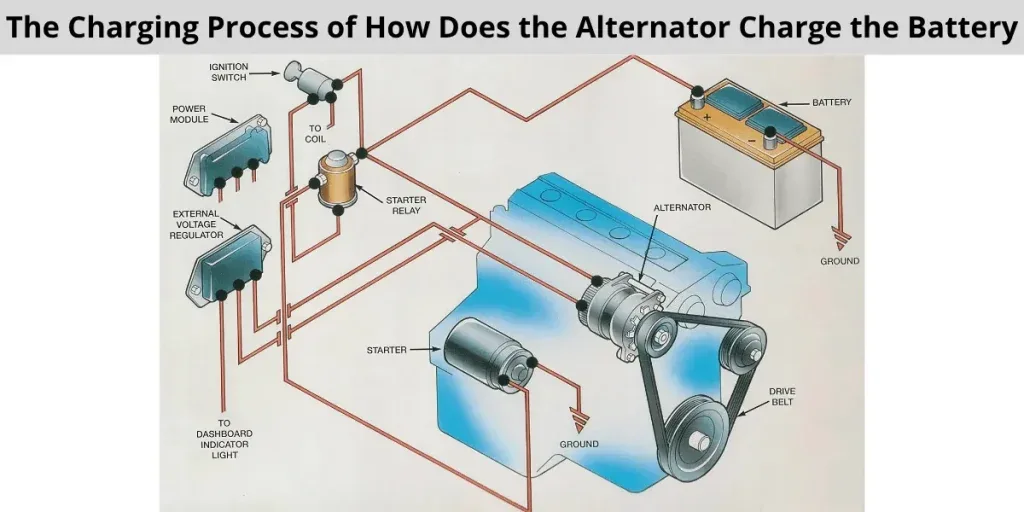
The alternator on the dead car also kicks on and begins recharging it for the rest of the drive. This is why driving immediately after a jump matters. Idling alone produces limited charging current.
Once the dead engine is running smoothly, the cables are mostly just keeping the battery topped off during the wait. The alternator on the donor car isn't fighting the load anymore.
Step-by-Step: The Right Way to Use Jumper Cables
Safe Connection Order (Dead Battery First, Donor Second)
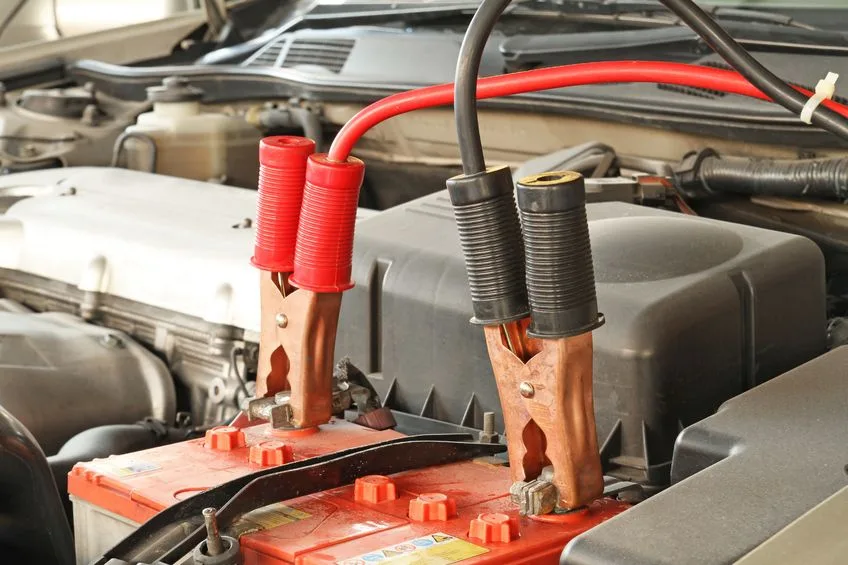
Always connect positive (red) to positive and negative (black) to negative, but the sequence matters. Connect red to the dead battery first, then red to the donor. Connect black to the donor, then black to a grounding point on the dead vehicle.
The grounding point should be unpainted metal on the engine block, away from the battery and fuel lines. A bracket or alternator housing works well.
This order reduces spark risk near the dead battery. Hydrogen gas can pool around a discharged battery, and a stray spark near the terminals can ignite it.
Starting the Donor Car and Letting It Idle
Start the donor vehicle first. Let it idle for 2 to 3 minutes to stabilize the charging system. Rev the engine to around 1,500 RPM and hold it there during the rest of the process.
The higher RPM keeps alternator output strong. This matters more for deeply discharged batteries than for mildly drained ones.
Cranking the Dead Engine
Now move to the dead vehicle. Try to start it. If it cranks slowly, give it another 5 minutes of connected charging before retrying.
Most healthy batteries will start within the first or second attempt. If it doesn't fire after two tries and 10 minutes of waiting, the battery may be too far gone or there's a separate issue like a bad alternator or starter.
The Wait Period: What to Do and How Long
Here's the practical breakdown:
| Battery condition | Wait before removing cables |
|---|---|
| Slightly drained (above 12.2V) | 1 to 2 minutes |
| Moderately drained (11.8V to 12.2V) | 5 to 10 minutes |
| Deeply drained (below 11.8V) | 10 to 15 minutes |
Keep the donor engine at 1,500 RPM throughout. Don't rev the dead engine aggressively. Gentle idle is fine.
Aggressive revving doesn't speed up the connected phase meaningfully.
Disconnecting in the Correct Reverse Order
Disconnect in the reverse order of connection. Black clamp off the grounding point first, then black off the donor. Red off the donor, then red off the dead battery.
Keep the clamps from touching each other during removal. A momentary short can blow a fuse or damage electronics.
Once the cables are off, the dead vehicle should run on its own charging system. If it stalls within a minute, the battery likely wasn't charged enough.
What to Do Right After You Remove the Cables
Idling vs. Driving — Which Recharges Faster and Why
Driving wins, hands down. At idle, your alternator produces roughly 40 to 60 amps, but only a fraction of that actually reaches the battery. Most of it powers the ignition, fuel pump, and accessories.
Once you're moving at road speed, alternator output climbs to 80 to 120 amps. Excess current now flows into the battery instead of just running the engine.
Higher RPM means more charging headroom. Highway driving at 60 to 70 mph recharges a battery roughly 3 to 4 times faster than sitting in a parking lot idling.
How Long to Drive Before the Battery Holds a Charge
For a mildly discharged battery, 20 to 30 minutes of steady driving usually does the trick. The battery climbs back to a healthy resting voltage around 12.4V to 12.6V.
For a deeply discharged battery, plan on 45 minutes to an hour of driving. Even then, a full recharge from dead takes several hours behind the wheel, which is why an external charger is the better long-term play.
If the car stalls again later that day or the next morning, the battery isn't holding charge. Time for a new one.
Common Mistakes People Make With Jumper Cables
Revving the Donor Engine Too Aggressively
We've all seen someone rev the donor engine to 3,000 RPM and hold it there. It feels like it should help. It mostly doesn't.
Yes, higher RPM increases alternator output, but there's a ceiling. Once the alternator maxes out, more revving just wastes fuel and stresses the belt. 1,500 RPM is the sweet spot.
Disconnecting Too Early and Stalling Out
The most common mistake we see in aggregate user reports is pulling the cables the instant the engine fires. The battery is still nearly flat at that moment.
If you disconnect too early, the engine stalls within seconds. The alternator needs a few minutes to stabilize the system before it can handle the load alone.
Leaving Cables Connected While Both Engines Run Too Long
Going overboard in the other direction causes its own problems. Leaving the cables on for 30+ minutes can overwork the donor alternator, especially on smaller engines.
There's no benefit past 15 minutes. The donor battery isn't doing the charging anymore. The donor alternator is, and it's already feeding its own vehicle plus the cable load.
Skipping the Grounding Point on the Dead Vehicle
The last black clamp should never go directly on the dead battery's negative terminal. It goes on a grounding point like the engine block.
Connecting directly to the negative terminal can spark near hydrogen gas that pools around the battery. The grounding point moves the spark away from a potential ignition source.
Mixing Up Cable Order and Causing a Short
Reverse polarity is the dangerous mistake. Red on negative and black on positive creates a dead short through the electrical system.
Modern cars often have reverse polarity protection that blows a fuse instantly. Older cars don't. The result can be fried ECU, melted cables, or damaged alternator.
Can You Damage the Alternator or ECU by Leaving Cables On Too Long?
What the Alternator Can and Can't Handle
A healthy alternator handles a parallel load without complaint for the duration of a normal jump start. The danger comes from disconnecting the cables while both engines are running.
If you pull a clamp while the donor engine is at high RPM, the sudden load drop can spike the alternator's output. This spike can fry the donor's voltage regulator.
Manufacturer guidance in most owner's manuals warns explicitly against disconnecting jumper cables while engines are revving. Keep the donor at idle during cable disconnection.
Voltage Spikes and Modern Electronics
Modern vehicles run sensitive electronics. The ECU, infotainment system, and various sensors all expect steady 13.8V to 14.4V from the alternator.
A voltage spike during jump start disconnection can corrupt ECU memory, reset radio codes, or trigger sensor fault codes. None of these are catastrophic, but they cost time and money to clear.
The safest practice is to turn off both engines before disconnecting, or at minimum bring the donor to idle and disconnect quickly without revving.
When the Jump Start Means It's Time for a New Battery
Warning Signs the Battery Won't Hold Charge
A jump start is a recovery, not a fix. If the car needs another jump within a week, the battery is failing.
Other telltales include dim headlights at idle that brighten when revving, slow cranking even after a long drive, and a swollen or bloated battery case.
A resting voltage below 12.2V after the car has been off overnight confirms the battery isn't holding charge.
How Old Is Too Old for a Car Battery
Most car batteries last 3 to 5 years in normal conditions. Hot climates shorten that to 2 to 4 years. Cold climates can extend life slightly if the battery isn't deeply cycled.
Check the date sticker on the battery. A battery manufactured more than 4 years ago is living on borrowed time, especially if it's needed a jump.
Jumper Cables vs. Portable Jump Starters vs. Battery Chargers
When Each Option Makes More Sense
Jumper cables require a second vehicle. They're cheap, reliable, and work every time as long as you have a helper. The downside is needing that helper in the first place.
Storms, rural breakdowns, and solo parking lots all complicate this.
Portable jump starters (lithium booster packs) solve the solo problem. They're compact, hold charge for months, and crank most engines 5 to 10 times per charge. The downside is they need to be kept charged and they don't help a deeply dead battery that needs a long recharge.
Battery chargers are the right tool when the car is home and time isn't pressing. A 2-amp trickle charger takes 24 hours. A 10-amp standard charger takes 4 to 6 hours.
They're the gentlest option for long-term battery health.
Speed, Convenience, and Safety Tradeoffs
| Option | Best for | Tradeoff |
|---|---|---|
| Jumper cables | Quick roadside recovery | Requires a second vehicle |
| Portable jump starter | Solo emergencies | Needs periodic recharging |
| Battery charger | Home or shop recovery | Slowest option |
For most drivers, carrying both jumper cables and a compact lithium jump starter covers every scenario. The cables handle the slow recovery, the booster handles the no-helper situation.
Expert Tips for a Reliable Jump Start Every Time
Pre-Jump Checks Most People Skip
Before clamping anything, eyeball both batteries. Look for cracks, bulges, or leaking acid. A damaged battery shouldn't be jumped at all.
Call for a tow instead.
Check the terminals too. Heavy corrosion blocks current flow. A quick scrub with a wire brush or a pour of baking soda and water clears most buildup.
Confirm cable gauge matches the job. 4-gauge cables handle most cars and light trucks. 6-gauge works for smaller engines. 10-gauge is too thin for any vehicle with a V8.
What to Keep in Your Trunk for Battery Emergencies
A good emergency kit includes 4-gauge jumper cables at least 16 feet long, a lithium jump starter with at least 1,000 peak amps, and a basic tool kit with a 10mm wrench for terminal bolts. Add safety glasses and a pair of mechanic's gloves.
A small LED flashlight matters more than people think. Most jump starts happen at night or in dim parking garages.
How to Maintain Battery Health and Avoid Needing a Jump
Drive the car regularly. Short trips under 15 minutes never fully recharge the battery. Once a week, take a 30-minute highway drive.
Keep the terminals clean. A quarterly scrub with a wire brush prevents the buildup that causes charging problems.
Turn off accessories before shutting the engine. Headlights, dome lights, and phone chargers left plugged in are the usual suspects when a battery mysteriously dies overnight.
Real-World Scenarios: What the Wait Time Looks Like in Practice
Scenario 1: Headlights Killed the Battery Overnight
The dead battery still holds around 12.0V to 12.2V. Connect the cables, start the donor, wait 2 minutes, start the dead car.
This is the common case. The wait is brief, the engine fires quickly, and a 20-minute drive puts enough charge back for normal use the next day.
Scenario 2: Car Sat for a Month in a Garage
Parasitic drain pulled the battery down to 10.5V or lower. Connect the cables, start the donor, wait the full 10 to 15 minutes before trying to start the dead vehicle.
Even after the engine fires, the battery is still heavily depleted. Plan on 45 to 60 minutes of driving, or hook up a battery charger once you get home.
Scenario 3: Cold Morning, Battery Is 5 Years Old
The battery was already weak before the cold snap. Voltage likely sat below 11.8V overnight. Wait 10 to 15 minutes connected, but be ready for the engine not to start at all.
If the engine doesn't catch after two attempts and 15 minutes of charging, the battery has likely failed internally. A jump start won't bring it back.
Quick Reference: Wait Time by Battery Condition
| Battery state | Voltage range | Wait time | Drive time after |
|---|---|---|---|
| Slightly drained | 12.2V to 12.4V | 1 to 2 minutes | 20 minutes |
| Moderately drained | 11.8V to 12.2V | 5 to 10 minutes | 30 minutes |
| Deeply drained | Below 11.8V | 10 to 15 minutes | 45 to 60 minutes |
| Likely failed | Below 10.5V | Replace instead | N/A |
Keep this table on your phone for emergencies. It removes the guesswork when you're standing in a parking lot with a dead battery.
What to Do If the Jump Start Doesn't Work
If the engine won't crank after 15 minutes of connected charging, stop trying. Continued cranking overheats the starter motor and burns battery plates.
Check the cable connections first. A loose or corroded clamp prevents current flow even when it looks attached. Wiggle each clamp and confirm a tight grip on the terminal or ground point.
If connections are solid and the engine still won't crank, the problem isn't the battery. The starter motor, alternator, or ignition switch could be the real failure. Call for a tow instead of cranking endlessly.
Frequently Asked Questions
Is 5 Minutes Long Enough to Leave Jumper Cables On?
Yes for a battery above 12.2V resting voltage. For anything below that, wait 10 to 15 minutes. Five minutes is the standard middle-ground answer that works for most situations.
Can I Just Disconnect Right After the Engine Starts?
You can, but expect a stall within seconds if the battery was flat. Give it at least 2 minutes for a quick-start battery, 5 to 10 for a deeply drained one.
Does Revving the Engine Help Charge Faster?
Slightly. Keeping the donor at 1,500 RPM increases alternator output during the connected phase. Revving the dead engine doesn't add much.
Once the cables are off, driving at road speed matters more than revving in park.
Why Does My Car Stall After Removing the Cables?
The battery wasn't charged enough during the connected phase. The alternator briefly picked up the load, then the battery failed again. Wait longer next time, or the battery needs to be replaced.
Can Jump-Starting Hurt the Donor Car?
Rarely, as long as polarity is correct and cables are removed at idle. Disconnecting while revving can spike the donor alternator. Other than that, the donor car handles a normal jump without strain.
Should I Drive or Idle After Removing the Cables?
Drive. Alternator output at idle is low. Highway speeds produce 80 to 120 amps, which recharges the battery 3 to 4 times faster.
Twenty to 30 minutes of steady driving is the practical minimum.
Your Decision Guide Based on What You're Facing
If the battery is mildly drained and you're in a hurry, wait 2 minutes connected, then drive. If the battery is deeply discharged, wait 10 to 15 minutes connected, then drive for at least 45 minutes.
If the car needs another jump within days, the battery is done. Replace it before it strands you somewhere worse. The SAE International J537 standard covers automotive battery testing procedures that confirm when a battery has reached end of life.
For most drivers, the jump itself is straightforward. The real skill is knowing when the battery has given up and needs replacement rather than another boost.