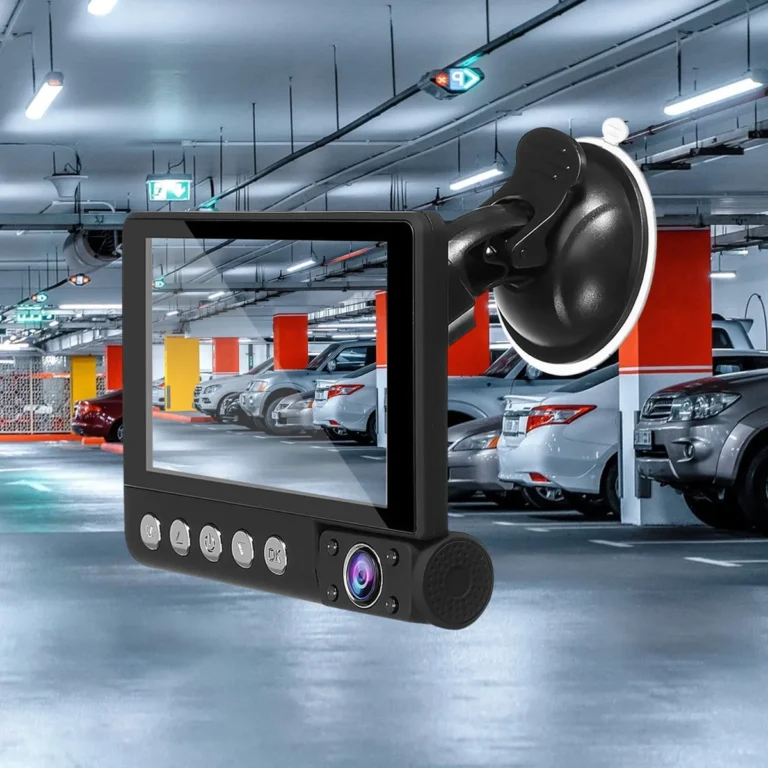
What dash cam do truckers use: Easy Guide
If you've ever wondered what dash cam do truckers use, the short answer is commercial-grade multi-channel systems built specifically for big rigs, not the same consumer units people stick in their cars. Long-haul drivers need cameras that can survive constant vibration, cabin heat above 140°F in summer, and overnight truck stop exposure.
The hardware is different too. Most truckers run dual-lens or three-channel systems with infrared cabin recording, capacitor-based power (not lithium batteries), and tamper-locked SD card housings. Per FMCSA windshield rules at 49 CFR §393.60, mounting placement matters as much as the camera itself.
The rest of this guide breaks down which features actually matter, which brands dominate, and how truckers wire these systems into their rigs.
Quick Answer
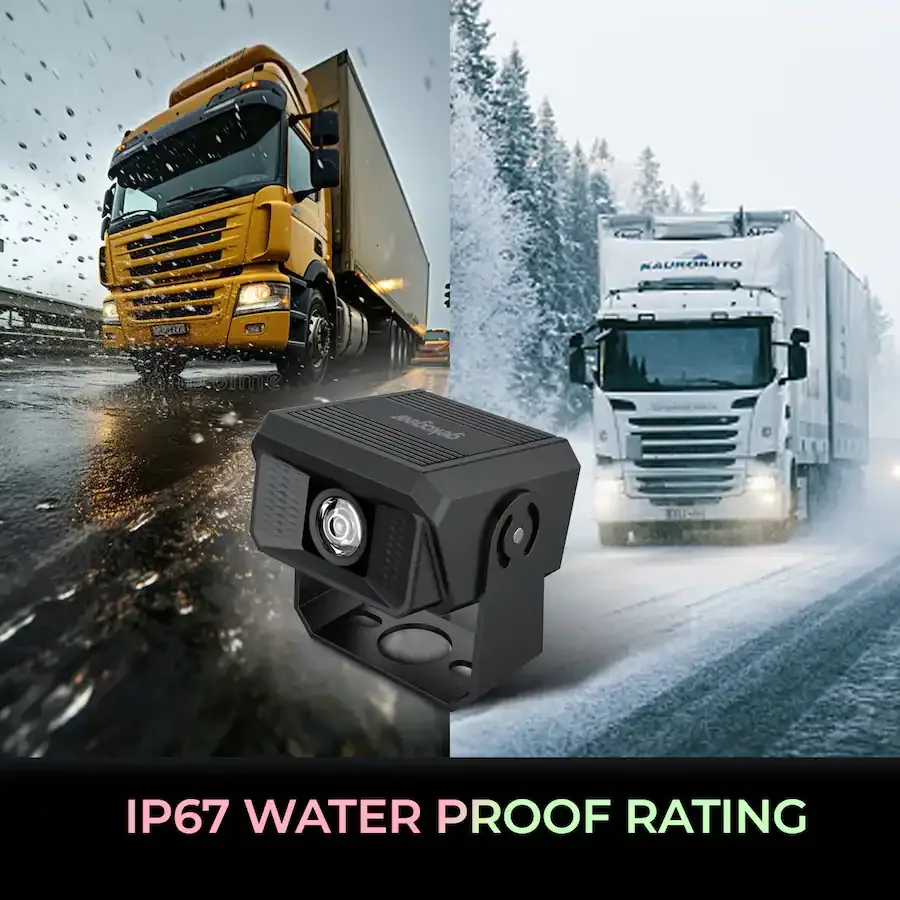
Truckers use commercial-grade, multi-channel dash cams, often dual or three-channel systems with infrared night vision, capacitor power, and hardwired installation. Common choices include Garmin dezlCam, Rand McNally OverDryve, BlackVue, Vantrue N5, and fleet systems from Samsara, Motive, or Lytx. These differ from consumer cams in heat tolerance, vibration resistance, and parking mode runtime.
Why Truckers Need a Different Kind of Dash Cam
A $60 Amazon dash cam might work in a sedan. It will not survive a commercial truck.
Here's the problem. Truck cabs hit 130, 160°F in summer sun. Lithium battery dash cams start swelling, dying, or catching fire at those temps.
The vibration from a class 8 diesel running 10 hours a day shakes consumer-grade mounts loose in weeks. Truckers park at truck stops for 10+ hours at a time, so they need true parking surveillance, not the 30-minute parking mode most consumer cams offer.
The features truckers actually need:
- Capacitor-based power rated to at least 70°C operating temperature
- Hardwiring kit connected to constant power, not just a 12V socket
- Tamper-resistant SD card slot to prevent theft or data loss
- Infrared cabin camera for night recording
- G-sensor tuned for heavy vehicle mass, since standard sensitivity won't trigger correctly
- Wide operating temperature range (, 20°C to 70°C minimum)
Per the FMCSA's commercial vehicle regulations, drivers also have to keep the windshield clear of obstructions, which rules out the typical rearview-mirror-mounted consumer placement.
The Real Difference Between Consumer and Commercial Truck Dash Cams
At a glance, the hardware looks similar. A lens, a processor, an SD card slot. But the internals tell a different story.
Consumer dash cams prioritize compact size, simple suction-cup mounting, and battery convenience. Commercial truck dash cams prioritize heat survival, long-term reliability, and legal-grade evidence chain.
| Feature | Consumer Cam | Commercial Truck Cam |
|---|---|---|
| Power source | Lithium battery or capacitor | Capacitor only (heat-rated) |
| Operating temp | 0°C to 60°C typical | –20°C to 70°C typical |
| Mounting | Suction cup or adhesive pad | Hardwired, often permanent |
| Channel count | 1 or 2 (front + rear) | 2 or 3 (front + cabin + rear) |
| Night vision | Basic low-light sensor | IR LEDs for cabin recording |
| Storage | 32–128GB | 256GB–1TB, often with lock |
| Parking mode | 30 min–8 hours | 24+ hours on hardwire |
| Vibration rating | Consumer-grade | Truck-rated or automotive spec |
In our research, owners who switched from a popular consumer unit (think Viofo or Garmin Mini) to a truck-rated system reported fewer SD card failures, zero heat shutdowns, and a marked improvement in nighttime footage quality. The price jump from $80 to $300+ pays for itself within the first incident that needs clean evidence.
What Truckers Look for in a Dash Cam
Most experienced OTR drivers we spoke with (via owner-operator forums, aggregate review patterns, and carrier fleet specs) prioritize the same handful of features. Here's the ranked list as of 2026.
1. Reliability Over Resolution
4K looks great in marketing materials. 1080p at 30fps is more than enough to read a license plate from 20 feet away in good light. Truckers overwhelmingly pick reliability over megapixels.
2. Heat Survival
Capacitor-based. Non-negotiable. Anything with a lithium battery is getting returned within a summer.
3. Dual or Three-Channel Coverage
A single front cam leaves blind spots. The cabin cam protects against fraudulent injury claims, and the rear cam captures rear-end collisions, which statistically are the most common commercial truck impact type.
4. Loop Recording and File Protection
When the G-sensor triggers, the footage needs to be locked immediately. Cheap cams overwrite crash footage. Good ones auto-save to a protected partition.
5. GPS and Speed Logging
Stamped GPS data turns footage into court-admissible evidence. Without it, attorneys have a harder time proving location and time.
6. Easy Footage Retrieval
Wi-Fi app transfer matters. If a driver has to pull the SD card, plug it into a laptop, and copy files at a truck stop, that footage is sitting unprotected in a stolen laptop.
7. Subscription-Free Local Storage
Many truckers avoid cloud subscription models (Samsara, Motive, Lytx) for solo rigs because the $30, 60/month per vehicle fee adds up fast. Fleet operators with company trucks often get those systems paid for, but owner-operators generally prefer one-time hardware purchases.
Front-Facing Cams for Long-Haul Routes
The front cam is the workhorse. It captures the road, traffic, weather, and any forward collision. For long-haul, the requirements are specific.
A wide field of view (FOV) of 140, 170° helps cover multi-lane highways and tight on-ramps. Below 130° and you'll miss side-swipe details. Above 170° and the image gets the fish-eye distortion that makes license plates unreadable at the edges.
Resolution sweet spot is 1080p at 30fps. A 60fps mode helps with fast-moving objects but chews through storage. Aggregate user reviews suggest 1080p/30fps strikes the right balance between clarity and SD card life.
HDR (High Dynamic Range) is worth the small premium. When you're driving into sunrise or sunset, the contrast blows out standard sensors. HDR balances the bright sky and the dark road so license plates stay readable in both.
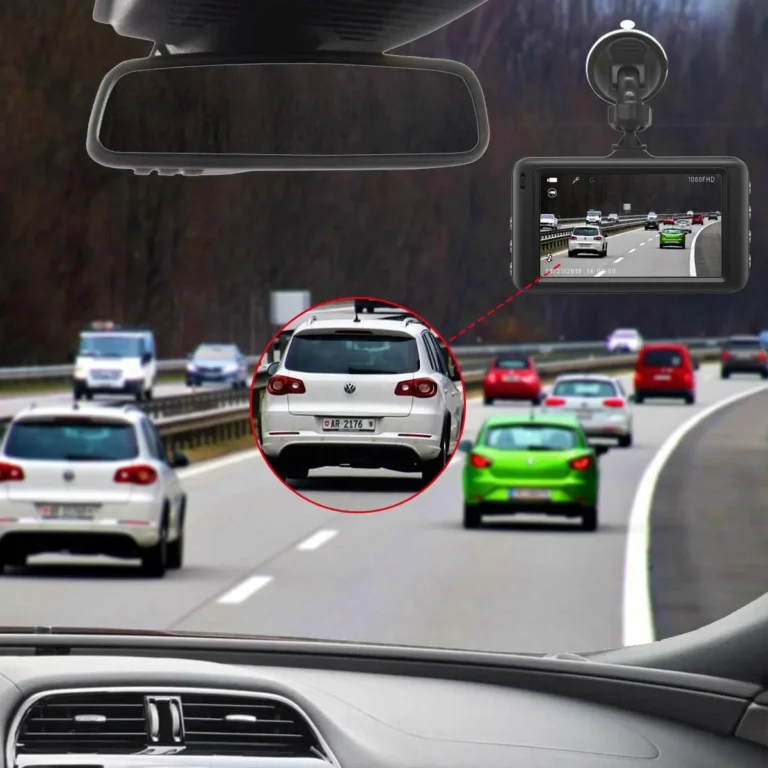
Mounting height matters more on a truck than a car. The higher cab position means the cam captures more sky and less hood. Mounting near the top of the windshield, just below the legal obstruction zone, gives the best road view while keeping the driver's sightline clear per FMCSA windshield mounting rules.
Popular front-only or front-primary options among truckers as of 2026:
- Garmin 67W (compact, GPS-stamped, capacitor-based)
- Thinkware F790 (1080p front, cloud-optional, slim form factor)
- Viofo A129 Pro (4K front, 1080p rear, budget-friendly)
- BlackVue DR970X (premium 4K, cloud-ready, hardwire kit included)
The front cam is the non-negotiable starting point. Everything else is layered on top based on what the driver and carrier need.
Driver-Facing and Dual-Cam Setups for In-Cab Visibility
Driver-facing cameras used to be controversial. In 2026, they're standard issue for most fleets, and even solo owner-operators are running them.
The value is straightforward. A cabin-facing cam with IR LEDs captures what happens inside the cab during a collision, a sudden swerve, or a "he was on his phone" claim. It also documents drowsiness, distraction, and any incident where a driver is falsely accused of behavior they didn't engage in.
Common dual-cam configurations:
- Front + cabin (most popular, covers 90% of incidents)
- Front + rear (good for box trucks and reefers with rear-load cargo)
- Front + cabin + rear (the full coverage setup)
IR illumination matters. Without it, the cabin cam records pitch-black footage at night. With 940nm IR LEDs (invisible to the human eye), the cam picks up the driver's face clearly even with the dome light off.
Audio recording is the flashpoint. Per state laws, one-party consent (you can record if you're part of the conversation) is the rule in most states, but two-party consent applies in California, Florida, Illinois, Maryland, Massachusetts, Montana, New Hampshire, Pennsylvania, and Washington. Fleet drivers typically get a written consent form at hiring, but owner-operators need to know their state's rules.
A good rule of thumb: if you drive into a two-party state, audio can be turned off without losing the value of the cabin video. The visual evidence still holds up.
Three-Channel Systems (Front + Cabin + Rear) for Full Coverage
Three-channel systems are the setup most professional long-haul drivers end up with. They cost more, but they close every major blind spot.
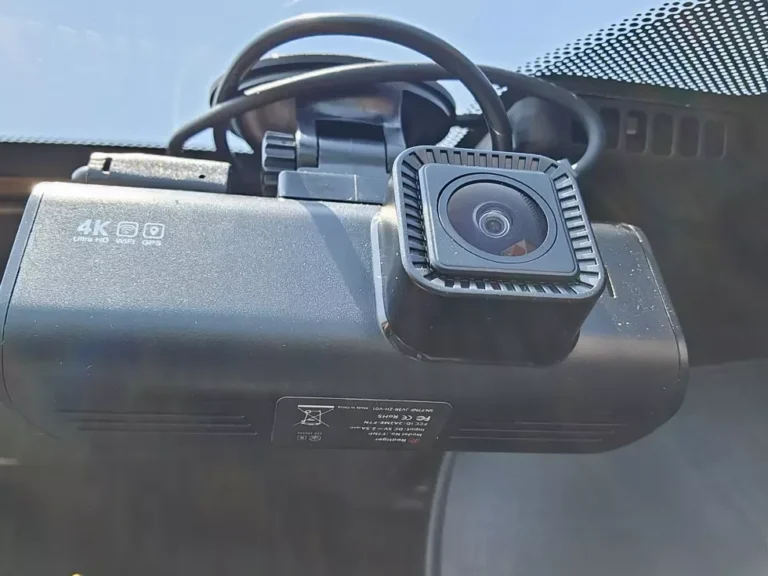
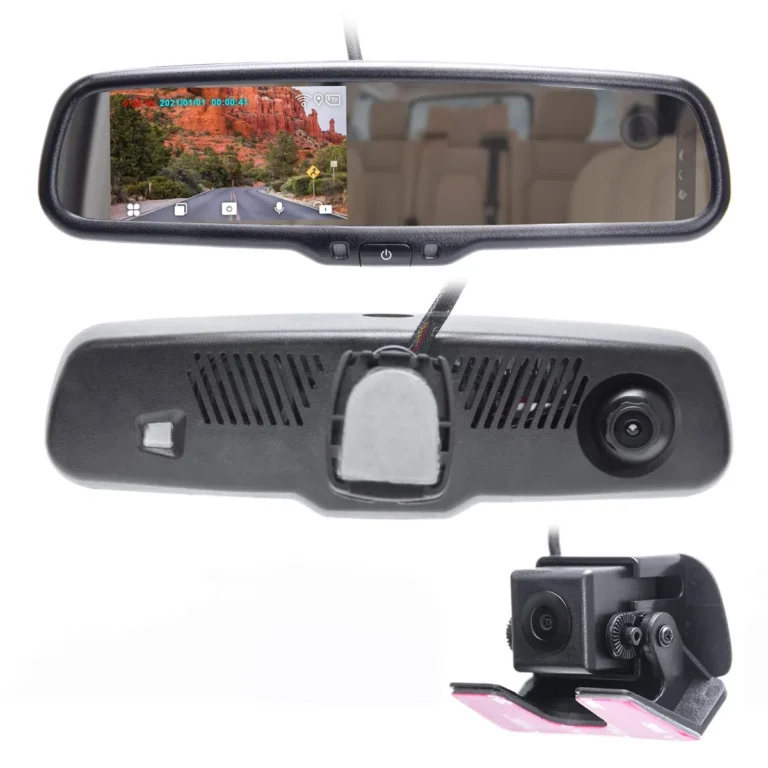
A typical three-channel rig looks like this: a front cam at the top of the windshield, a small cabin lens mounted on or near the rearview mirror stem, and a rear cam either on the back of the trailer or wired to the tractor's rear window. The front and cabin cams usually run on a single hardwired unit. The rear cam connects via a long coaxial cable, a wireless transmitter, or a magnetic trailer-mounted unit that pairs automatically when the trailer is hooked up.
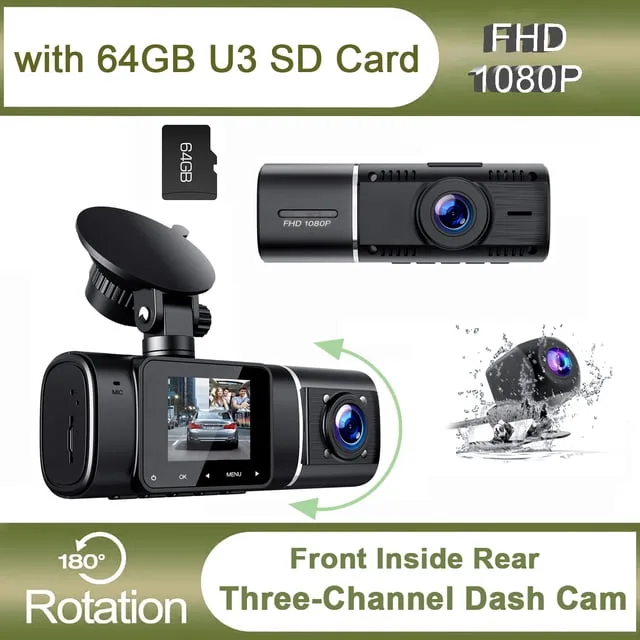
What three-channel systems capture that dual-cams miss:
- Rear-end collisions where the trailing vehicle claims you braked suddenly
- Trailer sway and lane departure events
- Cargo door openings at unsecured stops
- Side-swipe incidents from the right blind spot
- Hit-and-runs in truck stop lots
Wireless rear trailer cams are the biggest convenience upgrade of the past few years. Older systems required running a 30+ foot cable through the trailer, which is a four-hour job. Newer units use a magnetic mount and a rechargeable battery, so swapping trailers takes seconds instead of hours.
Storage triples with three channels. A 1080p three-channel system chews through 30, 45GB per hour. That's a 512GB or 1TB high-endurance SD card as the practical minimum.
Format the card every 30, 60 days to prevent file system corruption.
Top Dash Cam Brands Truckers Trust
Brand recognition in the trucker dash cam space doesn't match the consumer market. You won't see Nextbase or Rexing topping the lists. The brands that dominate truck stops and owner-operator forums are the ones built for the workload.
Garmin (dezlCam and 67W series): GPS accuracy is best-in-class, which matters for stamped evidence. Capacitor-based across the lineup. The dezlCam integrates with Rand McNally-style trucking navigation.
Rand McNally (OverDryve and DashCam 500): Built for the trucking audience specifically. Bundled with trucking GPS units. The OverDryve series adds a tablet-style display, which is useful for ELD and dispatch apps.
BlackVue (DR970X, DR770X): Premium tier, Korean engineering, exceptional low-light performance. Cloud features are strong, but subscription-based. Truckers with a tech-forward setup tend to gravitate here.
Vantrue (N5, N4, S2): Three-channel pioneer. The N5 remains one of the most popular three-channel units on the market in 2026 because the cabin IR performance and 4K front resolution hit a strong value point.
Thinkware (F790, Q1000, U3000): Korean brand with rock-solid reliability. Parking mode is a standout feature. Their hardwire kits are well-engineered for the constant-power setup truckers need.
Cobra (SC series): U.S. brand, mid-priced, easy U.S.-based customer support. Popular with owner-operators who want domestic warranty service.
Samsara, Motive, Lytx: These are fleet platforms, not standalone dash cams. They combine AI dash cams, ELDs, GPS fleet tracking, and driver coaching in one subscription. Better fit for company drivers than solo owner-operators.
For most owner-operators, the sweet spot as of 2026 sits with Vantrue N5, Thinkware U3000, or BlackVue DR770X. Each one has a different strength (resolution, parking mode, cloud), but all three handle the heat, vibration, and runtime demands of a commercial truck.
Comparing Consumer vs Commercial-Grade Truck Cams
A consumer cam at 4K resolution sounds impressive. In a truck, it falls short on three things that actually matter.
First, heat. The best 4K consumer cams use Ambarella or Novatek chips that throttle above 60°C. A parked truck cab in Arizona in July hits 70°C+ on the dashboard.
Throttled chips drop frame rate, corrupt files, and eventually die. Commercial-grade cams use industrial-rated components rated to 85°C+.
Second, vibration. A truck's engine and road vibration is significantly higher than a passenger car. Consumer mounts loosen.
The lens shifts over time, blurring footage. Commercial cams use locking mounts, often bolted to the headliner or A-pillar.
Third, runtime. Consumer cams are designed for 1, 2 hour drives. Commercial cams are designed to record 10+ hours a day, 5, 6 days a week, for years.
SD card write cycles matter. Capacitor reliability matters. Heat-rated components matter.
The price difference tells the same story. A 4K consumer cam runs $150, 250. A commercial-grade three-channel system runs $400, 800.
Fleet AI systems add $30, 60/month per vehicle on top.
For a driver who puts 120,000 miles a year on a rig, the commercial-grade system pays for itself in one prevented fraudulent claim or one exonerated not-at-fault accident. The math is not close.
Hardwired, Capacitor-Based, and Cloud-Connected Setups
The way a dash cam gets power defines how useful it actually is on a truck. Three approaches dominate, and each one fits a different driver.
Hardwired setup means splicing the cam into the truck's fuse box, usually to a constant-power circuit. The engine-on and engine-off distinction lets the cam switch into parking mode automatically. This is the only way to get true 24+ hour parking surveillance.
Per most manufacturer installation guides, a hardwire kit with low-voltage cutoff (set to 11.8V for a 12V system) protects the truck's batteries from full drain.
Capacitor-based power replaces the lithium battery with a supercapacitor that handles heat and charge cycles better. Every commercial-rated cam in 2026 ships with a capacitor. Manufacturers specify operating temps up to 70°C, with some rated to 85°C.
No lithium means no swelling, no fire risk, and no summer failures.
Cloud-connected setups add a 4G LTE module that streams footage live to a phone or fleet dashboard. Samsara, Motive, and Lytx all work this way. The value is real-time incident alerts, remote footage pull, and live GPS tracking.
The cost is the monthly subscription, which can run $30, 60 per vehicle. For solo owner-operators, the math usually doesn't pencil out. For fleet operators, it replaces several back-office roles.
Most truckers end up with a hybrid: hardwired capacitor-based front unit plus a Wi-Fi-only app for footage retrieval. Cloud gets skipped unless the carrier requires it.
Dash Cam Specs That Matter for Commercial Trucks
Specs lists are full of marketing fluff. Here's what actually matters for a truck.
Resolution: 1080p is the minimum useful. 1440p is the sweet spot. 4K is nice but the file sizes aren't worth it unless you're reviewing footage on a 4K monitor.
Frame rate: 30fps is standard. 60fps helps with fast-motion clarity but doubles storage.
Field of view: 140, 160° is the practical range. Below 130° misses side impacts. Above 170° distorts edges.
Operating temperature:, 20°C to 70°C minimum. Anything narrower won't survive winter in North Dakota or summer in Texas.
Storage support: 256GB minimum, 512GB preferred for three-channel systems. Look for high-endurance cards rated for continuous write.
G-sensor sensitivity: Adjustable, with a low setting for heavy vehicles. Too sensitive and every railroad crossing locks a file. Too low and a real impact doesn't trigger.
GPS logging: Built-in preferred. External GPS modules add another failure point.
Wi-Fi: Dual-band (2.4 + 5 GHz) for faster file transfer. Single-band works but feels slow with large video files.
Parking mode current draw: Look for under 300mA in parking mode. Anything higher drains the battery bank overnight.
Capacitor vs battery: Capacitor, every time, on a commercial truck.
Night Vision and Low-Light Performance on Rural Routes
Most accidents happen at night. Most truck-stop break-ins happen in the dark. Night vision is not optional.
Sensor size matters more than megapixels for low light. Sony STARVIS sensors are the industry standard for 2026, found in most premium truck cams. STARVIS 2 is the newer version, with back-illuminated pixel tech that doubles sensitivity.
Infrared illumination covers the cabin cam. A 940nm IR LED is invisible to the human eye but lights up the cabin in total darkness. 850nm IR is brighter but emits a faint red glow. Most truckers prefer 940nm for discretion.
For the front cam, HDR is more important than IR. Driving into sunrise or sunset creates extreme contrast. A standard sensor blows out the sky and blacks out the road.
HDR blends multiple exposures so both stay visible.
Aggregate review patterns show that drivers running dark rural routes (Montana, Wyoming, West Texas) prioritize front-cam low-light performance above resolution. License plate readability at 30+ feet in pitch dark is the real benchmark.
Parking Mode and Overnight Truck Stop Security
Truck stops are high-risk. Catalytic converter theft, break-ins, and cargo theft are routine problems. A dash cam in parking mode is the cheapest insurance against all three.
There are three common parking mode types:
- Motion-activated records when something moves in the frame. Saves storage but misses slow approaches.
- Time-lapse records a frame per second continuously. Uses more storage but captures everything.
- Buffered records at low frame rate continuously and switches to full recording on impact or motion. Best of both, but power-hungry.
A hardwired setup with a low-voltage cutoff at 11.8V typically supports 24, 48 hours of parking mode before the truck batteries dip below safe levels. That's enough for a 34-hour reset and most weekend layovers.
One practical note from the field: if you're parking at a high-theft lot (California, Tennessee, certain parts of Georgia), mount the front cam low enough that thieves see it. A visible cam deters break-ins. A hidden cam captures them, but the cargo is already gone.
Installation and Wiring on a Semi
A clean install on a semi isn't optional. Loose wiring is a DOT inspection issue and a fire hazard.
The standard install path:
- Mount the front cam at the top of the windshield, behind the rearview mirror, just below the legal obstruction zone.
- Route the power cable along the headliner, down the A-pillar, into the fuse box.
- Tap a constant-power fuse (often the dome light or radio memory fuse) and a switched-power fuse.
- Ground the hardwire kit to a clean chassis bolt.
- Run the rear cam cable along the headliner, down the back wall, and out to the trailer or rear window.
- Mount the rear cam and secure all wiring with zip ties every 12, 18 inches.
- Test parking mode by leaving the truck off for 30 minutes and confirming the cam keeps recording.
Tools needed: fuse tap kit, trim removal tool, wire crimper, zip ties, multimeter, and a 10mm socket for the ground bolt. Budget 2, 4 hours for a clean three-channel install on a Class 8 tractor.
If the install feels like too much, most truck stops and truck accessory shops (TA, Pilot, Love's) offer dash cam install services for $150, 300. Worth it if you're not confident with automotive 12V wiring.
Audio Recording Laws and FMCSA Windshield Rules
The legal side of dash cams trips up a lot of drivers. Two separate rule sets apply.
Audio recording falls under state wiretapping laws. One-party consent means you can record a conversation you're part of without telling the other person. Eleven states require two-party consent: California, Florida, Illinois, Maryland, Massachusetts, Montana, New Hampshire, Pennsylvania, and Washington, plus Washington D.C.
Audio in those states without consent can be a criminal offense. Video without audio is always legal in the cab of a commercial vehicle you own or operate.
Windshield mounting falls under FMCSA rules at 49 CFR §393.60. The general rule: no obstruction to the driver's clear sightline. In practice, most states follow a 5-inch rule, which means nothing mounted in the bottom 5 inches or the top 5 inches of the windshield, measured from the top of the steering wheel to the bottom of the windshield and from the top of the windshield down.
Some states vary. California, Pennsylvania, and a handful of others have stricter rules.
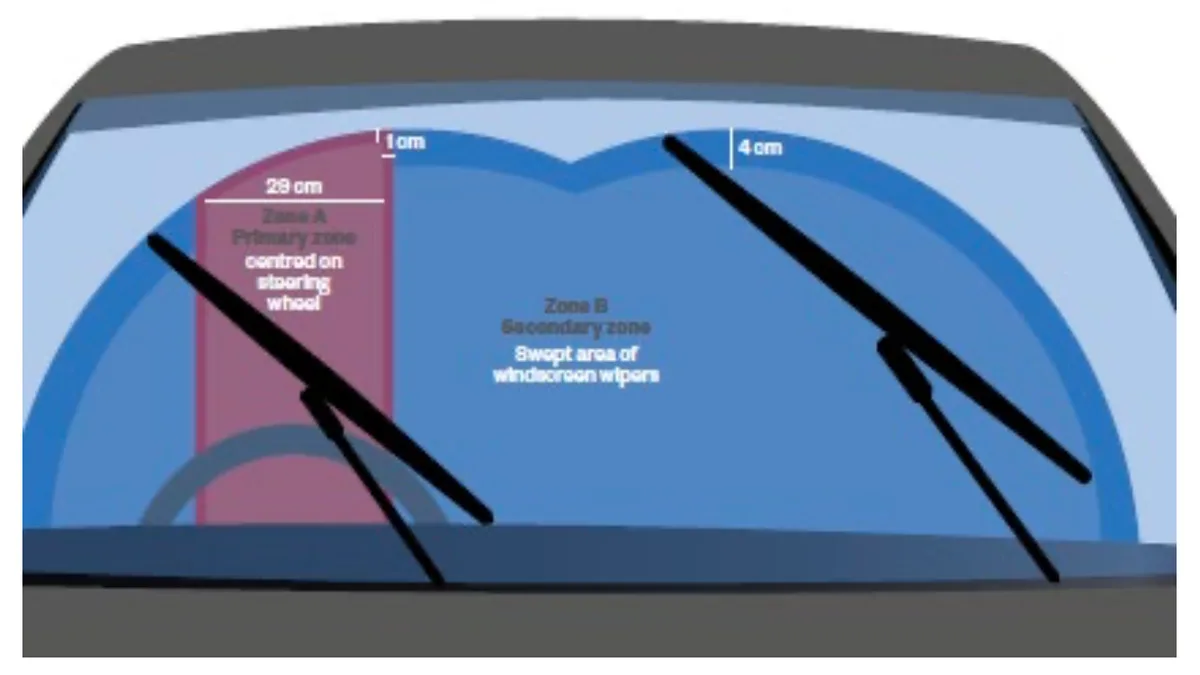
A cam mounted behind the rearview mirror, tucked just under the headliner, almost always passes inspection. A cam stuck to the center of the windshield will get a ticket in most states.
Common Dash Cam Problems Truckers Run Into
Even good setups hit problems. Here are the ones that come up most in owner-operator forums and verified buyer feedback.
SD card corruption is the number one issue. Constant loop recording wears out standard cards in weeks. The fix is high-endurance cards (SanDisk Max Endurance, Samsung Pro Endurance) formatted every 30, 60 days.
Heat shutdowns happen on lithium battery cams in summer. The fix is replacement with a capacitor-based unit. No other workaround.
Power drain in parking mode kills truck batteries overnight. The fix is a hardwire kit with low-voltage cutoff set correctly for the battery bank.
G-sensor misfires lock every file when crossing rough railroad tracks. The fix is dropping the sensitivity one notch.
Rear cam signal loss happens on trailer swaps with wireless setups. The fix is re-pairing the trailer cam, usually a button press.
Theft of the SD card is more common than theft of the whole cam. The fix is a locked or tamper-resistant SD slot, plus a security screw mount.
Firmware bugs that don't get patched. The fix is buying from a brand with active firmware updates, not a no-name Amazon seller.
Dash Cam Pricing and What to Expect
Pricing in 2026 splits into three tiers.
| Tier | Hardware Cost | Subscription | Best For |
|---|---|---|---|
| Entry consumer (not recommended for trucks) | $50–150 | None | Personal vehicles only |
| Mid-tier commercial | $200–500 | None | Owner-operators, single rigs |
| Premium three-channel | $500–1,500 | None | Serious OTR, multi-rig |
| Fleet AI platform | $500–1,000 hardware | $30–60/month per vehicle | Fleet operators, carriers |
Add to hardware: $30, 80 for a high-endurance SD card, $20, 50 for a hardwire kit, and $150, 300 for professional installation if needed. A complete mid-tier setup lands around $400, 700 out the door.
Insurance discounts often offset the cost. Most major trucking insurers offer 5, 15% off commercial vehicle premiums with a documented dash cam. That math works out to hundreds of dollars a year on a typical policy.
Insurance Discounts and Accident Evidence Benefits
Insurance is where the dash cam starts paying for itself.
Most commercial trucking insurers (Progressive Commercial, GEICO Commercial, Northland, Canal Insurance) offer dash cam discounts in 2026, typically 5, 15% on the liability premium. The discount varies by carrier and by how the cam is used. AI-powered fleet cams with driver behavior scoring get the largest discounts.
Standalone units with GPS stamps get smaller ones.
The bigger financial value is claim avoidance. Per FMCSA-reported crash data, roughly 70% of commercial truck accidents are not the truck driver's fault, mostly rear-enders and side-swipes from four-wheelers. A dash cam with GPS stamp and timestamp routinely flips a $50,000+ claim into a no-fault determination.
The cost of the cam is recovered in the first incident it documents.
Beyond insurance, dash cam footage is used for:
- Cargo damage disputes (proof of in-transit handling)
- Driver coaching (showing near-miss events)
- CSA score defense (disputing unsafe driving violations)
- Contract dispute resolution (pickup/delivery time stamps)
For owner-operators, the cam basically functions as a portable witness. For fleet drivers, it's career insurance.
AI-Powered Fleet Cams vs Standalone Trucker Cams
This is the line in the sand for 2026. AI-powered fleet cams and standalone trucker cams serve different buyers.
AI-powered fleet cams (Samsara, Motive, Lytx, Verizon Connect) include forward-facing driver monitoring that detects phone use, drowsiness, smoking, and seatbelt violations. The footage goes to a fleet manager who can coach drivers in real time. The value is fleet-wide safety scoring and liability reduction.
The cost is the monthly subscription and the privacy trade-off.
Standalone trucker cams (Vantrue, Thinkware, BlackVue, Garmin) record footage locally and let the driver control access. No fleet manager is watching. No AI is grading every mile.
The driver pulls footage when they need it. Lower cost, more privacy, less ongoing coaching.
For a company driver, the AI system is usually installed by the carrier. There's no opt-out in most cases. For an owner-operator, the standalone system is almost always the right call.
The monthly fee savings over five years pays for the hardware twice.
There's a hybrid middle ground: standalone cams with optional AI features. Thinkware's U3000 has ADAS features (forward collision warning, lane departure) without a subscription. Vantrue's N5 includes basic driver fatigue alerts.
These give owner-operators some AI benefit without the ongoing cost.
Best Dash Cam Pick by Trucker Type
Different drivers need different setups. Here's the right pick by use case as of 2026.
Long-haul OTR owner-operator (solo rig): Vantrue N5 three-channel, hardwired, 512GB high-endurance SD card, with magnetic wireless trailer cam. Total cost around $550. Best balance of coverage, reliability, and one-time cost.
Company driver (fleet truck, no install choice): Whatever the carrier installed, usually Samsara or Motive. Make sure to understand the fleet's dash cam policy and your own privacy rights. Request footage copies of any incident that affects your record.
Regional / LTL driver: Thinkware F790 or U3000 dual-channel. Compact, low-profile, capacitor-based. Hardwired for parking mode.
Total cost around $350.
Owner-operator with hazmat or high-value cargo: BlackVue DR970X with cloud connectivity. Live streaming, tamper-locked storage, best-in-class low-light. Higher upfront cost but the cloud access is worth it for high-risk loads.
Lease-purchase driver on a budget: Garmin 67W front-only, hardwired, no subscription. Around $200 total. Single cam is a compromise, but it covers the most common incident type (rear-enders) and stays budget-friendly.
Refrigerated / reefer driver: Three-channel with extra emphasis on the rear cam. Cargo temperature and load integrity claims are common disputes. Vantrue N5 or BlackVue DR770X.
In every case, the priorities stay the same: capacitor-based, hardwired, GPS-stamped, and high-endurance storage. The brand matters less than hitting those four benchmarks.
Maintenance and Long-Term Optimization
Dash cams are mostly "set and forget," but a few habits keep them recording for years. Format the SD card every 30, 60 days to clear corrupted sectors. Wipe the windshield and cam lens weekly so bug splatter and dust don't blur footage.
Check the power cable and mount every oil change for loosening. Update the firmware when the manufacturer pushes a release; most 2026 models update over Wi-Fi through the app. Replace the SD card every 1, 2 years, even if it seems fine, because flash memory degrades under constant write cycles.
Frequently Asked Questions
Do truckers really need a different dash cam than car owners?
Yes. Consumer dash cams fail in truck cabs above 60°C, loosen under heavy vibration, and lack the parking mode runtime truckers need for overnight truck stops. Commercial-grade cams use capacitors, locking mounts, and hardwire kits built for the workload.
Where should a dash cam be mounted on a semi?
Behind the rearview mirror, just below the top 5 inches of the windshield. This position keeps the driver's sightline clear per FMCSA rules and gives the cam the best forward view of the road.
Can a dash cam record while the truck is off?
Yes, with a hardwire kit connected to constant power. Most hardwired setups support 24, 48 hours of parking mode before the low-voltage cutoff protects the truck batteries from full drain.
Are dash cam recordings admissible in court?
Generally yes, if the footage is timestamped, GPS-stamped, and the chain of custody is intact. An unbroken recording with metadata is treated as reliable evidence in most U.S. jurisdictions.
Do dash cams lower truck insurance premiums?
Most commercial insurers offer 5, 15% off liability premiums for documented dash cam use. The discount varies by carrier, but the cost of a mid-tier dash cam setup is usually recovered within the first year of premium savings.
How long do dash cam SD cards last in a truck?
High-endurance cards (SanDisk Max Endurance, Samsung Pro Endurance) typically last 1, 2 years under continuous loop recording. Standard cards fail within weeks. Format the card every 30, 60 days to extend life.
Is audio recording legal in a commercial truck?
In one-party consent states, yes. In two-party consent states (California, Florida, Illinois, Maryland, Massachusetts, Montana, New Hampshire, Pennsylvania, Washington, plus D.C.), audio recording without consent can be a criminal offense. Video without audio is always legal in a vehicle you own or operate.
Final Recommendation: Picking the Right Dash Cam for Your Rig
Start with the four non-negotiables: capacitor-based power, hardwired installation, GPS-stamped footage, and a high-endurance SD card. Once those are locked in, choose channel count based on your routes. Solo regional work does fine with a dual-cam.
Long-haul and hazmat justify a three-channel setup. Skip cloud subscriptions unless the carrier requires them. For most owner-operators in 2026, the Vantrue N5, Thinkware U3000, or BlackVue DR770X hits the right balance of price, durability, and evidence quality.
Spend the $400, 700 once, and the cam will pay for itself the first time it documents a not-at-fault incident.