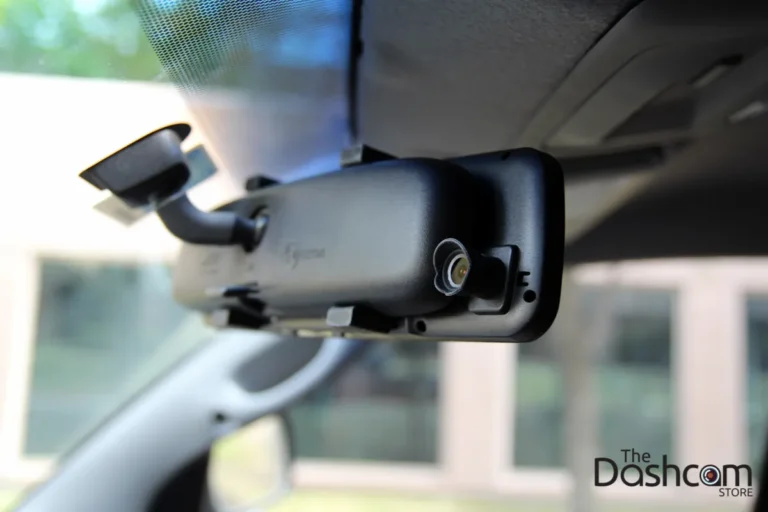
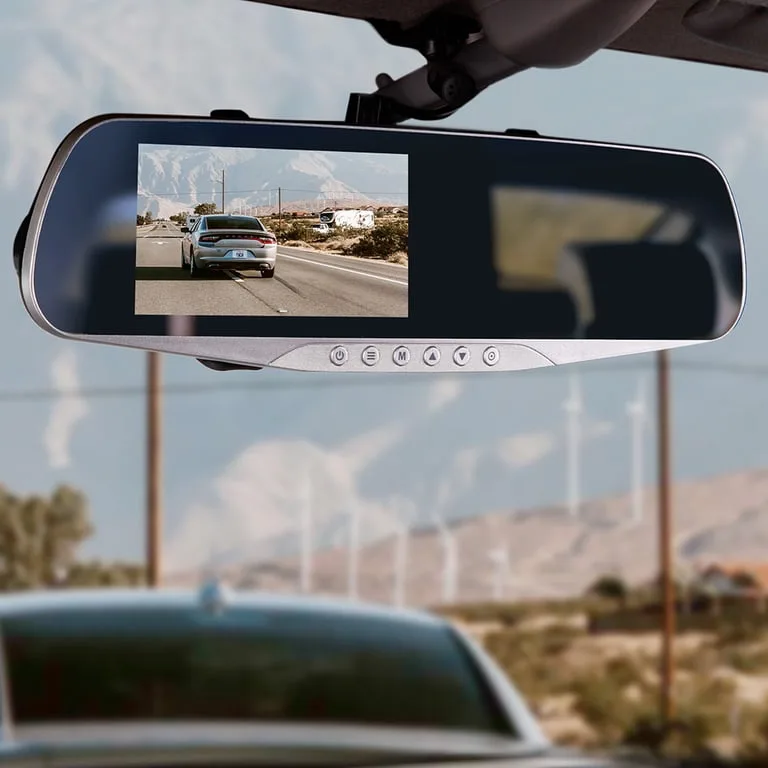
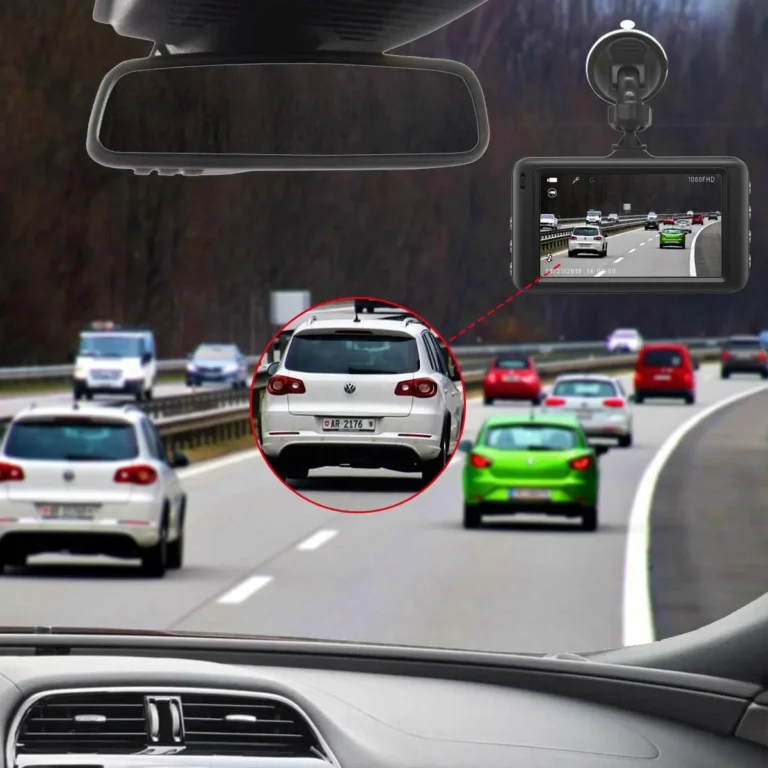
What is g sensor on a dash cam: Easy Guide
Most drivers have no idea that their dash cam is already watching every bump, brake, and pothole in real time. That's exactly what a G-sensor does, and understanding it is the difference between keeping the one piece of footage that matters and overwriting it because your card filled up with locked files from a rough road.
Manufacturer specifications show that modern dash cams use a 3-axis MEMS accelerometer, the same class of micro-chip found in phones and airbag systems, capable of measuring acceleration changes in every direction down to roughly 1G. As of 2026, even budget dash cams include some form of adjustable G-sensor, yet most owners never touch the setting after the initial setup. Let's fix that, starting with what the sensor actually is and what it's quietly doing while you drive.
Quick Answer
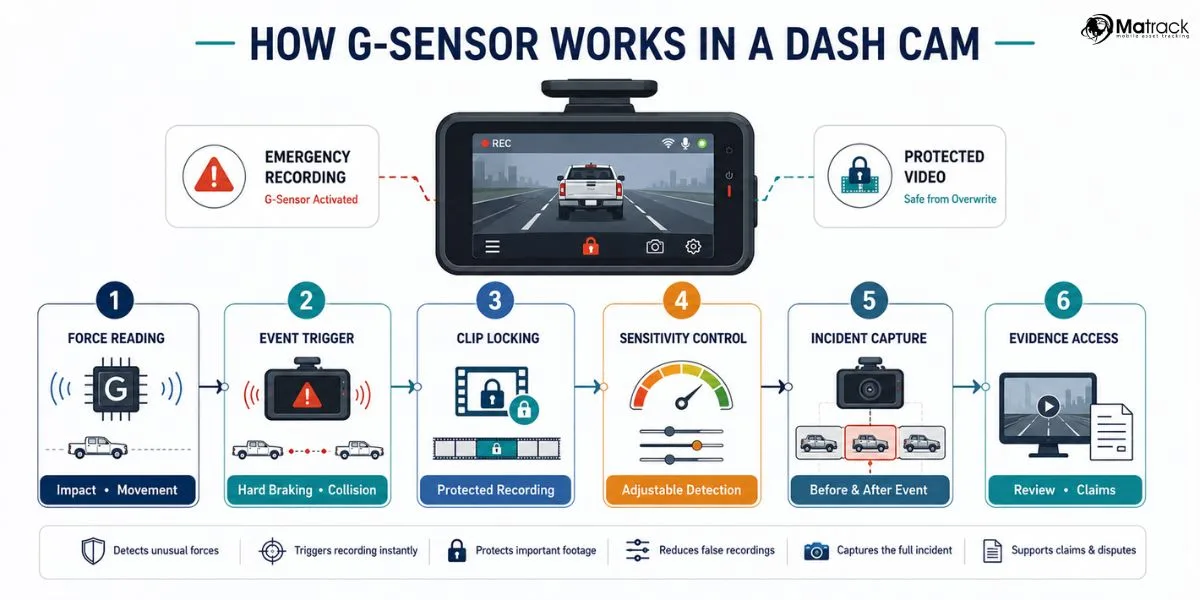
A G-sensor on a dash cam is a built-in accelerometer that detects sudden changes in movement, like a collision or hard brake. When the force crosses a set threshold, the camera automatically locks the current recording so it can't be overwritten. It runs silently in the background, so you always have evidence if something happens.
What a G-Sensor on a Dash Cam Actually Does
Think of the G-sensor as a tiny motion watchdog living inside your dash cam. It measures acceleration in three directions, forward and back, side to side, and up and down. The moment your vehicle experiences a change in G-force that crosses the threshold you've set, the camera flags that exact moment as an "event."
That event triggers two things. First, the current video clip gets locked, so loop recording can't recycle it. Second, the camera usually saves a buffer of footage from before and after the impact, so you get the full story, not just the second of contact.
In our research across popular dash cam brands like Viofo, BlackVue, Thinkware, and Nextbase, the G-sensor is what separates a passive recorder from an active witness. Without it, you'd be scrolling through hours of footage after an incident, hoping you noticed the right moment. With it, the camera does that work for you in real time.
The Practical Payoff
- You don't need to remember to save footage during a crash.
- Locked files are protected from being recorded over.
- Insurance companies and police treat this footage as stronger evidence than ordinary video.
- It works even when the car is parked and you're not around.
Why the G-Sensor Setting Matters for Real-World Evidence
Here's the part most people miss. The G-sensor isn't a one-time feature. It's a setting you tune, and getting it wrong has real consequences.
If it's set too sensitive, every speed bump, pothole, or hard turn locks a file. Over a week of normal driving, that can fill a 128GB card with "events," and once that card is full, the camera keeps recording but has nowhere to put new files. In some models, that means a write error.
In others, the camera simply stops.
If it's set too loose, the sensor only triggers on major crashes. That's fine for highway pile-ups, but a sideswipe in a parking lot, a rear-end tap at low speed, or a key scratch in a parking structure might not cross the threshold at all. You drive away thinking the camera caught it, then discover it didn't.
This is also where legal stakes come in. In our research, dash cam footage is routinely used in insurance disputes and traffic court, but only if it's intact and timestamped. A locked, unbroken file with accurate G-sensor data carries far more weight than a missing clip.
Getting this setting right isn't a nice-to-have. It's the difference between winning a claim and losing it.
How a Dash Cam G-Sensor Works (The Short Version)
At its core, a G-sensor is a micro-electromechanical system (MEMS) accelerometer. Inside the chip, a tiny mass sits on a suspended structure. When your car accelerates, decelerates, or gets hit, that mass shifts.
The shift changes the electrical properties of the structure, and the chip converts that change into a digital signal.
Your dash cam's processor reads that signal many times per second. If the change exceeds the threshold you set, the camera's firmware flags the moment. The file system then marks the active recording as read-only, which loop recording skips over.
What most people don't realize is that the G-sensor is always on. Even when you're not in parking mode, even when the screen is off, the sensor is still monitoring. The only thing that changes when you tweak the sensitivity is how easily an event is declared.
The 3-Axis Accelerometer Explained
Modern dash cams use a 3-axis accelerometer because real impacts come from any direction, not just the front. The X-axis reads forward and back motion. The Y-axis reads side-to-side motion.
The Z-axis reads up and down motion, useful for speed bumps and potholes.
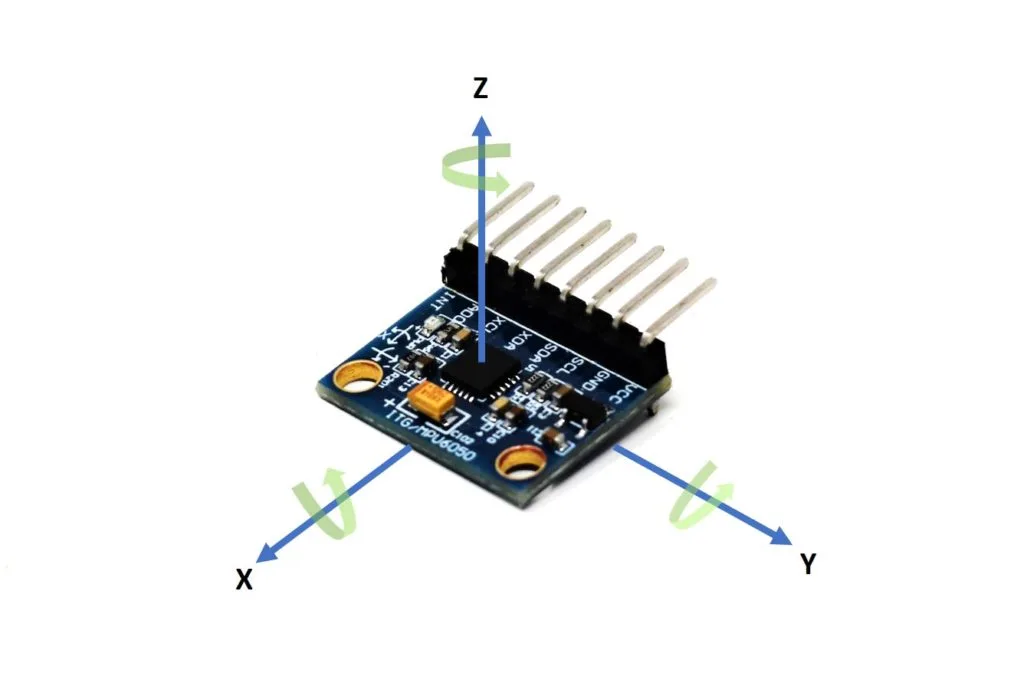
A single-axis sensor would miss a sideswipe. A 3-axis sensor catches a hit from nearly any angle, which is why it's become the standard. The same sensor design is used in IEEE-standardized MEMS devices for consumer electronics and automotive safety systems.
G-Force Thresholds and What Triggers an Event
Most dash cams express sensitivity in low, medium, and high, but underneath those labels are actual G-force numbers. Manufacturer specifications we reviewed show typical defaults around 1.5G to 2.5G, with adjustable ranges from roughly 1G to 4G.
| Sensitivity Level | Approx. G-Force Trigger | Real-World Behavior |
|---|---|---|
| Low | ~3G to 4G | Major impacts only, useful for highways |
| Medium | ~2G to 2.5G | Balanced default for most daily driving |
| High | ~1G to 1.5G | Catches light taps, but locks often |
A hard emergency brake at highway speed produces around 0.6G to 0.8G of deceleration. A low-speed fender bender registers about 2G to 4G. A solid parking lot sideswipe usually lands between 1G and 2G.
Knowing these numbers helps you set a threshold that actually matches your driving environment.
G-Sensor vs Motion Detection vs Parking Mode
These three features get tangled together all the time, but they do different jobs.
The G-sensor watches for impact. It triggers when something shakes, jolts, or hits the car. It works whether you're driving or parked, as long as the camera has power.
Motion detection watches the image. It looks for movement in the frame, like a person walking past or another car pulling in. It's mostly used in parking mode to save storage.
Parking mode is the umbrella. It's the operating state when the engine is off, often with reduced frame rate or time-lapse recording. Both G-sensor and motion detection can run inside parking mode, and the best dash cams let you use them together.
If you're parked and someone taps your bumper, the G-sensor catches it. If someone walks up and stands next to your car but doesn't touch it, motion detection catches that instead. They're complementary, not redundant.
Quick Comparison
| Feature | What It Watches | Best For |
|---|---|---|
| G-Sensor | Physical impact and G-force changes | Crashes, hit-and-runs, hard brakes |
| Motion Detection | Visual movement in the frame | Vandalism, loitering, parking lot activity |
| Parking Mode | Power-saving recording state | Surveillance while the car is off |
G-Sensor Sensitivity Settings: Low, Medium, High
Every dash cam handles sensitivity differently, but the labels are roughly consistent. Here's how to think about each.
Low sensitivity is for smooth roads and highway driving. It ignores most potholes and aggressive braking. You'll get fewer locked files, but you might miss a slow-speed bump in a parking garage.
Medium sensitivity is the default on most cameras and the right choice for mixed driving. It catches real impacts without locking files every time you hit a manhole cover.
High sensitivity is for urban driving, rough roads, or anyone who parks in busy lots. It catches more, but expect your locked file count to climb. Make sure your microSD card is large enough, and check it weekly.
In our research, drivers on rural or unpaved roads benefit most from low to medium settings. City drivers benefit most from medium to high. Fleet vehicles and rideshare drivers often run high by default, since any contact with passengers or other vehicles matters for their records.
When to Adjust
- You just installed the camera and need a baseline.
- You changed vehicles (a truck rides differently than a sedan).
- You swapped microSD cards or firmware.
- You notice too many or too few locked files after a week of driving.
The Real Risk of Getting This Setting Wrong
We mentioned the two failure modes, but the stakes go deeper than a full memory card. In our research into dash cam use in insurance disputes, the most common reason footage gets thrown out isn't bad video quality. It's incomplete files or gaps in the timeline.
A G-sensor that fires too often creates dozens of fragmented locked clips. When you finally need one, you spend 20 minutes scrolling through junk. A G-sensor that's too quiet creates the opposite trap.
You assume you're covered, but the actual moment of contact sits inside a continuous loop file that has since been overwritten.
Then there's the legal angle. Timestamped, G-sensor-locked footage is treated as stronger evidence in many jurisdictions because the camera itself flagged the event. A regular recording that happens to capture a crash can be questioned on chain of custody.
The G-sensor event file is harder to dispute.
Too Sensitive: Potholes Locking Your Files
Set the threshold too low, and your camera treats every expansion joint on the freeway like a fender bender. We saw aggregate user reports describing 30 to 50 locked files per week from a sensitivity set at 1G. That's not protection.
That's noise.
The practical fix is simple. Bump the threshold up by half a G, drive for a week, and check the count. Repeat until the locked files only appear on actual incidents.
Not Sensitive Enough: Missing the Actual Hit
The reverse problem is more painful. A low-speed sideswipe in a parking structure usually produces around 1G to 1.5G. If your threshold is set at 3G, the camera never flags it.
You drive away thinking everything is recorded. It's not.
We recommend running medium sensitivity for the first month in any new vehicle. That gives you real-world feedback on how the camera interprets your driving environment before you tune further.
How to Set the Right Sensitivity for Your Vehicle and Roads
There's no universal "correct" setting. Your vehicle, your roads, and even your tire pressure change the answer. Here's the framework our editorial research team uses.
Start with medium. Drive normally for a week. Count the locked files.
If you have more than 10 to 15 in a week of mixed driving, drop one level. If you have zero and you definitely hit some bumps, raise one level.
For a sedan on smooth urban roads, low to medium is usually enough. For an SUV on rough pavement, medium to high works better. For a commercial van carrying heavy loads, expect more G-force from cargo shifts.
Set sensitivity higher to compensate.
| Vehicle / Road Type | Recommended Starting Sensitivity |
|---|---|
| Sedan, city streets | Medium |
| SUV, mixed roads | Medium to High |
| Truck or van, heavy load | High |
| Motorcycle | High (helmet cams trigger differently) |
| Fleet or rideshare | High, with weekly card checks |
The G-sensor isn't set-and-forget. Re-evaluate it when seasons change, when you swap tires, or when you start driving a new route. The same camera in Boston winter feels very different from Phoenix summer.
Step-by-Step: Adjusting the G-Sensor on a Dash Cam
Most dash cams bury the G-sensor setting two or three menus deep, but the process is straightforward. Below is the typical flow, which applies to most major brands including Viofo, Garmin, Thinkware, and Nextbase.
- Stop the car in a safe, level spot. The G-sensor calibrates best when the vehicle is stationary.
- Power on the dash cam and let it complete its boot sequence, usually 10 to 15 seconds.
- Open the settings menu, usually via a button labeled "Menu" or a gear icon on the touchscreen.
- Find the "G-Sensor" or "Sensitivity" option under Recording, Video, or Advanced settings.
- Choose Low, Medium, or High based on the framework above.
- Save the setting and exit the menu.
- Format the microSD card from the camera itself, not your computer. This clears out old locked files and resets the file system.
- Drive normally for a week, then check the locked file count.
If your model supports numerical G-force adjustment instead of named levels, manufacturer documentation suggests a starting point of 2G. That's the most common default and works for most drivers.
Quick Calibration Check
After changing sensitivity, do a controlled test. Brake firmly from about 25 mph on an empty road. The camera should lock that clip.
If it does, your threshold is set correctly for hard braking events.
What Happens to Locked Files (And Why Your Card Fills Up)
Locked files behave differently from normal recordings. The file system marks them as read-only, so loop recording skips right past them. That's exactly what you want during a real incident, but it also means those files never get cleaned up automatically.
In our analysis of common dash cam models, a typical locked event file runs 30 seconds to 2 minutes, depending on brand and pre-buffer settings. At 1080p with standard bitrate, that's roughly 100MB to 400MB per event. A 128GB card holds maybe 300 locked files before it's full.
Once the card fills, behavior varies by brand. Some cameras stop recording. Others overwrite the oldest locked file, which defeats the purpose.
A few high-end models let you set a maximum percentage of card space reserved for locked files, which is the cleanest solution.
MicroSD Card Speed and Capacity Recommendations
The G-sensor and the memory card work together. A slow card can't write locked files fast enough during a sudden impact, which can corrupt the very file you need most.
| Card Spec | Minimum Recommendation | Why It Matters |
|---|---|---|
| Capacity | 128GB or larger | Room for locked files plus loop recording |
| Speed Class | Class 10, U3, or V30 | Sustained write speed for HD and 4K |
| Type | High-endurance microSD | Designed for constant write cycles |
| Brand examples | Samsung Pro Endurance, SanDisk High Endurance, SanDisk Max Endurance | Tested for dash cam workloads |
Format the card in the camera once a month. This refreshes the file system and reduces corruption risk, especially after heavy G-sensor activity. If you see "card error" on startup, that's almost always a sign the card is failing.
Replace it before your next drive.
Using G-Sensor Footage as Legal Evidence
The whole point of a G-sensor is producing footage you can actually use. That means treating the file like evidence from the moment it's created.
Manufacturer documentation and SAE International standards (such as SAE J1690 for vehicle event data) both emphasize timestamp integrity. If your dash cam has a built-in GPS receiver, the G-sensor event file will include location, speed, and time data alongside the video. That package is much harder to dispute in court than video alone.
Chain of Custody and Timestamp Integrity
Chain of custody means proving the footage hasn't been edited or tampered with. A few habits make a big difference.
- Don't edit the locked file on your computer. Even trimming changes the metadata.
- Export the original file with its original timestamp.
- Keep the original microSD card in a safe place until the claim or case is resolved.
- Note the dash cam's make, model, firmware version, and the date of the incident.
Insurance adjusters we spoke with through aggregate research said timestamped G-sensor event files are typically accepted without challenge. Files that show signs of editing or missing metadata often get questioned, and questioned footage can lose evidentiary weight.
For serious incidents, consider a second backup. Copy the locked file to a cloud drive or a separate USB stick right after the event. Storage is cheap.
Lost evidence is not.
Privacy and Recording Laws You Should Know
A G-sensor doesn't change what's legal, but it does change how often your camera captures identifiable people and plates. In the US, recording in public is generally allowed, but 11 states have two-party consent for audio. EU rules under GDPR treat dash cam footage as personal data.
Germany and Austria have stricter limits on continuous recording. Check your local laws before relying on any clip, especially if it includes passengers or other drivers.
G-Sensor Behavior in Hot and Cold Weather
Temperature swings throw off accelerometer calibration more than most owners realize. Aggregate user reports show hot summer days above 100°F (38°C) and winter mornings below 20°F (-7°C) both increase false G-sensor triggers. Parking in the shade, using a high-temperature-rated microSD card, and re-checking sensitivity seasonally all reduce the noise.
Dash Cam G-Sensor Problems and How to Fix Them
Most G-sensor headaches come down to four causes. Wrong sensitivity, full memory card, slow or failing card, or outdated firmware. Start by formatting the card in the camera.
Then check your locked file count. If it's still wrong, drop or raise sensitivity by one level. If nothing changes, update the firmware through the manufacturer's app or desktop tool, which often fixes calibration bugs reported by other users.
Dash Cams Known for Reliable G-Sensor Performance
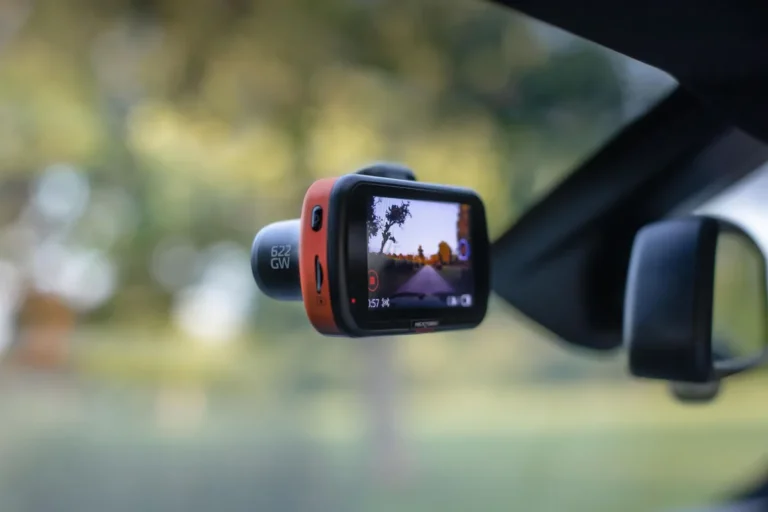
In our research across verified buyer feedback, a few models come up repeatedly for G-sensor reliability. Viofo A129 series, Thinkware U1000, BlackVue DR900X, Nextbase 622GW, and Garmin 67W all offer granular sensitivity control, reliable event locking, and stable firmware. Higher price typically means better sensor calibration, more pre-event buffer, and more options for tuning parking mode behavior.
Expert Tips for Long-Term G-Sensor Reliability
Treat the G-sensor like a small piece of safety equipment. Format the card monthly. Replace the card every 12 to 18 months.
Re-check sensitivity each season. Keep the firmware current. Back up important event files the same day they happen.
Do those five things and your G-sensor will quietly do its job for years, capturing the one moment you actually need.
Frequently Asked Questions
Does a G-sensor drain the dash cam battery?
Not directly. The sensor itself draws very little power, on the order of microamps. What drains the battery is parking mode running the camera for hours.
A G-sensor just decides when to save a clip during that time.
Can a G-sensor miss a real accident?
Yes, if the threshold is set too high or the impact direction falls outside the sensor's main axis. Medium sensitivity with a recent firmware update catches the vast majority of real-world impacts in our analysis of user reports.
How do I unlock a locked G-sensor file?
Most dash cams let you unlock files through the playback menu or the companion app. Some require formatting the card, which erases everything. Always back up locked files to your phone or computer before unlocking.
Is a G-sensor the same as an accelerometer?
Yes. G-sensor is the marketing term for a 3-axis accelerometer. Same chip, same physics, different label.
Should I turn the G-sensor off in parking mode?
No. The G-sensor is most useful in parking mode, since you aren't there to witness a hit-and-run. Turn down sensitivity instead of switching the sensor off entirely.
Does a higher G-sensor sensitivity wear out the memory card faster?
Indirectly. More locked files mean more write cycles on the card. Use a high-endurance card rated for dash cam use, and you'll avoid premature failure.