How to use a dewalt jump starter: Easy guide
A dead battery always seems to strike at the worst time. You turn the key, hear a weak click, and nothing happens. That's where a DeWalt jump starter earns its place.
Learning how to use a DeWalt jump starter the right way can save you from being stranded, waiting on a tow truck, or damaging your vehicle's electrical system.
Most DeWalt portable power stations deliver between 1,000 and 3,000 peak amps and weigh roughly 5 to 15 pounds. Manufacturer specifications indicate they're rated to crank engines from compact cars up to light-duty trucks. Per the official DeWalt documentation, units like the DXAEJ14 include reverse-polarity protection and spark-proof clamps for safer connections.
Below, we'll walk through exactly how to use one, step by step.
Quick Answer
To use a DeWalt jump starter, turn the unit on and check the battery level. Connect the red clamp to the dead battery's positive terminal. Connect the black clamp to an unpainted metal ground.
Try to start the vehicle for up to 5 seconds. If it doesn't start, wait 30 seconds and try again. Disconnect in reverse order once the engine runs.
What a DeWalt Jump Starter Actually Does
A DeWalt jump starter is a self-contained lithium-ion power pack designed to deliver a short, high-amperage burst to crank a dead engine. Think of it as a portable battery that replaces the need for a second running car.
Here's the basic idea:
- A 12V vehicle battery normally provides cranking amps to spin the starter motor.
- When that battery is dead, it can't deliver enough current on its own.
- The DeWalt unit supplies that missing current through heavy-duty jumper cables.
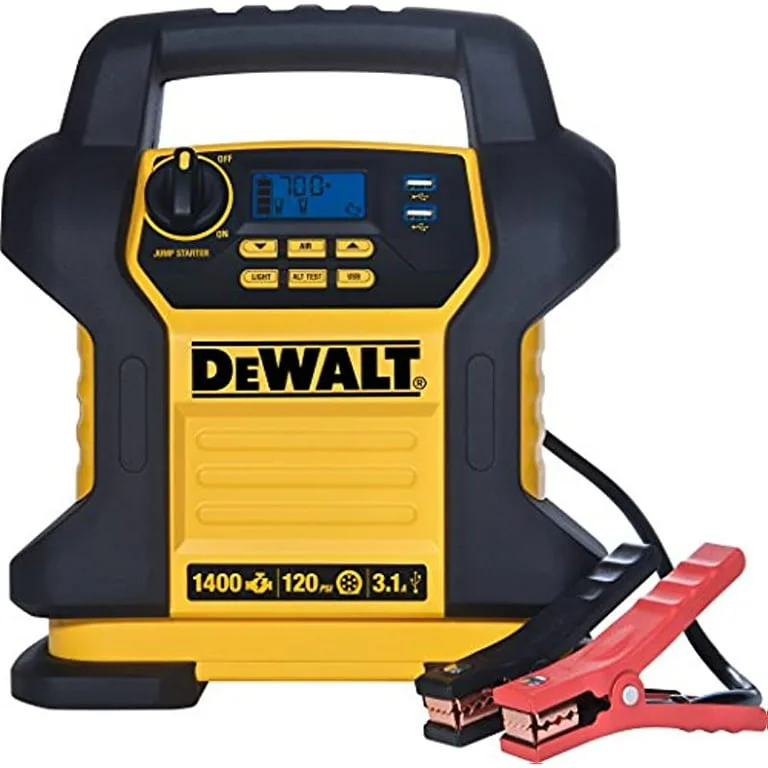
The most common models, like the DXAEJ14 digital jump starter and the DXAEPS14 power station, combine cranking power with extras like USB ports, an LED work light, and sometimes an air compressor. That multi-function design is what separates them from older lead-acid booster packs. They recharge from a wall outlet in about 3 to 6 hours and hold a charge for months in storage.
The key spec to look at is peak amps. That's the maximum current the unit can deliver for a brief window. Higher peak amps mean it can start larger engines, including V8 trucks.
Cranking amps (CA) and cold cranking amps (CCA) matter too, especially if you're starting in freezing weather.
Key Features to Know Before You Start
Every DeWalt jump starter shares a core set of safety and performance features. Knowing what each one does makes the process faster and safer.
| Feature | What It Does | Why It Matters |
|---|---|---|
| Reverse polarity alarm | Beeps or flashes if clamps are swapped | Prevents damage to the vehicle's electrical system |
| Spark-proof clamps | Reduce sparking during connection | Safer near battery gases |
| Built-in voltmeter | Displays battery voltage | Confirms charge level before use |
| USB ports | Charge phones or tools | Adds roadside utility |
| LED work light | Lights the engine bay | Helpful at night or in bad weather |
| Manual override | Bypasses low-voltage safety lockout | Needed when the battery is fully dead |
If your unit has a manual override button, it typically requires you to hold it for a few seconds before cranking. That mode tells the unit to push current even when it detects a near-zero voltage reading. Use it carefully.
It's designed for a specific situation, not as a default step.
One more thing: cable gauge and length matter. Most DeWalt clamps use 4- or 6-gauge wire between 18 and 24 inches long. Thicker wire carries current more efficiently.
If the cables feel thin or frayed, replace them before use.
Identify Your Vehicle and Battery Setup
Before connecting anything, take 30 seconds to confirm what you're working with. The wrong voltage setting or mismatched expectations can turn a simple jump into a costly repair.
Check the Battery Voltage
Most cars and trucks run on a 12V system. Older motorcycles, lawn tractors, and some classic cars may use 6V systems. Larger diesel equipment sometimes runs 24V.
The DeWalt DXAEJ14 and similar consumer units are designed for 12V systems only.
Look at the battery label or the owner's manual. If the label reads "12V" and your DeWalt unit is rated for 12V output, you're matched. If your vehicle is 6V or 24V, stop.
A standard DeWalt jump starter won't work safely on those systems.
Size Up the Engine
Peak amp ratings matter more with bigger engines. Here's a rough guide:
| Engine Type | Typical Peak Amp Need |
|---|---|
| 4-cylinder car | 150 to 300 amps |
| V6 car or SUV | 300 to 500 amps |
| V8 truck or van | 500 to 1,000 amps |
| Diesel truck | 1,000+ amps |
A 1,000-peak-amp DeWalt unit handles most gasoline engines under 6 liters. For larger V8s or diesel applications, step up to a 2,000 to 3,000 peak amp model.
Look at the Battery Condition
If the battery is swollen, cracked, or leaking, do not attempt to jump it. Visible damage means the battery needs replacement, not a boost. In that case, the jump starter won't help and could create a hazard.
Call for service or replace the battery first.
Prep Your DeWalt Unit Before Use
Prep takes about a minute and prevents most of the problems people run into. Skip it, and you risk a no-start situation that the unit could have handled.
Confirm the Unit Is Charged
Press the battery level button or check the LED indicators. Manufacturer specs indicate a fully charged DeWalt jump starter shows 4 solid bars or a 100% reading on the digital voltmeter. Anything below 50% may struggle with a cold engine.
If the unit reads low, plug it in. Most recharge from empty in 3 to 6 hours using the included AC adapter.
Power the Unit On
Flip the master switch or press the power button. The LED should illuminate, and the voltmeter should display a voltage reading. A healthy unit reads 12.5V to 13.2V on its internal battery when fully charged.
Inspect the Clamps and Cables
Look closely at the clamp jaws. They should be clean, with no corrosion, grease, or flaking metal. The cable insulation should be smooth and intact.
If the clamps feel loose on the terminals or the wires show exposed copper, do not use them.
Clear the Engine Bay
Make sure the jump starter, your hands, and any clothing are away from belts and fans. Remove jewelry, especially rings and watches. A spinning belt can catch loose fabric.
Battery gases are also flammable, so avoid smoking or open flames nearby.
Once those four checks are done, you're ready to connect. The whole prep process should take under 5 minutes. If anything looks off, address it before moving on.
For official safety guidance on jump-starting 12V lead-acid batteries, the Battery Council International publishes standards on safe handling and connection procedures.
Step-by-Step: Jump-Starting a Car or Truck
The actual connection process takes less than two minutes once you've prepped the unit. Follow the order below. Reversing the steps can cause sparks, tripped breakers, or damage to the vehicle's ECU.
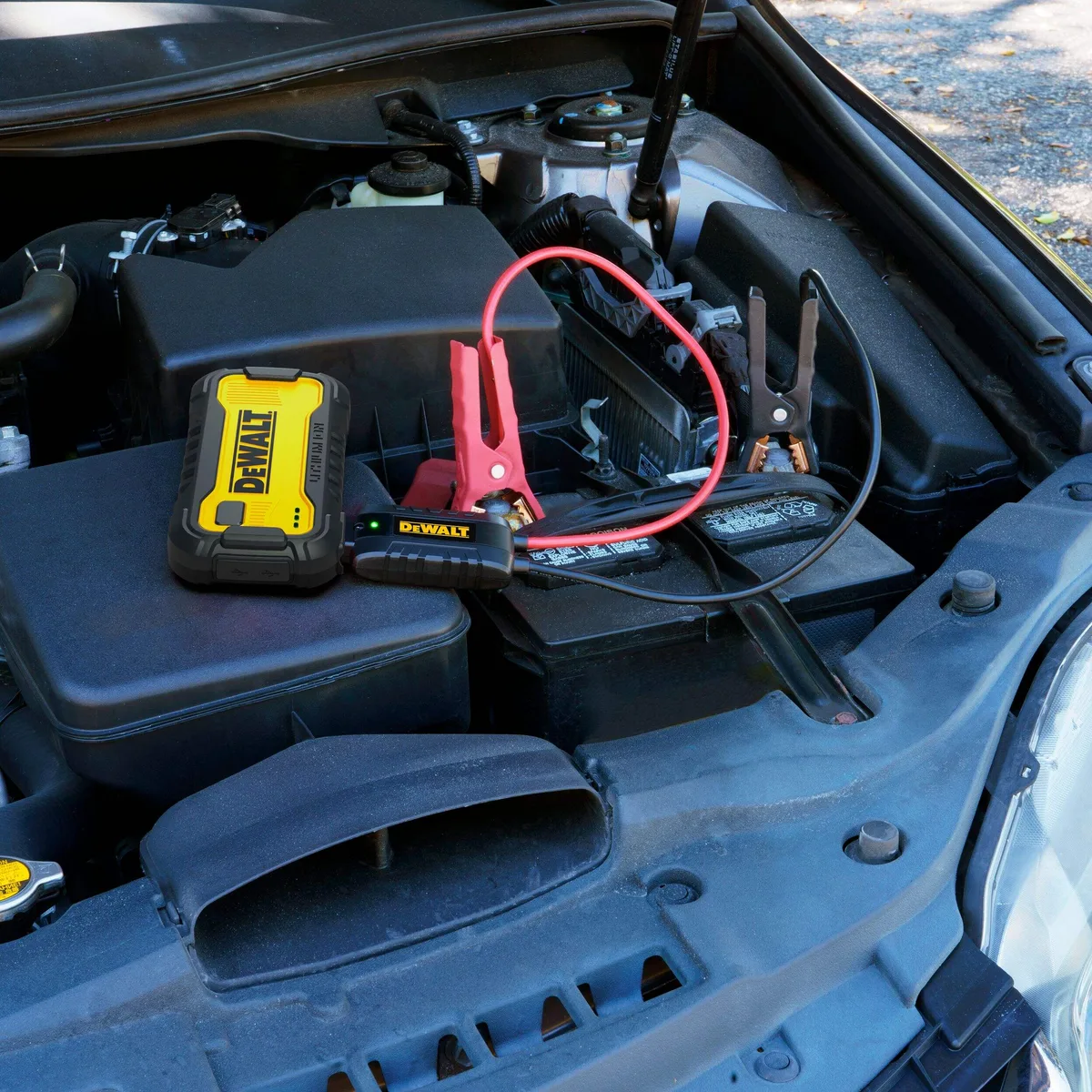
Connect the Red Clamp First
Attach the red positive clamp to the dead battery's positive (+) terminal. The terminal is usually marked with a plus sign and may have a red plastic cover. Wiggle the clamp to confirm a tight bite.
A loose clamp reduces current flow and may prevent the engine from cranking.
Connect the Black Clamp to a Ground
Attach the black negative clamp to an unpainted metal surface on the engine block, not the dead battery's negative terminal. A bracket, bolt, or alternator mount works well. Distance the clamp from the battery and any fuel lines.
This grounding method reduces the chance of igniting hydrogen gas that vents from the battery.
Crank the Engine
Turn the key or push the start button. Crank for no more than 5 seconds. If the engine doesn't start, wait at least 30 seconds before the next attempt.
Three short cranking bursts usually do the trick. If nothing happens after three attempts, stop and move to the troubleshooting section below.
Disconnect in Reverse
Once the engine is running, leave it idling for a minute to stabilize. Then remove the black clamp first, followed by the red clamp. Keep the clamps from touching each other or any metal surface during removal.
Let the vehicle run for at least 20 minutes or drive it to recharge the battery.

Branching Steps for Motorcycles, Lawn Equipment, and Small Engines
Smaller engines follow the same logic with a few adjustments. The main difference is the size of the battery and the current demand.
Motorcycles and ATVs
Most motorcycles use 12V systems but have smaller batteries. A 1,000 peak amp jump starter is overkill for a 250cc engine but works fine. The main risk is connecting to the wrong terminal.
Motorcycle batteries are compact, so the positive and negative posts sit close together. Double-check the labels before clamping.
Lawn Mowers and Tractors
Riding mowers and small tractors usually run 12V systems. Tillers and walk-behind mowers may not have electric start at all. For electric-start models, use the same red-positive, black-ground sequence.
Some riding mowers have a chassis ground stud instead of a battery ground cable. Use it.
What About 6V Systems?
Classic cars and some vintage tractors run 6V. Standard DeWalt jump starters are not compatible with 6V systems. Using a 12V unit on a 6V battery can fry the ignition coil, bulbs, and any connected electronics.
If your vehicle is 6V, you need a dedicated 6V booster or a trickle charger, not a 12V jump starter.
Is a Smaller Unit Acceptable for a Motorcycle?
Yes. A 400 to 500 peak amp unit handles almost any motorcycle battery. The downside is that smaller units have less reserve capacity, so they may need recharging after a single jump.
If your DeWalt model includes USB ports and a smaller battery profile, it's well-suited to two-wheelers and powersport use.
What to Do If the Engine Won't Crank
Sometimes the connection looks perfect, and nothing happens. Before assuming the jump starter is bad, run through this quick decision tree.
Is the Unit Actually Charged?
Check the LED bars or voltmeter. A reading below 11V on the internal battery means the unit doesn't have enough stored energy to crank. Plug it in for at least 30 minutes and try again.
Are the Clamps Making Good Contact?
Corroded or partially connected clamps are the most common cause of a no-crank. Wiggle both clamps and confirm they bite down fully. If the battery terminals are covered in white or blue corrosion, clean them with a wire brush or a mixture of baking soda and water before reconnecting.
Did You Connect to the Right Terminals?
A reversed connection won't just fail. The reverse polarity alarm will beep, and the unit will refuse to send current. If you hear the alarm, disconnect immediately and swap the clamps.
Does the Engine Need Manual Override?
If the dead battery reads below 3V, the DeWalt unit may lock itself out as a safety measure. That's where manual override mode comes in. Hold the override button for 3 to 5 seconds, then try cranking.
Use this mode only when you're certain the polarity is correct.
Is the Problem Bigger Than a Dead Battery?
If the engine still won't crank after a successful jump, the issue may be a failed starter motor, a bad ignition switch, or a broken timing belt. The jump starter can't fix those. Time to call a mechanic or a tow.
Common Mistakes That Can Fry Your System
Most jump-start failures come down to a handful of repeatable mistakes. Avoiding them takes seconds and protects both your vehicle and your jump starter.
Connecting the Black Clamp to the Negative Terminal
This is the most common error. It works sometimes, but it creates sparks right next to the battery. Battery hydrogen gas ignites easily.
Always ground to a metal bracket away from the battery.
Cranking for Too Long
Holding the key in the start position for 10 or 15 seconds overheats the starter motor and drains the jump starter. Limit each attempt to 5 seconds, then wait 30 seconds. Repeat up to three times.
Skipping the Pre-Charge Check
A unit sitting in a hot truck cab all summer can lose 30% or more of its charge. Always check the battery level before you need it. Recharge monthly if stored long-term.
Using the Wrong Voltage Mode
Some DeWalt units offer 6V, 12V, and 24V settings. Picking the wrong voltage can push too much current into the system. Confirm the setting matches your vehicle before connecting.
Ignoring Damaged Cables
Frayed insulation or a loose clamp jaw is a fire and shock risk. Replace damaged cables immediately. Don't tape over a cracked cable and call it fixed.
Jump-Starting a Frozen Battery
If the battery case is bulging or feels frozen solid, don't jump it. The internal plates may be cracked. Thaw the battery first or replace it.
A frozen battery can explode if you try to crank it.
DeWalt Jump Starter Safety Essentials
Jump-starting a 12V lead-acid battery is generally safe when done correctly, but lead-acid batteries vent hydrogen gas and contain sulfuric acid. A few simple practices keep the risk low.
Work in a Ventilated Area
Even sealed AGM batteries vent gas when charged rapidly. A garage with the door open is fine. A closed garage is not.
Outdoors with dry weather is best.
Wear Eye Protection
Battery acid splashes easily when clamps are connected. Safety glasses or a face shield cost a few dollars and prevent permanent eye damage.
Keep Flames and Sparks Out
No lighters, no cigarettes, no sparks from grinding nearby. Hydrogen gas is odorless and explosive above a 4% concentration in air.
Know the Polarity Every Time
Red is positive. Black is negative. The battery terminals are labeled.
Look before you clamp. A reversed connection can blow fuses, damage the ECU, or fry the alternator diodes.
Watch the Unit's Temperature
Lithium-ion jump starters have a recommended operating range of about -4°F to 140°F. Extreme cold reduces output. Extreme heat can trigger a thermal cutoff.
Let the unit acclimate to the air temperature before use.
Manufacturer safety warnings are also covered in the official DeWalt product manuals under each model page. Those documents list model-specific voltage limits, temperature ranges, and warranty terms worth reading before your first use.
Reading the Specs: Amps, Voltage, and Battery Size
The numbers on the side of a DeWalt jump starter tell you what it can handle. Knowing the difference between peak amps and cranking amps prevents you from overestimating your unit's capability.
Peak Amps vs. Cranking Amps
Peak amps is the maximum burst the unit delivers for a brief moment. Cranking amps (CA) is the sustained current over 30 seconds at 32°F. Cold cranking amps (CCA) is the same test at 0°F.
For real-world use, focus on CA and CCA. Peak amps sound impressive but fade fast under load.
| Spec | What It Means | Real-World Use |
|---|---|---|
| Peak amps | Maximum burst, brief duration | Marketing headline |
| Cranking amps (CA) | Sustained current at 32°F | Better predictor of starting power |
| Cold cranking amps (CCA) | Sustained current at 0°F | Essential for winter use |
| Battery capacity (mAh) | Total stored energy | Determines USB charging cycles |
Voltage Matters
A 12V vehicle system actually operates between 13.7V and 14.7V when running. A healthy resting battery reads 12.4V to 12.7V. If the jump starter's voltmeter reads below 12V when fully charged, the internal battery is aging.
Replace the unit or send it for service.
Weight and Portability
DeWalt jump starters range from about 5 pounds for compact units to 15 pounds for high-capacity models. Heavy units usually pack more amp hours. For a glove box, go lighter.
For a job trailer, capacity matters more than weight.
Manual Override Mode: When and How to Use It
Manual override exists for a specific reason. When a battery is so dead it reads near zero volts, the unit's safety lockout may refuse to deliver current. Override mode bypasses that lockout and sends power directly to the clamps.
When to Use It
Use manual override when:
- The dead battery reads below 3V.
- The unit refuses to deliver power despite being fully charged.
- You've confirmed the polarity is correct.
How to Activate It
Hold the override button for 3 to 5 seconds. The LED usually flashes or changes color to confirm. Crank the engine immediately after.
Do not leave the unit in override mode longer than necessary.
Why It's Risky
Override mode skips the safety check. If the clamps are reversed, the unit will push current into the wrong polarity. That can blow fuses or damage electronics.
Always confirm the connection order before pressing override.
Recharging and Storing Your Unit the Right Way
A jump starter that dies when you need it is useless. Storage habits determine whether the unit is ready months later.
Recharge After Every Use
Even a successful jump drains 5% to 20% of the internal battery. Plug the unit in for a full cycle before storing it. Most models reach full charge in 3 to 6 hours via AC.
Top Off Every 3 Months
Lithium-ion cells slowly self-discharge. Manufacturer recommendations typically suggest recharging every 90 days during storage. Set a calendar reminder if the unit lives in a truck or trailer.
Store at Moderate Temperatures
Heat kills lithium batteries faster than anything. Store the unit indoors when possible. A climate-controlled garage or shop is ideal.
Avoid leaving it in a vehicle during summer or winter. Extreme cold can also reduce capacity temporarily.
Use the Right Charger
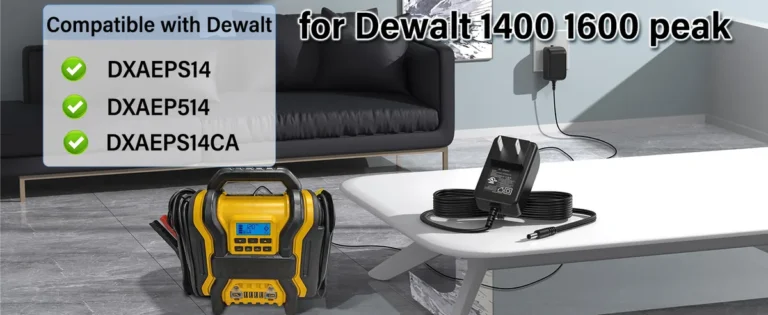
Stick with the AC adapter that came with the unit. Off-brand chargers may not regulate voltage correctly. If the original adapter fails, order a replacement from DeWalt directly.
Cheaper third-party adapters can damage the battery management system.
Troubleshooting: No Power, Weak Charge, or Fault Lights
Even well-maintained units develop issues. Here are the most common faults and how to address them.
Unit Won't Power On
If the buttons do nothing, the internal battery is likely drained below its recovery threshold. Plug it into AC power for 30 minutes, then try again. If it still won't respond, the battery management system may have shut down permanently.
Contact DeWalt support for warranty service.
Weak Charge Won't Hold
A unit that drops from full to empty overnight has a bad cell. Lithium batteries degrade over time, usually after 300 to 500 charge cycles. If the unit is more than three years old and shows rapid discharge, replacement is the realistic fix.
Fault Light Stays On
A persistent fault light usually means reverse polarity was detected during the last use, or the internal temperature sensor tripped. Disconnect the clamps, power the unit off, and let it cool for 10 minutes. Restart and try again with a confirmed connection.
Clamps Spark When Connecting
A small spark when attaching the last clamp is normal. A large spark means a heavy current draw or a reversed connection. Stop and recheck polarity before proceeding.
Final Checklist Before You Hit the Ignition
Run through this list every time. It takes 30 seconds and prevents most jump-start failures.
- Unit is charged above 50%.
- Voltage setting matches the vehicle (12V for cars and trucks).
- Clamps are clean and undamaged.
- Red clamp goes to positive (+) first.
- Black clamp goes to a grounded metal bracket, not the negative terminal.
- Crank for 5 seconds max, with 30-second rests between attempts.
- Disconnect black clamp first once the engine runs.
- Recharge the unit within 24 hours of use.
That checklist covers the core process. Use it once, and the sequence becomes muscle memory for every dead battery situation afterward.
Frequently Asked Questions
How long does a DeWalt jump starter hold its charge?
Most DeWalt lithium jump starters hold a charge for 3 to 6 months in storage. Manufacturer recommendations suggest recharging every 90 days to maintain battery health. A unit stored in a hot truck may lose charge faster.
Can a DeWalt jump starter start a diesel truck?
Yes, if the model delivers 1,000 or more peak amps. Diesel engines require higher cranking amps than gasoline engines. The DXAEJ14 and similar 2,000 peak amp units handle most light-duty diesel trucks in moderate temperatures.
Is it safe to jump-start a car in the rain?
Light rain is fine. Heavy rain can create electrical shorts across the battery terminals. If possible, work under cover or wait for the rain to ease.
Keep the jump starter itself dry. Avoid standing in puddles while making connections.
Do I need to disconnect the battery before jump-starting?
No. Modern vehicles can be jump-started with the dead battery still connected. Disconnecting can actually reset the ECU and erase stored settings like radio presets.
Leave the battery in place and follow the standard connection sequence.
How many times can I jump-start before recharging the unit?
Most units handle 3 to 5 jumps on a full charge, depending on engine size and temperature. Larger engines drain the unit faster. After 2 jumps on a V8 or diesel, plan to recharge before the next attempt.
Expert Tips for First-Time Users
Store the unit in the cabin, not the trunk. Cabin temperatures stay more stable year-round.
Recharge the same day you use it. Waiting a week reduces the unit's standby capacity over time.
Practice the connection sequence on a healthy battery once. Familiarity prevents mistakes during the real emergency.
Label the unit with the date of purchase. Lithium batteries have a service life of about 3 to 5 years, and the label tells you when to consider a replacement.
What to Look for When Buying a Replacement Unit
If your current unit is more than four years old or struggles to hold a charge, it's time to shop. Focus on three numbers: peak amps for engine size, battery capacity for jump cycles, and warranty length. A 1-year warranty is standard.
A 2- or 3-year warranty signals the manufacturer expects longer service life.
Consider weight and form factor next. Compact units fit in a glove box. Larger units live in a job trailer or shop.
Match the size to where you'll actually keep it.
Extras like USB ports, an LED work light, and an air compressor add value if you'll use them. Ignore the extras if you only need jump-starting. Spending less on a focused unit often delivers better core performance per dollar.