How to jump start a push to start car: Easy guide
If you've ever walked out to your car, pressed the start button, and gotten nothing but a sad click, you're not alone. Push-to-start cars can be jump started the same way as any other 12-volt vehicle, but the steps have a few quirks that trip people up. We'll walk through what actually happens under the hood, where the battery might be hiding, and the exact sequence to get your engine running again.
The push-button ignition runs on the same 12V battery that cranks a keyed car, and that battery loses about 35% of its cranking power at 0°F. As of 2026, AAA reports that battery-related issues remain the single most common roadside cause of no-starts, well ahead of alternators and starters. Knowing the right process saves you a tow, a service call, or a wasted afternoon.
Quick Answer
Yes, you can jump start a push-to-start car. Connect a booster source to the 12V battery terminals. Press the brake pedal.
Press and hold the start button until the engine fires. Most push-start cars fully recharge within 20 to 30 minutes of driving.
Why Push-to-Start Cars Jump Differently Than You Think
The ignition button is just a fancy switch. The real muscle is your 12V lead-acid or AGM battery under the hood, in the trunk, or tucked under a seat. When that battery drops below roughly 11.8V, the starter can't spin fast enough, and the car's computer won't even let you try.
Here's what most people miss: the smart key fob has to be detected inside the car before the system will crank. If the fob battery is also dead, or the car can't read it through a dead chassis battery, the button does nothing, no matter how many times you tap it. That tiny detail is why so many push-start owners assume the jump didn't work, when really the fob just needs to be held right up against the button.
Modern push-start cars also pack a lot more sensitive electronics than older models. Think of the infotainment screen, the engine control unit, the throttle-by-wire system, and a dozen other modules. A sloppy jump with reversed polarity can fry a $1,500 computer, so the order of your clamp connections matters more than it did on a 2002 Civic.
The Short Answer: Can You Even Jump a Push-to-Start Car?
You can. Every push-to-start gasoline car on the road uses a standard 12V electrical system, the same one a tow truck would hook up to. The process is jump cables or a lithium pack, a donor source of power, and the right terminal location.
What changes versus a traditional car:
- The start button replaces the key turn, so you press the brake and hold the button rather than turning anything.
- The battery is often in the trunk or under the rear seat, with a remote jump post in the engine bay.
- The smart key fob has to be inside the car and recognized, which can fail if voltages are very low.
If your car is a hybrid or a battery-electric vehicle, the same basic 12V jump procedure applies. You just never touch the high-voltage pack (usually orange cables) and you only jump the small 12V auxiliary battery. Per Toyota's hybrid roadside emergency guide, jumping only the 12V system is the correct and supported method.
How a Push-Button Ignition System Actually Works (And Why It Matters)
The start button sends a digital request, not a direct electrical current. When you press it with your foot on the brake, the Body Control Module checks a handful of conditions before cranking the engine.
Those conditions include:
- A valid smart key fob detected inside the cabin
- The brake pedal switch engaged
- Battery voltage above a minimum threshold (typically 9.6V while cranking)
- Transmission in Park or Neutral
If the battery is weak, the BCM often locks everything out as a safety measure. That's why a half-dead battery in a push-start car behaves like a completely dead one, while a keyed car would at least try to crank slowly.
Manufacturer specifications indicate most push-start systems need at least 12.0V resting and 9.6V under load to function. Below that, the start request gets denied outright.
The Key Fob Factor
The fob is the silent gatekeeper. If its coin-cell battery is dead and the car's main battery is also weak, the car can't authenticate the fob through the antennas in the door handles or cabin. Holding the fob directly against the start button puts it right next to a backup reader, which is why owner's manuals from Toyota, Honda, Ford, and others all describe this exact trick.
First, Figure Out What's Really Wrong
Before you pop the hood, take 30 seconds to listen and look. The symptoms tell you which path to take.
Dead 12V Battery vs. Dead Key Fob vs. Bigger Problem
| What You See / Hear | Most Likely Cause | Jump Start? |
|---|---|---|
| Nothing at all, no lights, no dome light | Completely dead 12V battery or corroded terminals | Yes, after cleaning terminals |
| Clicking sound when pressing start, lights dim | Weak 12V battery | Yes |
| Lights work, dash lights up, no crank | Weak battery, bad starter, or fob not detected | Maybe, try fob-against-button first |
| Engine cranks but won't fire | Fuel issue, not battery | No, jump won't help |
| Push button flashes amber or red | Brake pedal switch or fob detection fault | No, jump won't help |
If the engine cranks at all, the battery is doing its job. A no-crank situation is the one we can fix with a jump.
Quick Checks Before You Grab the Cables
- Confirm the gear selector is fully in Park.
- Make sure the brake pedal feels firm; if it's soft, hydraulic pressure may be lost.
- Open the trunk or rear seat to eyeball the battery if it's mounted there.
- Wiggle the key fob closer to the start button and try again; sometimes a low fob battery is the whole problem.
- Check the battery age sticker; if it's over 4 years old, replacement is likely the smarter move.
These 60 seconds save you from jumping a car that doesn't actually need it.
What You'll Need to Jump a Push-to-Start Car
You only need one of two things: a second running vehicle with a good battery, or a portable lithium jump pack. Both work, and the right pick depends on where you're stuck and what you own.
Jumper Cables From a Second Vehicle
A good set of 4-gauge or 6-gauge cables, 16 to 20 feet long, handles nearly every push-start car on the road. Thicker cables move more current with less voltage drop, which matters when you're trying to wake up a deeply discharged battery.
- Gauge: 4 AWG for trucks and large SUVs, 6 AWG is fine for most sedans
- Length: 16 ft works in most parking lots, 20+ ft helps when nose-to-nose isn't possible
- Clamp quality: copper-clad clamps grip better than cheap stamped steel
- Insulation: thick rubber coating resists melting if a clamp slips
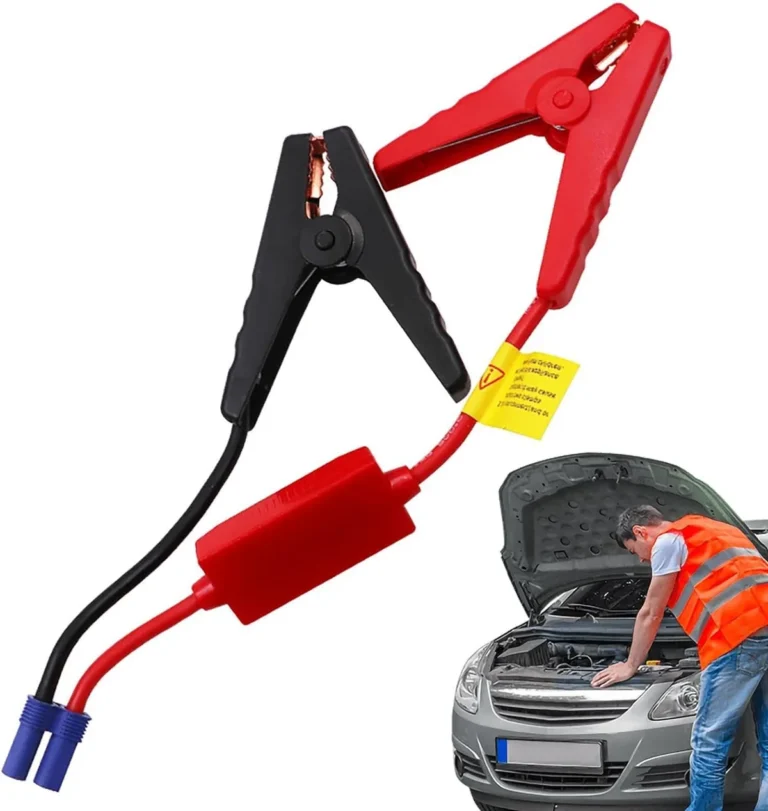
Portable Jump Starter Pack (Lithium Booster)
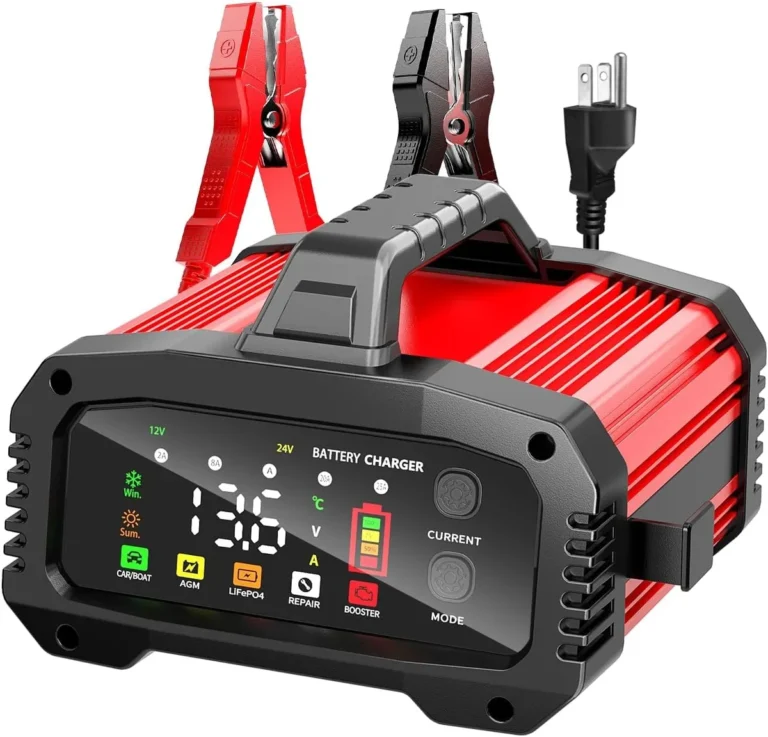
A modern lithium jump pack is the single best upgrade a push-start owner can buy. It weighs 2 to 4 pounds, fits in a glove box, and doesn't need a second car. Per NOCO and Antigravity manufacturer specs, today's 1,000 to 2,000 peak-amp packs will start a 6-liter V8 multiple times on a single charge.
What to look for:
- Peak amps: 1,000A minimum for most cars, 2,000A+ for V8s and diesels
- Capacity: 10,000 mAh or higher
- Safety: reverse polarity protection and spark-proof clamps
- Extras: USB-C charging, built-in flashlight, 12V output for tire inflators
If you don't already own one, this is the one tool worth keeping in the trunk year-round. Battery failures don't wait for a convenient moment.
Find the Battery, It's Not Always Under the Hood
Most push-start cars still hide the battery in plain sight, but plenty don't. If you pop the hood expecting a battery and find a plastic cover with no terminals in sight, that's by design.
Engine Bay Battery Locations
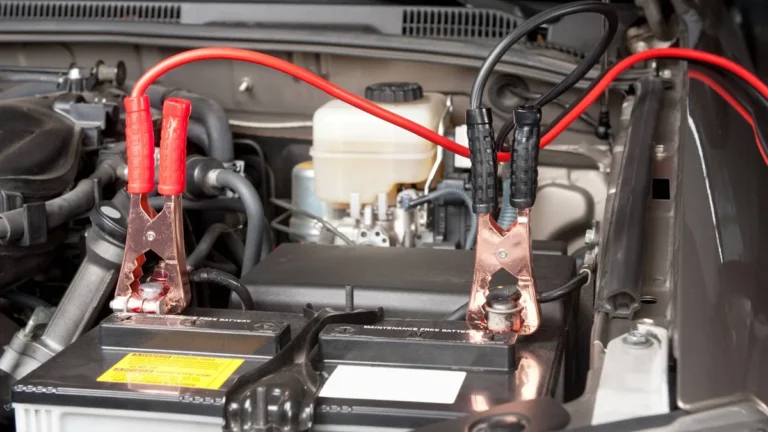
The traditional layout still rules for most sedans and smaller SUVs. Look for a rectangular box with two cable posts, one usually wrapped in a red boot for the positive side. If you see a "+" symbol molded into the cover nearby, that's the post you're after.
Trunk, Under-Seat, and Remote Jump Terminal Locations
Many newer cars put the battery in the trunk (BMWs, several Audis, some Mercedes) or under the rear seat (some Honda and Acura models). For those, manufacturers add a remote positive jump post in the engine bay, often a red cap marked with a "+". The negative usually goes to a designated chassis ground point, also marked.
Owner's manuals always show this in the "Jump starting" section. If you don't have yours, a quick check of the under-hood fuse box cover often has a diagram stamped right into the plastic.
Hybrid and EV 12V Battery Locations
Hybrids like the Toyota Prius and the Honda Insight have a regular 12V battery somewhere in the cabin or trunk. The big high-voltage pack is the orange-cabled one under the rear seat or under the cargo floor. Per Toyota's hybrid emergency response documentation, only the 12V battery gets jump started, never the hybrid system itself.
Same rule for fully electric vehicles: a small 12V auxiliary battery powers the computers and unlocks the high-voltage contactors. Jump that one, and the car wakes up.
How to Jump Start a Push-to-Start Car: Step-by-Step
Here's the clean sequence, no fluff. We'll cover both methods so you can pick the one that fits your situation.
Method 1: Jump Starting With Another Car
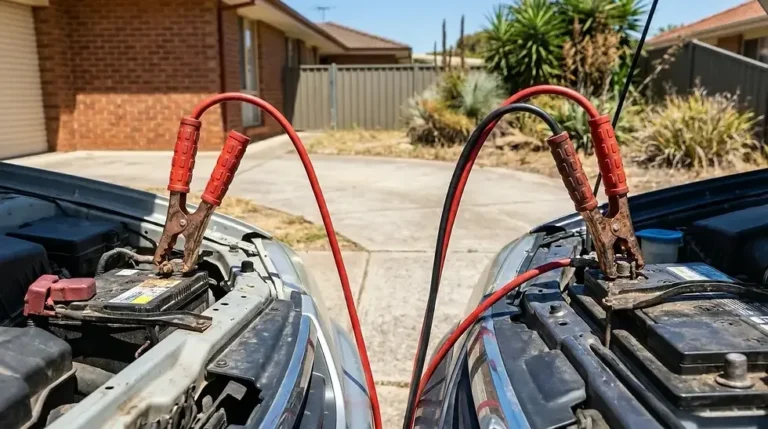
- Park the donor car nose-to-nose or side-by-side. Leave enough room that the cables reach comfortably without stretching.
- Turn off both vehicles. Remove the keys, switch off headlights, climate control, and anything else drawing power.
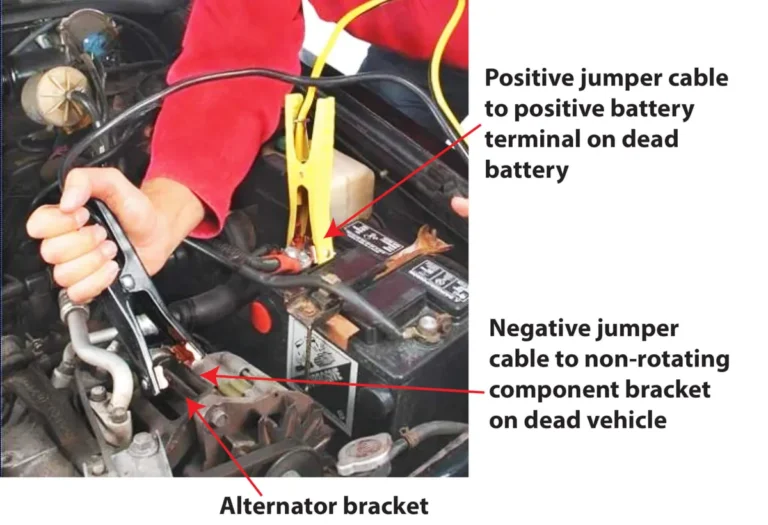
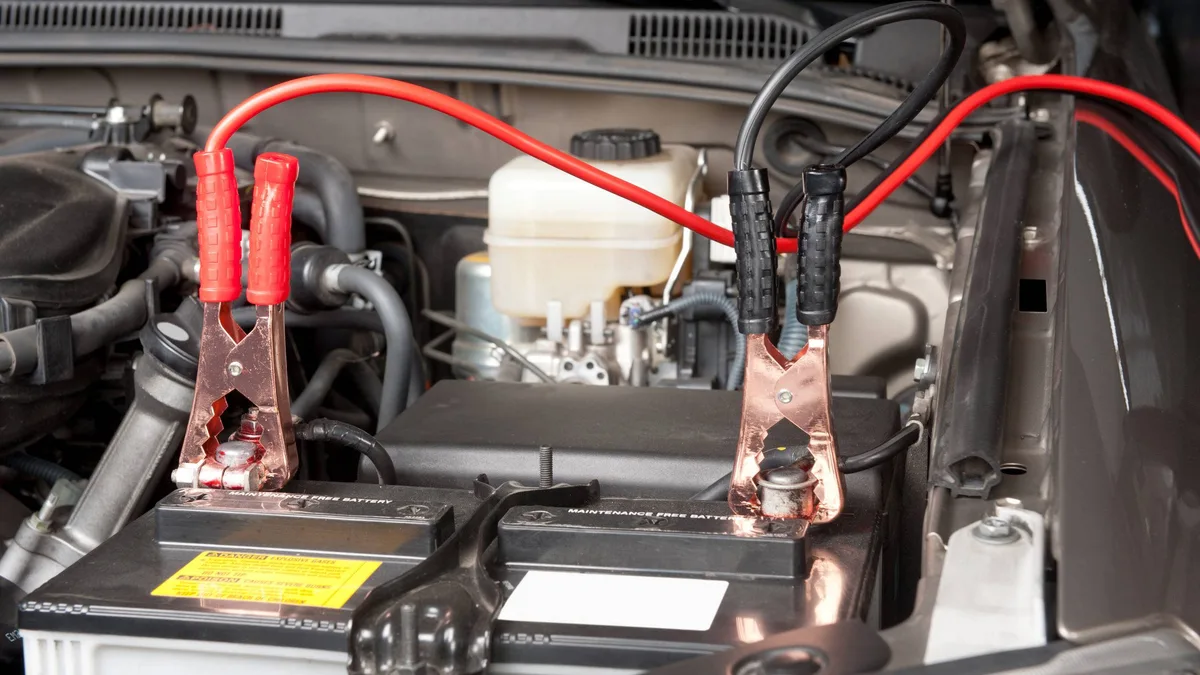
- Connect the red (positive) clamp to the dead car's positive terminal or remote jump post.
- Connect the other red clamp to the donor car's positive terminal.
- Connect the black (negative) clamp to the donor car's negative terminal.
- Connect the final black clamp to a clean, unpainted metal ground on the dead car. A bracket, bolt, or engine lift point works. Avoid the battery itself if it looks corroded or you smell sulfur.
- Start the donor car and let it idle for 2 to 5 minutes. This gives the dead battery a surface charge.
- Try to start the dead car. Hold the start button for up to 10 seconds. If it doesn't fire, wait another 2 minutes and try again.
Method 2: Jump Starting With a Portable Jump Pack
A lithium jump pack is faster and safer in solo situations. No second driver, no parking gymnastics.

- Make sure the pack is charged above 50% (most have a fuel-gauge LED).
- Connect the red clamp to the dead car's positive terminal or remote post.
- Connect the black clamp to a chassis ground on the dead car.
- Turn the jump pack on (some power on automatically when clamps are connected).
- Wait for the green "ready" light. Most packs refuse to deliver power if polarity is reversed, so a red light means stop and swap the clamps.
- Press the brake pedal and hold the start button. Crank for up to 10 seconds.
- Once the engine fires, disconnect the pack within 30 seconds.
What to Do If Your Key Fob Is Completely Dead
If the fob won't unlock the doors, look for a hidden mechanical key inside the fob body. Most push-start fobs slide open to reveal a small blade key. Use it on the driver's door, then place the fob directly against the start button while pressing the brake.
The backup antenna reads the fob at very close range, even with a dead coin cell. Manufacturer service bulletins from Toyota, Honda, Ford, and Nissan all describe this exact procedure.
The Right Way to Start the Car After Hooking Up the Cables
Here's the part that confuses most people. You hook everything up, jump in, press the button, and… nothing. Or the dash lights up but the engine doesn't crank.
Pressing the Brake, Pressing the Button, and Waiting
Two non-negotiables: foot on the brake, button held for 1 to 2 seconds. The brake pedal switch tells the car you're ready to start. Without it, the BCM ignores the button press entirely.
If the engine is cold, you may need to hold the button a few seconds longer while the fuel pump primes.
If nothing happens after 10 seconds of cranking, release the button, wait 2 minutes, and try again. Continuous cranking overheats the starter motor and won't help a deeply discharged battery.
When the Engine Cranks But Won't Fire
Cranking but no fire is a fuel or spark issue, not a battery issue. Possible causes:
- Out of gas (yes, it happens)
- Flooded engine from repeated cranking
- Bad fuel pump relay
- Immobilizer not recognizing the fob
A jump won't fix any of these. If the engine cranks strongly but won't start, stop jumping and look for a different problem.
Disconnecting the Cables Safely (In the Right Order)
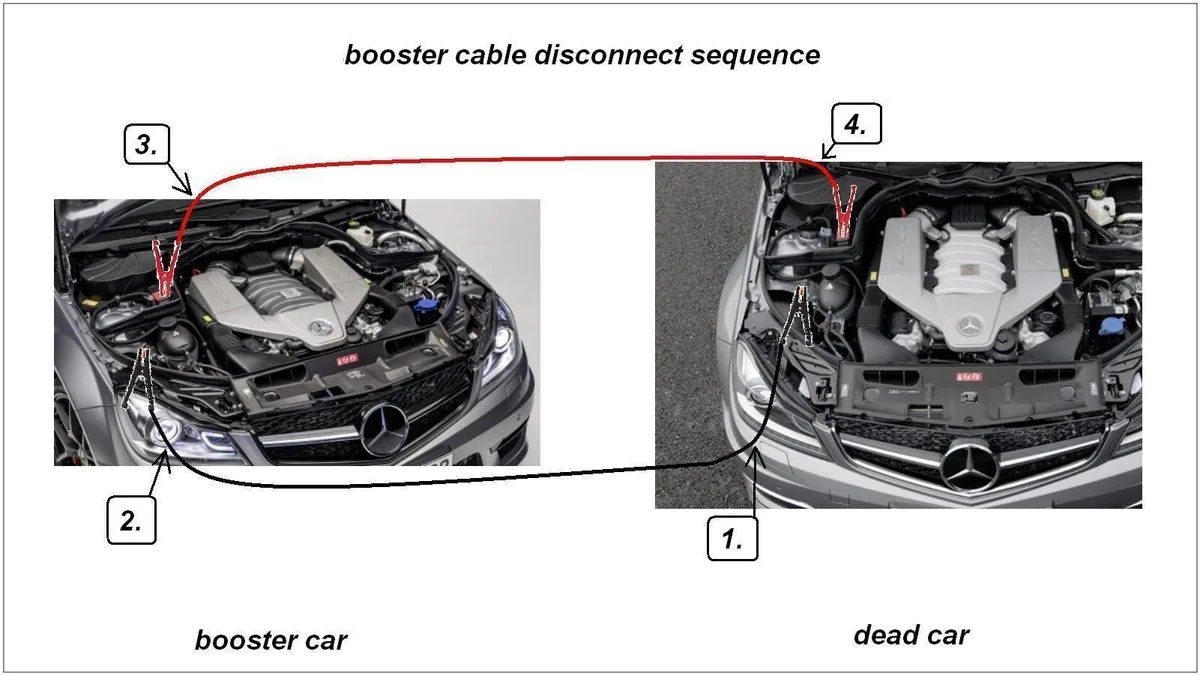
Order matters here, but only in reverse. The sequence that built the circuit is the same one that takes it apart, just in reverse.
- Turn off the engine in the newly-jumped car if you haven't already.
- Disconnect the black clamp from the chassis ground on the dead car.
- Disconnect the black clamp from the donor car.
- Disconnect the red clamp from the donor car.
- Disconnect the red clamp from the dead car.
Keep the clamps from touching each other or any metal surface while any clamp is still connected to a battery. A brief spark won't hurt anything, but a clamp swinging into the wrong post can fry a fuse or worse.
What to Do Right After the Car Starts
Don't shut it off. The alternator needs 20 to 30 minutes of driving to put a meaningful charge back into a depleted battery. A 5-minute idle won't do it.
Idling vs. Driving to Recharge
Idling charges slowly because the engine is at low RPM. Driving at 30+ MPH with light electrical loads (no seat heaters, no headlights if you can avoid it) charges faster. Per most manufacturer service manuals, 30 minutes of mixed driving usually brings a healthy battery back to a 75% state of charge.
If the car dies again the next morning, the battery is probably done. A healthy 12V battery holds its charge for days. One that drains overnight is either old, has a parasitic draw, or has a failing cell.
Resetting Windows, Infotainment, and the Clock
Power loss resets some of the car's convenience features. You may need to:
- Recalibrate the auto-up windows (hold the window switch up for 5 seconds after fully closing)
- Reset the clock and infotainment presets
- Re-enter radio station favorites
- Recalibrate the power seat memory in some luxury models
These aren't urgent. They'll keep working in their current state until you fix them.
Common Mistakes That Damage Push-Start Cars
Most jump-start horror stories come from a handful of repeated errors. Avoid these, and you'll be fine.
Jumping the Wrong Terminal on Remote Posts
If the car has a remote positive post in the engine bay, use it. Don't try to access the battery in the trunk by running jumper cables through the cabin. The wire gauge isn't designed for that current path, and you can melt trim panels or damage harnesses.
Reverse Polarity and What It Does to Modern Electronics
Red to negative, black to positive. That single mistake can fry the Body Control Module, the infotainment system, and the alternator's voltage regulator. Aggregate dealer service data puts a reverse-polarity repair at $800 to $2,500.
If you're unsure which post is which, don't guess. Stop and check.
Smoking, Sparking, and Skipping Safety Gear
Lead-acid batteries vent hydrogen gas, especially when discharged. A spark near the battery can ignite it. Per OSHA battery handling guidance, no open flames, no smoking, and always wear safety glasses.
Signs You Should Replace the Battery Instead of Jumping
A jump is a fix, not a cure. If any of these apply, skip the jump and head to a parts store.
- Battery is more than 4 to 5 years old
- Visible corrosion, swelling, or a sulfur smell
- The car dies again within hours of a successful jump
- Dashboard battery light was on before the no-start
- Slow cranking even with a full jump source
Any of the major chain parts stores (AutoZone, O'Reilly, Advance Auto Parts, Costco) will test your battery and alternator for free and install a replacement on the spot for most models. A new battery runs $100 to $300 installed, far cheaper than a tow or a service call.
Portable Jump Starter vs. Cables From Another Car: Which Is Better?
Each option has a clear best-use case. Here's the honest breakdown.
| Factor | Jumper Cables | Portable Jump Pack |
|---|---|---|
| Cost | $25 to $50 one-time | $60 to $150 one-time |
| Need a second car | Yes | No |
| Works in parking garages | Awkward, no radio contact | Easy |
| Shelf life | Indefinite | Recharge every 3 to 6 months |
| Best for | Home driveway, rural roads | Urban drivers, commuters, solo travel |
If you regularly drive alone, commute in the city, or park in a tight garage, the jump pack wins. If you live in a rural area with long drives and a partner or family member at home, a heavy set of 4-gauge cables is plenty.
How to Pick a Portable Jump Starter That Actually Works
Not all jump packs are equal. The cheap ones on marketplace sites often quote inflated peak amp numbers. Here's how to cut through the noise.
Peak Amps, Capacity, and Cable Gauge Explained
- Peak amps: the maximum burst the pack can deliver for 1 to 2 seconds. 1,000A covers most 4-cylinder and V6 engines. 2,000A+ is required for V8s, especially in cold weather.
- Capacity (mAh): how many starts you get per charge. 10,000 mAh is roughly 5 to 10 starts before recharging.
- Cable gauge: the clamps should be at least 8 AWG. Thicker is better.
Features Worth Paying For (and Ones to Skip)
Worth paying for: reverse polarity protection, spark-proof clamps, USB-C recharge, a built-in flashlight.
Skip: built-in air compressors (usually underpowered), non-standard charging ports, packs under $40 from unknown brands.
Manufacturer specs from NOCO, Antigravity, Hulkman, and Schumacher all confirm these specs match real-world performance claims.
How Long to Drive After a Jump to Fully Recharge
Plan on 30 minutes of mixed driving. Stop-and-go city traffic charges slower than steady highway speeds. If the car starts fine and runs well, a single 30-minute drive usually gets you back to a 75 to 80% state of charge.
A full recharge from deeply depleted to 100% takes 4 to 8 hours of driving or a proper bench charge with a smart charger. Per most service manuals, the alternator simply isn't designed to do a full recharge from dead. It just tops things off enough for normal driving.
If you keep needing jumps, the battery is done. Replace it.
Cold Weather, Long Parking, and Other Situations That Kill Push-Start Batteries
The usual suspects all show up here. Cold cranking amps drop as temperature drops, which is why winter mornings claim so many batteries. Short trips don't give the alternator enough time to recover.
Long parking (4+ weeks) lets the battery self-discharge past the point of no return.
A few patterns worth knowing:
- Below freezing, battery capacity drops 20 to 35%
- Heat above 100°F for extended periods also kills batteries, just slower
- Parasitic draws from aftermarket electronics (dashcams, amplifiers) can drain a battery in 1 to 2 weeks
- Cars driven only 2 to 3 miles a day often fail batteries faster than highway-driven cars
If you live in a cold climate or only drive short hops, a battery warmer or a smart maintainer (CTEK, NOCO Genius) extends battery life significantly.
Safety Rules From the People Who Build the Cars
Manufacturer owner's manuals are unanimous on a few points. Read yours before you jump, especially if the car is still under warranty.
- No flames or sparks near the battery
- Wear eye protection
- Remove metal jewelry (rings, watches) before working near terminals
- Never jump a cracked, leaking, or frozen battery
- Never touch the orange high-voltage cables in a hybrid or EV
- Disconnect the negative cable first when removing a battery
- Recycle the old battery; per EPA regulations, lead-acid batteries are nearly 100% recyclable and most parts stores take them for free
If the battery is frozen, leave it alone. A frozen battery can explode when jump-started. Bring it inside to thaw first, or replace it.
Frequently Asked Questions
Can you push-start a push-to-start car?
No. Push-start vehicles (with automatic transmissions) cannot be bump-started or roll-started. The starter motor is the only way to crank the engine.
A dead battery means you need a jump or a replacement.
Will jump starting a push-start car mess up the electronics?
Not if you do it correctly. Modern cars are designed to accept jump starts from another 12V source. The risk only comes from reverse polarity, low-quality jump packs without voltage regulation, or jumping a battery with a frozen cell.
Use a proper jump pack or a second car, follow the connection order, and you're safe.
Why won't my car start even after a successful jump?
The most common reasons are a dead key fob battery, a brake pedal switch fault, or a battery too far gone to hold a charge. Hold the fob against the start button, confirm the gear is in Park, and try again. If it still won't fire, the battery is likely the problem, not the jump procedure.
How long does a push-start car battery last?
Three to five years on average. Extreme climates (very hot or very cold) and short-trip driving can shorten that to two to three years. AAA recommends annual battery testing once your battery passes the three-year mark.
Can I jump a push-to-start car in the rain?
Yes. The 12V system operates below the threshold where rain is a hazard. Just avoid letting the clamps drip water directly into the battery vents, and dry your hands before touching anything.
Most manufacturer manuals are silent on rain because it's a non-issue at 12V.
Your Decision Guide Based on Your Situation
Here's the quick decision tree, based on your real situation.
If you have a second car and are at home: use heavy-gauge jumper cables, follow the order above, drive 30 minutes.
If you're alone, in a parking lot, or in a garage: use a portable lithium jump pack. It's faster, safer, and you don't need to flag down a stranger.
If the engine cranks but won't start: stop jumping. It's a fuel or spark problem. Call for service.
If the car dies again the next day: skip the next jump. Replace the battery. A typical replacement costs $100 to $300 installed at any major parts chain.
If your key fob is unresponsive and the doors won't unlock: find the hidden mechanical key in the fob, unlock the driver's door manually, then hold the fob against the start button while pressing the brake.
That's the whole playbook. Push-button ignitions look fancier than they are. Under the trim, it's still a 12V battery, a starter, and an alternator doing the same job they did 40 years ago.
Treat it with respect, jump it in the right order, and you'll be back on the road in under 10 minutes.