How many minutes to jump start a car
How many minutes to jump start a car isn't a single number. It's a range that shifts based on how dead the battery is, the temperature around you, and whether you're using another vehicle or a portable jump pack. If you've ever sat behind the wheel turning the key and heard nothing but a click, you already know the panic.
Most modern 12-volt car batteries are rated between 40 and 80 amp-hours, and a healthy resting voltage sits at 12.6 volts. Once that drops below roughly 11.8 volts, your starter can't grab enough current to turn the engine. As of 2026, manufacturer service manuals still recommend 2 to 5 minutes of charge time before cranking, with longer waits for deeply discharged or cold-soaked batteries.
Let's walk through what actually changes that wait time, step by step.
Quick Answer
Most cars need 2 to 5 minutes of charging before cranking. Wait 3 minutes for a partially drained battery. Wait up to 10 minutes for a fully dead or cold battery.
Use a donor vehicle running at 1500 RPM, or a jump pack rated 1000+ peak amps.
The Real Answer: How Many Minutes to Jump Start a Car (It Depends)
Here's the honest truth that frustrates a lot of DIYers. There isn't one universal "wait this many minutes" rule. The right wait time depends on five real-world variables that change the math every single time.
If you're using jumper cables connected to a running donor car, plan on 2 to 5 minutes of idle time before you try to start the dead car. That's the baseline case for a battery drained by leaving the headlights on for a few hours. If the battery is fully dead from age or weeks of sitting, you'll wait longer. 5 to 10 minutes is more realistic.
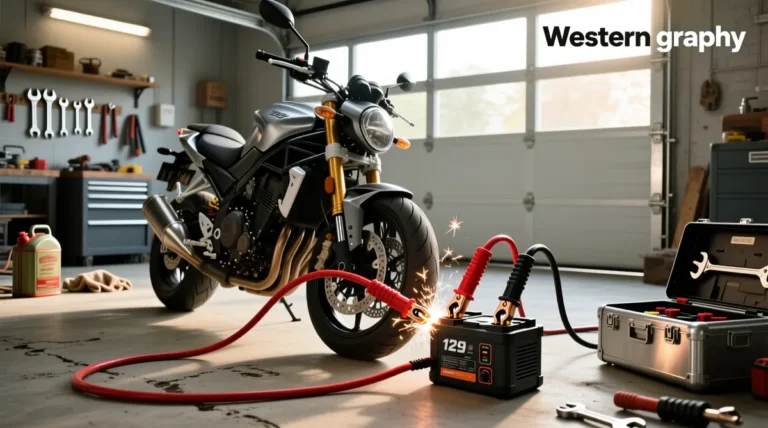
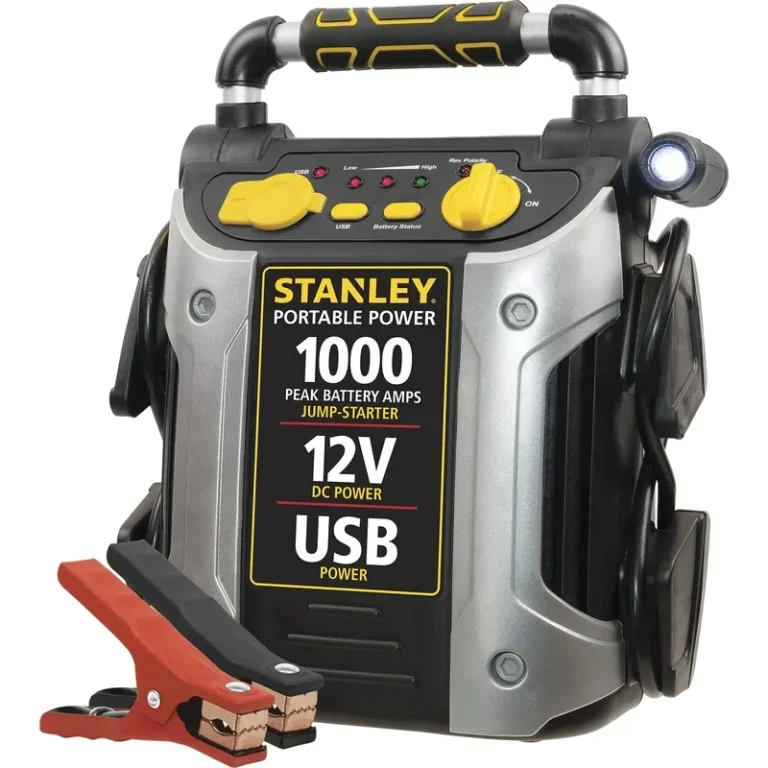
If you're using a portable jump starter (jump pack) instead of another car, the math shifts again. Jump packs deliver a high burst of amps for a short time. They don't trickle-charge the way a running alternator does.
Most owners should wait just 30 seconds to 1 minute to let the pack's internal circuitry stabilize, then crank immediately. If the engine doesn't fire, wait another 2 minutes and try again.
Cold weather adds another wrinkle. A battery at 0°F delivers roughly half the cranking amps it does at 80°F. Industry testing confirms that battery capacity drops about 20% for every 10°F below freezing.
In sub-freezing conditions, plan on the longer end of every range. Expect 5 to 10 minutes even for a lightly drained battery.
The biggest mistake people make is rushing the process. Cranking for 30 seconds with a half-charged battery and no idle time just dumps heat into the starter motor without actually turning the engine. Patience here is non-negotiable.
Why a Dead Battery Won't Start, and What "Charging Time" Actually Means
A 12-volt car battery doesn't work like the lithium-ion battery in your phone. It's a lead-acid battery, which means it stores energy through a chemical reaction between lead plates and sulfuric acid electrolyte. When you turn the key, the starter motor pulls a massive surge of current.
Often 150 to 300 amps for a typical sedan, and up to 600 amps for a diesel truck in cold weather.
When the battery's state of charge drops below about 11.8 volts, it can't deliver that surge. The voltage is there in name, but the available current collapses under load. That's why your headlights might still glow dimly while the engine refuses to crank.
The battery has surface charge but no real reserve.
Jump-starting doesn't really "charge" the battery in the traditional sense. It pushes current directly into the dead battery's terminals so it has enough surface voltage to crank the engine. Once the engine fires, the alternator takes over and slowly recharges the battery over the next 20 to 60 minutes of driving.
This distinction matters. A battery drained by leaving the lights on will usually recover fully after a jump and a drive. A battery that's been dead for weeks, or one that's sulfated from age, may accept the jump but fail to hold a charge afterward.
The 5 Variables That Change Your Wait Time
Let's break down the five factors that actually shift your clock. Use this as your mental checklist before you connect a single clamp.
Battery State of Charge (Fully Dead vs. Partially Drained)
A battery drained by an overnight dome light click has a high state of charge left. You only need to top off the surface. Wait 2 to 3 minutes and try cranking.
A battery that's been sitting dead for a week or more is at a much lower state of charge. The lead sulfate crystals on the plates have started to harden, which raises internal resistance. Wait 5 to 10 minutes, and don't be surprised if the first crank attempt fails.
Temperature and Climate Conditions
Heat and cold both hurt batteries, but cold is the usual culprit for dead starts. Cold batteries lose available cranking amps fast. Battery Council International data shows capacity drops roughly 20% per 10°F below freezing.
If your car sat outside overnight at 10°F, double your baseline wait time. If you're in a garage at 60°F, the standard 2 to 5 minutes is fine.
Jump Source: Donor Vehicle vs. Jump Pack
A donor vehicle with a running engine is putting out alternator voltage. Typically 13.7 to 14.7 volts, with real current behind it. This recharges the dead battery while you wait.
A portable jump pack is essentially a lithium power bank with a high-discharge output. It pushes amps but doesn't sustain a charging current the way an alternator does. Treat it as a cranking aid, not a charger.
Short waits, then crank.
Battery Age and Condition
A battery older than 4 to 5 years is approaching end of life. Sulfation builds up over time. If your battery is old, jump-starting buys you a one-time recovery.
Don't expect repeated jump-starts to fix a dying battery. They won't.
Engine Size and Cranking Load
A 2.0L four-cylinder sips amps compared to a 5.7L V8 truck. Big engines demand more cranking amps. Give the dead battery extra time if you're jumping a truck or SUV with a large displacement engine.
Wait Time by Scenario: Cables vs. Jump Pack vs. Extreme Cold
Here's a quick reference table that maps your situation to the right wait time.
| Scenario | Tools | Wait Time Before Cranking | Crank Duration |
|---|---|---|---|
| Partially drained, mild weather | Jumper cables + donor | 2 to 3 minutes | 3 to 5 seconds |
| Fully dead, mild weather | Jumper cables + donor | 5 to 10 minutes | 5 to 10 seconds |
| Cold weather (below 20°F) | Jumper cables + donor | 10 minutes | 5 to 10 seconds |
| Partially drained | Jump pack | 30 seconds | 3 to 5 seconds |
| Fully dead | Jump pack | 1 to 2 minutes | 3 to 5 seconds |
| Cold weather, jump pack | Jump pack | 2 minutes | 3 to 5 seconds |
If the engine doesn't start after the first 5-second crank, stop. Wait another 2 minutes and try again. Cranking longer than 10 seconds at a time overheats the starter motor.
Three short attempts beat one long one every time.
Step-by-Step: How to Jump Start a Car the Right Way
Order matters here, and so does cleanliness. Corroded terminals can ruin a perfectly good jump. Before you connect anything, eyeball both batteries.
White or blue-green crust on the posts? Wipe it off with a wire brush or even a coin. Dirty terminals block current flow and make the wait time longer than it needs to be.
Pre-Jump Safety Check
Park the donor vehicle close enough that the cables reach, but never let the cars touch. Metal-to-metal contact between two running vehicles is a real risk. Turn off both ignitions, all accessories, and set the parking brakes.
Pop the hoods and prop them securely.
Pull on a pair of safety glasses if you have them. Lead-acid batteries can vent hydrogen gas, especially when charging hard. The AAA roadside safety guide recommends eye protection on every jump, no exceptions.
Correct Cable Order (Positive First, Negative Last)
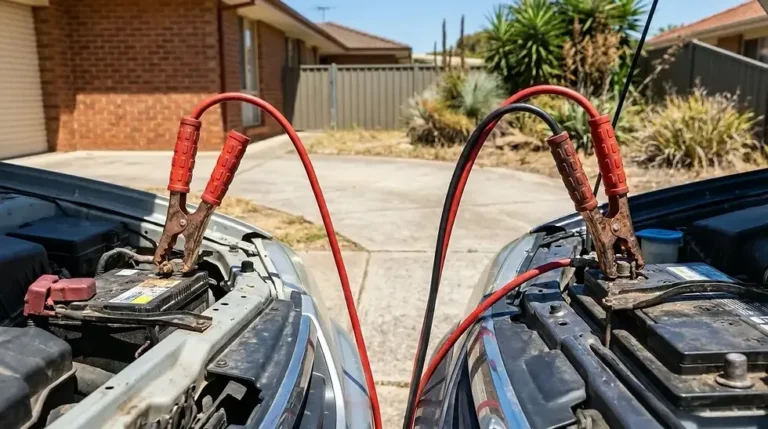
Grab your jumper cables. Most sets are color-coded. Red is positive, black is negative.
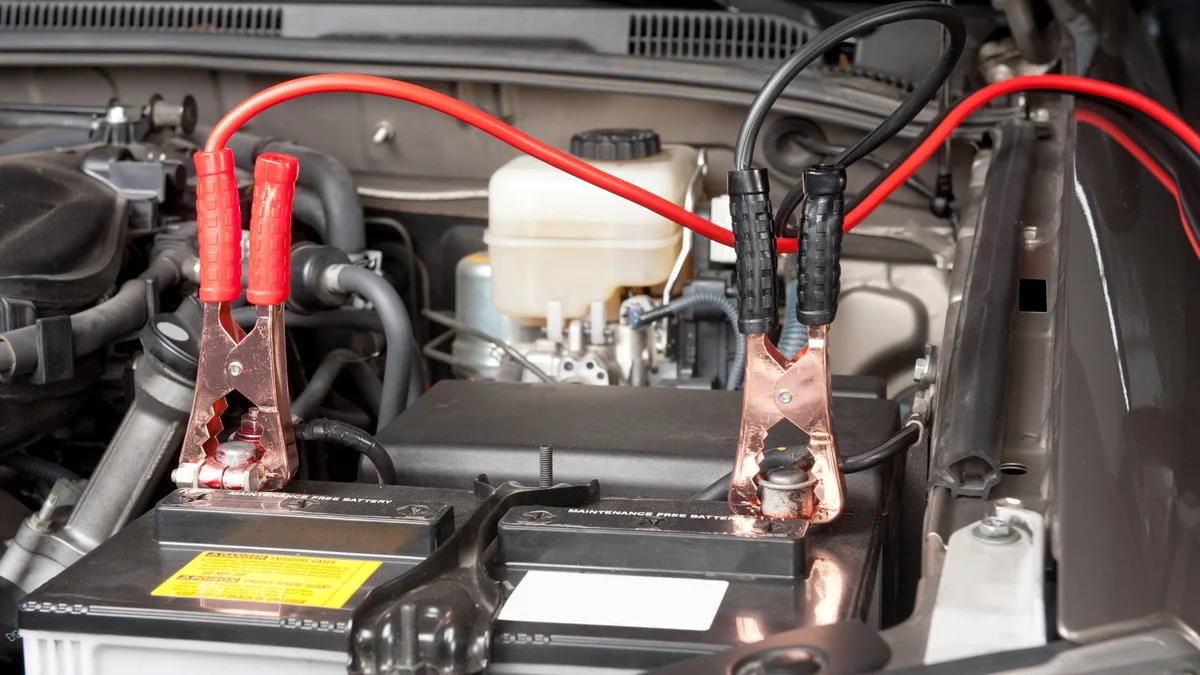
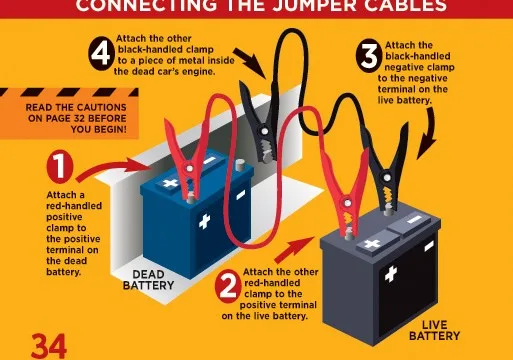
Attach the red clamp to the positive terminal of the dead battery first. Look for the "+" symbol or a red cover. Then attach the other red clamp to the positive terminal of the donor battery.
Black clamps go on the negative terminal of the donor battery next. The final black clamp does NOT go on the dead battery's negative post. Clip it to an unpainted metal surface on the dead car's engine block, away from belts and fuel lines.
This grounds the circuit and prevents sparks near any vented gas.
How Long to Wait Before Cranking
Start the donor vehicle and let it idle. Rev the engine to about 1500 RPM to push more current through the cables. Now wait.
Reference the table from earlier for the right wait time based on your conditions. Most mild-weather, partially-drained scenarios only need 2 to 3 minutes.
Cranking Duration and What to Do If It Doesn't Start
Turn the key on the dead car and crank for 3 to 5 seconds. If it fires, great. Let it idle.
If it clicks but doesn't turn over, kill the switch and try one more time after another 2 minutes of charging. If it still won't start after three short attempts, you've got a bigger problem than a dead battery.
Disconnecting in Reverse Order
Once the dead car is running, disconnect the cables in reverse order. Black ground clamp first, then black on the donor, red on the donor, red on the formerly-dead battery. Keep the just-jumped car running and drive it for at least 20 to 30 minutes.
Idling alone won't do it. The alternator needs real engine RPM to push meaningful charge back into the battery.
How Long to Drive After a Jump Start to Fully Recharge
A common mistake is treating a jump-start as a full recharge. It isn't. The alternator needs real driving time to bring a depleted battery back to a useful state of charge.
Here's the rough math. A typical car alternator puts out 40 to 80 amps at engine RPM above 1500. The car's electrical system consumes 10 to 20 amps just to run.
That leaves 30 to 60 amps for the battery. A 50 amp-hour battery drained to 50% needs about 25 amp-hours back. At a 40-amp charging rate, that's roughly 30 to 45 minutes of sustained driving, not idling.
Highway driving is best. Stop-and-go city driving idles the alternator and burns time without meaningful recharge. If you can hit the highway for 30 minutes straight, you'll leave with a battery at roughly 80% charge.
Good enough to start the next day.
Jump Starting Mistakes That Damage Your Battery or ECU
Modern cars don't forgive electrical mistakes the way older models did. Reverse polarity is the big one. A single reversed clamp can fry the ECU, the alternator diodes, or any number of sensitive modules.
Always double-check positive-to-positive and negative-to-ground before you crank.
Cranking too long is another silent killer. Holding the key for 15 or 20 seconds while the engine refuses to turn dumps serious heat into the starter motor. It also drains whatever charge you just pushed into the battery.
Stick to 3 to 5 seconds per attempt with 2-minute rests.
Connecting to the dead battery's negative post instead of a ground point is risky. The dead battery can vent hydrogen during charging. A spark at the negative terminal can ignite that gas.
Battery Council International has documented this as a recurring cause of garage battery explosions. Always ground the final black clamp to engine metal.
Using a Jump Pack: Time, Limits, and Cold Weather Performance
Portable jump packs changed the game for solo drivers. No second car, no awkward parking lot maneuvers. Just clamp and go.
But they work differently than cables, and the wait times reflect that.
A quality lithium jump pack rated 1000 to 2000 peak amps can crank most V8 engines without any pre-charge wait at all. You connect the clamps, wait 30 seconds for the smart circuitry to detect the battery, and crank. The pack's high-current burst is enough to spin the starter directly.
If the first attempt fails, wait 2 minutes before retrying. This lets the pack's internal temperature sensors reset and the lithium cells recover voltage. Cold weather cuts jump pack capacity substantially.
Below 20°F, a pack rated 1500 peak amps may only deliver 800 to 900 amps in practice. Manufacturer specs typically confirm a 30 to 50% performance drop in freezing temps. Store the pack indoors overnight if you know cold weather is coming.
After a successful jump, recharge the pack itself. Most modern lithium packs recharge from a USB-C or wall adapter in 2 to 4 hours. Don't store them fully drained.
Lithium cells degrade if left at zero charge for weeks.
Jump Starting vs. Alternatives: When a Jump Won't Fix It
A jump is the right call when the battery is healthy and the no-start was caused by a one-time drain. Left a light on. Sat for two weeks.
Froze overnight. These all recover with a jump and a drive.
A jump is the wrong call when the battery is old, the alternator is failing, or there's a parasitic drain. If the car dies again within a day of the jump, something else is wrong. A failing alternator won't recharge the battery, so you'll be stuck again by morning.
A parasitic drain (a stuck relay, a trunk light, an aftermarket stereo wired wrong) will pull the battery flat overnight no matter how long you drive.
Calling roadside assistance makes sense when you don't have cables or a jump pack, when the battery is physically damaged, or when you suspect the alternator is the real culprit. Towing to a shop beats getting stranded twice in one week.
Battery replacement runs $100 to $300 for most cars as of 2026, including installation at a shop. An alternator runs $400 to $800 installed. A cheap multimeter test can tell you which one you actually need before you spend a dime.
Signs Your Battery Is Dead vs. Your Alternator Is Failing
The symptom looks the same from the driver's seat. Car won't start, you need a jump. But the cause matters for your wallet.
A dead battery accepts a jump, the car runs fine afterward, and the next morning it starts without help. That's a one-time drain or normal end-of-life. Replace the battery if it's over 5 years old.
An alternator failure looks different. The car may run for a few minutes after the jump, then die again as the battery drains. Dashboard lights flicker.
The headlights dim at idle and brighten when you rev the engine. That's not a battery problem. That's an alternator not putting out proper voltage.
Get to a shop.
A quick voltage test tells the story. With the engine off, a healthy battery reads 12.4 to 12.7 volts. With the engine running, the alternator should push 13.7 to 14.7 volts.
Anything under 13.5 volts at idle means the alternator isn't charging. Anything over 15 volts means the voltage regulator has failed. Both are shop visits, not jump-start situations.
How to Know When It's Time to Replace the Battery, Not Jump It
Repeated jump-starts are a sign, not a solution. If you've needed a jump more than twice in the last six months, the battery is on its way out. Lead-acid batteries rarely recover from chronic deep discharge.
Age is the simplest indicator. Most car batteries last 4 to 6 years in moderate climates and 3 to 5 years in extreme heat or cold. If your battery is past the 5-year mark, replacement is cheaper than the next tow truck bill.
Visible swelling of the battery case is a hard stop. A swollen battery has frozen internally or suffered thermal damage. Jump-starting a swollen battery can crack the case and leak sulfuric acid.
Replace it immediately.
Slow cranking after a full overnight rest is the classic pre-failure symptom. The engine turns over but sounds labored. The battery has enough charge for the dome light but not enough amps for the starter.
That's a battery begging for retirement.
If your battery checks out but the car still won't hold a charge, look for parasitic loads. A multimeter set to amps, connected in series with the disconnected negative terminal, should read under 50 milliamps with everything off. A reading of 200 mA or more means something is draining the battery while the car sits.
Common culprits include aftermarket alarms, stuck relay switches, and miswired accessories.
Expert Tips for Faster, Safer Jump Starts
Keep your battery terminals clean. A wire brush once a year adds years to battery life. Corrosion is resistance, and resistance makes every jump harder than it has to be.
Buy a portable jump pack and keep it charged. Modern lithium packs are smaller than a paperback book and hold enough charge for 10 to 20 jumps. They eliminate the need for a second vehicle entirely.
If you live somewhere cold, consider an AGM (absorbed glass mat) battery. AGM batteries handle deep discharge and cold cranking better than standard flooded cells. Manufacturer specs confirm AGM batteries deliver 15 to 20% more cranking amps at 0°F than equivalent flooded batteries.
Always drive after a jump. Don't just idle. Idling at 700 RPM doesn't spin the alternator fast enough to push meaningful charge back into the battery.
Highway RPM for 30 minutes is the real recovery.
Frequently Asked Questions
How long should I let the donor car run before trying to start the dead car?
Let the donor car idle at 1500 RPM for 2 to 5 minutes if the dead battery was drained recently. Wait 5 to 10 minutes if the battery was fully dead or the weather is cold. The donor's alternator needs this time to push enough surface charge into the dead battery to crank the starter.
Can I jump-start in the rain or snow?
Yes, jump-starting in wet weather is safe as long as the cables and clamps stay clear of pooling water. The voltage involved is too low to electrocute you, but keep the clamps clean and dry before connecting. Make sure both cars are parked on stable ground with the parking brakes set.
What if the car still won't start after a 10-minute charge?
The most common reason is a battery too far gone to accept current. Sulfated or internally shorted batteries won't take a charge. The other possibility is a failing starter motor or a fuel system issue unrelated to the battery.
If the dashboard lights are bright but the engine won't crank at all, the starter has likely failed.
Will idling the car charge the battery after a jump?
Not effectively. A car idling at 700 RPM produces far less alternator output than at 1500 RPM or higher. Idling for an hour puts roughly 5 amp-hours back into the battery.
Driving at road speed for 30 minutes puts back 25 to 30 amp-hours. Drive, don't idle.
How long does a jump starter pack hold its charge?
A quality lithium jump pack loses roughly 1 to 3% charge per month when stored at room temperature. Stored at full charge in a cool garage, expect 6 to 12 months between top-ups. Stored in a freezing car, expect noticeable capacity loss within a month.
Charge it every few months to keep the cells healthy.
Can a completely dead battery be jumped?
Yes, but it takes longer. A battery at 0% state of charge needs 5 to 10 minutes of donor-vehicle charging before cranking. Don't crank until you see the dashboard lights brighten on the dead car.
If they stay dim after 10 minutes, the battery is likely shorted and won't accept a charge.
Final Recommendation
If you remember nothing else, remember this. Wait 3 minutes for a typical dead battery, 5 to 10 minutes if the weather is cold or the battery is completely flat. Drive for 30 minutes after the jump to recharge.
If the car dies again within a day, skip the second jump and test the alternator. A good multimeter and ten minutes of your time will tell you whether you need a $150 battery or a $600 alternator.