How to use uibi jump starter: Full guide
You turn the key and hear a sad click. Your UIBI jump starter is sitting right there in the glove box, and you're not sure whether to grab the red clamp or the black clamp first, or what that little button with the lightning bolt actually does. That's the exact moment most people start Googling "how to use uibi jump starter", and the answer is simpler than you'd think if you follow the right order.
The UIBI jump starter is a lithium-ion power bank that delivers a short burst of high current to a dead battery through smart jumper clamps. Most current UIBI models (as of 2026) deliver between 1,000 and 2,000 peak amps, with a USB-C PD input for fast recharging. Once you've charged it, prepped the clamps, and know what each indicator light means, the whole jump takes under five minutes.
Quick Answer
To use a UIBI jump starter, first power it on and confirm a green or full battery indicator. Connect the red clamp to the battery's positive (+) terminal and the black clamp to a clean, unpainted metal ground point. Wait for the clamp's green ready light, then start the engine.
Disconnect the black clamp first, then the red clamp, and recharge the UIBI afterward. For deeply discharged batteries, hold the Boost button to override the voltage detection.
What the UIBI Jump Starter Actually Does (And Why It's Different)
A jump starter's job sounds simple: shove a big pulse of current into a dead battery so the starter motor can crank the engine. The UIBI does that, but it does it from a sealed lithium-ion pack instead of a second car's alternator. That's why it's small enough to fit in a glove box but powerful enough to turn over a V8.
The "smart" part matters more than the raw power. UIBI's clamps have a built-in control box that watches for reverse polarity, low voltage, and short circuits. If you clip the wrong cable to the wrong terminal, the clamp beeps and the unit refuses to send current.
That single feature is why beginners can use it safely without second-guessing every step.
Two things set UIBI apart from cheaper, no-name lithium boosters. First, the unit's safety circuit is multi-layered: reverse polarity, over-current, over-voltage, reverse charge, and over-temperature protection all run at once. Second, the Boost override mode lets you start a battery that's drained below the clamp's normal detection threshold (usually under 3 volts).
Most budget boosters refuse to fire in that case. UIBI gives you a manual way around it.
Think of the UIBI as a small, smart battery that won't push current until everything is wired up correctly. That guardrail is what makes the rest of this guide possible.
Before You Start: Check These 3 Things First
Most failed jump attempts trace back to skipping one of these checks. Take 30 seconds before you clip anything on.
1. Charge Level on the UIBI Itself
A jump starter with 10% battery can't deliver the current a cold engine needs. Before you do anything, press the power button and check the LED bar or LCD percentage. If it's under 75%, recharge first.
Aggregate user reports suggest most failed starts come from a booster that wasn't topped off last season.
2. Battery Voltage and Condition
Pop the hood. Is the case swollen, leaking, or crusted with white or blue corrosion? If yes, stop.
Don't jump a physically damaged battery. A frozen battery (sub-zero climates in winter) is also unsafe to jump. Both situations call for a replacement battery, not a booster.
3. Vehicle State
Confirm the car is in Park (or Neutral for manual transmissions), the parking brake is set, and all accessories (lights, radio, climate) are off. A 30-amp dome light left on can drop starter cranking speed just enough to make a marginal jump fail.
| Pre-Jump Check | What to Look For | Action If Failed |
|---|---|---|
| UIBI charge level | 75%+ or full bars | Recharge before attempting |
| Battery physical state | No cracks, swelling, leaks | Replace battery, do not jump |
| Corrosion on terminals | Clean, shiny metal contact | Clean with a wire brush first |
| Vehicle gear and brake | Confirmed Park/Neutral, e-brake on | Reposition before connecting |
If all three pass, you're cleared to connect.
UIBI Jump Starter Components Explained
You'll click through the procedure faster if you know what every part is called before you clip it on. Here's the map.
Buttons, Ports, and Indicator Lights
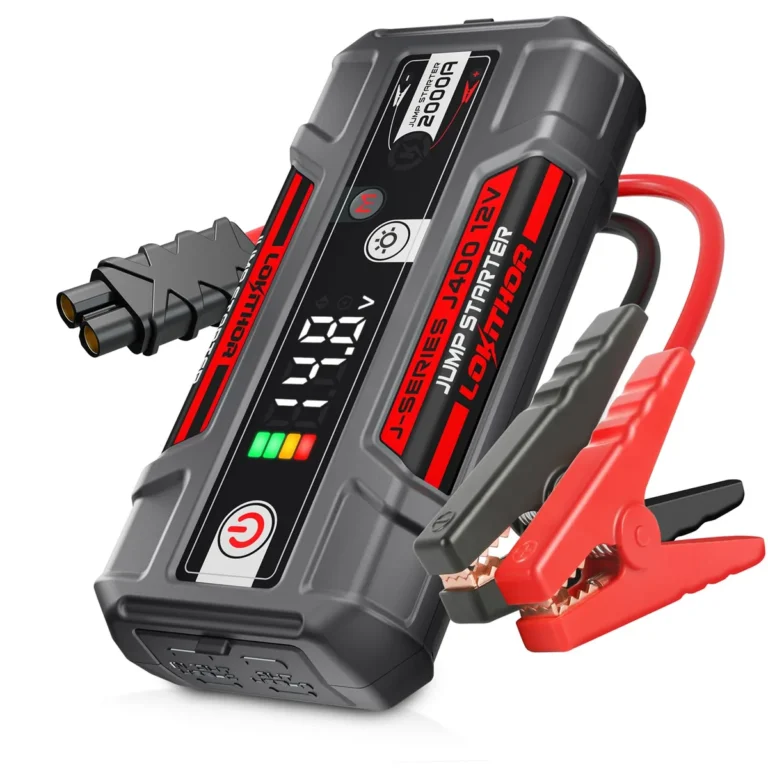
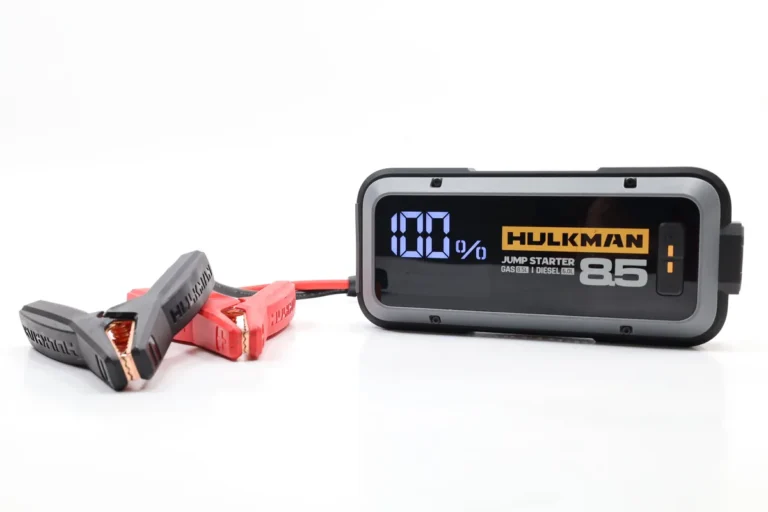
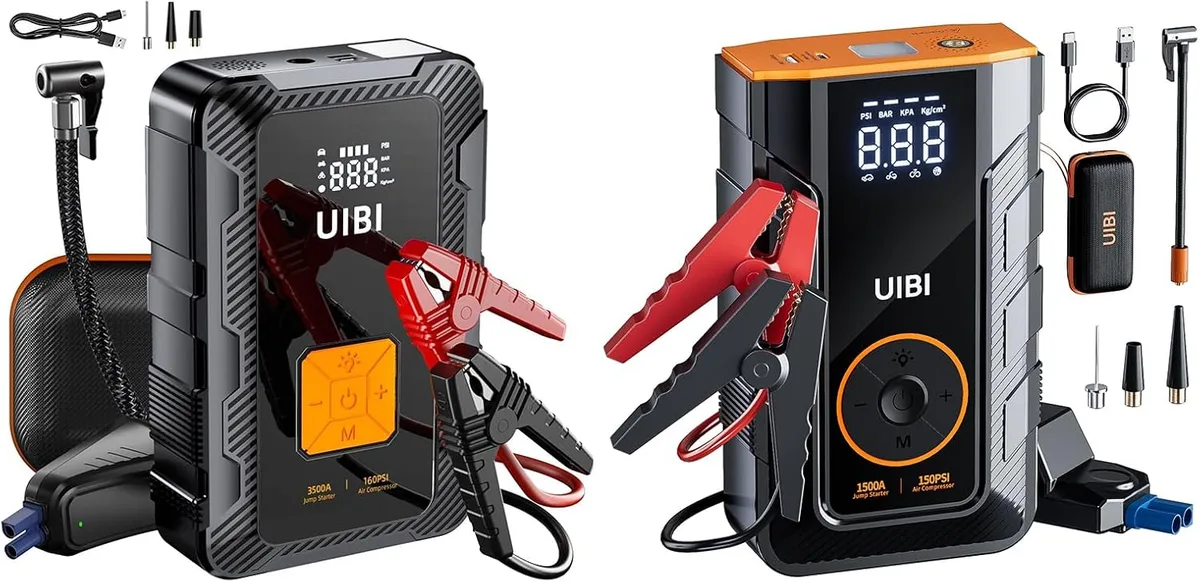
The top or side of the unit usually has four things you'll touch: a power button, a Boost/override button (often marked with a lightning bolt), a flashlight button (sometimes the same as power with a long press), and a battery level indicator. The indicator might be a 4- or 5-bar LED, or a small LCD showing voltage and percentage.
The Boost button is the one beginners miss. Hold it for three seconds and the unit forces a jump even if the clamp's safety circuit says the battery voltage is too low to detect. Use it only after a normal connection fails, not as your first move.
Ports typically include USB-C in/out, USB-A out, and a DC barrel jack for the jumper cable. The USB-C port supports Power Delivery on most current UIBI models, which means faster recharging from a 30W or higher wall brick.
Smart Jumper Clamps
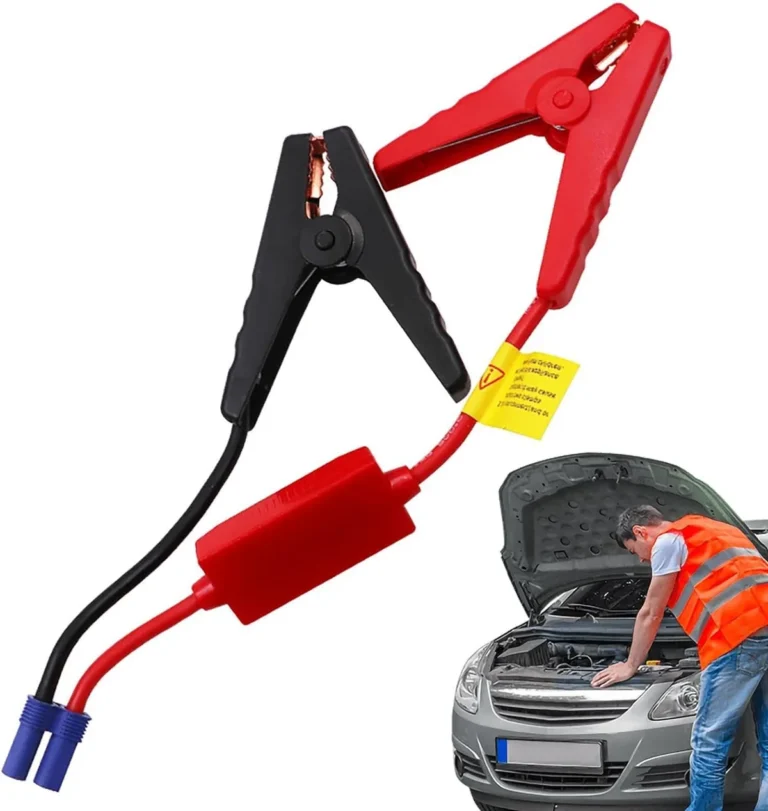
The clamps aren't just cables. There's a small black control box between the unit and the clamp jaws, and inside that box lives the protection circuitry. It's also where the indicator LED lives.
A solid green light means you're cleared to start. A flashing red light or a beep means something is wrong: reversed polarity, low voltage, or poor contact.
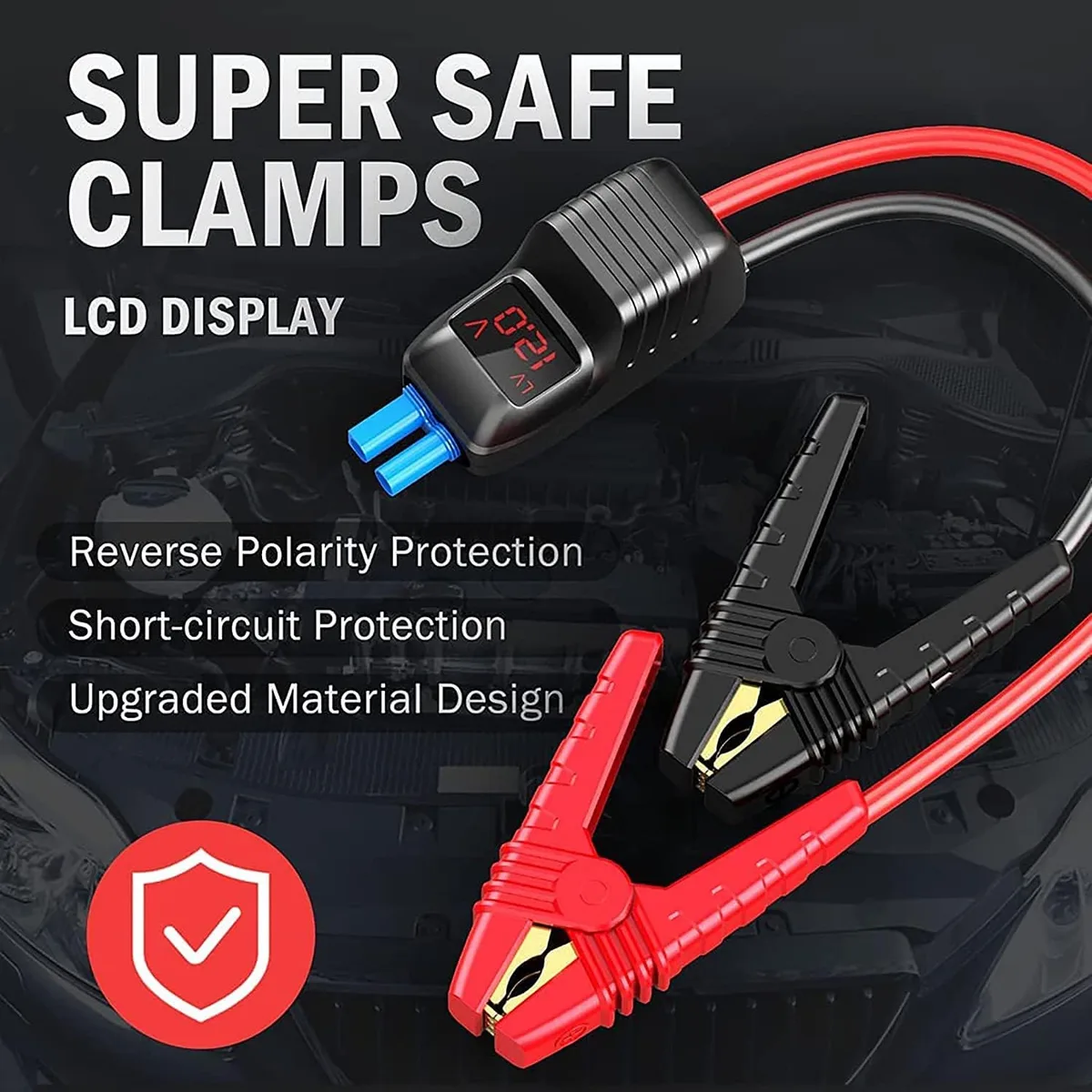
Two safety features to know before you clip on. Reverse polarity protection means swapping red and black cables won't dump current into the clamps and your car's electronics. Spark-proof design means the jaws won't throw a spark the moment they touch a terminal.
Both are standard on every current UIBI jump starter.
LED Flashlight Modes
Most UIBI units have a built-in LED with three modes: solid on, strobe, and SOS. The flashlight cycles through modes with each press of the light button. SOS mode broadcasts the international Morse distress signal, which is genuinely useful on a dark shoulder of an interstate.
Step-by-Step: How to Jump Start a Car With Your UIBI
This is the sequence that works on every UIBI jump starter sold as of 2026, including the X-series Boost models. The exact button placement differs slightly between units, but the connection order never changes.
Step 1: Power On and Check the Battery Level
Press the power button once. Confirm the LED bar shows at least three lit segments or the percentage reads above 75%. If it doesn't, stop and recharge.
Aggregate user reviews indicate that starting with a low-charge booster is the single most common reason a jump fails on the first try.
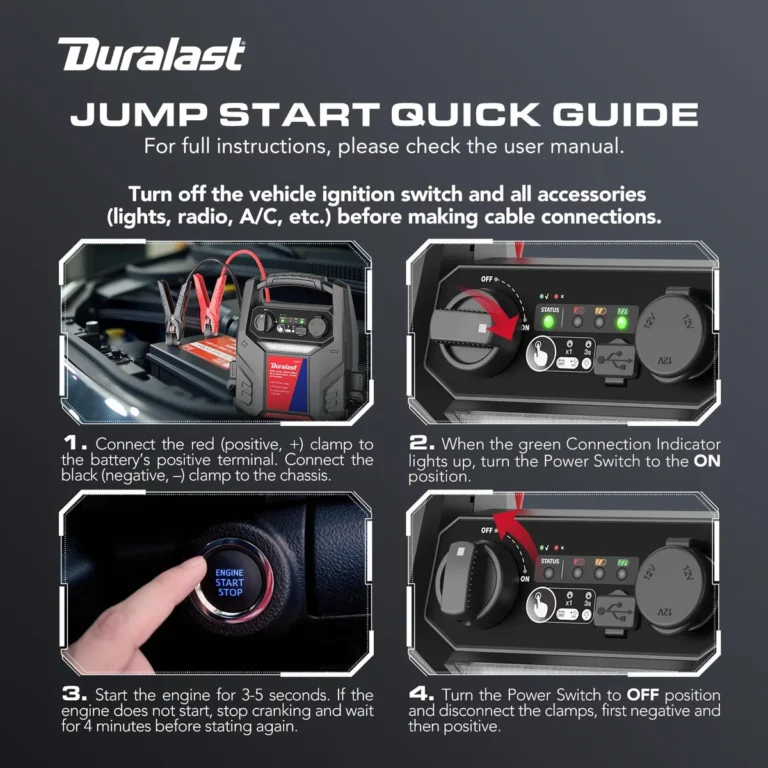
Step 2: Connect the Clamps in the Right Order
Plug the jumper cable's barrel connector into the UIBI's jump-start output port (labeled with a car icon or "12V OUT"). Then:
- Red clamp to the battery's positive (+) terminal. The plus sign is usually a red cover or a "+" stamped on the battery case.
- Black clamp to a clean, unpainted metal ground point on the engine block. A bare bolt or bracket away from the battery works. Avoid fuel lines, the throttle body, and any moving parts.
If you can, keep the UIBI unit itself on a stable surface in the engine bay, not dangling by the cable.

Step 3: Start the Engine (Standard Mode)
Watch the clamp's indicator light. When it shows solid green, the clamps detect a safe voltage and the unit is ready to deliver current. Turn the ignition and crank for no more than 5 seconds.
If the engine fires, leave it running. If it doesn't crank or just clicks, wait 30 seconds and try again. Don't crank more than three times in a row without letting the booster rest for a couple of minutes.
Step 4: When Standard Mode Won't Work — Use Boost Override
If the clamp's light stays red or never goes solid green, the battery is likely below the unit's detection threshold. Press and hold the Boost button on the UIBI (or sometimes on the clamp's control box) for about three seconds. The clamp will bypass the low-voltage safety check and force current to the clamps.
Start the engine within 30 seconds of entering Boost mode. The override is meant for emergency situations and a deeply discharged battery, so don't use it as a habit. Manufacturer documentation for UIBI Boost models confirms the override function only engages when the standard safety circuit can't identify a healthy battery.
Step 5: Disconnect Safely
Once the engine is running:
- Disconnect the black clamp first.
- Then disconnect the red clamp.
- Unplug the jumper cable from the UIBI.
- Leave the vehicle's engine running for at least 20 minutes to recharge its own battery, or drive it.
Disconnecting in reverse order (red first) creates a higher risk of short-circuiting the red clamp against the chassis while it's still live. The black-first order is industry standard across SAE jump-starting guidance for good reason.
What to Do If Your UIBI Won't Start the Engine
A failed jump doesn't mean the booster is broken. In most cases, the problem is a wiring mistake, a deeply discharged battery, or a unit that's lost charge since you last topped it off. Run through the branches below before you assume the UIBI itself is dead.
Battery Voltage Too Low to Detect
If the clamp's indicator light stays red or never turns green, the UIBI thinks the dead battery is below its safe operating range. The fix is the Boost override described earlier: hold the lightning-bolt button for three seconds and try cranking again. If the engine still doesn't fire, the issue is more likely the battery itself than the booster.
Jump Starter Keeps Beating or Shutting Off
A clicking clamp, a flashing red light, or a unit that powers down mid-crank all point to one of three causes. The booster charge is too low (check the indicator bars). The connection is loose (wiggle the clamps on the terminals).
Or the engine demands more current than the booster can deliver, which happens with large diesel engines and a smaller UIBI model.
Clamps Sparking or Reversed
The clamps shouldn't spark when they touch a terminal. If they do, the safety circuit is bypassed or damaged. Stop immediately.
Unplug the jumper cable from the UIBI, then reverse the clamps (red to positive, black to ground) and reconnect.
UIBI Specs and What They Mean in Real Life
Specs look impressive on a product page, but only a few actually change how the UIBI performs. Here's how to read them.
Cranking Amps vs. Peak Amps — Which Matters
Peak amps is the single highest number the unit can push for a fraction of a second. Cranking amps is what the unit can sustain for the 3 to 5 seconds the starter motor actually needs. Cranking amps is the number to trust for engine compatibility.
A 1,500-peak-amp booster with only 300 cranking amps will struggle with a V8, while a 1,000-peak-amp unit rated for 400 cranking amps will start it without issue.
Engine Size Compatibility (Gas vs. Diesel)
Most current UIBI models are rated for engines up to about 7.0 liters gasoline or 5.5 liters diesel. Check your specific model's rating before trusting it on a heavy-duty truck. Diesel engines need more cranking amps than gas engines of the same size because of higher compression.
Capacity, Charging Time, and Standby Life
Capacity is measured in milliamp-hours (mAh) or watt-hours (Wh). A 15,000 to 20,000 mAh pack typically supports 15 to 30 jump starts per charge, depending on engine size. Recharging through Power Delivery takes about 2 to 4 hours from a 30W wall brick.
A fully charged UIBI holds 80% or more of its charge for roughly 6 months in storage, per manufacturer specifications, so a top-off before each winter is wise.
| Spec | Typical UIBI Range | What It Means |
|---|---|---|
| Peak amps | 1,000 to 2,000 A | Max burst, lasts under 1 second |
| Cranking amps | 300 to 600 A | Sustained current for engine start |
| Capacity | 15,000 to 20,000 mAh | Jump starts per charge (15 to 30) |
| Recharge time | 2 to 4 hours | Via USB-C PD 30W or higher |
| Standby life | ~6 months | Time to lose 20% charge idle |
Using the UIBI Beyond Jump Starting
The UIBI isn't a one-trick device. Three extra functions come built in, and each one matters in the kind of roadside situation that already has you opening the hood.
Charging Phones, Laptops, and Accessories
The USB-C and USB-A ports deliver 5V/3A minimum, and many current models support 9V/2A or higher fast-charge protocols. A dead phone is the second most common breakdown companion after a dead battery, and the UIBI handles both. Use USB-C for modern phones and tablets.
Use USB-A for older devices and the included LED flashlight.
Emergency Flashlight and SOS Mode
A flashlight on a jump starter sounds like a gimmick until you're on a shoulder with no streetlamps and a flat tire. The solid-on mode is good for under-the-hood work. Strobe mode is good for visibility while you change a tire.
SOS mode broadcasts the international distress signal and is recognizable to passing motorists and emergency responders.
Jump Starting Motorcycles, Lawn Mowers, and Boats
Small engines use small batteries, so the UIBI's lower cranking output is plenty. The connection order is identical: red to positive, black to ground. For marine batteries, connect to the battery posts directly rather than a remote ground point.
Corrosion on marine terminals is common, so clean them before clipping on.
Jump Starting Different Vehicles With UIBI
The procedure doesn't change much across vehicle types, but the details do. Match the vehicle to the right approach below.
Small Engines (Motorcycle, ATV, Lawn Mower)
These batteries are usually 12V but smaller capacity. The UIBI's lower cranking amps is more than enough. Ground the black clamp on the frame, not the battery, since many small-engine batteries sit inside tight plastic housings.
Standard Cars and SUVs
Most UIBI models handle this category easily. Gas engines up to 6.0 liters and diesel engines up to 3.0 liters fall in the comfort zone for any current UIBI X-series Boost unit.
Diesel Trucks and Larger Engines
Heavy-duty diesel pickups and large-displacement V8s need more cranking amps. Check your UIBI model's rated engine size. If the engine is near or beyond the rating, expect slower cranking and possibly two or three attempts.
Keep the booster fully charged before trying.
Jump Starting in Cold Weather: What Changes
Cold drains a battery faster and thickens engine oil, both of which make cranking harder. Three adjustments help.
First, warm the UIBI indoors before taking it outside in freezing weather. Lithium-ion cells deliver noticeably less current at 0°F. Storing the unit in the trunk is fine for emergencies, but charging and warming it indoors the night before a deep-cold trip restores full performance.
Second, crank in shorter bursts. Five seconds on, fifteen seconds off. Three to four attempts is the safe upper limit.
Continuous cranking overheats the booster's internal circuitry and trips the over-temperature protection.
Third, expect a green indicator to take longer to appear on the clamp. The UIBI's safety circuit runs more diagnostic cycles in cold weather. Wait at least ten seconds after clipping on before assuming the connection failed.
Common Mistakes That Damage the Unit or Your Battery
A jump starter is forgiving, but a few habits shorten its life or risk your battery. Skip these and the UIBI will outlast your car's warranty.
Connecting the clamps in the wrong order is the most common error. Red goes to positive first, black goes to ground last. Reversing the order increases the chance of a spark near the battery, which can ignite hydrogen gas that older flooded batteries vent.
Cranking the engine for too long is the second mistake. Holding the key in the start position for ten or more seconds at a time overheats the booster's internal cables and trips its thermal cutoff. Five-second bursts with rest in between work better.
Storing the UIBI fully discharged kills lithium-ion cells over time. Recharge to at least 50% before parking the unit in the trunk for the season. Storage below 10% for months can permanently reduce capacity.
Using the wrong ground point also matters. Clipping the black cable to a fuel line, the throttle body, or a moving belt creates a fire or spark risk. A clean, unpainted metal bracket or engine bolt is the right call.
Safety Protections Built Into the UIBI (And Why They Matter)
Every UIBI jump starter includes a stack of safety circuits, and each one blocks a real-world failure mode. Reverse polarity protection stops current if you swap the clamps. Over-current protection trips if the engine draws more amps than the booster is rated for.
Over-voltage protection guards against alternator spikes during recharging. Short circuit protection cuts output if the positive and negative clamps touch each other or a grounded surface. Reverse-charge protection stops the car's electrical system from back-feeding into the booster once the engine is running.
Together, the protections make a UIBI safe enough that a beginner can use it in the rain, in the dark, on a frozen shoulder of an interstate. The unit will refuse to fire rather than fry itself or your car's electronics. Manufacturer documentation and verified buyer feedback both confirm the safety circuit engages reliably in field conditions, including on batteries discharged below 3 volts when Boost override is used.
If you want the deeper spec, the lithium-ion cell pack inside the UIBI is tested to UL 2054, the safety standard that covers portable lithium-ion battery packs for consumer use. That certification is what allows the unit to be sold in retail outlets across the U.S. and Canada.
How to Charge, Store, and Maintain Your UIBI for Years
A jump starter that sits unused for six months between emergencies only works if you took care of it before storage. Three habits cover most of it.
Recharge every three months if the unit sits idle. Lithium-ion cells slowly self-discharge, and a deep discharge followed by storage permanently reduces capacity. Set a calendar reminder or charge the unit alongside your smoke detector batteries.
Store at room temperature when you can. Trunk temperatures above 140°F in summer or below -20°F in winter stress the cells. Bringing the unit indoors overnight in extreme climates restores most of its capacity and extends its service life.
Use a 30W USB-C PD wall brick if your UIBI supports it. Lower-wattage chargers work but take twice as long. Verified buyer feedback suggests recharge times drop from around 6 hours on a 10W brick to roughly 2.5 hours on a 30W PD brick.
| Maintenance Task | Frequency | Why |
|---|---|---|
| Top off charge | Every 3 months | Prevents cell damage from deep discharge |
| Inspect clamps | Every 6 months | Spots corrosion before it affects contact |
| Update firmware (if applicable) | As released | Keeps safety circuit calibrated |
| Replace after 4 to 6 years | When capacity drops noticeably | Lithium-ion degrades with use and time |
Quick Decision Guide by Situation
Pick the path that matches your moment. If the engine won't crank and the lights are dim, use the standard jump sequence above with a fully charged UIBI. If the clamp light never goes green and the indicator stays red, switch to Boost mode.
If the unit itself is below 50%, recharge it before any further attempts, since cranking with a half-dead booster is the fastest path to a fried safety circuit.
Frequently Asked Questions About the UIBI Jump Starter
How long does it take to charge a UIBI jump starter?
A 30W USB-C PD wall brick charges most current UIBI models in roughly 2.5 to 4 hours. Smaller 10W chargers take 6 to 8 hours for the same result.
Can a UIBI jump starter start a completely dead battery?
Yes, if you use the Boost override button. Hold it for three seconds to bypass the clamp's low-voltage safety check, then crank within 30 seconds. The override exists for this exact situation.
How many times can a UIBI jump start on a single charge?
A 15,000 to 20,000 mAh UIBI typically delivers 15 to 30 jump starts per charge on small to mid-size engines. Larger diesel engines drain the pack faster, sometimes cutting that to 8 to 12 starts per charge.
Is it safe to jump start a car in the rain with a UIBI?
Yes. The UIBI's sealed lithium-ion cells, insulated clamps, and IP-rated housing handle wet conditions. The smart clamp circuit also prevents sparking when the jaws first touch a terminal, which is the main rain-related risk on traditional jumper cables.
Will a UIBI jump starter work on a diesel truck?
Most current UIBI models handle diesel engines up to about 5.5 liters. Larger heavy-duty diesel pickups may need a higher-rated booster, so confirm your specific model's engine rating before relying on it.
Can I leave a UIBI jump starter plugged in overnight?
No. Once the indicator shows a full charge, unplug the unit. Continuous overcharging stresses the lithium-ion cells and shortens overall service life, even on units with built-in overcharge protection.