How to jump start jeep grand cherokee 2023
Your 2023 Jeep Grand Cherokee won't start. The dash lights flicker, the doors unlock fine, but the engine just clicks. Before you call for a tow, there's a good chance you can get back on the road yourself in under fifteen minutes, as long as you know one quirk: the battery isn't where you'd expect.
The actual battery sits under the front passenger seat, tucked under an access panel. To save you from wrestling with that, Jeep added dedicated remote jump-start posts under the hood. Manufacturer specifications for the 2023 Grand Cherokee confirm a 12V AGM battery with a remote positive terminal (red cover, marked "+") and a remote ground post on the driver-side firewall.
As of 2026, this layout still applies to the 4xe plug-in hybrid variant as well.
Quick Answer
The 2023 Jeep Grand Cherokee has a remote jump-start terminal under the bonnet. Connect the positive cable to the red-capped post. Connect the negative cable to the unpainted ground bracket nearby.
Start the donor vehicle, wait two minutes, then start the Grand Cherokee. Disconnect in reverse order. Drive for at least thirty minutes to recharge the battery.
Where Is the Battery on a 2023 Jeep Grand Cherokee?
Here's the part that trips people up: the battery isn't under the hood. On the 2023 Grand Cherokee, the H6 (Group 48) AGM battery sits beneath the front passenger seat, accessed through a removable carpeted panel.
Jeep did this for a few reasons. AGM batteries vent less hydrogen and tolerate cabin mounting better than flooded batteries. The under-seat position also balances weight and protects the battery from engine-bay heat, which shortens battery life.
But moving the battery created a usability problem. You don't want to pull up carpet and shift a seat every time you need a jump. So Jeep engineered two remote posts in the engine bay that act as a bridge to the battery.
They're the only terminals you should touch during a jump.
| Location | What You'll Find | Why It's There |
|---|---|---|
| Under front passenger seat | Main 12V AGM battery (H6/Group 48) | Weight balance, heat protection, AGM safety |
| Engine bay, driver-side firewall | Remote positive (+) post with red cover | Easy access for jump-starting |
| Engine bay, near positive post | Unpainted metal bracket (− ground) | Safe grounding point away from battery gases |
If you can't find the posts right away, look for a red plastic cover with a "+" stamped on it. Pop it open, and that's your positive terminal.
What You'll Need Before You Start
A jump-start doesn't require much, but skimping on any of these will cost you time.
- Jumper cables, 4-gauge or 6-gauge. Lower gauge numbers mean thicker cables, and thicker cables handle cranking amps without voltage drop. Don't use the cheap 10-gauge set from the discount bin; they struggle with the V6 and V8.
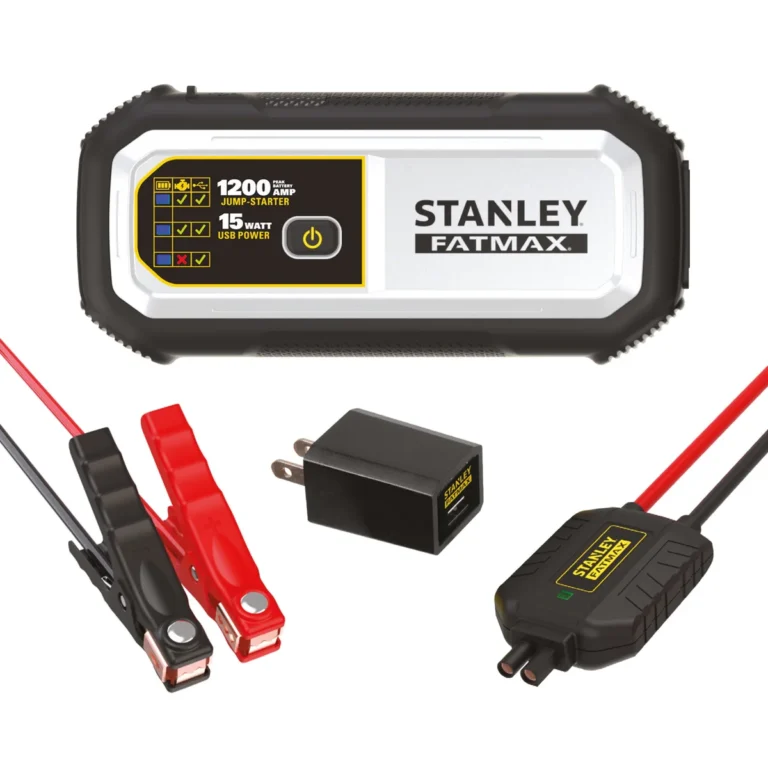
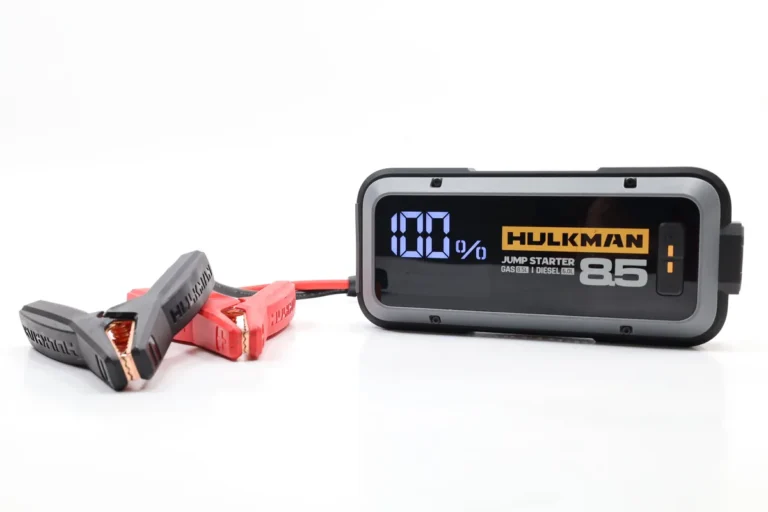
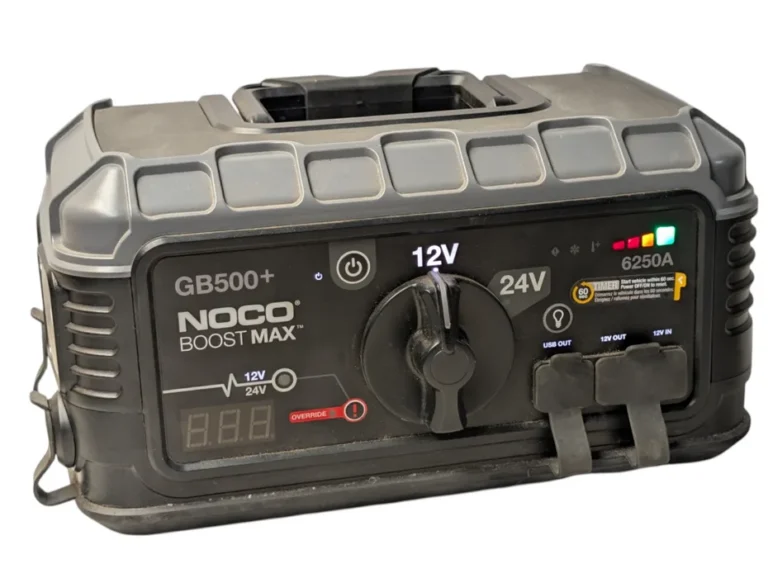
- A donor vehicle with a healthy 12V system, OR a portable lithium jump box rated for at least 1,000 peak amps.
- Safety glasses and gloves. AGM batteries don't leak much, but they can crack if mistreated.
- Your owner's manual. Not optional, since the 2023 manual spells out the exact emergency starting procedure for your specific engine.
If you're using a portable jump box, confirm it's fully charged. A half-charged unit might light up the dash but fail to crank the engine. For the 3.6L V6, 400 cranking amps is usually enough.
For the 5.7L V8, push that to 800+ amps. Cold weather roughly doubles the cranking demand, so plan accordingly.
Aggregate user reviews on portable jump boxes consistently flag the same mistake: owners buy a unit rated only for 4-cylinder cars and assume it'll work on a V8 SUV. It won't. Check the engine displacement before you buy.
Understanding the Remote Jump-Start Posts Under the Hood
The remote posts sit on the driver-side firewall, near the back of the engine bay, just below the brake booster area. They're usually tucked under a small black plastic lid or a flip-up flap.
Here's what to look for once you pop the hood:
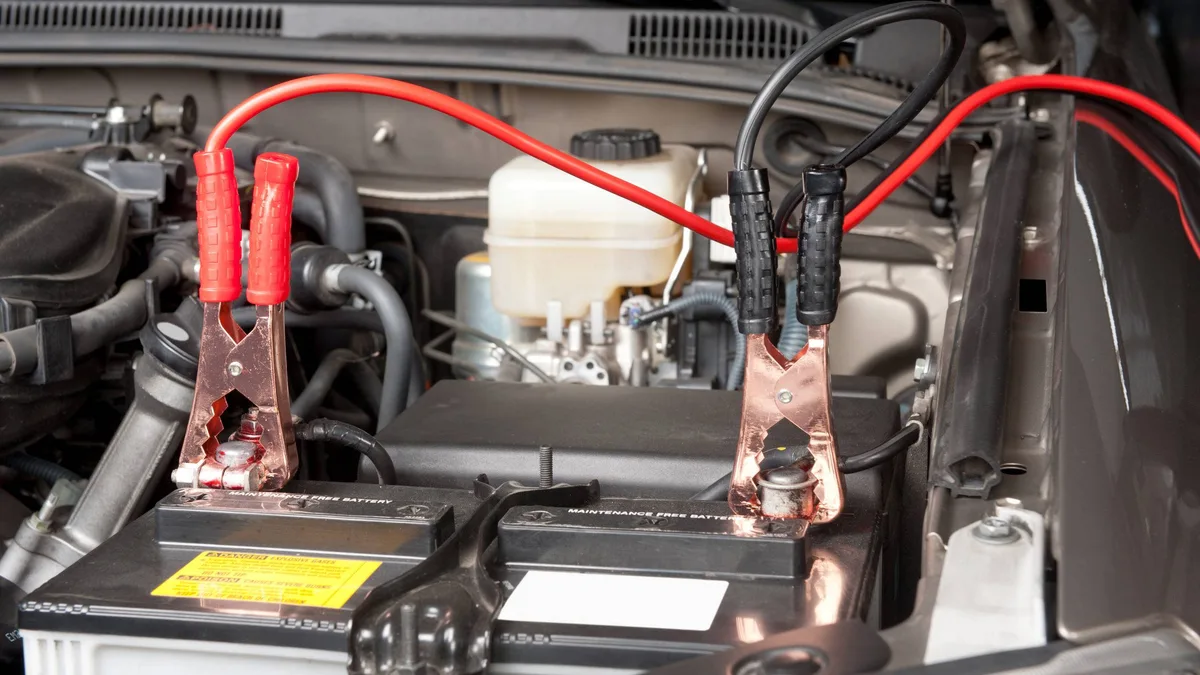
- Positive post. Red plastic cover marked "+". Slide or lift the cover to expose the metal terminal underneath.
- Ground point. An unpainted metal bracket or stud nearby, often shaped like a small bolt or loop. This is your negative connection point.
Why ground on a separate post instead of the battery's negative terminal directly? Two reasons. First, the battery's actual negative terminal is buried under the seat, so it's not an option.
Second, the remote ground post keeps any spark from igniting hydrogen gas that AGM batteries can still off-gas under heavy charging.
Never connect the negative clamp to a painted surface, a fuel line, a moving part, or the alternator. A painted surface won't conduct well, and the other options are either dangerous or will fry electronics.
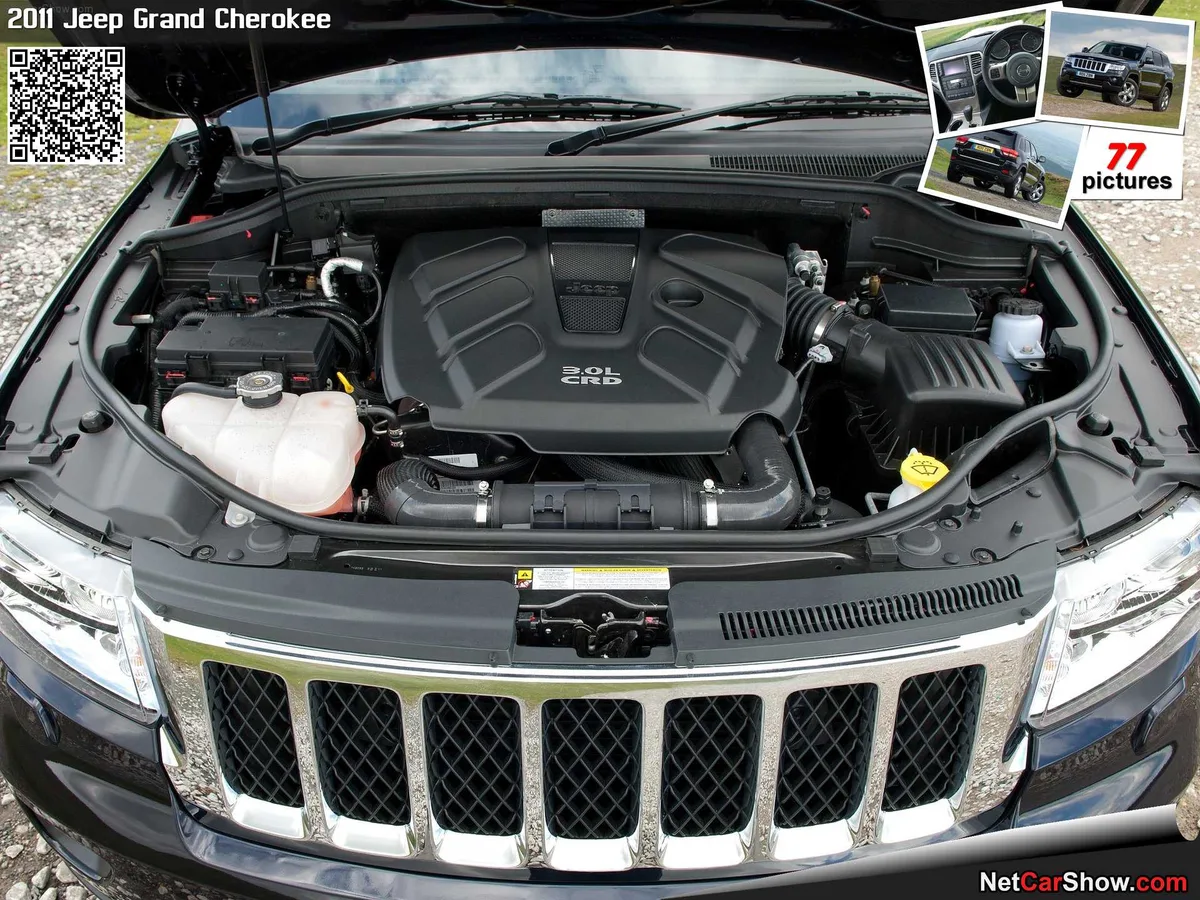
If you've never opened your Grand Cherokee's hood, the manual's emergency starting section walks you through this with a labeled diagram. Refer to it before your first jump, especially if your model has the 4xe powertrain, since hybrid layouts vary slightly.
Step-by-Step: Jump Starting With Another Vehicle
This is the workflow you'll follow roughly 80% of the time. It's safe, it's quick, and it works as long as the donor vehicle has a healthy battery.
Before You Connect Anything
Park the donor vehicle close enough that the cables reach comfortably between both engine bays. Make sure the two vehicles aren't touching, since body-to-body contact can create an alternate ground path. Turn both vehicles off.
Remove the key (or step away with the fob) so neither vehicle tries to wake up its electronics.
Open both hoods. On the Grand Cherokee, locate the red-capped positive post on the driver-side firewall and the nearby ground bracket.
Connection Order (Critical)
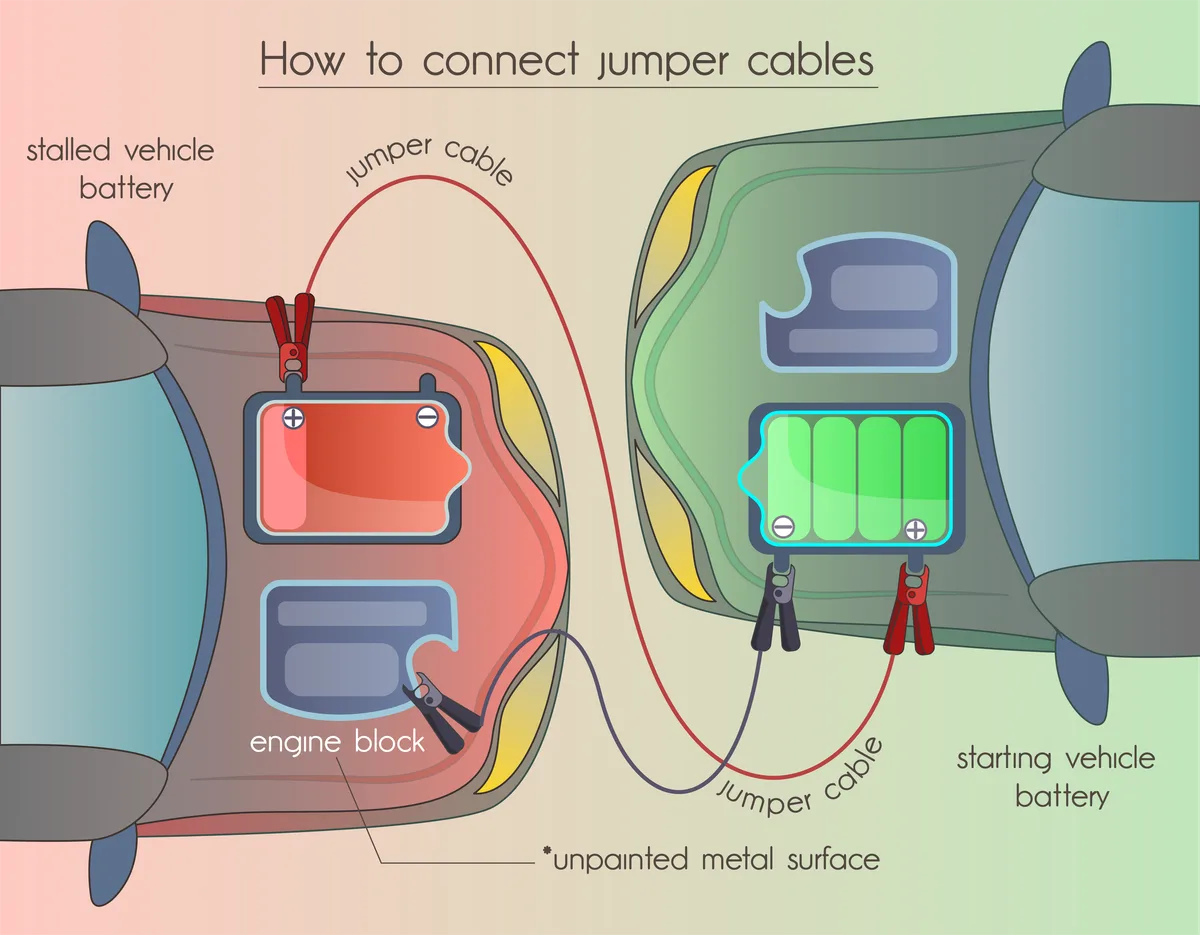
This is where the decision-tree logic kicks in. If you connect the cables in the wrong order, you risk a voltage spike that can damage the donor car's ECU, the Grand Cherokee's ECU, or both. The sequence matters.
- Connect the red clamp to the donor vehicle's positive (+) battery terminal.
- Connect the other red clamp to the Grand Cherokee's remote positive post.
- Connect the black clamp to the donor vehicle's negative (−) battery terminal.
- Connect the other black clamp to the Grand Cherokee's remote ground post.
Notice the pattern: positive terminals first, negative terminals last. And on the dead vehicle, both clamps go to the remote posts, never to the actual battery.
Starting the Vehicles
Start the donor vehicle. Let it idle for two to three minutes so its alternator can push a small stabilizing charge into the dead battery. Don't rev the engine; it doesn't help and can spike voltage.
Now try to start the Grand Cherokee. If it cranks slowly or not at all, wait another two minutes and try again. If it doesn't start after three attempts of five to ten seconds each, something else is wrong (bad battery, bad starter, bad alternator), and more jump-starting won't fix it.
Disconnection Order (Reverse)
Once the Grand Cherokee is running, disconnect in reverse order:
- Black clamp from the Grand Cherokee's ground post.
- Black clamp from the donor vehicle's negative terminal.
- Red clamp from the Grand Cherokee's positive post.
- Red clamp from the donor vehicle's positive terminal.
Why reverse order? It prevents a spark from forming near any battery vent. Keep the clamps from touching each other or any metal surface while the other end is still connected.
After the Jump
Leave the Grand Cherokee running. Drive it for at least thirty minutes, or let it idle for twenty. The alternator needs time to push enough charge back into the battery for a reliable next start.
If you shut it off too soon, you'll be jumping it again tomorrow.
For guidance on safe jump-starting practices and battery handling, the U.S. Department of Energy confirms that modern AGM batteries require remote grounding to avoid hydrogen ignition risk during boost-charging.
Step-by-Step: Jump Starting With a Portable Jump Box
A portable jump box is the better choice when you're solo, in a quiet parking lot, or anywhere a second vehicle isn't around. It also avoids the risk of a donor car with its own electrical gremlins sending bad voltage into your Jeep.
Picking the Right Box
Match the box to your engine. A 3.6L V6 needs a unit rated for at least 1,000 peak amps. A 5.7L V8 or the 2.0L turbo wants 1,500 peak amps or higher.
Below those numbers, the box might light the dash but fail to spin the engine.
Lithium jump boxes are lighter and hold their charge for months. Lead-acid booster packs are heavier but tougher in cold weather. If you live anywhere the temperature drops below freezing, lean toward a lithium unit rated for sub-zero cranking.
Cold saps battery output fast.
Connection Sequence With a Jump Box
The order is the same as with a donor car, but you'll be clamping directly to the jump box leads rather than a second battery.
- Turn the jump box off before connecting anything.
- Connect the red clamp to the Grand Cherokee's remote positive post.
- Connect the black clamp to the remote ground post on the firewall.
- Power on the jump box.
- Wait 30 to 60 seconds for the box to sense the system, then crank the engine.
Once the engine starts, turn the jump box off before disconnecting. Remove the black clamp first, then the red clamp. Store the box with at least a 50% charge so it's ready next time.
Aggregate user reviews of portable jump boxes consistently show that the failure point isn't the box, it's the clamps. Cheap clamps lose grip, slip off the joint, and arc. Spend a few extra dollars on a unit with solid copper clamps and a tight jaw spring.
How to Jump Start the 2023 Grand Cherokee 4xe (Plug-In Hybrid)
The 4xe plug-in hybrid uses the same 12V AGM battery layout as the gas models. The 400V hybrid battery system is separate and lives under the rear floor. That high-voltage system is not user-serviceable, but the 12V system is, and it follows the exact same jump procedure.
What Stays the Same
You still use the remote positive post and ground bracket on the driver-side firewall. You still follow the red-positive-first, black-negative-last connection rule. A standard set of jumper cables or a 12V jump box works fine.
What You Must Not Do
Don't connect to anything orange under the hood. The orange cables are part of the high-voltage hybrid system and carry enough current to be lethal. The 12V posts are clearly marked and isolated from the orange cabling.
If the 12V battery dies in a 4xe, the high-voltage system won't wake up either, since the 12V battery is what closes the contactors. A successful jump brings everything back online.
After starting a 4xe, let the vehicle idle for at least thirty minutes before shutting it off. The high-voltage battery management system needs time to recalibrate, and short hops right after a jump can trigger hybrid system warnings.
Correct Cable Connection Order (And Why It Matters)
We've touched on this twice, but it deserves its own pass, because this is where most DIYers get hurt.
The Order, Stated Cleanly
| Step | Connection | Why This Order |
|---|---|---|
| 1 | Donor red (+) to donor battery | Establishes positive side first |
| 2 | Donor red (+) to dead vehicle remote + | Completes positive circuit safely |
| 3 | Donor black (−) to donor battery | Grounds the donor side |
| 4 | Donor black (−) to dead vehicle ground post | Last connection, away from battery gases |
Why Reverse Order on the Way Out
When disconnecting, you reverse the sequence. The goal is to keep the circuit open as long as possible without letting a live clamp touch metal.
The black clamp on the dead vehicle is removed first because it's the most recent connection. Removing it first lets you set the clamp aside while the other three clamps still hold the circuit. Then the donor black, then the dead vehicle red, then the donor red.
What Happens If You Reverse Polarity
If you accidentally connect a black clamp to a positive post and a red clamp to a ground, several bad things happen. The donor car's alternator sees a reverse load. Fuses blow in both vehicles.
Modern ECUs can survive a brief reverse polarity event, but the airbag module, infotainment head unit, and body control module can all be damaged.
If you ever smell burnt electronics or see smoke after a connection, stop, disconnect the negative clamp on the donor battery first, and call for service. Don't keep trying.
Mistakes to Avoid When Jump Starting a Modern Jeep
Modern vehicles are less forgiving than the cars of twenty years ago. The Grand Cherokee's electrical system is sensitive to voltage spikes, and small mistakes can cost real money.
- Connecting to the actual battery under the seat. The under-seat panel isn't designed for routine access. Forcing it risks cracking the AGM case.
- Grounding on painted body panels. Paint insulates. A weak ground connection causes voltage spikes that damage modules.
- Cranking the engine for more than ten seconds at a time. Each crank attempt dumps heat into the starter motor. Three attempts of five to ten seconds, with two-minute rests, is the safe pattern.
- Letting the donor car run at high RPM. Idle only. High RPM raises alternator output above 15V, which can spike sensitive electronics.
- Driving five minutes and shutting off. The battery needs thirty minutes of charging minimum, or it'll be dead again the next morning.
- Using thin 10-gauge cables. They'll heat up and lose voltage before reaching the starter. Stick with 4 or 6 gauge.
- Forgetting the Auto Start/Stop reset. We'll cover this in the next section.
In our research across owner forums and repair write-ups, the most common post-jump complaint is an Auto Start/Stop warning light. The second most common is a dead battery the next morning because the owner didn't drive long enough.
Battery and Electrical System Warnings
Never smoke near the battery. Even AGM batteries can off-gas hydrogen under heavy charging. The remote ground post is specifically placed away from the battery to keep sparks away from any vented gas.
Wear safety glasses. If a battery explodes, it's the eyes that take the worst hit. Gloves protect against acid if the case cracks.
Don't jump a frozen battery. If the battery case looks swollen or you can smell sulfur strongly, the battery is damaged. A jump won't fix it, and a damaged battery can crack or explode under charging load.
Replace it instead.
For confirmed safety standards on automotive battery handling and jump-starting, SAE International governs 12V automotive battery testing and safety thresholds.
Auto Start/Stop Reset and Battery Relearn After a Jump
If your Grand Cherokee has the Engine Stop/Start (ESS) system, expect a warning light after a jump. This isn't a fault; it's the system telling you it needs to relearn the battery's state of charge.
Why the Warning Appears
The Battery Monitoring System (BMS) sits on the negative terminal of the under-seat battery. It tracks current flow, temperature, and state of charge. When the battery drops below 11.9V, the BMS flags it as deeply discharged.
After a jump, the BMS doesn't yet know the battery has recovered. The ESS light comes on, and Auto Start/Stop stays disabled until the system relearns.
The Drive Cycle That Resets It
The relearn cycle is straightforward but requires specific driving conditions:
- Drive at least 30 minutes continuously, mixing city and highway speeds.
- Keep the battery temperature normal; avoid heavy electrical loads (heated seats, rear defrost, high fan speed) for the first 15 minutes.
- Bring it to a complete stop, shift into Park, and let the engine idle for two minutes.
- Shut the vehicle off, wait 60 seconds, restart.
If the conditions are met, the ESS light goes off and Auto Start/Stop reactivates. If it doesn't clear on the first drive cycle, run the same pattern again. In cold weather, the relearn can take two or three cycles.
A fully charged AGM battery should read 12.6V at rest, with the engine off for at least four hours. Anything below 12.2V after a charge cycle means the battery is aging and may need replacement within a few months.
How Long Should You Drive After a Jump Start?
The short answer is thirty minutes minimum. The longer answer depends on how dead the battery was.
| Battery State Before Jump | Recovery Drive Needed |
|---|---|
| Lights left on, drained overnight | 20 to 30 minutes of driving |
| Cold-soak drain, weak but not flat | 30 to 45 minutes |
| Fully dead (under 11.0V) | 45 to 60 minutes, plus a full overnight charge |
| Battery older than 4 years | Replace rather than recharge |
Idling in the driveway charges slower than driving. The alternator only puts out full voltage above roughly 1,500 RPM. Sitting in Park at idle generates enough charge to run accessories but not enough to refill a deeply drained battery quickly.
If the battery was stone dead and you only drove ten minutes to the grocery store, expect a no-start the next morning. The alternator only topped off the surface charge, not the bulk charge below.
Jump Starting in Cold Weather vs. Warm Weather
Cold weather changes the math on everything: battery capacity, cranking amps needed, and jump box performance.
What Cold Does to Your Battery
A lead-acid or AGM battery at 0°F delivers roughly 35% of its rated cranking amps. At -20°F, that drops to around 20%. The engine oil thickens, raising the load the starter has to push through.
You need more amps at the worst possible moment.
What Cold Does to a Jump Box
Lithium jump boxes lose significant cranking power below freezing. Some drop by half. If you live in a cold climate, store the box indoors, not in the trunk.
A box that's been sitting at -10°F all night might light the dash but won't crank the engine.
Practical Adjustments
Warm the donor vehicle for five minutes before attempting the jump. This stabilizes its alternator output. Crank the Grand Cherokee for five-second bursts with longer rests between attempts (three minutes instead of two).
Give the battery time to recover a surface charge between tries.
In warm weather, the process is more forgiving. Most jumps work on the first or second attempt. Battery drain in summer usually comes from parasitic loads (interior lights, aftermarket accessories) rather than cold-induced voltage sag.
Jump Cables vs. Jump Box: Which Is Better for the Grand Cherokee?
Both work. Which one is "better" depends on your situation.
| Option | Best For | Drawback |
|---|---|---|
| Jumper cables + donor vehicle | Home use, family fleet, predictable situations | Requires a second vehicle on site |
| Portable lithium jump box | Solo drivers, road trips, urban use | Needs recharging, loses power in extreme cold |
| Lead-acid booster pack | Cold climates, high-displacement engines | Heavy (15+ lbs), slow to recharge |
For most daily drivers, a lithium jump box paired with a set of 4-gauge cables gives the best of both worlds. Use the box when alone. Use the cables when you have access to a friend, family member, or friendly stranger.
Aggregate user reviews indicate that lithium jump boxes from established brands hold their charge for six to twelve months in a glove box. Off-brand units often fail within a season.
If your V8 Grand Cherokee is your daily and you never carry a jump box, get one. The cost is small. The day you need it, it's priceless.
When Jump Starting Won't Work (And What to Do Next)
Sometimes a jump does nothing. The engine still doesn't crank, or it cranks but won't fire. That tells you the battery wasn't the only problem.
Symptom: No Crank, No Lights, Nothing
The battery is fully dead or there's a connection issue. Check the clamps. Wiggle them.
Make sure they bite metal, not paint. Try a second donor vehicle. If still nothing, the under-seat battery may be completely dead, not just discharged, and a jump won't bring it back.
Symptom: Cranks but Won't Start
The battery has enough charge to spin the starter, but something else is wrong. Common culprits on the 2023 Grand Cherokee include a bad fuel pump relay, a failed crankshaft position sensor, or water in the fuel system. These need diagnostic work, not a jump.
Symptom: Starts, Then Dies Within a Few Seconds
The alternator isn't charging. Run the vehicle for as long as the battery lasts, but plan a trip to a service center. The alternator or its voltage regulator has likely failed.
Symptom: Jump Works Once, Then It's Dead Again Tomorrow
The battery won't hold a charge. It's either sulfated from sitting, aged past its service life, or there's a parasitic drain pulling current while the vehicle is off. A multimeter amp draw test can identify the drain.
Most aftermarket accessories (dashcams, phone chargers, alarm systems) are the usual suspects.
If any of these symptoms appear, replace the battery or have the charging system tested. Repeated jump-starts stress the starter motor and can burn out the solenoid.
Frequently Asked Questions
Can I jump start a 2023 Grand Cherokee in the rain?
Yes. Water on the battery posts or remote jump terminals doesn't create a hazard. The 12V system is too low to conduct through wet skin, and the remote posts are well-ventilated.
Just don't stand in a puddle while making the final connection.
Where exactly is the positive jump post under the hood?
On the driver-side firewall, near the rear of the engine bay, just below the brake booster. Look for a red plastic cover with a "+" stamped on it. The ground post is an unpainted metal bracket within a few inches of the positive post.
Will jumping the battery void my warranty?
No. A standard jump-start using the manufacturer's remote posts does not void the Jeep warranty. Damage caused by improper connections (reverse polarity, grounding on painted surfaces) is not warrantable, but the act of jump-starting itself is fine.
How do I know if my battery needs replacement instead of a jump?
If the battery is more than four years old, has visible swelling, smells strongly of rotten eggs, or won't hold voltage above 12.2V after a full charge cycle, replace it. A new H6/Group 48 AGM battery for the 2023 Grand Cherokee runs roughly $220 to $380 depending on brand.
Do I need to reset anything in the vehicle after a jump?
Potentially. If you have Auto Start/Stop, expect the warning light. It clears after a proper drive cycle.
Radio presets, the clock, and one-touch window features may also need to be reset. Window auto-up/down relearn is simple: hold the switch down for five seconds, then up for five seconds.
Is it safe to use a jump box on the 4xe plug-in hybrid?
Yes, but only on the 12V system using the same remote posts. Never touch the orange high-voltage cables. The 12V jump procedure is identical to the gas models and brings the high-voltage system online once the engine starts.
Final Checklist Before You Turn the Key
Before you push the start button, confirm everything is set:
- Donor vehicle running for at least two minutes.
- All four clamps firmly attached to clean metal.
- Grand Cherokee in Park, parking brake set.
- Heated seats, rear defrost, and high-draw accessories off.
- A clear path to drive away, since the engine needs to run for thirty minutes minimum.
- A plan for the battery. If it's more than four years old or has been jumped twice this month, replace it before it strands you again.
A jump-start gets you moving. A replacement battery keeps you moving. Know which one you need before the next cold morning.