How to jump start a car step by step: Easy guide
You turn the key, hear a single click, and the dashboard stays dark. Now you need to know how to jump start a car step by step, and you need it to work on the first try. The good news: a jump start is one of the simplest roadside skills a driver can learn, and it only takes about ten minutes with the right setup.
The key numbers matter. Per SAE International standards, a healthy 12-volt car battery rests at about 12.6 volts, drops to roughly 12.2 volts at 50% charge, and falls below 11.8 volts when it can't crank the engine. If your battery is in that bottom range and the alternator is fine, a jump will get you rolling in minutes.
As of 2026, the procedure hasn't changed, but modern cars with sensitive ECUs make the connection order more important than ever. Let's walk through it.
Quick Answer
Yes, you can jump start a dead car in about ten minutes using jumper cables and a donor vehicle. Connect red to the dead battery's positive terminal, then to the donor's positive. Connect black to the donor's negative, then to an unpainted metal ground on the dead car.
Start the donor, wait two to five minutes, then crank the dead car. Disconnect in reverse order and drive for at least 20 minutes to recharge.
Why Your Car Won't Start (And Whether a Jump Will Actually Fix It)
Not every no-start is a dead battery. Before you pop the hood, run through a 30-second check. It saves you the time of jumping a battery that's actually fine, and it tells you if the problem runs deeper than a quick fix.
The Symptoms That Point to the Battery
- Single click or rapid clicking when you turn the key, but the engine doesn't crank.
- Dashboard lights dim or flicker as you try to start.
- Radio, clock, or interior lights work weakly or not at all.
- Battery warning light stays on while the engine is running (this is more about the alternator, covered below).
If those match your situation, a jump is almost certainly the right move.
The Symptoms That Mean It's NOT the Battery
- Engine cranks normally but won't fire. That's fuel or spark, not battery.
- You hear a grinding or whirring sound. That's the starter motor.
- Battery warning light comes on while driving. That's the alternator, and jumping won't help for long.
A quick voltage check confirms the diagnosis. Most auto parts stores will load-test your battery for free in under five minutes. Per Battery Council International guidance, a battery below 12.4 volts at rest is significantly discharged, and one that won't hold above 12 volts after a full charge is headed for the recycling bin.
What You'll Need Before You Start
Gather your gear before you connect anything. Scrambling for a tool with the hood up and cables live is how people mix up positive and negative.
| Item | What to Look For | Why It Matters |
|---|---|---|
| Jumper cables | 4 or 6 AWG gauge, at least 12 feet long, copper-clad or pure copper | Thicker cables carry more current without overheating |
| Donor vehicle | A running car with a healthy 12V battery of similar voltage | Mismatched voltage (like jumping a 12V car from a 24V truck) damages electronics |
| Safety glasses | Basic impact-rated glasses | Batteries can vent hydrogen gas or spray acid if disturbed |
| Wire brush or terminal cleaner (optional) | Cheap toothbrush-style brush from any auto parts store | Removes white or green corrosion that blocks current |
| Owner's manual | For both vehicles if possible | Some manufacturers specify a remote jump post instead of the battery terminal |
If you don't have a donor car, you'll need a portable lithium jump starter instead. We cover that option later in the comparison section.
The Step-by-Step Jump Start Process (Standard Gasoline Vehicles)
The full procedure takes about ten minutes. Read all the steps before you start, since you'll need both hands and your full attention once the cables are live.

Step 1: Park and Prep Both Cars
Park the donor car close enough that the cables reach both batteries, but make sure the cars don't touch. Metal-to-metal contact can create a ground fault. Engage the parking brake on both cars, turn off both ignitions, and remove the keys.
Pop both hoods and locate each battery.
Step 2: Identify the Terminals
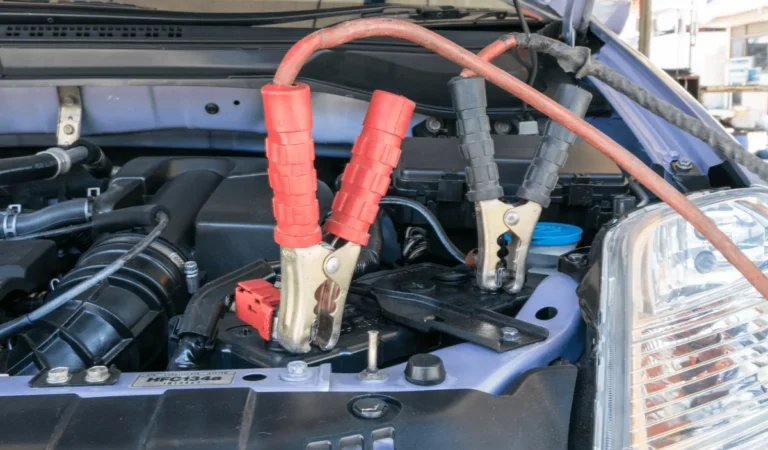
The positive terminal has a "+" symbol and usually a red cover or cable. The negative terminal has a "−" symbol and a black cable. If the markings are worn off, the positive post is slightly larger in diameter than the negative on most batteries built to BCI group size standards.
Step 3: Check the Battery for Damage
Look over the dead battery before you connect anything. If you see cracks, leaks, bulging sides, or a frozen case, stop. A damaged battery can vent hydrogen gas, leak sulfuric acid, or even explode when jumped.
If the battery looks compromised, call for a tow instead.
Step 4: Make All Four Connections (Order Matters)
This is the most important part of the whole process. The sequence protects the donor car's electrical system and gives the dead battery the cleanest path to charge. Go to the next section for the full breakdown.
Step 5: Start the Donor Car and Wait
Start the donor vehicle and let it idle for two to five minutes. Revving the donor engine slightly (to around 2,000 RPM) pushes more current through the cables and charges the dead battery faster.
Step 6: Try to Start the Dead Car
Turn the key (or press the start button) on the dead car. If it cranks and starts, great. If not, wait another two minutes and try again.
Three or four attempts spaced out is normal. If it still won't start after four tries, the battery may be too far gone or the problem may not be the battery at all.
Step 7: Let Both Cars Run Together
Once the dead car is running, leave both engines idling for about five minutes. This stabilizes the voltage in the jumped car and lets its alternator start topping off the battery.
Step 8: Disconnect the Cables (Reverse Order)
Disconnecting in the wrong order can send a voltage spike through the donor car's electronics. Reverse the connection sequence exactly, and don't let the clamps touch each other or any metal surface while the other end is still connected.
Step 9: Drive or Idle the Jumped Car
The alternator needs 20 to 30 minutes of driving to put a meaningful charge back into the battery. A short idle won't do it. Take the highway if you can, since alternator output rises with engine RPM.
Connecting the Jumper Cables in the Right Order
This is the one part of the process you want to memorize. Getting the order wrong can fry a fuse, blow an ECU, or in rare cases cause the battery to explode. The sequence below is the standard procedure recommended across the industry, including by NHTSA's vehicle safety guidance for roadside emergencies.

The Correct Connection Sequence
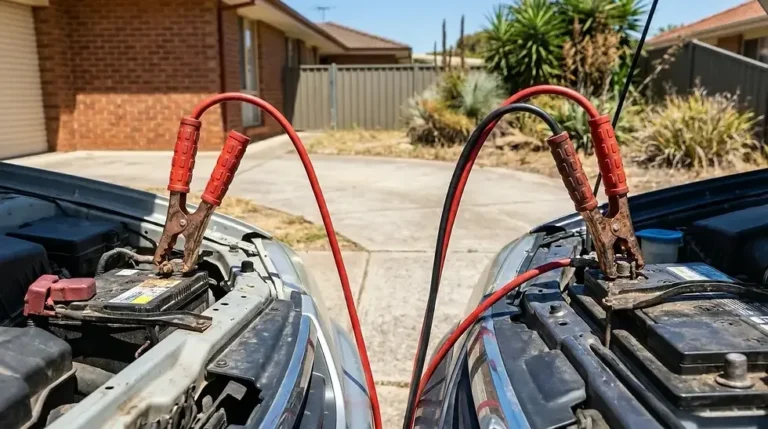
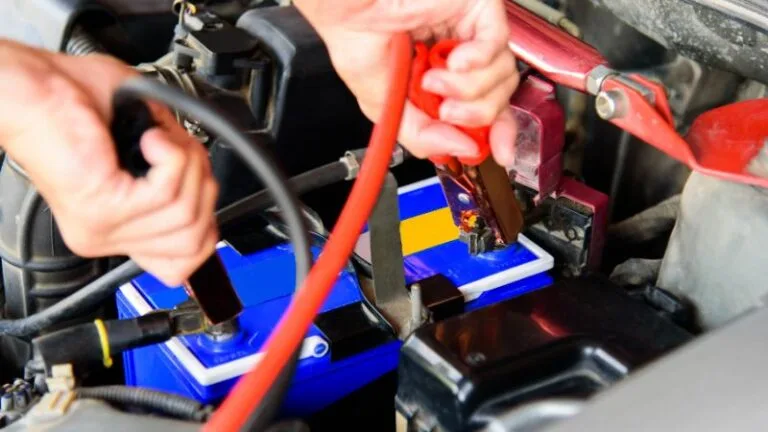
- Red clamp to dead battery's positive (+) terminal. This puts the first clamp on the battery that needs help.
- Red clamp to donor battery's positive (+) terminal. Now the positive circuit is complete between both cars.
- Black clamp to donor battery's negative (−) terminal. The donor side is now fully connected.
- Black clamp to an unpainted metal ground on the dead car. Use a bracket, bolt, or engine lift point away from the battery. This grounds the circuit through the dead car's chassis instead of its battery post, which reduces the risk of igniting any hydrogen gas the dead battery might be venting.
Why the Ground Goes on Metal, Not the Battery
Connecting the final black clamp to the dead battery's negative post is the most common amateur mistake. It usually "works," but if the battery is venting even a tiny amount of hydrogen, the spark at the terminal can ignite it. The result is a battery explosion that sprays sulfuric acid across your engine bay and your face.
The unpainted-metal-ground method puts that spark far away from the battery.
What "Unpainted Metal" Means in Practice
Look for a thick, clean bracket, bolt head, or engine component that bolts directly to the engine block. Common choices include the alternator bracket, the power steering reservoir bracket, or any exposed bolt on the engine itself. Avoid the fuel lines, the battery itself, and anything that moves when the engine cranks.
Starting the Dead Car — What to Do If It Doesn't Crank
You followed the sequence, the donor's been idling for five minutes, and you turn the key on the dead car. Nothing. Or maybe just one click.
Don't panic, and don't immediately assume the worst. Most no-start situations after a jump have a simple cause.
If You Get a Single Click but No Crank
That click is the starter solenoid trying to engage. The battery still doesn't have enough surface charge to spin the starter motor. Leave both cars connected for another five minutes, rev the donor engine slightly, and try again.
Three or four spaced-out attempts is normal. If the fourth attempt fails, the battery is likely sulfated and won't take a charge.
If You Get Nothing at All
Check every clamp. Loose connections cause more failed jumps than dead batteries. Wiggle each clamp to make sure it's biting into the terminal, not just resting on a layer of corrosion.
If the clamps are clean and tight, check the ground connection on the dead car. A painted bolt or a rusty bracket won't conduct well.
If You See or Smell Something Off
Stop immediately if the cables get hot, the battery hisses, or you smell rotten eggs. Hot cables mean undersized gauge for the current draw. Battery gassing or sulfur smell means overcharging or internal damage.
Disconnect everything, move the cars apart, and reassess before trying again.
Disconnecting the Cables Safely (Reverse Order)
The disconnection step is where most people get sloppy. They're relieved the car started, and they rush. That rush can send a voltage spike through one of the cars and pop a fuse or damage a sensor.
The Reverse Sequence
- Black clamp off the ground point on the dead car. This breaks the circuit on the jumped side first.
- Black clamp off the donor battery's negative terminal.
- Red clamp off the donor battery's positive terminal.
- Red clamp off the dead battery's positive terminal.
Don't Let the Clamps Touch
While the other end is still connected, keep the loose clamp from touching anything metal. If it brushes the car's body or another clamp while one side is still live, you create a short. That can weld the clamp to the chassis, blow a fuse, or fry electronics.
Take it slow.
Why This Order Matters for Modern Cars
Vehicles built in the last 15 years run sensitive modules throughout the electrical system. A sudden disconnection on the wrong side can create an inductive spike, a brief burst of high voltage that the alternator's regulator usually absorbs. In some cars with weak grounding, that spike damages the ECU, the radio, or body control modules.
Following the reverse order keeps the spike contained to the donor side, where it's safe.
What to Do Right After a Successful Jump
The hard part's done, but you're not finished. The next 30 minutes determine whether this was a one-time fix or a problem you'll face again tomorrow morning.
Drive for at Least 20 Minutes
The alternator needs sustained RPM to put a real charge back into the battery. Highway driving is better than city driving because alternator output scales with engine speed. A 10-minute idle won't cut it.
A 30-minute highway drive at 60 mph typically restores enough charge for a few more starts.
Watch for Warning Signs
If the battery light stays on while driving, the alternator isn't charging. The car is running purely off the battery you just jumped, and you'll be stranded again within an hour. Pull over and shut the engine off.
Get a tow.
Reset Lost Settings
Modern cars lose their radio presets, clock, window auto-up/down memory, and sometimes throttle-body learning when the battery dies. You may need to re-enter a radio code, reset the windows (usually hold the switch for 5 seconds in the up position), or let the car idle for 10 minutes to relearn idle speed.
Plan a Battery Test
A battery that needed a jump once will usually need one again. Within the next day or two, drive to any auto parts store and ask for a free load test. The test applies a simulated load and measures how the battery holds voltage under stress.
If it fails, replace the battery before it strands you somewhere less convenient.
Special Situations: Manual Transmissions, Hybrids, and EVs
The standard procedure covers most gasoline cars and light trucks. A few vehicle types need a different approach.
Manual Transmission Cars
You don't have to jump a manual at all if you can push-start it. Put the car in second gear, press the clutch, turn the key to "on," and have someone push the car to about 5 mph. Release the clutch quickly and the engine fires.
Push-starting works because the engine's mechanical motion spins the alternator, which generates current. If a push-start isn't possible, the jump procedure is identical to an automatic.
Hybrid Vehicles (12V Battery)
Toyota, Honda, Ford, and other hybrids still run a conventional 12V battery to power the computers, lights, and accessories. When that battery dies, the hybrid system can't wake up. The jump procedure is the same as a regular car, with one warning: the orange high-voltage cables under the hood are NOT for jumping.
They're typically rated at 200+ volts and can kill you. Only use the standard 12V battery terminals, usually under the hood but sometimes in the trunk.
Electric Vehicles (12V System)
EVs from Tesla, Ford, Chevy, and others have a small 12V auxiliary battery that powers the lights, computers, and contactors that close the high-voltage system. When it dies, the car won't wake up. Most EVs have dedicated 12V jump posts in the front trunk or under a panel in the engine bay.
Check the owner's manual for the exact location, since the procedure varies by manufacturer.
Common Mistakes That Damage Your Car or Battery
Most jump-start failures aren't because the battery was too dead. They're because someone skipped a step or did something out of order. Here's what we see most often in aggregate roadside reports.
Reversing the Polarity
Connecting red to negative and black to positive is the single most expensive amateur mistake. Modern cars have reverse polarity protection in some systems, but not all. A reversed connection can blow the main fuse, destroy the alternator's diodes, and in worst cases damage the ECU.
If you hear a loud pop or see sparks the moment you connect a clamp, you crossed the wires. Stop, swap them, and check for blown fuses before trying again.
Clamping to the Dead Battery for Ground
We covered this in the connection section, but it's worth repeating because it's so common. The final black clamp goes on metal, not the battery. The spark from that final connection can ignite hydrogen gas the dead battery is venting.
Using Undersized Cables
A 10 AWG or 12 AWG cable set might start a motorcycle, but it won't reliably start a V8 truck. Thinner cables heat up under load and lose voltage over distance. Stick with 4 AWG or 6 AWG cables for any vehicle over 3 liters of displacement.
Smoking Near the Battery
Lead-acid batteries vent hydrogen gas during charging, and a spark or flame can ignite it. Don't smoke, use a lighter, or create sparks anywhere near the battery while the cables are connected.
Trying to Jump a Damaged Battery
A cracked, leaking, bulging, or frozen battery shouldn't be jumped under any circumstances. The acid leak can damage your car's paint and frame, and a frozen battery can crack internally and explode. Replace the battery instead.
Skipping the Drive After
A 5-minute idle around the parking lot doesn't recharge the battery. You need sustained driving for the alternator to do its job. Most drivers who get stranded again the next morning made this exact mistake.
Safety Warnings You Should Never Ignore
Jumping a battery looks casual, but it's a chemical and electrical procedure. The risks are real but manageable if you take them seriously.
Hydrogen Gas and Battery Explosions
A charging battery releases hydrogen gas at the vent caps. Hydrogen ignites at concentrations as low as 4% in air, and a single spark is enough to set it off. Per OSHA hydrogen safety guidance, even a small battery explosion can launch plastic shrapnel at high speed.
That's why safety glasses are non-negotiable, and the final ground clamp goes on metal, not the battery post.
Sulfuric Acid Burns
The electrolyte inside a lead-acid battery is dilute sulfuric acid. It burns skin, eats through clothing, and ruins car paint within minutes. If you see wet residue or white crystals around the terminals, don't touch them with bare hands.
A box of baking soda in your garage neutralizes small spills.
Electrical Shorts and Burns
A 12-volt car battery won't shock you, but it can dump hundreds of amps through a ring or watch band if you short it accidentally. That's enough current to weld metal to skin and cause serious burns. Remove jewelry before connecting cables.
Frozen Batteries
A battery that's been in sub-zero weather for hours may have frozen electrolyte. Trying to jump a frozen battery can crack the case internally and cause it to explode when current flows. If the battery case looks swollen or feels rock-hard, don't jump it.
Bring it inside to thaw slowly, then test it, or replace it.
How to Tell If It's the Battery or the Alternator
This question saves you money. A new battery runs $100 to $250, and a new alternator runs $400 to $800 plus labor. You want to replace the right one.
The Quick Field Test
After a successful jump, drive the car for 20 minutes to put surface charge back into the battery. Then turn the engine off and wait five minutes. Measure the battery voltage with a multimeter:
| Reading | Diagnosis |
|---|---|
| 12.6V or higher | Battery is healthy, alternator likely fine |
| 12.2V to 12.4V | Battery discharged, may need replacement or extended charge |
| Below 12.0V | Battery is failing or alternator isn't charging it |
The Alternator Tell
If the battery light stays on while the engine is running, the alternator isn't putting out enough voltage. Jump-starting will get you going, but the car will die again as soon as the battery drains. The alternator is the problem.
The Parasitic Drain
If the battery keeps dying overnight, something is drawing power when the car is off. Common culprits include a trunk light that won't turn off, an aftermarket stereo wired directly to the battery, or a faulty relay. A mechanic can measure parasitic draw by placing an ammeter in series with the negative terminal and pulling fuses one at a time until the draw drops.
Cables vs. Portable Jump Starter: Which One Should You Use
Both options work. The right choice depends on how often you need to jump, whether you usually have a second car available, and how much space you have in your trunk.
When Cables Make Sense
Cables are cheap (about $20 to $60 for a decent set), reliable, and never run out of power. If you have a spouse, neighbor, or coworker who can pull up alongside you, cables are all you need. They're also the only option that works in extreme cold where lithium jump boxes lose capacity.
When a Portable Jump Starter Wins
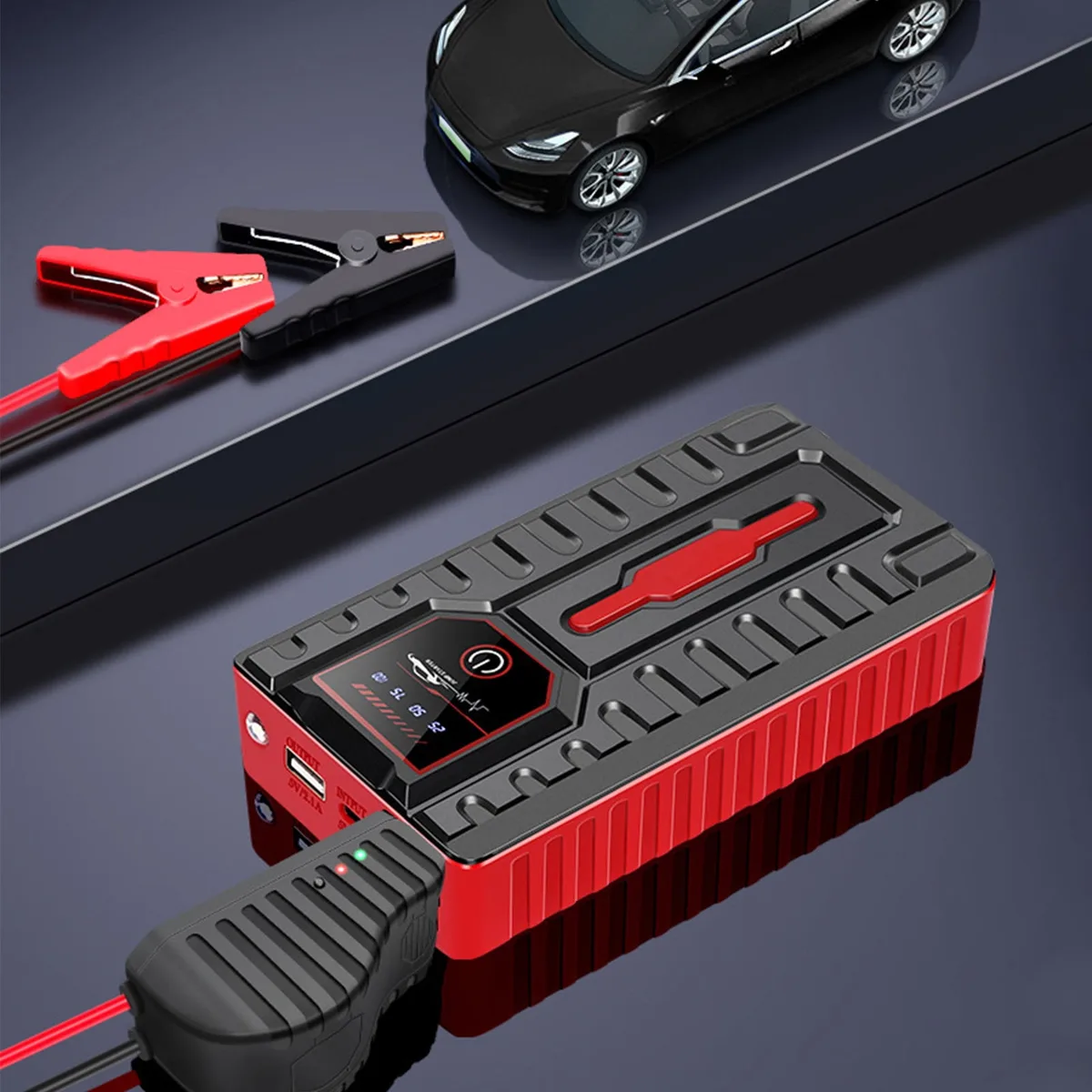
A lithium jump box lets you jump your car without a donor vehicle. That matters at 6 AM in an empty parking lot, on a back road, or anywhere cell service is dead. Modern units pack 1000 to 3000 peak amps into a box smaller than a paperback book, and most double as a USB charger for your phone.
The Honest Comparison
| Factor | Jumper Cables | Lithium Jump Starter |
|---|---|---|
| Upfront cost | $20 to $60 | $80 to $250 |
| Needs donor car | Yes | No |
| Cold-weather performance | Excellent | Capacity drops below 0°F |
| Maintenance | None | Recharge every 3 to 6 months |
| Lifespan | Indefinite | 3 to 5 years for the lithium cells |
| Extra features | None | USB charging, flashlight, 12V outlet |
For most drivers, carrying a lithium jump box in the trunk is the smarter move. For drivers in northern climates or fleet operators, cables are still the more reliable choice.
When a Jump Won't Work and You Need a Mechanic
Sometimes the jump fails and you know it right away. Other times the car starts but acts up in ways that tell you the problem runs deeper. Here are the signs that it's time to call for help.
The Jump Doesn't Start the Car
If you've connected everything correctly, waited five minutes, and tried four times with no crank, the battery is likely sulfated beyond recovery. Repeated jump attempts on a dead battery can overheat the alternator. Stop trying and call a tow.
The Car Starts but Runs Rough
If the engine fires but idles rough, stalls, or triggers the check engine light immediately after the jump, there may be an underlying issue. A severely discharged battery can sometimes mask or trigger fault codes in the ECU. Drive gently to a mechanic and have them read the codes.
Electrical Components Are Acting Strange
Dim headlights, flickering dashboard lights, random warning messages, or accessories that don't work after a jump point to voltage irregularities. The alternator may be failing, or there may be a bad ground somewhere. Either way, a technician needs to diagnose it before you drive long distances.
The Battery Is Visibly Damaged
We covered this earlier, but it's worth repeating. A cracked, swollen, or leaking battery is a chemical hazard and an electrical hazard in one. Don't try to jump it.
Don't drive with it. Replace it.
Decision Guide: What to Do Based on Your Situation
The right move depends on what you're facing right now. Use this guide to skip straight to the correct action.
If Your Battery Just Died and You Have a Donor Car
Park nose-to-nose or side-by-side, follow the four-step connection order we covered earlier, and idle the donor for 2 to 5 minutes before cranking. Drive the jumped car for 20 to 30 minutes afterward, then get a free load test within the next day or two.
If You Don't Have a Donor Car and You're Not at Home
A portable lithium jump starter is your best option. Most units can sit in your glove box or trunk and crank a V8 engine 10 to 20 times per charge. Charge it every 3 to 6 months even if you don't use it, since lithium cells slowly self-discharge.
If the Battery Keeps Dying Overnight
Something is draining the battery while the car sits. Check for a stuck dome light, an aftermarket stereo wired directly to the battery, or a faulty relay. A mechanic can run a parasitic draw test in about 30 minutes and pinpoint the circuit pulling the current.
If the Engine Cranks but Won't Start
The battery is probably fine. The problem is fuel delivery, spark, or compression. Spraying a small amount of starter fluid into the air intake can help diagnose.
If the engine fires briefly with starter fluid and then dies, fuel is the issue. If nothing changes, spark or timing is the culprit. Call a tow.
If You're Stuck Somewhere Dangerous
Move to safety first. If you're in the middle of traffic, stay in the car with your seatbelt on and call for roadside assistance. If you're on a busy shoulder or highway, the safest option is often to wait inside the vehicle with hazards on until help arrives rather than standing between two cars with live cables.
If This Is Your First Time Jumping a Car
Read the full process once before you start. Have someone experienced nearby if possible, even just on the phone. The procedure is simple, but muscle memory helps.
After your first successful jump, you'll never be intimidated by a dead battery again.
That covers the full jump-start workflow, the edge cases, and the decisions that come after. A dead battery is rarely the end of the road. With the right cables or a portable jump box, the right sequence, and 10 minutes of patience, you'll be back behind the wheel before the tow truck even arrives.
Frequently Asked Questions
How Long Does It Take to Jump Start a Car?
The whole process usually takes 10 to 15 minutes from parking both cars to driving away. The donor car needs to idle for 2 to 5 minutes to build up surface charge in the dead battery before you try to start it. Plan an extra 20 to 30 minutes of driving afterward so the alternator can recharge the battery.
Can You Jump a Car in the Rain?
Yes, you can jump a car in light rain without any extra risk beyond what you already have. The 12-volt system isn't dangerous to work with wet hands, and the cables are insulated. Just avoid standing in puddles while making connections, and keep the clamps from falling into standing water.
Heavy rain can cause visibility problems while driving, so wait for a break if you can.
What If I Only Have a Portable Jump Starter and No Donor Car?
Connect the jump box's red clamp to the dead battery's positive terminal, then connect the black clamp to an unpainted metal ground on the engine block. Turn on the jump box, wait 30 seconds for the unit to detect the battery, then try to start the car. Most lithium jump boxes follow the same connection order as cables, but always check your unit's manual first.
Will Jump Starting a Car Damage the Donor Vehicle?
A properly executed jump start puts minimal stress on the donor car's electrical system. The donor battery does most of the work, and the alternator only needs to replenish what flows out. Running the donor engine at idle for 10 to 15 minutes is no harder on it than sitting in a drive-through.
Reverse polarity or a short circuit, though, can damage the donor's alternator diodes or ECU.
How Many Times Can You Jump a Car Before the Battery Dies?
There's no fixed number, but a healthy battery should hold a charge for at least a week after a successful jump. If the car won't start again within a day or two, the battery is failing or there's a parasitic drain. Most auto parts stores will load-test your battery for free and tell you within five minutes whether it needs replacement.
Is Push Starting a Manual Transmission Car Better Than Jumping It?
Push starting (also called bump starting) works on any manual transmission car with a healthy battery that just doesn't have enough charge to crank the starter. It doesn't help if the battery is completely dead, since the ignition and fuel pump still need 12V power to run the engine. For a partially discharged battery, push starting is faster than a jump and easier on the electrical system.
Can a Car Battery Be Too Dead to Jump Start?
Yes. A battery that sits below 10 volts for weeks will sulfate internally, and the lead plates lose their ability to hold a charge. A deeply sulfated battery may take a jump and run for a few minutes, but it'll die again almost immediately.
If the battery won't hold above 12 volts after a 30-minute drive, it's reached the end of its service life and needs replacement.