How does a jump starter work: Best guide
A jump starter is a portable battery pack that delivers a short, high-amperage burst of DC power to a dead car battery so the starter motor can crank the engine. When you connect the clamps correctly and press the start button, current flows from the internal cells, through the smart cables, and into the vehicle's battery posts, briefly bypassing the dead battery. Modern units add a battery management system, reverse-polarity protection, and temperature monitoring so the surge stays safe for both the unit and your car's electronics.
As of 2026, most consumer units use lithium chemistry rated between 800A and 3,000A peak, per manufacturer specifications from NOCO, Antigravity, and Hulkman.
Understanding the internal parts matters because it changes how you use it. A typical 12V automotive system, per SAE International's J537 standard for cranking batteries, needs 150 to 1,000 cranking amps depending on engine size. Knowing what's inside your jump starter helps you match the right amp rating to your engine and avoid frying the unit.
Let's break down exactly what's happening when you press that button.
Quick Answer
A jump starter works by storing DC electrical energy in an internal battery, then releasing it in a short, high-amperage burst through heavy-gauge clamps. You connect the red clamp to the battery's positive terminal and the black clamp to the negative terminal or a ground point. Once connected, the battery management system confirms a safe connection and lets current flow to the starter motor.
The engine cranks, the alternator takes over, and the jump starter can be disconnected.
What's Hiding Inside a Portable Jump Starter
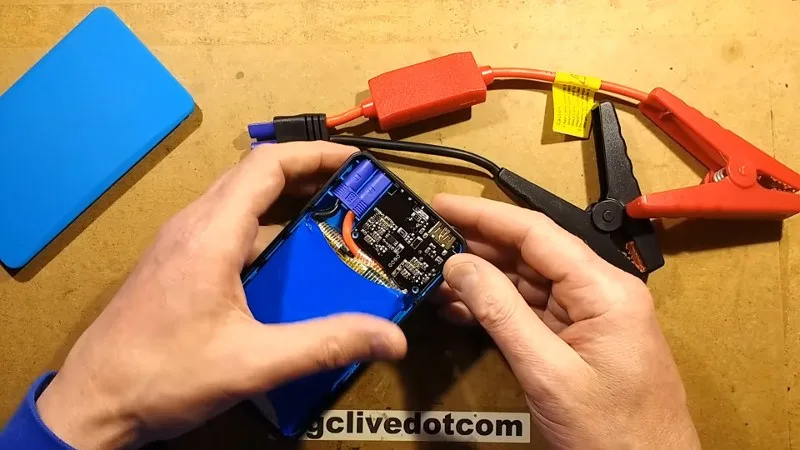
Pop the case open on most consumer jump starters and you'll find four core layers stacked together: the battery cells, the battery management system (BMS), the output circuitry, and the safety hardware around the clamps. Each one plays a specific role in the surge that reaches your battery posts.
The Battery Cells (The Energy Reservoir)
Most modern units use lithium-ion cells, often 18650 or pouch cells arranged in a 3S or 4S configuration. A few budget models still use lead-acid, and a small premium niche uses ultracapacitors. The capacity is measured in milliamp-hours (mAh) or watt-hours (Wh), with consumer units ranging from 10,000 mAh up to 30,000 mAh.
Higher capacity means more jump starts per charge, but the peak amp rating matters far more for actually cranking an engine.
The Battery Management System (The Brain)
The BMS is a small circuit board that monitors voltage, current, and temperature on every cell. It prevents over-discharge during a jump, balances cell voltage during recharge, and shuts the unit down if it overheats. Per UL 62133 standards for lithium battery safety, the BMS is the reason modern units don't routinely catch fire, even when you leave them in a hot car.
The Output Circuit (The Power Highway)
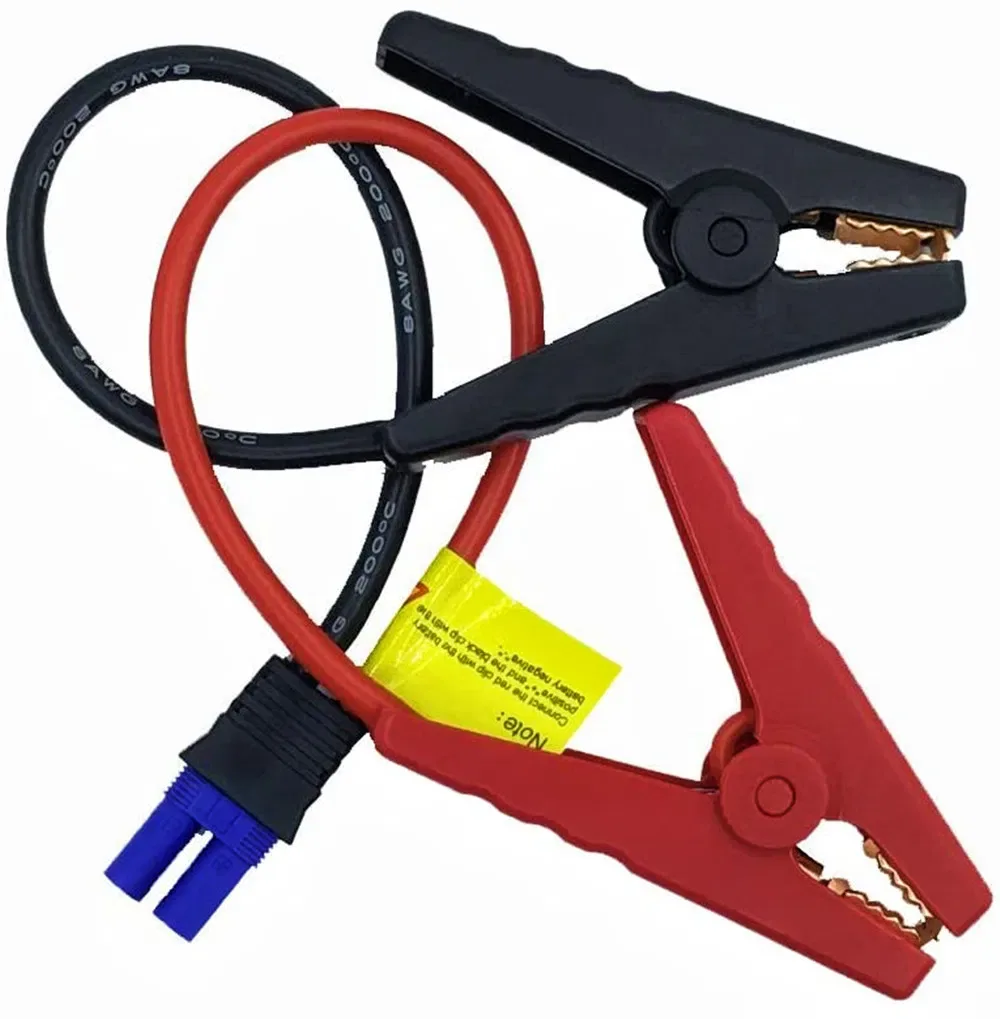
Heavy copper bus bars and thick gauge wiring carry current from the cells to the clamps. The cable gauge matters: cheap 12 AWG clamps lose voltage over distance, while 8 AWG or 6 AWG clamps deliver more of that peak amp rating to the actual battery posts. Some premium models add supercapacitors in parallel to smooth out the burst.
The Safety Hardware (The Gatekeeper)
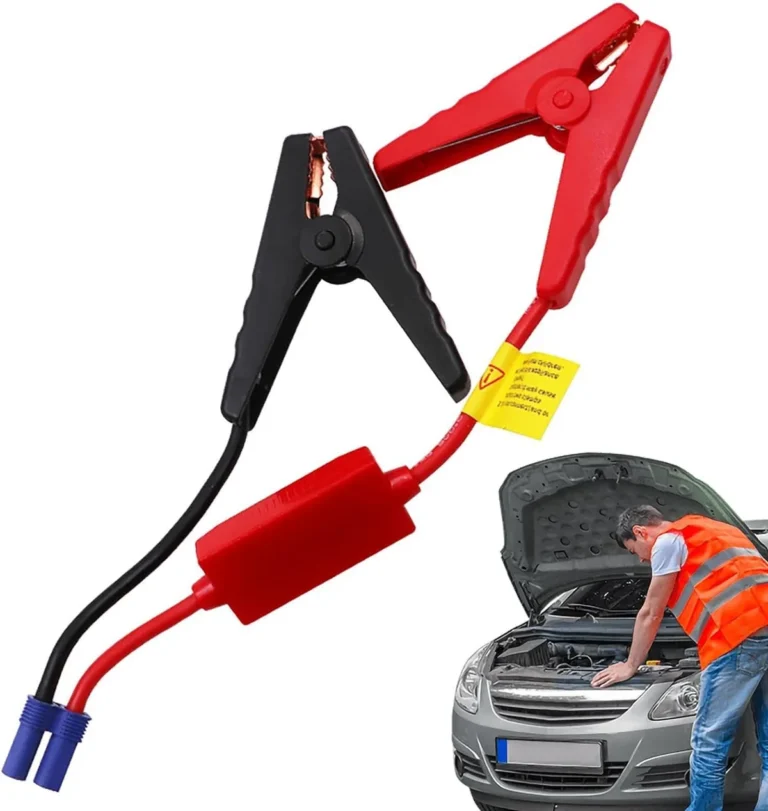
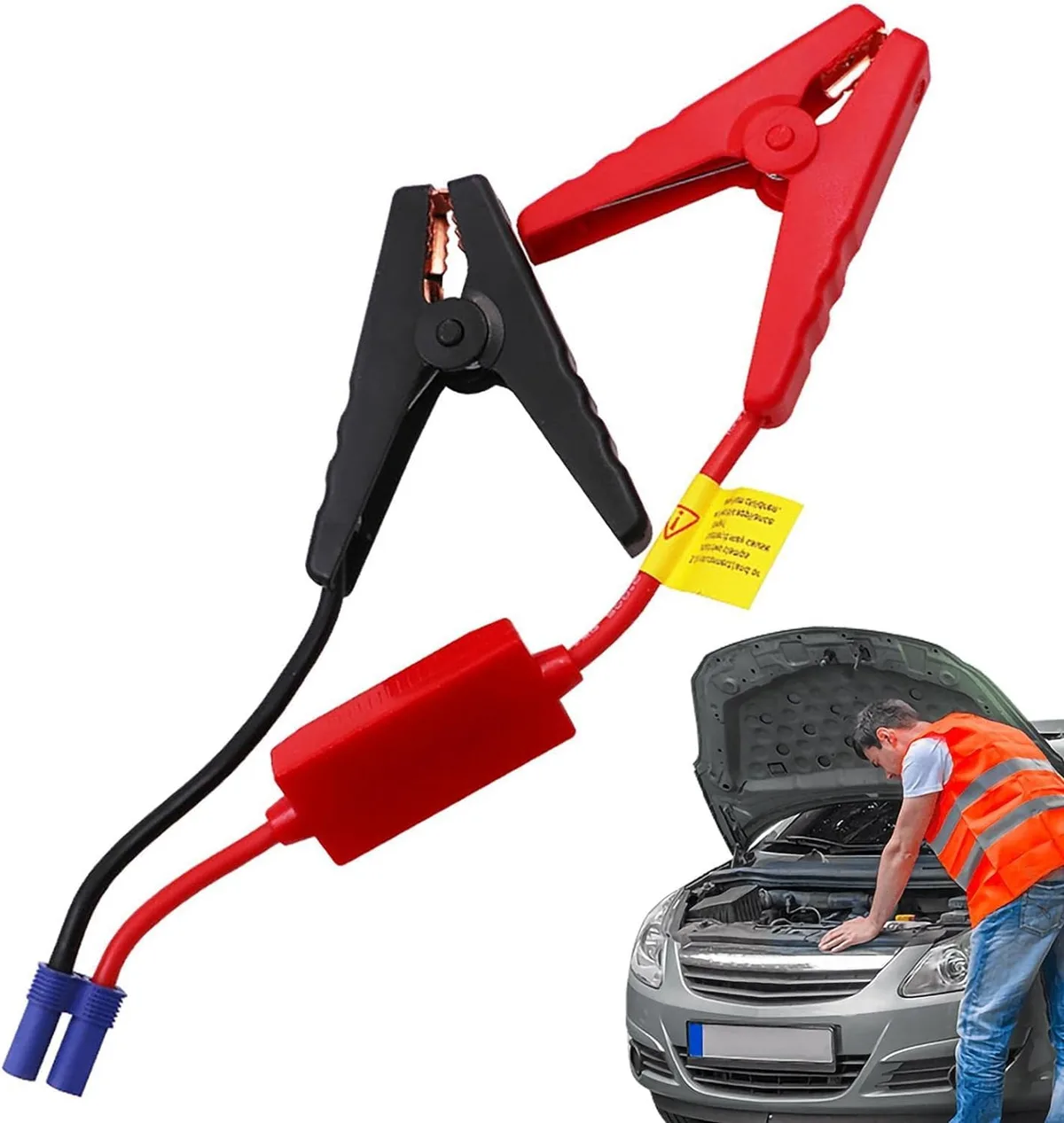
Smart clamps contain a second small circuit board with MOSFET switches, spark arrestors, and a polarity-sensing chip. This is what makes the clamps spark-proof and reverse-polarity protected. If you accidentally clip black to positive and red to negative, the MOSFETs stay open and no current flows.
The LED on the clamp handle tells you when the connection is safe.
The Battery Inside the Box: Lithium, Lead-Acid, or Capacitor
Three storage technologies dominate the jump starter market, and they behave very differently under load. The right one for you depends on your climate, your engine size, and how often you actually use the unit.
Lithium-Ion (The Everyday Standard)
Lithium-ion is the dominant chemistry as of 2026, used by NOCO, Antigravity, Hulkman, and most major brands. It's lightweight, holds charge for 6 to 12 months in storage, and packs high peak amps into a small case. Downside: lithium cells degrade in extreme cold below -20°C (-4°F) and can swell if stored fully discharged.
For most drivers in temperate climates, this is the sweet spot.
Lead-Acid (The Workhorse)
Lead-acid jump boxes are heavier, often 15 to 30 lbs, but they're cheaper and more tolerant of cold weather and rough handling. You'll still see them in shop settings and older fleet vehicles. They self-discharge faster, so they need a top-up charge every 1 to 3 months.
Peak amp ratings are high, but the units are bulky enough that nobody likes carrying one in a sedan trunk.
Ultracapacitor (The Specialty Option)
Ultracapacitor jump starters don't store energy in a traditional battery at all. They charge from your car's residual battery voltage (even a "dead" battery at 4V has enough) in 30 to 60 seconds, then discharge a massive burst. They're nearly indestructible, work in extreme cold, and last 10+ years.
The trade-off: they only jump, they don't have USB ports, air compressors, or built-in flashlights, and they cost more upfront.
| Technology | Weight | Cold Tolerance | Lifespan | Best For |
|---|---|---|---|---|
| Lithium-Ion | 1-3 lbs | Moderate | 3-5 years | Daily drivers, compact storage |
| Lead-Acid | 15-30 lbs | Good | 4-6 years | Workshops, heavy-duty fleets |
| Ultracapacitor | 3-6 lbs | Excellent | 10+ years | Extreme climates, infrequent use |
Smart Clamps and Protection Circuits Explained
The clamps are where most of the magic, and most of the safety, actually lives. A quality set of smart jumper cables does far more than just conduct electricity.
Spark-Proof Design
Traditional jumper cables spark the moment they touch a terminal because current immediately flows. Smart clamps have a MOSFET switch that stays open until the BMS confirms correct polarity and a safe voltage level. You can touch the clamps together without a spark.
This matters when you're working near gasoline fumes or in a poorly ventilated garage.
Reverse Polarity Protection
If you accidentally reverse the clamps, the polarity-sensing chip detects the error within milliseconds and refuses to close the circuit. The LED on the handle flashes red, and an audible buzzer usually sounds. The unit won't deliver power until you fix the connection.
This single feature has prevented countless fried ECUs and dead body control modules.
Voltage and Temperature Monitoring
Premium clamps include a thermistor that watches the cable temperature during a jump. If the cables start overheating from a too-long cranking attempt, the BMS cuts output. Some units also monitor clamp contact quality, flagging corrosion or loose connections before you spend 10 minutes wondering why the engine won't crank.
Override and Boost Mode
If your car's battery is so dead that it's reading under 3V, the BMS may refuse to start because it can't confirm a safe circuit. The manual override button bypasses this safety check. Use it only when you're certain the polarity is correct.
It exists for a reason, but it's the one feature where user error can actually damage electronics.
How Power Moves From the Jump Starter to Your Engine
The current path during a jump is short, fast, and surprisingly high. Here's the actual sequence, in order, from the moment you press the start button on the jump starter.
Step 1: The BMS Performs a Pre-Check
Before current flows, the battery management system measures the voltage at the clamps. If the reading is normal (matching the jump starter's output, usually 12V to 14.8V), and polarity is correct, the MOSFETs close. If anything is off, the unit stays in standby and the clamp LED tells you why.
Step 2: Current Flows Through the Cables
Once the circuit closes, electrons flow from the jump starter's positive output, through the red clamp, into the battery's positive terminal, through the dead battery's remaining chemistry, out the negative terminal, and back through the black clamp to the jump starter. This current is measured in hundreds of amps, often peaking at 1,000A or more for the first second.
Step 3: The Starter Motor Cranks
The starter solenoid engages, the starter motor spins, and the engine turns over. During cranking, the jump starter is effectively acting as a parallel battery, supplementing whatever residual charge remains in your car's battery. A typical 4-cylinder gas engine needs 150 to 300 amps to crank.
A diesel V8 can demand 600 to 1,000 amps.
Step 4: The Engine Starts and the Alternator Takes Over
Once the engine fires, the alternator begins generating 13.5V to 14.8V, which recharges both your car's battery and powers the electrical system. At this point, the jump starter's job is done. You should disconnect the black clamp first, then the red, to minimize the risk of a short circuit if a clamp accidentally touches a metal surface.
Step-by-Step: How a Jump Starter Starts a Dead Battery
Here's the exact sequence most manufacturer manuals walk you through, with the reasoning behind each step. Following this order keeps both you and your car's electronics safe.
Step 1: Check the Jump Starter's Charge Level
Press the test button on the jump starter. Most units display battery percentage or a series of LEDs. If it's below 50%, recharge it before attempting a jump.
A half-charged unit may not have the peak amps to crank a larger engine.
Step 2: Identify the Battery Terminals
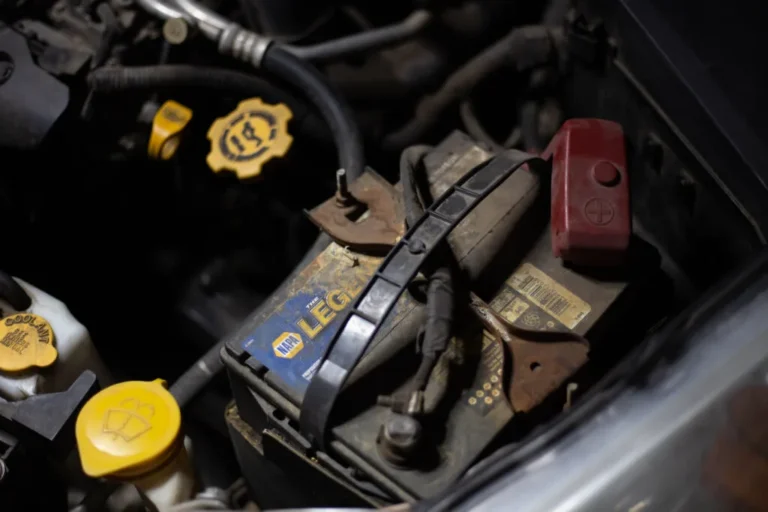
Pop your car's hood and locate the battery. The positive terminal is marked with a "+" symbol and a red cover. The negative terminal has a "-" and is often connected to the chassis ground via a cable.
If the terminals are corroded, clean them with a wire brush first.
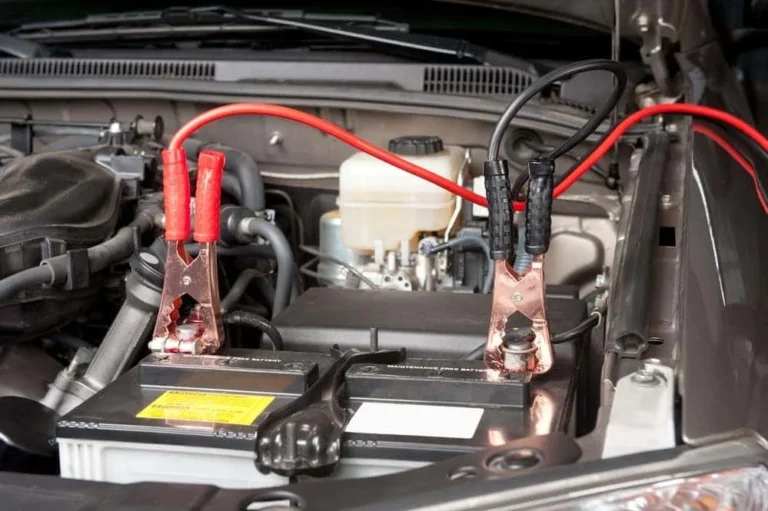
Step 3: Connect the Red Clamp to Positive
Attach the red clamp to the positive terminal. Make sure the clamp bites into the metal, not just the plastic cover. A loose connection here is the #1 reason a jump starter "doesn't work" when the unit is actually fine.
Step 4: Connect the Black Clamp to a Ground Point
This is where many people get tripped up. The black clamp should go to an unpainted metal surface on the engine block, such as a bracket or bolt, away from the battery. Connecting it directly to the negative terminal works but creates a small spark risk near battery gases.
Manufacturer manuals consistently recommend a ground point instead.
Step 5: Wait for the Connection Confirmation
The smart clamps need 3 to 5 seconds to confirm safe polarity and voltage. The LED on the handle turns green or stops flashing. If it stays red, recheck your connections.
Once you see green, you have 30 to 60 seconds to attempt a start before some units auto-shut off to conserve energy.
Step 6: Crank the Engine for 3 to 5 Seconds
Turn the key or press the start button. Crank for no more than 5 seconds at a time. If the engine doesn't start, wait 30 to 60 seconds before trying again.
This lets the jump starter recover and the cables cool down. Most engines fire within 2 to 3 attempts.
Step 7: Disconnect in Reverse Order
Once the engine is running, disconnect the black clamp first, then the red. This order minimizes the chance of a short circuit if a clamp swings into the engine bay. Do not let the clamps touch each other or any metal surface while still connected to the jump starter.
Step 8: Recharge the Jump Starter Within 24 Hours
Lithium-ion units self-discharge slowly, but a full drain from a jump should be topped up within a day. Leaving the unit at 0% for weeks can permanently damage the cells. Most units reach a full charge in 3 to 9 hours via USB-C or wall adapter.
Peak Amps vs. Cranking Amps (And Why It Matters)
The single most confusing spec on any jump starter box is the relationship between peak amps and cranking amps. Manufacturers love to lead with the biggest number, and that number is almost always peak amps.
What Peak Amps Actually Means
Peak amps is the maximum current the unit can deliver for about 1 second, right at the moment the starter motor first engages. It's a marketing number. Real engines don't draw peak amps for more than a brief instant before settling into a lower sustained draw.
What Cranking Amps Means
Cranking amps (sometimes labeled "starting amps") is the current the unit can sustain for 5 to 30 seconds. This is the number that matters. Per SAE J537 testing standards, a battery's cranking amp rating is measured at 0°F (-18°C) for 30 seconds while maintaining voltage above 7.2V.
The Rule of Thumb
If your engine needs 300 cranking amps, look for a jump starter rated at least 1,000 peak amps. That 3x margin accounts for cold weather, cable losses, and the natural drop in lithium cell output as the unit drains. A unit rated 800 peak amps might deliver only 200 to 300 cranking amps, which is borderline for a V6 and insufficient for most diesels.
Jump Starter vs. Jumper Cables: How They Differ
The old debate between jumper cables and a portable jump starter isn't really about which one works better. Both deliver the same DC current. The real difference is logistics and safety.
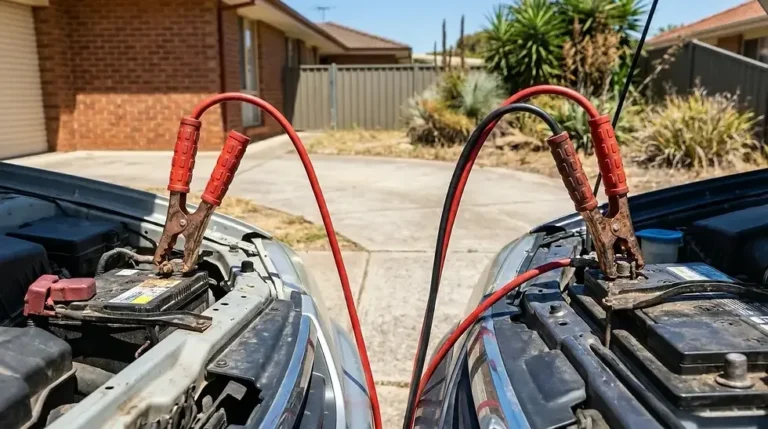
Jumper Cables Need a Donor Vehicle
Traditional jumper cables require a second running car with a good battery. You need another driver, a clear parking position, and the right cable gauge. Cheap 10 AWG cables lose so much voltage over their length that they barely work in cold weather.
Heavy 4 AWG or 2 AWG cables work better but are a pain to store.
Jump Starters Work Solo
A portable jump starter is self-contained. No second vehicle, no parking gymnastics, no flagging down a stranger. For anyone who drives alone, parks on the street, or travels in remote areas, this is the only realistic option.
Aggregate user reviews consistently rate this convenience as the top reason to own a unit.
Safety Trade-Offs
Jumper cables are dumb conductors. They spark on contact, deliver raw current regardless of polarity mistakes, and rely entirely on the user knowing what they're doing. Smart jump starters refuse to operate in unsafe conditions.
For a new driver or anyone uncomfortable under the hood, the jump starter wins on safety.
| Feature | Jumper Cables | Portable Jump Starter |
|---|---|---|
| Needs second vehicle | Yes | No |
| Spark-proof | No | Yes (most models) |
| Reverse polarity protection | No | Yes |
| Works in remote areas | No | Yes |
| Upfront cost | $20-$50 | $80-$300 |
| Storage | Bulky | Compact, glovebox-sized |
Battery-Based vs. Ultracapacitor Jump Starters
This is the most underrated comparison in the category. Battery-based and ultracapacitor jump starters solve the same problem with completely different physics, and each one has clear winners.
Battery-Based Units (The Default Choice)
Battery-based units store energy chemically in lithium-ion or lead-acid cells. They hold a charge for months, double as USB power banks, and include extras like flashlights and air compressors. They work in any weather, though cold reduces their output.
For 90% of drivers, this is the right pick.
Ultracapacitor Units (The Specialist Pick)
Ultracapacitor units store energy electrostatically, not chemically. They don't hold a charge in storage. Instead, they pull a small amount of residual voltage from your "dead" battery (even 4V is enough) in 30 to 90 seconds, then discharge it in one massive burst.
They weigh less, last 10+ years, and shrug off temperature extremes.
When Capacitors Win
If you live in Alaska, northern Canada, or the upper Midwest and your car sits outside in -30°F winters, capacitors outperform batteries. They also work for classic car owners who only drive in summer. A capacitor unit sitting on a shelf for 2 years will still work, while a lithium unit may have self-discharged to 0%.
When Batteries Win
For everyone else, the battery-based unit's extras are too useful to give up. USB charging, built-in flashlights, and tire inflators turn a one-trick device into a genuine emergency kit. The trade-off in lifespan is worth it for most users.
Cold Weather, Diesel Engines, and Other Tough Scenarios
Not every jump is created equal. Cold weather, large engines, and partial battery failures all change what your jump starter needs to deliver.
Sub-Zero Cold Starts
Cold engines need 2x to 3x more cranking amps than warm ones because the oil thickens and the battery's internal resistance climbs. A jump starter that delivers 1,000 peak amps at 70°F might only deliver 600 at -10°F. Always oversize your unit if you live in a cold climate.
Diesel Glow Plugs
Diesel engines draw current twice during starting. First, the glow plugs warm the cylinders for 5 to 15 seconds. Then the starter cranks.
This double draw can pull 800 to 1,200 amps from a jump starter, which is why most consumer units spec out at 6-cylinder diesels max. For a Power Stroke or Cummins diesel, you need a heavy-duty unit rated 3,000+ peak amps.
Partially Discharged vs. Fully Dead
A partially discharged battery (10V to 11V) is actually easier to jump than a fully dead one (under 5V). The residual voltage gives the BMS a clear signal that the circuit is intact. A battery at 0V confuses the safety logic and often requires manual override.
If your battery is more than 4 years old, replace it instead of jumping repeatedly.
Hybrid and EV 12V Batteries
Modern hybrids and EVs still have a 12V auxiliary battery that powers the computer systems and the relay that closes the high-voltage contactor. If that 12V battery dies, the car won't start even with a full hybrid battery. A standard jump starter works fine, but you jump the 12V posts, not the high-voltage system.
Always consult the owner's manual first.
Common Mistakes That Fry Jump Starters (or Car Electronics)
Most jump starter failures are user error, not equipment defect. After reviewing warranty claim patterns from major manufacturers, these are the mistakes that come up over and over.
Storing the Unit at 0% Charge
Lithium-ion cells stored at 0% for more than a few weeks can drop below their safe voltage threshold. The BMS may then refuse to charge them, effectively bricking the unit. Always top up within 24 hours of use, and store at 50% to 80% if you won't use it for months.
Cranking Too Long
Holding the key for 15+ seconds doesn't help. It overheats the jump starter's cables, drains the cells below their safe limit, and can trigger the BMS to shut down mid-jump. Three to five seconds per attempt, with 30 to 60 seconds of rest between tries, is the correct rhythm.
Skipping the Ground Point
Clipping the black clamp directly to the negative terminal works but creates a spark near battery gases. Hydrogen gas venting from a battery can ignite. Manufacturer manuals consistently recommend a chassis ground point a foot or more from the battery.
This is a small habit that prevents rare but real explosions.
Using a Cheap Unit on a Big Engine
A 400 peak amp jump starter from a gas station rack isn't going to crank a 5.7L V8. It'll click, dim its own display, and then die. If you drive anything larger than a 4-cylinder, get a unit rated at least 1,500 peak amps.
The cheap unit becomes a $50 paperweight.
Confusing Peak Amps with Cranking Amps
A unit rated 2,000 peak amps might only deliver 400 cranking amps. Always check both numbers. If only peak amps is listed, assume the cranking amp rating is roughly 25% to 30% of the peak number, then add a margin for cold weather and cable losses.
Safety Features You Should Never Buy Without
Skip the manual override button and the air compressor. These are the non-negotiable safety features on any jump starter worth owning in 2026.
Reverse Polarity Alarm
Without this, a clamp mistake means fried electronics. Every smart unit has it. If the one you're looking at doesn't, walk away.
Spark-Proof Clamps
Mandatory in any garage or enclosed space. The MOSFETs in the clamp handle prevent ignition of battery gases. Worth the small upcharge every time.
Over-Temperature Cutoff
The cables and cells heat up during a hard crank. This feature kills output before anything melts. It's the difference between a tool and a fire hazard.
How to Read Jump Starter Specs Without Getting Lost
Specs sheets are designed to confuse. Here's the cheat code.
Ignore the mAh Number for Engine Starting
A 30,000 mAh unit with weak cells is worse than a 15,000 mAh unit with quality lithium-iron-phosphate (LiFePO4) chemistry. Focus on peak amps and cranking amps instead.
Match Cable Gauge to the Claimed Amps
A unit claiming 2,000A peak with 14 AWG clamps is lying. Look for 8 AWG or thicker. Voltage drop across thin cables kills real-world performance.
Check the Certifications
UL listing, CE marking, FCC Part 15 compliance, and RoHS certification all matter. These confirm the unit passed third-party safety testing. Skip anything that lists only "CE RoHS FCC" without verifiable documentation.
Caring for Your Jump Starter So It Lasts Years
A quality unit should last 4 to 6 years with basic care. These habits separate the units that die in 18 months from the ones that keep working.
Top Up Every 3 to 6 Months
Lithium cells slowly self-discharge, even when idle. If you let the unit sit at 0% for months, the BMS may permanently lock the cells. Plug it in for an hour every few months and you're fine.
Store at Room Temperature
A hot car trunk cooks lithium cells. A frozen garage slows them down. Bring the unit inside during temperature extremes.
This single habit doubles the lifespan of most consumer units.
Clean the Clamps Monthly
Corrosion on the clamp jaws increases resistance and reduces cranking power. A quick wipe with a dry cloth and a touch of dielectric grease on the contact surfaces keeps the connection solid.
Jump Starter FAQs
How long do portable jump starters last?
Quality lithium-ion units last 4 to 6 years with regular use and proper storage. Lead-acid versions last 3 to 5 years. Ultracapacitor units can last 10+ years since they have no chemical degradation.
The BMS, not the cells, is usually the first thing to fail.
Can you take a jump starter on a plane?
Per FAA and IATA regulations, lithium jump starters under 100Wh are allowed in carry-on luggage only. Units between 100Wh and 160Wh require airline approval. Anything over 160Wh is banned from passenger aircraft.
Check the watt-hour rating on the back of the unit before flying. Most consumer units fall in the 30Wh to 80Wh range.
Why does my jump starter click but not start the car?
A clicking sound usually means the jump starter's voltage dropped below the threshold needed to engage the starter solenoid. The unit is alive but underpowered for the engine. Recharge it fully, check the clamp connections, and try a different ground point.
If it still clicks, the unit's peak amp rating is too low for your engine.
Can jump starters charge a laptop or phone?
Most modern units include a 5V/2.4A USB port, and premium models add USB-C PD up to 65W. You can charge phones, tablets, and many laptops in a pinch. This is why the multi-function units have largely replaced the old single-purpose jump boxes in consumer markets.
How do I know if my jump starter is bad?
Three warning signs: it won't hold a charge for more than a few days, the LED display flickers or shows wrong percentages, or the clamps spark even when not connected to a battery. Any of these mean the BMS, cells, or clamp circuitry has failed. Stop using it and recycle it at a battery drop-off.
Don't throw lithium units in the trash.