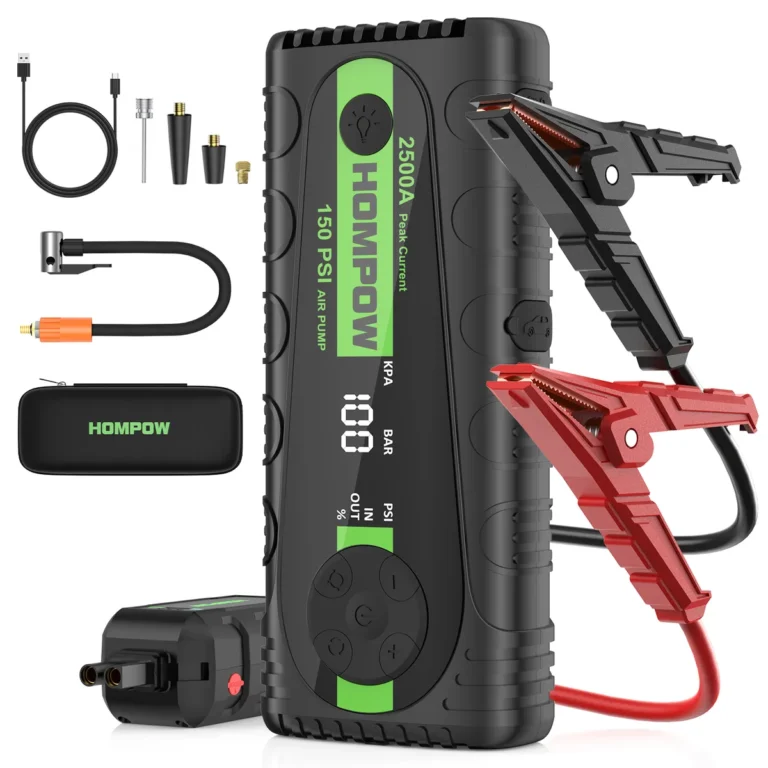
How to use automatic jump starter: Easy guide
Few things ruin your morning like turning the key and hearing nothing. If you've ever sat in a silent car with a dead battery, you already know why learning how to use an automatic jump starter is worth ten minutes of your time. These compact lithium power packs can bring most 12V vehicles back to life without a second car, a stranger with cables, or a tow truck.
Most modern units deliver between 1,000 and 3,000 peak amps, weigh under five pounds, and include built-in protections against reverse polarity, sparks, and short circuits. Manufacturer specifications and aggregate user reviews indicate that a fully charged unit can sit in your trunk for three to six months and still hold enough juice for multiple jumps. Let's walk through what you actually need to know before you ever need one.
Quick Answer
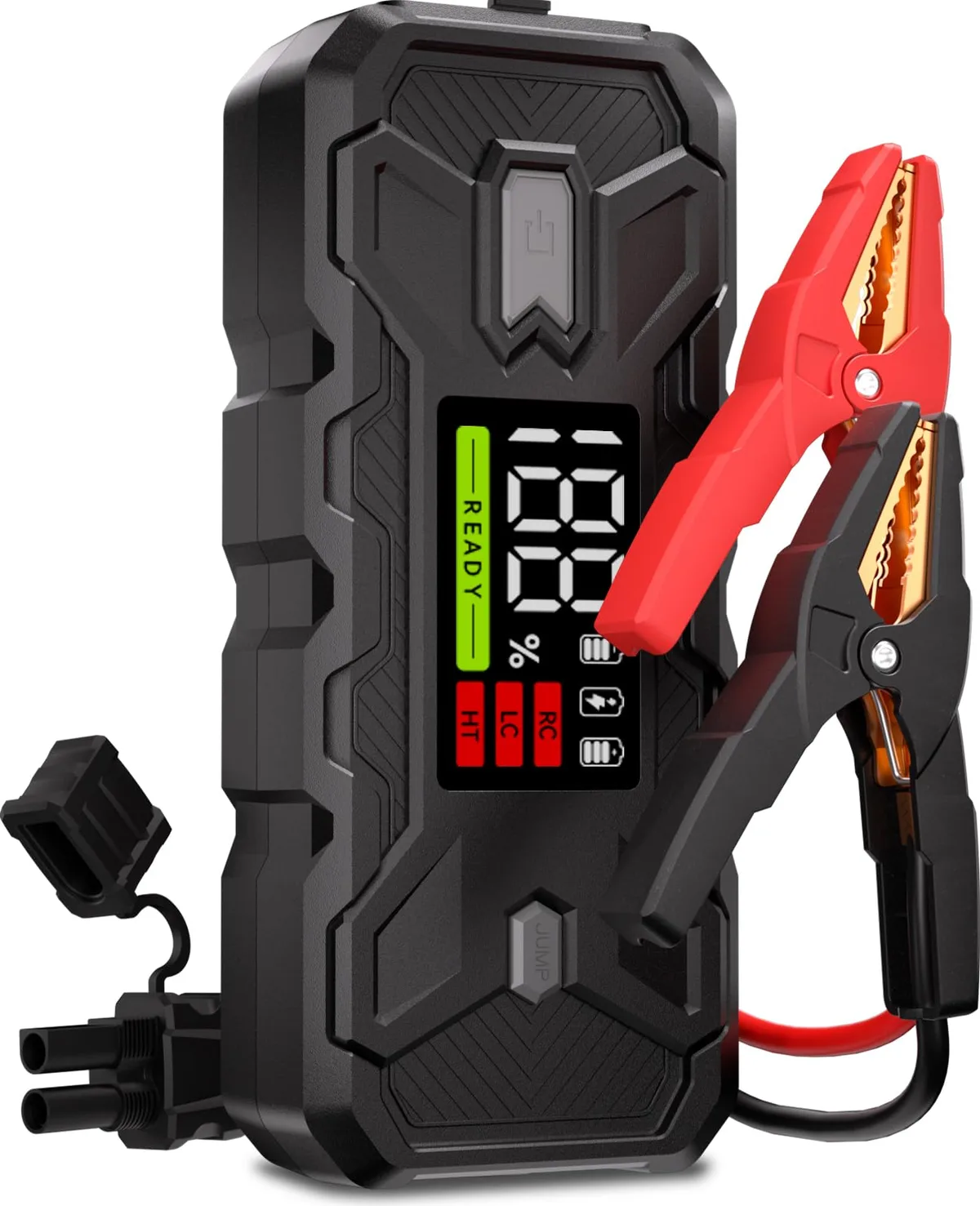
An automatic jump starter connects to a 12V car battery using smart clamps. Power it on, attach red to positive and black to negative, wait for a green ready light, then crank the engine. Disconnect in reverse order once the car is running.
Why You Shouldn't Guess With a Dead Battery
A dead battery feels straightforward until you're standing in a parking lot at 6 a.m. with cables in one hand and a manual you're too stressed to read. The problem isn't the jump itself. The problem is that modern cars punish mistakes in ways older cars didn't.
Hook a standard clamp to the wrong post, and you can fry a $1,200 ECU in under a second. Connect a cheap unit to a diesel truck that needs 2,500 cranking amps, and you'll just get a sad click. Leave a lithium pack in a freezing trunk all winter, and it may refuse to turn on when you finally need it.
An automatic jump starter solves most of those failure modes by design. The clamps talk to the battery before they send current. The unit checks voltage, polarity, and temperature.
You get clear green and red lights instead of crossed fingers.
But "automatic" doesn't mean "no thinking required." You still need to match the unit to your engine, read the indicator lights correctly, and disconnect in the right sequence. Skip those steps and the safety features won't help you.
What an Automatic Jump Starter Actually Does
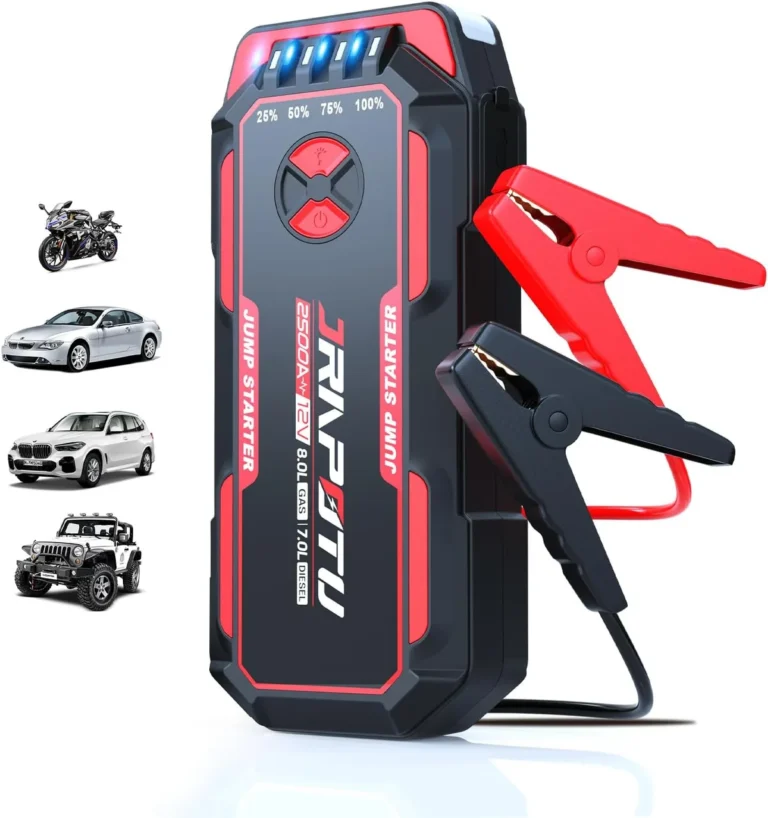
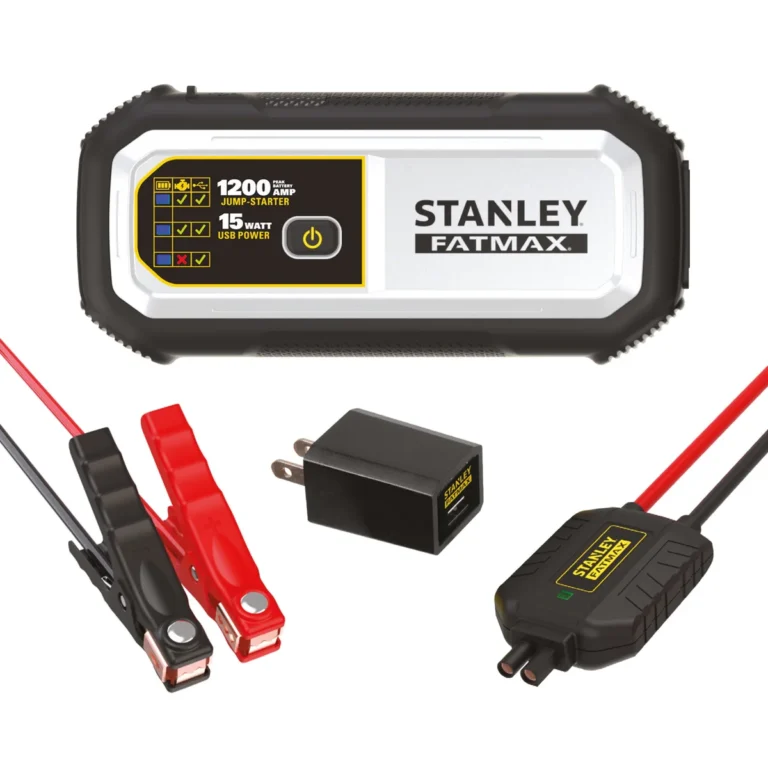
Strip away the marketing, and an automatic jump starter is a rechargeable lithium battery, often LiFePO4 or lithium-ion, paired with a pair of "smart" clamps. The smart part is a small circuit board inside the clamp housing that runs safety checks every time you connect to a battery.
Here's what happens the moment you hook it up:
- The unit measures the voltage on the terminals.
- It checks polarity. Red on positive, black on negative. If reversed, an alarm sounds and current stays off.
- It confirms the connected battery is in a safe voltage range (roughly 1V to 15V).
- It checks for short circuits or low internal temperature.
- Only then does it allow current to flow.
That sequence is why reverse polarity on a smart unit is a beep and a no-start instead of a spark show and a fried wire harness. Underwriters Laboratories (UL) certifies many of these units under their lithium battery safety standards, which is worth checking before you buy. Look for the UL mark on the label.
The clamps are the brain. The lithium pack is the muscle. Your job is to connect them to the right places in the right order.
The Key Decision Points Before You Start
Automatic jump starters aren't one-size-fits-all. Before you even open the trunk, three quick checks decide whether your unit is the right tool for the job. Get these wrong and you'll either get no crank, or worse, a damaged battery or electrical system.
Engine Size and Peak Amp Match
The single biggest spec on any jump starter is peak amps. Aggregate buyer data and manufacturer sizing charts suggest the following rough matches:
| Engine Type | Typical Peak Amp Requirement | Recommended Unit Rating |
|---|---|---|
| 4-cylinder gas | 150–400 A | 1,000 A starter |
| V6 gas | 300–500 A | 1,500 A starter |
| V8 gas | 400–800 A | 2,000 A+ starter |
| Small diesel (4-cyl) | 500–800 A | 2,000 A+ starter |
| Large diesel (6+ cyl) | 800–1,500+ A | 3,000 A+ starter |
A bigger unit doesn't hurt a smaller engine. A smaller unit trying to crank a V8 just clicks and drains itself. When in doubt, size up.
12V vs. Lithium vs. AGM Battery Compatibility
Almost every consumer jump starter is built for 12V systems, which covers nearly every car, truck, SUV, and motorcycle on the road as of 2026. The chemistry inside your car's battery matters less than you think.
Flooded lead-acid, AGM (absorbed glass mat), and gel batteries all work the same way from the jump starter's perspective. The clamps connect to terminals and current flows. What changes is the resting voltage of a deeply discharged battery, which can confuse some lower-end units.
If your car's battery has been sitting dead for weeks and reads under 2V, the smart clamps may refuse to engage because they think there's no battery at all. That's where the next decision point comes in.
Manual Override or Fully Automatic?
Most quality units include a "Force" or "Manual Override" button, often hidden behind a flap or marked with a lightning icon. This mode tells the clamps: "I know what I'm doing, send current anyway."
Use it carefully. Manual override bypasses polarity protection. Get the clamps wrong in this mode and you'll see sparks.
Manufacturer documentation consistently recommends manual override only when a standard connection won't engage, usually with deeply discharged batteries below 2V, and only when you've triple-checked your clamp placement.
Pre-Use Inspection Checklist
You don't want to discover your jump starter is dead when your car is dead. A 60-second check before any planned use (and every few months if it's sitting in storage) keeps you out of trouble.
Here's what to confirm:
| Check | What to Look For |
|---|---|
| Charge level | Battery indicator shows at least 50% (ideally 100%) |
| Clamp condition | No corrosion, frayed wires, or cracked housings |
| Terminal cleanliness | No white or green powder on your car's battery posts |
| Unit temperature | Not freezing cold or scorching hot from the trunk |
| Indicator test | Power on, confirm display and flashlight work |
| Cable integrity | No kinks, exposed copper, or loose plug ends |
If anything fails, fix it now, not at 2 a.m. in a rainstorm. Corroded terminals can be cleaned with a wire brush and a paste of baking soda and water. A dead jump starter just needs a few hours on the wall charger.
Check the unit's charge every three months if it's not in regular use. Lithium cells self-discharge slowly, but slowly isn't never. A unit left at 0% for months can drop below the voltage needed to even power its own display.
How to Use an Automatic Jump Starter: Step-by-Step
You've checked the unit. You've checked the battery. Now do the actual jump.
The sequence below is what manufacturer manuals and roadside safety guides from organizations such as AAA converge on. Follow it in order, and you'll get most engines fired up in under three minutes.
Connecting the Smart Clamps
First, make sure the jump starter is off. Then identify the positive (+) and negative (-) terminals on your battery. They're marked on the battery case and usually color-coded red and black.
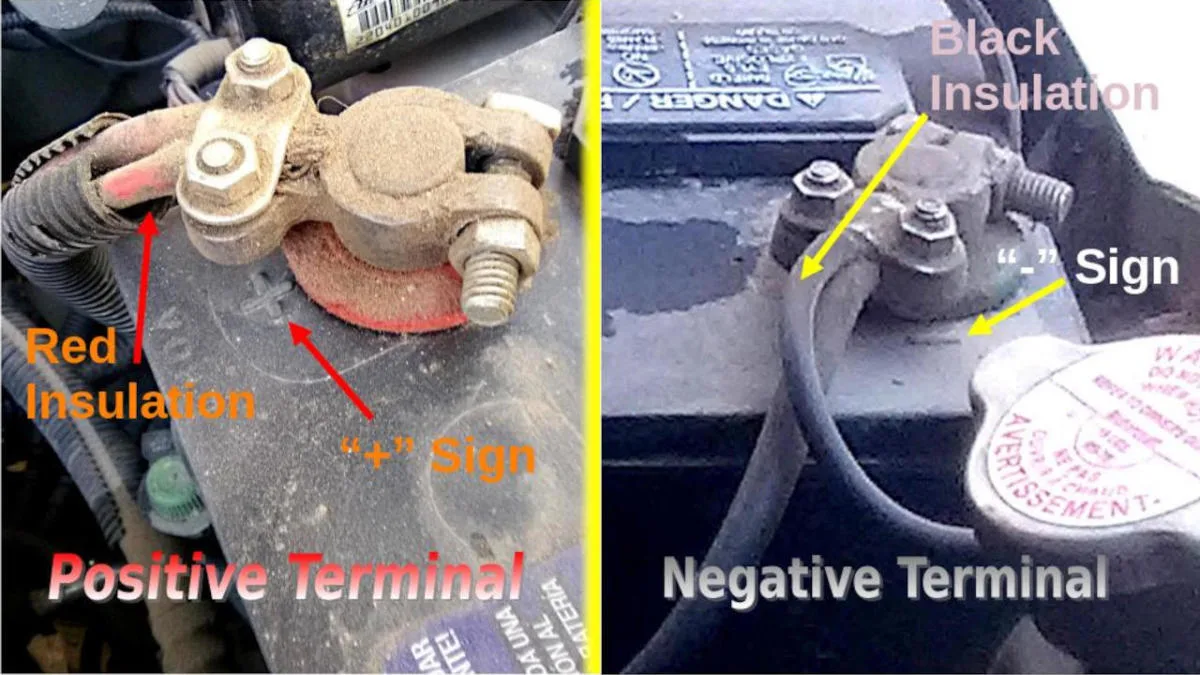
Connect the red clamp to the positive (+) terminal. Wiggle it slightly to ensure a solid metal-to-metal bite. Then connect the black clamp to the negative (-) terminal, or to an unpainted metal ground point on the engine block if the terminals are hard to reach.
Many modern cars have a designated ground bolt near the battery for exactly this purpose.
Once both clamps are seated, power on the jump starter. Wait for the smart clamp indicators to stabilize before you touch the ignition.
Reading the Indicator Lights and Error Codes
This is where most people panic. The clamps have lights, the unit beeps, and you don't know what any of it means. Here's the universal pattern across major brands.
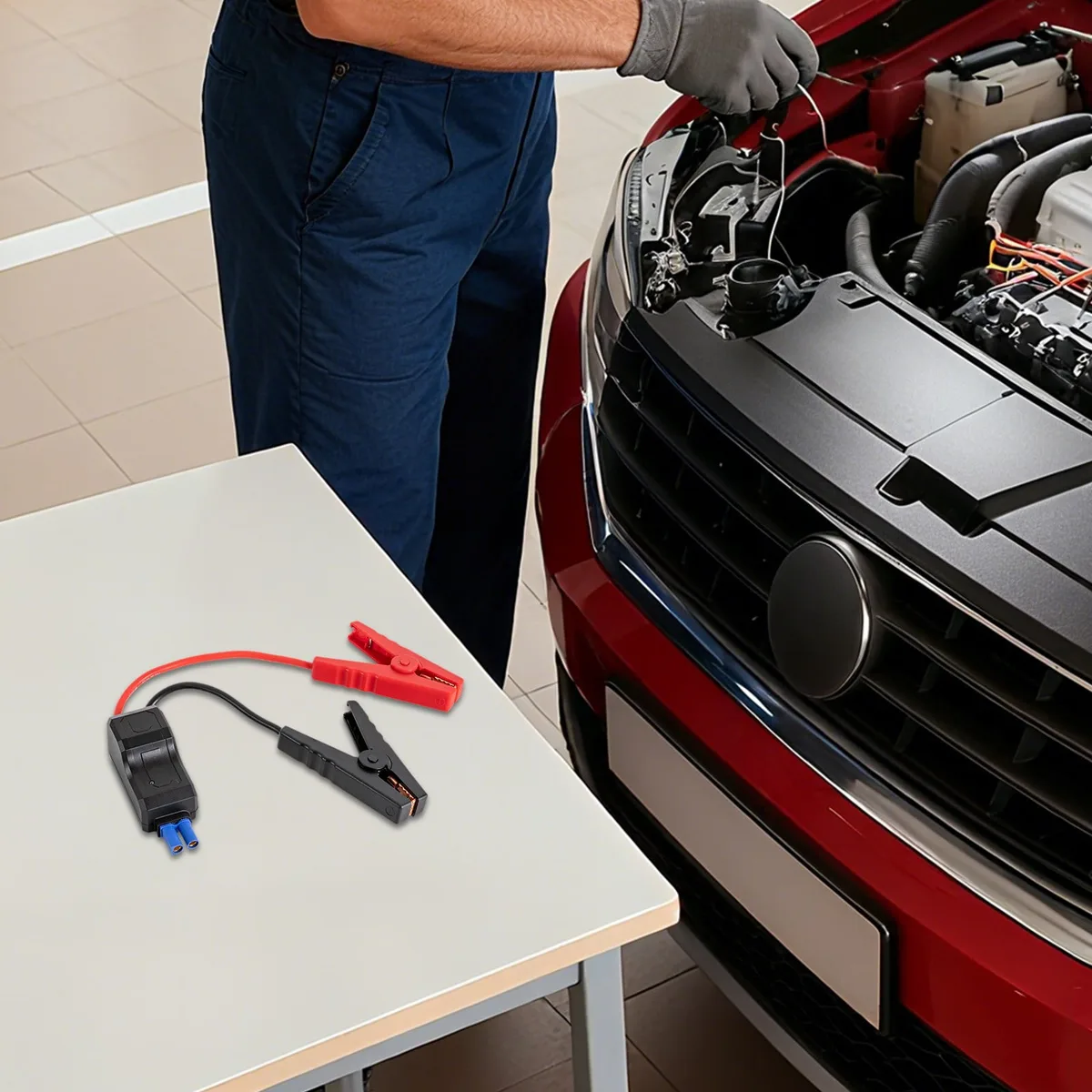
A solid green light means the connection is correct and you're cleared to start. A flashing green light typically means the clamps are connected but the battery is severely depleted, and you may need to use manual override. A red light or a continuous beep almost always signals reverse polarity, a poor clamp connection, or a voltage mismatch.
Disconnect immediately and re-check your placement.
If you see a red light and a steady alarm, don't try to start the car. Fix the connection first. Forcing it won't help and may damage the unit's internal MOSFET protection circuit, which is the component that keeps you safe.
Cranking the Engine
With a solid green light, turn the ignition key or press the start button. Crank for no more than five seconds at a stretch. If the engine doesn't catch, wait 30 to 60 seconds before trying again.
Three short attempts spaced out are far easier on the unit than ten rapid ones.
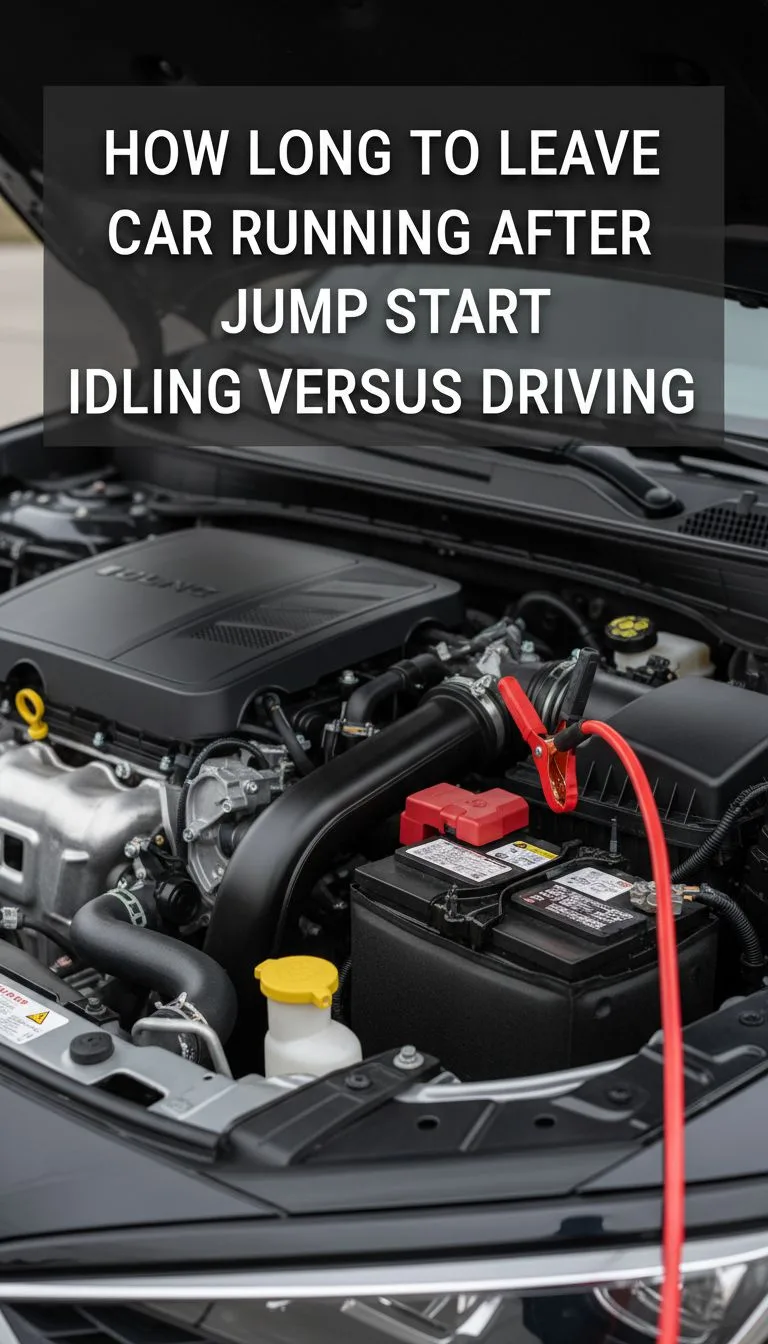
Once the engine starts, leave it idle. Don't drive off immediately. Give the alternator two to five minutes to put a surface charge back into the battery so the engine stays running after you disconnect.
Disconnecting in the Right Order
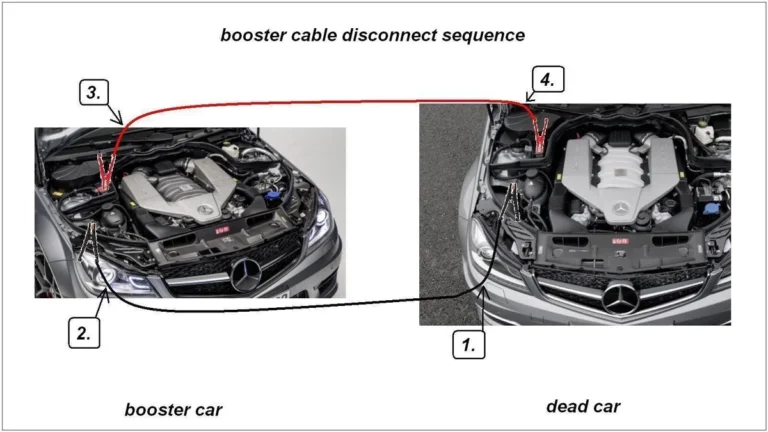
Engine running, lights stable? Good. Now disconnect in the exact reverse of how you connected.
Remove the black clamp first, then the red. Keep the clamps from touching each other or any metal surface as you set them aside. Power off the jump starter, then store it somewhere it won't slide around the trunk.
Recharge the unit as soon as you get home. Lithium cells recover best when topped back up within 24 hours rather than left at partial charge for weeks.
What to Do When the Jump Starter Won't Cooperate
Even good units misbehave sometimes. The trick is matching the symptom to the cause without throwing parts at the problem.
Clamps Clicking but No Crank
If you hear rapid clicking when you turn the key, the issue isn't the jump starter, it's the starter motor. The battery is sending current, but the solenoid isn't engaging. A weak jump starter can't fix a bad starter.
What you can do is let the cables sit connected for two or three minutes before cranking, which lets a surface charge build up. If it still clicks after that, the problem is mechanical and the jump box won't help.
Reverse-Polarity Alert
Red light, alarm, no power flow. You connected the clamps backward. Disconnect the unit, swap the clamps to the correct terminals, and start over.
No damage usually occurs because the smart clamps blocked current. If the unit still shows a red light after a correct connection, the internal fuse may have blown. Some units include a user-replaceable fuse near the clamp port.
Unit Won't Power On in Cold Conditions
Lithium chemistry struggles below about -10°C (14°F). If your unit has been in a freezing trunk, bring it inside for 20 to 30 minutes to warm up. Manufacturer data confirms that operating most consumer units below their rated minimum temperature range causes the BMS (battery management system) to refuse discharge as a safety measure.
Jump Starter vs. Traditional Jumper Cables vs. Roadside Service
Each option has a clear use case. Choosing the right one depends on whether you have help, time, and the right equipment.
| Option | Best For | Limitations |
|---|---|---|
| Automatic jump starter | Solo drivers, remote areas, anyone without a second car | Limited jump cycles per charge, unit needs maintenance |
| Traditional jumper cables | Pairing up with another vehicle, lower cost | Requires a willing second driver, no safety circuit |
| Roadside service (AAA, insurance add-on) | Anyone with membership, hands-off help | Wait times of 30+ minutes, membership fees |
| Tow to mechanic | Battery that won't hold a charge, electrical faults | Expensive, slower, not a "fix" |
If you drive alone or in rural areas, a quality jump starter is the best return on investment. If you live in a city and rarely drive, a roadside membership may make more sense. Most safety advocates recommend keeping a jump starter in the trunk regardless, as backup for situations when even roadside help is delayed.
Safety Rules That Actually Matter
Most of the safety advice online is recycled filler. Here's what genuinely matters, ranked by risk.
First, never connect black to negative on a battery that's gassing heavily or visibly damaged. A frozen, cracked, or leaking battery can explode under cranking current. If you see bulging, hissing, or acid smell, don't jump it.
Call for service.
Second, never smoke or create sparks near a flooded lead-acid battery. The off-gassing is hydrogen, which is explosive in enclosed spaces. A garage with the door open is fine.
A sealed garage is risky.
Third, never use a swollen or punctured lithium jump starter. LiFePO4 cells rarely go thermal, but lithium-ion cells can. If your unit smells sweet, feels hot while idle, or looks puffy, stop using it and recycle it at a battery drop-off.
Fourth, always wear eye protection if you have it. A cracked battery case under load can spray acid. Safety glasses cost two dollars and prevent permanent damage.
For broader standards on lithium battery transport and airline travel rules, the U.S. Department of Transportation's Pipeline and Hazardous Materials Safety Administration publishes the current regulations that govern how these units are shipped and whether you can fly with one in checked luggage.
Charging, Storing, and Maintaining Your Unit
A jump starter is a battery. Treat it like one, and it'll last five years or more. Ignore it, and you'll own a dead brick in 18 months.
Charge it fully after every use. Top it off every three months in storage. Store it at room temperature if possible.
A climate-controlled garage is better than a hot trunk in Arizona or a freezing trunk in Minnesota. Extreme heat kills lithium cells faster than almost anything else.
If your unit uses a USB-C input, any 65W PD wall charger will top it off in a few hours. Slower 10W chargers work but take overnight. Avoid leaving it plugged in for weeks at a time.
Most modern units have overcharge protection, but unplugging when full is still the safer habit.
Clean the clamps once a year with a dry cloth and a touch of dielectric grease on the metal teeth. That prevents oxidation, which is the leading cause of failed connections in our research.
Common Mistakes People Make With Automatic Jump Starters
Skipping the inspection step and assuming the unit is charged. Half of "my jump starter is dead" complaints trace back to a unit that wasn't topped off after the last use.
Connecting black to the wrong ground. The negative terminal is fine, but any solid metal bracket on the engine block works as a backup. People waste time hunting for the negative post when an alternator bracket would do.
Cranking for 15+ seconds straight. That overheats the unit's internal cells and the jumper cables. Short bursts with rest periods are what every manufacturer recommends.
Forgetting to disconnect in reverse order. It doesn't damage the battery, but it does create a momentary spark risk as you pull the last clamp off. Reverse order eliminates that.
Driving off immediately. The alternator needs a few minutes to push a usable voltage into a deeply discharged battery. Cut the engine too soon and you may not get it restarted.
Specs and Sizing Reference
Here's a condensed spec sheet covering what most buyers in our research care about. Use it as a benchmark when comparing brands and models.
| Spec | Typical Range (Consumer Units, 2026) |
|---|---|
| Peak amps | 1,000–3,000 A |
| Battery capacity | 10,000–20,000 mAh |
| Engine coverage | Up to 6.0L gas / 4.0L diesel |
| Jumps per charge | 5–30 (engine-dependent) |
| Standby charge retention | 3–6 months |
| Recharge time | 3–6 hours |
| USB outputs | USB-A, USB-C PD up to 65W |
| Operating temperature | -20°C to 60°C |
| Weight | 1–5 lbs |
| Price range | $60–$250 |
Anything well below these specs at a similar cost is probably cutting corners on the BMS or cell quality.
Best Use Cases and Who Benefits Most
Automatic jump starters aren't for everyone, but they're perfect for specific drivers. Solo commuters who can't flag down a stranger. Older vehicle owners whose batteries naturally weaken over time.
Rural drivers where the nearest help is an hour away. Rideshare operators whose income depends on starting shifts on time. Motorcycle, ATV, and boat owners with smaller batteries that surprise them with sudden failures.
If you fall into any of those groups, an automatic jump starter pays for itself the first time it saves you a tow. For drivers in mild climates with reliable roadside coverage, it's more of a "nice to have" backup than a necessity.
Expert Tips for Cold Weather and Long Storage
Cold saps lithium capacity, period. A unit rated for 1,500 peak amps at 25°C may only deliver 70% of that at -10°C. If you live in a cold climate, store the unit indoors overnight in winter and bring it out only when needed.
Warm it in your hands or inside your jacket for five minutes before cranking.
Long storage is its own challenge. Don't leave it plugged in indefinitely. Don't leave it at 0%.
Aim for 50 to 80% charge if you won't use it for months. Check it once a quarter. A five-minute maintenance habit beats a $150 replacement.
If your unit has a built-in voltmeter or display, watch the resting voltage after a full charge. Anything above 13.0V on a healthy lithium pack means it's holding capacity. A reading below 12.4V after a full charge cycle suggests the cells are aging out and it's time to recycle the unit.
Frequently Asked Questions
Can you jump a car in the rain?
Yes, modern automatic jump starters are weather-resistant enough for light rain. The smart clamps and sealed battery case handle moisture without issue. Just avoid submerging the unit or letting water pool around the battery terminals.
A dry towel wipe on the clamps before storage is good practice.
How long does an automatic jump starter hold its charge?
Most quality units retain usable charge for three to six months in storage. Aggregate user feedback suggests lithium self-discharge runs about 2 to 5% per month. Top it off every quarter and you'll never face a dead jump starter.
Will a jump starter work on a completely dead battery?
Sometimes. Smart clamps usually require at least 1 to 2V of residual charge to recognize a battery is present. If the battery reads zero, you'll likely need to use the manual override mode, which bypasses the safety circuit.
Match this with caution and double-check polarity first.
Is it safe to jump-start a hybrid vehicle?
Yes, with the same process as a standard car, but always use the 12V auxiliary battery, not the high-voltage traction battery. The 12V battery is what powers the computers needed to bring the hybrid system online. Manufacturer manuals for hybrids like Toyota Prius and Ford Escape Hybrid confirm this procedure.
Can you take a jump starter on a plane?
Yes, but with limits. The TSA allows lithium jump starters in carry-on luggage only, never checked bags, and only if they're under 100Wh (about 27,000mAh at 3.7V). Larger units require airline approval.
Always check current rules before flying.
What if my jump starter clicks but doesn't crank the engine?
A click with no crank usually means the unit's clamps have a poor connection, or the unit isn't powerful enough for your engine. Re-seat the clamps, confirm a green light, and try a longer crank burst. If the engine still won't turn, your starter motor may be the actual problem.
Your Quick-Reference Jump-Start Checklist
Print this, tape it to the inside of your trunk lid, or save it in your phone. When the moment comes, you won't want to think.
- Check unit charge (50% minimum, 100% preferred)
- Confirm clamps and cables are clean and undamaged
- Identify positive (+) and negative (-) terminals
- Connect red clamp to positive, black to negative or ground
- Power on the jump starter
- Wait for solid green light on the smart clamps
- Crank the engine in 5-second bursts with 30-second rests
- Disconnect black clamp first, then red
- Recharge the unit within 24 hours
Run this list in order, and you'll handle a dead battery the same way a mechanic would.