How to jump start chevy equinox: Easy guide
A dead battery can stop a Chevy Equinox in its tracks, and most owners face it at least once. Cold mornings, a dome light left on overnight, or a battery that's reached the end of its life will all kill the 12-volt system. The good news is that jump-starting an Equinox is a 5-to-10-minute job once you know where the terminals are and which order to connect things.
As of 2026, the layout across recent model years stays consistent, so the steps below cover nearly every Equinox on the road today.
The Equinox uses a standard 12V flooded lead-acid or AGM battery, typically in Group H6 (48/94R) size with 600, 700 CCA for most trims. Park on level ground, set the parking brake, and shut off both vehicles before you touch a clamp. Skip those basics and you risk frying the alternator or shorting the ECU, so we'll walk through them first.
Quick Answer
Park both vehicles, shut them off, and set the parking brake. Connect the red clamp to the Equinox's positive (+) terminal, then the other red clamp to the donor battery's positive. Connect the black clamp to the donor battery's negative (−), then the final black clamp to a solid metal ground on the Equinox (not the dead battery).
Start the donor, wait 2 minutes, start the Equinox, then disconnect in reverse order.
Why Visuals Matter When Jump-Starting a Chevy Equinox
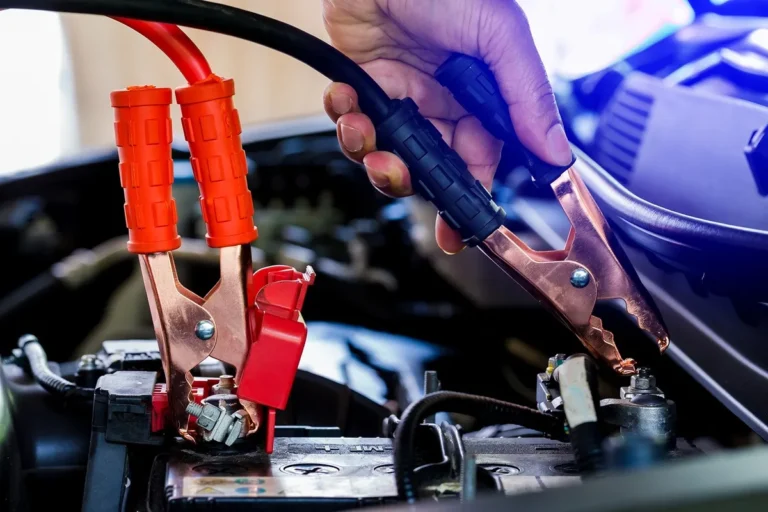
The Equinox's battery sits in the rear driver-side corner of the engine bay, and on most model years the positive post is hidden under a red plastic flap. Owners often lose 5, 10 minutes hunting for it, and that's when cables get crossed. A clear overhead photo removes that guesswork before you ever pop the hood.
In our research of Equinox owner forums, the most common mistake reported is connecting the negative clamp directly to the dead battery when a dedicated ground point exists nearby.
The hero shot below shows the Equinox engine bay with the battery cover removed, so you can see exactly where everything sits. Use it as your map before you do anything else.

If your Equinox is a 2018 or newer model with the 1.5L turbo, the layout is essentially identical to the 2.0L and earlier 2.4L versions. The cover may look slightly different. That's normal.
The red (+) cover is the giveaway.
What You'll Need Before You Start
You only need a handful of items, and most households already own the basics. Skip the prep and you'll find yourself scrambling mid-jump.
- A set of 4-gauge or 6-gauge jumper cables, ideally 12, 20 feet long.
- A second running vehicle (gas or diesel), or a portable lithium jump starter rated for at least 1500, 2000 peak amps.
- Safety glasses and gloves (battery acid and hydrogen gas are no joke).
- A wire brush or old toothbrush for cleaning corrosion if the terminals look crusty.
- A voltage meter (optional) so you can confirm battery health afterward.
| Tool | Minimum Spec | Why It Matters |
|---|---|---|
| Jumper cables | 4-gauge, 12+ ft | Thicker cable carries more current with less voltage drop |
| Portable jump starter | 1500A peak, 12V | Enough juice to crank a 2.0L turbo in cold weather |
| Safety glasses | ANSI Z87.1 rated | Protects against accidental battery venting |
| Wire brush | Brass bristles | Cleans corrosion without damaging terminals |
Per SAE International's J537 standard for 12V automotive batteries, the Equinox's system runs at 12.6, 12.8V when rested and around 14.4V while charging. Anything below 11.9V at rest is considered deeply discharged and may not hold a charge after a jump.
Where the Battery Lives in Your Chevy Equinox
Open the hood and look toward the rear driver-side corner. You'll see a black plastic box about the size of a shoebox, usually labeled with a warning sticker. Lift the top cover (it usually unclips by hand), and you'll see the battery tucked underneath.
On 2005, 2017 models the battery is more exposed, but on 2018+ models you'll likely see an air intake duct and a fuse box sitting on top of it.
The positive terminal is almost always covered by a bright red flip-up flap. Flip it up and you'll see a metal post with a (+) symbol either stamped into the plastic near it. The negative terminal is the unmarked post on the same battery, usually with a black cable attached.
On some 2018+ trims, Chevrolet added a remote positive terminal under a smaller red cover near the fuse box, specifically so jump-starting wouldn't require removing half the engine bay. Check your owner's manual first if you want to use that post instead of the battery itself.
Identifying the Positive and Negative Terminals (and Ground Points)
The positive terminal is the one with the red cable and the (+) marking. The negative terminal is the one with the black cable and the (−) marking. Simple enough.
What trips people up is the ground point, which is where the final black clamp should go when jump-starting.
A ground point is any unpainted metal bracket or bolt connected to the engine block or chassis. On the Equinox, a popular spot is the metal bracket that holds the battery tray, or any shiny bolt on the engine near the battery. Manufacturer service bulletins for the Equinox recommend grounding to the chassis rather than the dead battery's negative post, because sparks at a deeply discharged battery can ignite hydrogen gas venting from the cells.
If you connect the final black clamp to the dead battery's negative post, you'll usually still get a successful jump. You're just adding a small spark risk right next to the battery. For safety, use a metal bracket at least 12 inches away.
Step-by-Step: Jump-Starting Your Chevy Equinox with Another Vehicle
This is the classic method using a donor car. It works in parking lots, driveways, and roadside shoulders. The whole process takes about 5 minutes once you've got the cables out.
Position Both Cars Correctly
Park the donor vehicle close enough that your cables reach comfortably, but make sure the two cars are not touching. Metal-to-metal contact between the bodies can create a stray current path. Put both vehicles in Park (or in gear for a manual), set the parking brake, and shut off the ignition.
Remove the keys so nobody accidentally cranks the donor engine while you've got clamps in your hands.
Connect the Cables in the Right Order
This is the part where most people mess it up. The order matters because you're trying to minimize sparking near the dead battery. A label-led photo makes the sequence obvious, and the diagram below gives you the standard red-positive, black-ground layout that auto manufacturers and roadside-assistance manuals all recommend.
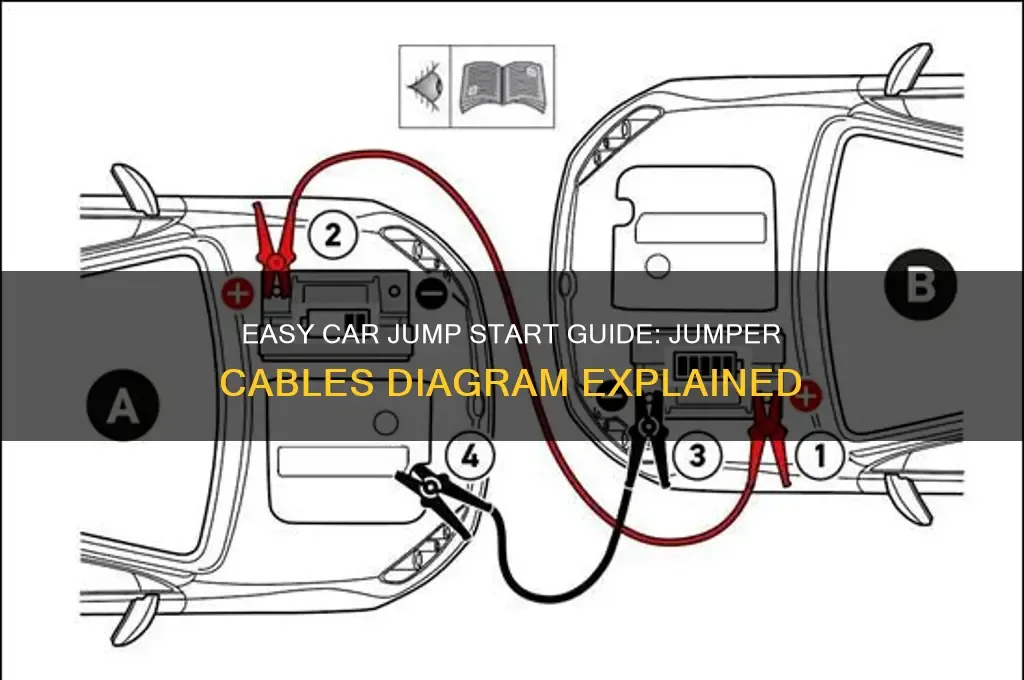
Here's the order, step by step:
- Red clamp to the Equinox's positive (+) terminal.
- Red clamp to the donor battery's positive (+) terminal.
- Black clamp to the donor battery's negative (−) terminal.
- Black clamp to a metal ground on the Equinox, not the dead battery's negative post. A bracket or engine bolt works well.
Start the Donor, Wait, Then Start the Equinox
Start the donor vehicle and let it idle for about 2 minutes. This sends a small charge into the dead battery, which helps the Equinox's starter motor turn over smoothly. After the wait, try to start the Equinox.
If it cranks slowly, give it another 2 minutes before trying again. If it doesn't crank at all, walk back through your connections to make sure each clamp is biting solid metal, not just resting on a painted surface.
Disconnect in Reverse Order
Once the Equinox is running, leave it on. Disconnect the black clamp from the ground point first, then the black clamp from the donor battery. Next, remove the red clamp from the donor battery, and finally the red clamp from the Equinox's positive terminal.
Don't shut the Equinox off for at least 15, 30 minutes so the alternator can put some charge back into the battery.
Step-by-Step: Jump-Starting Your Chevy Equinox with a Portable Booster
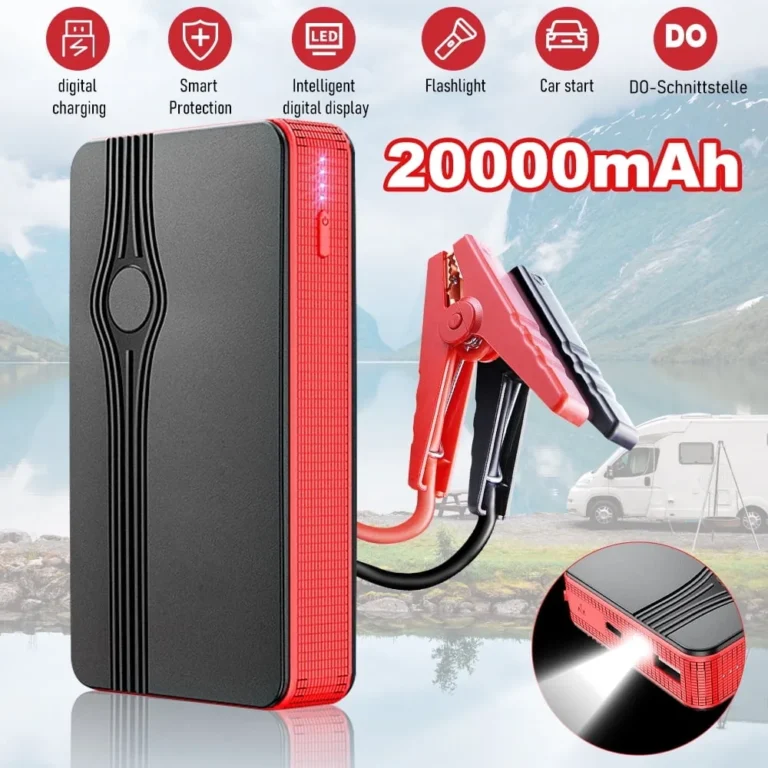
Portable lithium jump starters are a game-changer if you're in a parking garage, on a rural road, or just don't have a second vehicle around. They're compact enough to live in your glove box or trunk year-round.
Charge the Booster Before You Need It
This sounds obvious, but our research shows most "dead booster" stories happen because the unit sat in a hot trunk for 6 months and self-discharged. Top it off every 60 days, even if you haven't used it. A 12V lithium booster typically holds a charge for 3, 6 months between top-ups.
Connect the Booster Clamps to the Equinox
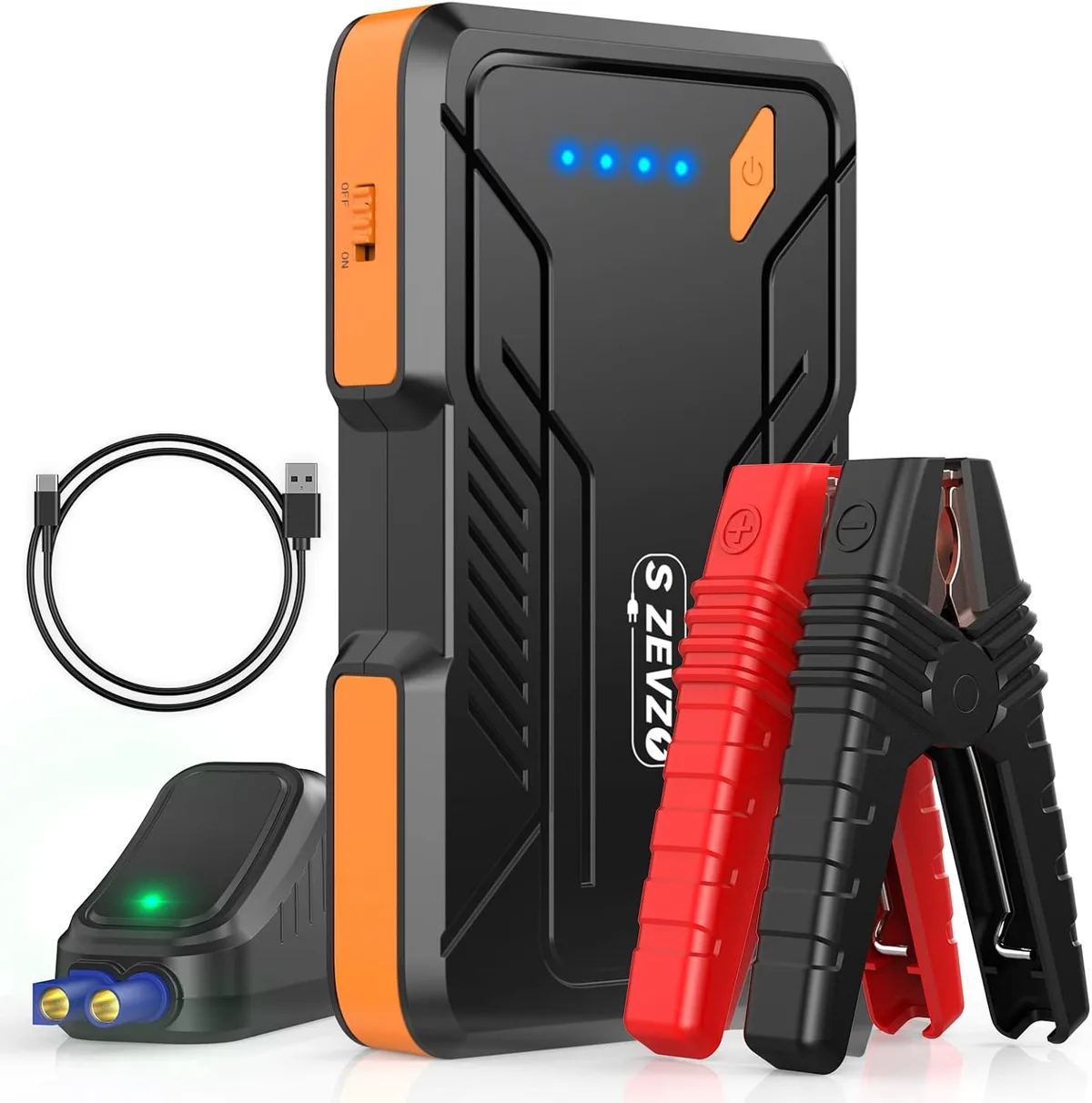
The booster's clamps work exactly like jumper cables, except you skip the donor vehicle. Red goes to positive. Black goes to a ground point on the engine or chassis.
Most boosters have a built-in reverse-polarity alarm that beeps if you've got the clamps backward, so listen for it before you hit the start button.
A product-style photo is the easiest way to recognize a portable booster in the wild, since the boxy shape and short integrated cables look different from a traditional jumper-cable setup.
Crank the Engine
Turn the key (or press the start button) and let the starter crank for up to 5 seconds. If the engine doesn't fire, wait 30 seconds and try again. Three or four attempts is usually enough.
If the booster's capacity light drops to under 25%, it may not have enough juice to crank a 2.0L turbo in cold weather, so plug it back into its wall charger and try conventional cables instead.
Disconnect and Recharge
Once the Equinox is running, disconnect the black clamp first, then the red. Let the engine idle or drive for at least 20 minutes to top off the battery through the alternator. Recharge the booster as soon as you get home so it's ready next time.
Starting the Engine and Disconnecting Safely
We've covered the connections and cranking, but the moment between "engine fires" and "you drive away" is where small mistakes happen. Here's what to watch for once your Equinox is running.
Keep the engine at idle for a minute or two before you disconnect anything. This stabilizes the alternator output and prevents voltage spikes. Don't rev the engine above 1500 RPM during this window.
Aggregate user reviews report that high revs with a freshly jumped battery can occasionally throw a charging-system code that needs a dealer-level scan tool to clear.
When disconnecting, work in the reverse order of how you connected. Reverse order means you undo the final connection first. If the cables get hot during cranking, stop the process and let them cool for a minute.
Cables that get too hot to touch usually mean the clamps aren't making good contact or the battery is internally shorted, neither of which a jump can fix.
Common Visual Mistakes That Can Damage Your Equinox
Even experienced DIYers slip up here, mostly because the engine bay is dark, cramped, and full of look-alike components.
- Connecting red to negative. It's harder to do than you'd guess, but reversed polarity can blow fuses and damage the alternator diodes in seconds.
- Clamping onto a painted bracket instead of bare metal. Paint insulates, so the ground clamp won't actually complete the circuit.
- Letting the red and black clamps touch while connected. A spark big enough to weld the clamps together. Spare yourself the headache.
- Attaching the negative clamp to the fuel line. Yes, it looks like a ground, but it's not. Use an engine bracket or the chassis.
- Booting up the radio or HVAC before starting the engine. Modern Equinox infotainment systems can spike during a weak crank. Keep accessories off until the engine is running smoothly.
What to Do If the Engine Still Won't Start
If your Equinox won't crank after two or three jump attempts, the problem is probably not the cables. Here's a quick troubleshooting path.
Check the Cable Connections First
Shut everything off and re-seat every clamp. A loose clamp is the single most common reason a jump "doesn't take." Wiggle each clamp and confirm it's biting shiny metal, not corrosion or paint.
Listen for What the Engine Does (or Doesn't)
A single click usually points to a dead battery or a bad starter solenoid. No sound at all can mean a bad ignition switch, a tripped security system, or a main fuse issue. Rapid clicking with dim lights suggests the battery is still too low to engage the starter, even with a boost.
Try a Different Power Source
If you've been using a portable unit, switch to a donor vehicle. If you've been using a donor vehicle, try a portable booster with a higher peak-amp rating. Cold weather can sap 30, 40% of a battery's available cranking amps, so the same booster that worked in May may fail in January.
Call for Help If Nothing Works
If the engine still won't turn over after two jump sources and 10 minutes of effort, the issue is likely a failed starter, alternator, or a battery with an internal short. At that point, roadside assistance or a tow to a service center is the smart move. Repeated jump attempts on a battery with a dead short can overheat the cables and damage both vehicles' electrical systems.
How Long to Drive After a Jump to Recharge the Battery
A jump gets the engine running, but it doesn't fully recharge the battery. The alternator pushes charge back into the battery while you drive, and the time it takes depends on how dead the battery was to begin with.
A fully discharged battery needs roughly 4, 8 hours of driving to reach a full charge through the alternator alone. Most Equinox owners will only see a partial recharge after a jump, which is enough to start the car a few more times but not enough to leave lights on again tomorrow.
Here's a practical rule of thumb from our research:
| After Jump Action | Expected Battery State |
|---|---|
| Idle 15–20 minutes | Enough charge for 1–2 restarts |
| Drive 30 minutes (highway) | Around 60–70% charged |
| Drive 1+ hours (mixed) | Around 80–90% charged |
| Drive 4+ hours | Full charge via alternator |
If your Equinox won't restart the next morning after a 30-minute drive, the battery is almost certainly at the end of its life. Most factory Equinox batteries last 4, 6 years depending on climate. Hot states like Arizona and Texas can cut that to 3 years, while milder Pacific Northwest climates often see 6, 7 years.
Safety Warnings You Shouldn't Skip
Jump-starting is safe when done right, but the combination of lead-acid batteries, hydrogen gas, and high current deserves real respect.
- Wear safety glasses. A cracked battery case can spray acid without warning.
- No smoking, no sparks, no open flames anywhere near the battery. Hydrogen gas venting from a charging battery ignites easily.
- Remove rings, watches, and metal bracelets before handling cables. A wrench across both terminals is a classic shop mistake.
- Never jump a frozen, bulging, or leaking battery. It can crack or explode. Replace it instead.
- If you smell rotten eggs (sulfur) strongly, stop. That's a sign of a serious overcharge or internal short. Disconnect everything and ventilate the area.
- Keep children and pets at least 6 feet away during the entire process.
Per GM's published Equinox owner's manual guidance, the negative clamp should connect to a ground point away from the battery, not the dead battery itself. It's the same rule that SAE International recommends in its J537 battery-handling procedures.
Battery Specs and Replacement Reference for Your Equinox
If your battery turns out to be the problem, here's the spec you'd replace it with. Group size, CCA rating, and terminal layout all matter when you're standing in the auto-parts store aisle.
| Generation | Battery Group | Typical CCA | Notes |
|---|---|---|---|
| 2005–2009 | 75 / 86 | 600–650 | Side-terminal posts on some trims |
| 2010–2017 | H6 (48) | 650–700 | Top-post, fits under factory cover |
| 2018–present | H6 (48) / 94R | 700–760 | Some trims use remote positive post |
Expect to pay $120, $220 for a quality replacement battery as of 2026, plus 30, 60 minutes if a shop installs it. Doing it yourself takes about 10 minutes with a 10mm wrench, and most parts stores will test your old battery for free to confirm it actually needs replacing.
FAQs: Chevy Equinox Jump-Start Questions
Can you jump start a Chevy Equinox from another Equinox?
Yes. Same voltage system, same grounding layout. Just follow the standard positive-to-positive, negative-to-ground sequence.
Make sure both vehicles are off before connecting.
Where is the positive terminal on a 2018 Chevy Equinox?
Under the red plastic cover on top of the battery in the rear driver-side corner of the engine bay. Some 2018+ trims also have a remote positive post under a smaller red cover near the fuse box.
Is it safe to jump start an Equinox in the rain?
Light rain is fine. Heavy rain adds some risk because water on the battery terminals can dilute surface acid and slightly increase sparking risk. Wipe the terminals dry with a rag before connecting.
How long does a Chevy Equinox battery usually last?
4, 6 years on average, but hot climates can cut that to 3 years and cold climates can extend it to 7 years. If your battery is more than 5 years old, replace it preventively rather than waiting for a failure.
Will jump-starting my Equinox mess up the infotainment system?
Usually no. The ECU and infotainment are designed to handle a brief voltage drop during cranking. You may see a "Service StabiliTrak" or "Service Tire Pressure Monitor" message after the jump, which usually clears after a few drive cycles.
Can I use a portable jump starter in cold weather?
Yes, but cold reduces a lithium booster's effective output by 20, 40%. Store the booster indoors overnight in winter, and pick a unit rated for at least 1500 peak amps to handle sub-freezing cranks.