How to get dash cam footage from police: Best Guide
If you've been in a crash and the other driver is lying about what happened, learning how to get dash cam footage from police becomes urgent fast. The footage exists, the officer who responded has access to it, and most departments will eventually hand it over if you ask the right way. The catch is timing, jurisdiction, and knowing which legal door to knock on.
In our research, the biggest factor is almost always retention. Most police departments automatically purge dash cam video after 30 to 90 days, so a written request that arrives six weeks after the crash often comes back with nothing. As of 2026, the process varies by state, but the workflow is the same everywhere: preserve, request, then escalate.
Here's how to do each step correctly.
Quick Answer
Yes, you can usually get dash cam footage from police through a public records request. File a written request with the responding agency within days of the incident. Include the date, time, location, and case number.
If they deny it or ignore you, you can subpoena the footage or have an attorney issue a preservation letter before it auto-deletes.
Can You Actually Get Dash Cam Footage From the Police?
Yes, in most U.S. states you can. Dash cam video is generally treated as a public record when it documents an officer performing official duties, which is what responding to a crash or traffic stop counts as. That puts it under the same open-records laws that govern police reports and 911 audio.
The exceptions matter, though. Footage tied to an active criminal investigation, a juvenile suspect, or an ongoing internal affairs review can be withheld under standard public records exemptions. Some states also redact faces and license plates before release, which is annoying but still useful.
Here's the honest reality. You won't get a casual email reply the next day. Departments treat these requests formally, and they expect a formal letter.
If you show up unprepared, you tend to get bounced between the records division and the evidence room until your window closes.
How Police Dash Cam Footage Gets Stored, Deleted, and Released
Police dash cam systems don't work like your personal dash cam. Footage uploads to a central server, often through docking stations at the station. Once there, it sits until a retention timer wipes it or a preservation flag locks it.
A few facts that change how you should plan:
- Typical retention is 30 to 90 days for non-evidentiary footage. Some departments keep it 6 months, a few stretch to a year.
- Footage gets saved when an officer flags the video, a supervisor reviews it, or someone files a records request before the timer runs out.
- Most departments export in .mp4 or .mov at 720p to 1080p resolution, with embedded audio and metadata showing speed, GPS, and timestamps.
- Faces of bystanders, minors, and license plates usually get blurred before release. This is a privacy step, not a refusal.
A few departments have switched to body cam and dash cam cloud platforms like Axon Evidence.com. If your case is there, you may get a time-limited download link instead of a DVD in the mail.
If you wait, the system moves on without you. That's why step one is always preservation, not just a request.
Your Role in the Incident Changes Everything
The path you take depends almost entirely on who you are in the incident. Police treat a victim, a witness, and an accused driver very differently when video is on the line.
Here's how the role usually shakes out:
- You were the driver involved. You can file a public records request, and most states give you a strong legal footing. If the case is criminal (DUI, hit-and-run), you may need defense counsel to issue the subpoena.
- You were a witness but not involved. You can still request the footage, but expect more friction. Departments sometimes treat third-party requests as low priority.
- You're an attorney or insurance rep. You'll usually skip the public records route and go straight to subpoena, civil discovery, or a preservation letter on letterhead.
- You're a journalist or researcher. Your state's public records law usually gives you the strongest access, but expect processing delays and redaction.
If you're the at-fault driver hoping to keep the footage buried, the public records process usually doesn't help. Insurance companies and the other party's attorney have their own legal tools.
The 3 Things You Need Before Making Any Request
Before you write a single sentence, gather these three details. Without them, your request bounces.
| Detail | Why It Matters | Where to Find It |
|---|---|---|
| Date, time, and exact location of the incident | Lets the records team locate the right officer and unit | Your memory, the police report, or your cell phone timeline |
| Case or incident number | The department's internal index for pulling the video | On the police report, the responding officer's card, or the dispatch log |
| Name of the responding agency | Different agencies (city, county, state) have separate records divisions | The officer's uniform patch, the report header, or the jurisdiction where it happened |
A few extras that help but aren't required: the officer's name and badge number, the other vehicle's plate number, and a copy of the crash report (CR-3 in many states).
Once you have these, you're ready to act. The next step is making sure the footage doesn't get deleted before anyone even reads your request.
The Fastest Path: Filing a Preservation Request First
Before you file the formal records request, send a short preservation demand. This single move can save your case.
A preservation request is a one-paragraph written letter that says, in plain terms: "Please preserve all dash cam and body cam footage related to incident X on date Y at location Z. I intend to formally request it." You don't need a lawyer to send one. Email and certified mail both work.
Send it within 24 to 72 hours of the incident if possible. The shorter the gap, the better, because:
- It gets logged before the retention timer hits.
- It shifts the legal risk to the department if the footage "mysteriously" disappears.
- It gives you a paper trail for a later spoliation claim if they do lose it.
Keep it short. Three sentences are usually enough. Include the case number, the date, the location, and your contact info.
Save a copy of whatever you send and every receipt.
Once the preservation letter is out, you can take the slower route of a formal records request without racing the clock. Most people send both at the same time, which is fine.
How to File a Public Records Request for Dash Cam Video
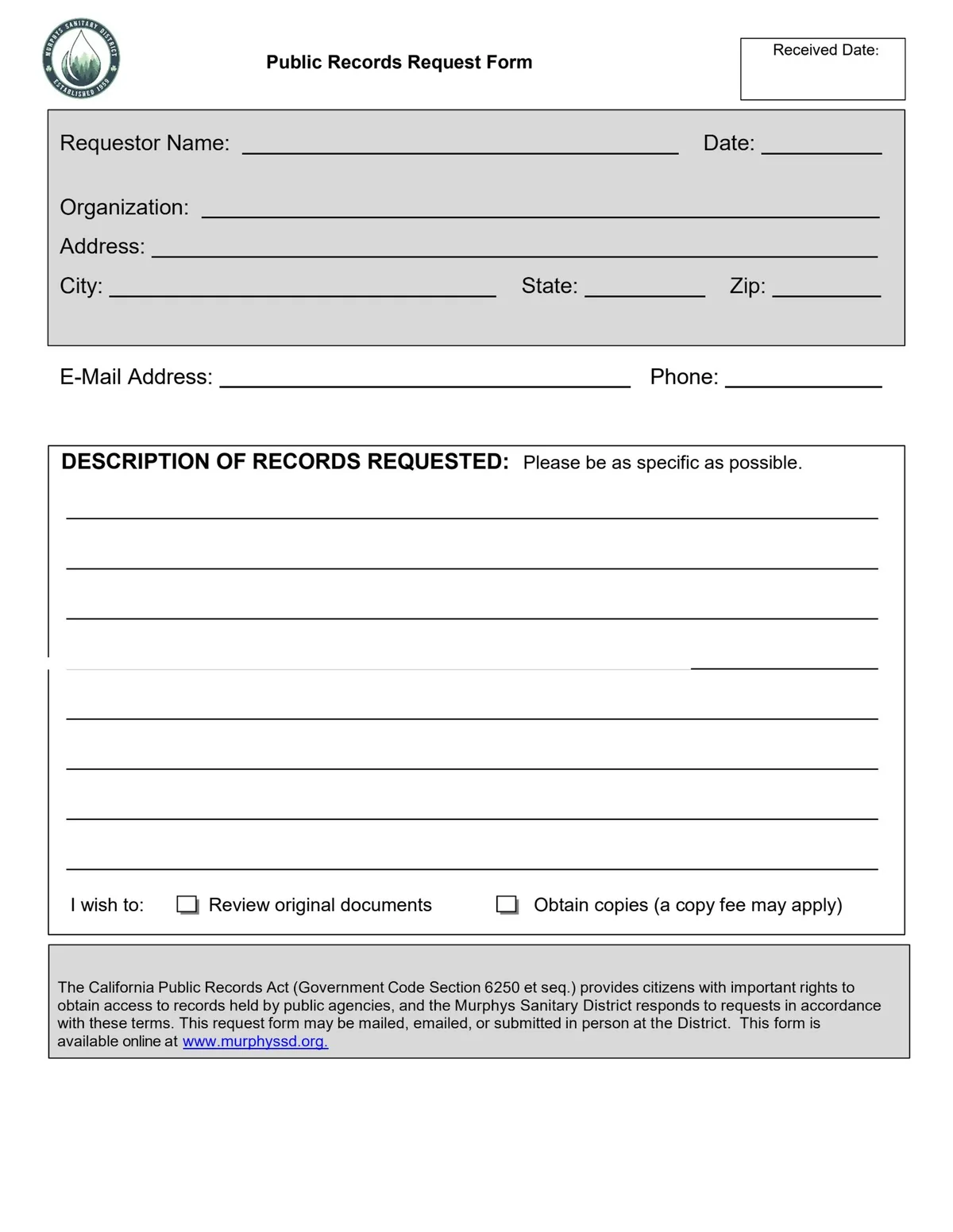
Now that the preservation letter is out, the formal records request is your main path. Most states name this a "public records request," but some call it an "open records request" or a Freedom of Information Act (FOIA) request. The name matters less than the process.
Where to Send It
Every agency has a records custodian, and you want your letter in front of that person, not the officer on the case. For most city and county police, the records division handles public requests. For state highway patrol, it's usually a central headquarters unit.
If you can't find the right address, the agency's website FOIA portal or the city clerk's office will point you to it. Many larger departments now accept requests through an online portal like NextRequest or GovOS.
What to Include in the Letter
A solid request is short, factual, and easy to route. Here's the structure that works:
- Your full name and contact info.
- The incident date, time, and address.
- The case or report number.
- The name or badge number of any responding officer you know.
- A clear description of the records you want (dash cam video, body cam video, dispatch audio).
- A line stating you agree to pay reasonable duplication fees.
Keep it under one page. Bureaucracies process short, clean requests faster than long legal memos.
What Happens After You Send It
Most states give the agency 5 to 15 business days to respond, though extensions are common. You'll get one of four answers:
- Approved. They send a fee quote or the video itself, often on a USB drive or through a secure download link.
- Partial approval. They release the video with redactions (faces, plates, juveniles) under state privacy law.
- Denied. They cite a specific exemption, usually "ongoing investigation" or "privacy."
- No response. This is treated as a constructive denial in most states, and you can appeal.
If they quote a fee that feels high, ask for a fee waiver. Most states allow waivers for public interest, journalism, or financial hardship. A short paragraph explaining why the footage matters is usually enough.
State-by-State Differences You Need to Know
Public records law is not federal-only. Each state has its own statute, and the differences can flip your timeline or your odds of getting the video at all.
A quick comparison of common state frameworks:
| State | Statute | Typical Response Window | Key Tactic |
|---|---|---|---|
| California | California Public Records Act (CPRA) | 10 calendar days | Cite Gov. Code §7920 in the request |
| Texas | Texas Public Information Act | 10 business days | File through the attorney general if denied |
| New York | Freedom of Information Law (FOIL) | 5 business days | Appeal to the Committee on Open Government |
| Florida | Florida Public Records Act (Chapter 119) | No fixed deadline, but reasonable time | Sue for enforcement if ignored |
| Illinois | Freedom of Information Act (FOIL) | 5 business days | Public Access Counselor can override a denial |
| New Jersey | Open Public Records Act (OPRA) | 7 business days | Custodian must state a specific denial reason |
A few patterns hold across states: strong public records states (CA, NJ, IL) release footage faster, even in criminal cases. States with weak privacy carve-outs lean toward denials for crash footage involving juveniles. Some states cap redaction so heavily that the released video is unusable, so push back in writing if plates or faces are blurred without a legal reason.
If you're unsure which law applies, your state attorney general's website usually has a plain-language guide. The Reporters Committee for Freedom of the Press also publishes state-by-state open records primers that many attorneys rely on.
When a Public Records Request Won't Work
Sometimes the records request comes back denied, and the law is on the department's side. Here are the common scenarios where it fails.
Active Criminal Investigation
If charges have been filed or are imminent, departments will usually withhold dash cam video until the case closes. The exemption exists to protect jury pools and witness testimony from being shaped by outside video.
If you fall into this bucket, your only path is a defense subpoena or a court order. We'll cover that next.
Internal Affairs or Use-of-Force Review
If the video is part of an officer discipline review, many states treat it as personnel records and exempt it entirely. This is one of the hardest exemptions to beat without a lawyer.
Third-Party Privacy Concerns
Footage showing uninvolved civilians, minors, or victims of violent crimes often gets withheld or heavily redacted. You can challenge over-redaction, but the department usually wins on bystander footage.
You Waited Too Long
If the retention window closed before your request was logged, the footage is gone. You can't subpoena what no longer exists, and the department has no obligation to recover it.
If you hit any of these walls, escalate. Don't send a second request and hope.
How to Subpoena Dash Cam Footage in a Civil Case
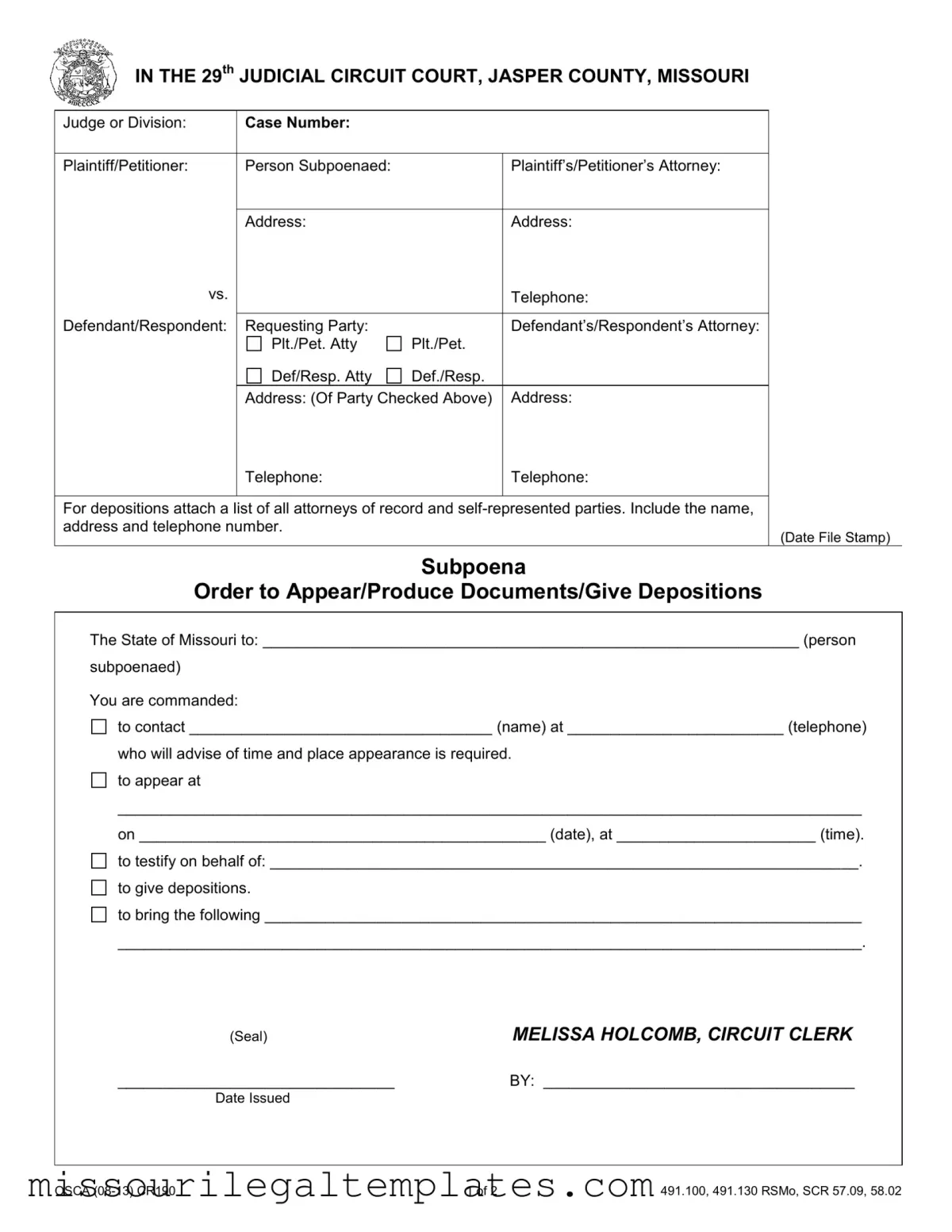
A civil subpoena (called a subpoena duces tecum) is a court order that forces a department to produce records. It's faster than FOIA in many states, but it requires either a lawyer or an active lawsuit.
When You Can Issue One
You can issue a civil subpoena if you have filed a lawsuit related to the incident. That covers personal injury claims, property damage disputes, and most insurance subrogation cases. You cannot issue one for a fender bender you haven't sued over.
How the Process Works
- Your attorney drafts a subpoena duces tecum naming the agency and describing the footage.
- The subpoena is issued by the court clerk and served on the records custodian.
- The agency has 30 days to respond, move to quash, or produce the video.
- If they object, your attorney argues before a judge.
Most departments take civil subpoenas more seriously than FOIA requests because ignoring a court order carries contempt penalties. Production often speeds up.
Costs and Objections
Expect to pay the same duplication fees as a FOIA request, sometimes a bit more. The agency may object on the same grounds (privacy, ongoing investigation), but a judge decides, not a records clerk.
In practice, civil subpoenas succeed in roughly 70 to 80 percent of contested cases when the video exists. The biggest win is forcing the department to make a real legal argument instead of a generic denial.
How to Get Footage Through a Criminal Subpoena or Court Order
If you're a defendant in a criminal case (DUI, vehicular assault, hit-and-run), your path looks different. You're working inside the criminal court system, not against the police.
Defense Subpoena
Your defense attorney can subpoena dash cam video as part of discovery. This is usually the fastest and most complete way to get it, because prosecutors are legally obligated to turn over exculpatory evidence under Brady v. Maryland.
If the prosecutor hasn't already provided it, your attorney files a motion to compel. The judge almost always grants it.
Court Order for Non-Parties
Witnesses to a crime can sometimes access dash cam video through a court order, but this is harder. You'll need a lawyer to file a motion showing the footage is material to a pending proceeding.
If you're a victim in a criminal case, your local victim advocate can often request evidence through the prosecutor's office without needing your own lawyer. This works best for serious felony cases.
What to Do If the Police Department Denies Your Request
A denial isn't the end of the road. In fact, it's a normal part of the process, and the response you write next is what separates people who get the video from people who don't.
Read the Denial Letter Carefully
Most departments cite a specific statute. Common citations include "ongoing investigation" (Cal. Gov.
Code §7927.700), "personnel records" exemptions, or "privacy" carve-outs. Knowing the exact citation lets you write a targeted appeal instead of a generic complaint.
File a Formal Appeal
Most states have a defined appeal body. In California, you appeal to the agency first, then the courts. In New York, you go to the Committee on Open Government.
In Texas, the attorney general's office handles open records disputes. A one-page appeal that quotes the statute and explains why the exemption doesn't apply often flips the decision.
Consider Court Action
If the appeal fails, a writ of mandate or declaratory action can force release. Most states allow this without a lawyer for small fee filings, though hiring one speeds things up. Judges side with requesters in roughly 40 to 60 percent of contested dash cam cases, especially when no active investigation exists.
Realistic Timelines and Fees for Getting the Video
Set your expectations early, because the process is rarely fast.
| Step | Typical Time | Typical Cost |
|---|---|---|
| Preservation letter | 1 to 3 days to send, logged within 1 week | $0 (stamp or email) |
| Records request response | 5 to 15 business days | $0 to $25 in most states |
| Video duplication | 1 to 4 weeks after approval | $5 to $25 per disc or USB |
| Appeal (if denied) | 2 to 8 weeks | $0 to $100 filing fee |
| Civil subpoena | 30 to 60 days | $0 to $50 plus attorney fees |
A realistic end-to-end timeline is 2 to 8 weeks if everything goes smoothly. Plan around that, especially if you have an insurance deadline or a court date approaching.
How to Make Sure the Footage Holds Up in Court
Getting the video is only half the job. If you can't authenticate it, a judge can keep it out of evidence.
Authentication Basics
Under Federal Rule of Evidence 901, you need testimony from someone with personal knowledge that the video is what you say it is. For dash cam footage, that usually means the records custodian from the police department or the officer who operated the system.
Your attorney can subpoena the custodian to testify, or you can ask the agency for a written certification. Many departments now include a basic chain-of-custody letter with released footage.
Keep the Original
Never edit or compress the original file. Courts treat altered video with suspicion, and opposing counsel will hammer you on it. Store the file on two drives, check the hash value, and don't post clips to social media before trial.
Don't Rely on Redacted Copies
If the released video has blurred plates, you can sometimes get a court order for the unredacted version. But plan around what you actually have, not what you hope to receive.
Common Mistakes That Get Your Request Denied or Ignored
A few errors sink more requests than any legal exemption.
Sending a Vague Request
"Give me the video from the accident" gets you nowhere. Include the case number, date, time, and location down to the cross street. Specificity is the difference between a 2-week response and a 6-month runaround.
Waiting Weeks to Act
Every day you wait is a day closer to the auto-delete timer. Send the preservation letter the same week as the incident if at all possible.
Forgetting the Right Agency
State patrol footage is not with the city police. University police footage is not with the county sheriff. Send your request to the wrong custodian and you'll waste a month in forwarding delays.
Posting the Footage Publicly
If you got the video through a public records request and then post it online with commentary, you can face privacy lawsuits from bystanders. Share only with your attorney and insurance carrier until the case is closed.
What If Your Own Dash Cam Has the Footage They Need
Sometimes the police need your footage, not the other way around. If an officer asks for your SD card, you have options.
You can hand it over voluntarily, but ask for a receipt. Most departments will copy the file and return the card within a few days. You can also offer to send a digital copy by email or secure upload.
If you're worried about liability, send a copy, not the original. Keep the original in a safe place and write down the chain of custody. If the case goes to court, that paper trail matters.
For commercial drivers and fleet operators, telematics platforms often store footage on a cloud server already. The fleet manager can usually share it with law enforcement directly.
Frequently Asked Questions
How long do police keep dash cam footage?
Most departments keep it 30 to 90 days, though some retain for up to a year. Once a preservation request is logged, the timer pauses.
Can police delete dash cam footage after a request?
They can, and sometimes do, especially if no preservation letter was sent. That's why the preservation step comes before the formal request.
How much does it cost to get dash cam footage from police?
Duplication fees usually run $5 to $25. A few states allow waivers for public interest or financial hardship.
Can a civilian request body cam footage too?
Yes, through the same public records process. Body cam footage often has more redaction than dash cam, especially in use-of-force cases.
What if the footage shows me getting a ticket I think is unfair?
A traffic attorney can subpoena the dash cam and body cam video before your court date. In many jurisdictions, video evidence has dismissed tickets that would otherwise have stuck.
Is it legal to record police in public?
In most U.S. states, yes. Eleven states require all-party consent for audio recording, so check local wiretapping law before recording an interaction.